
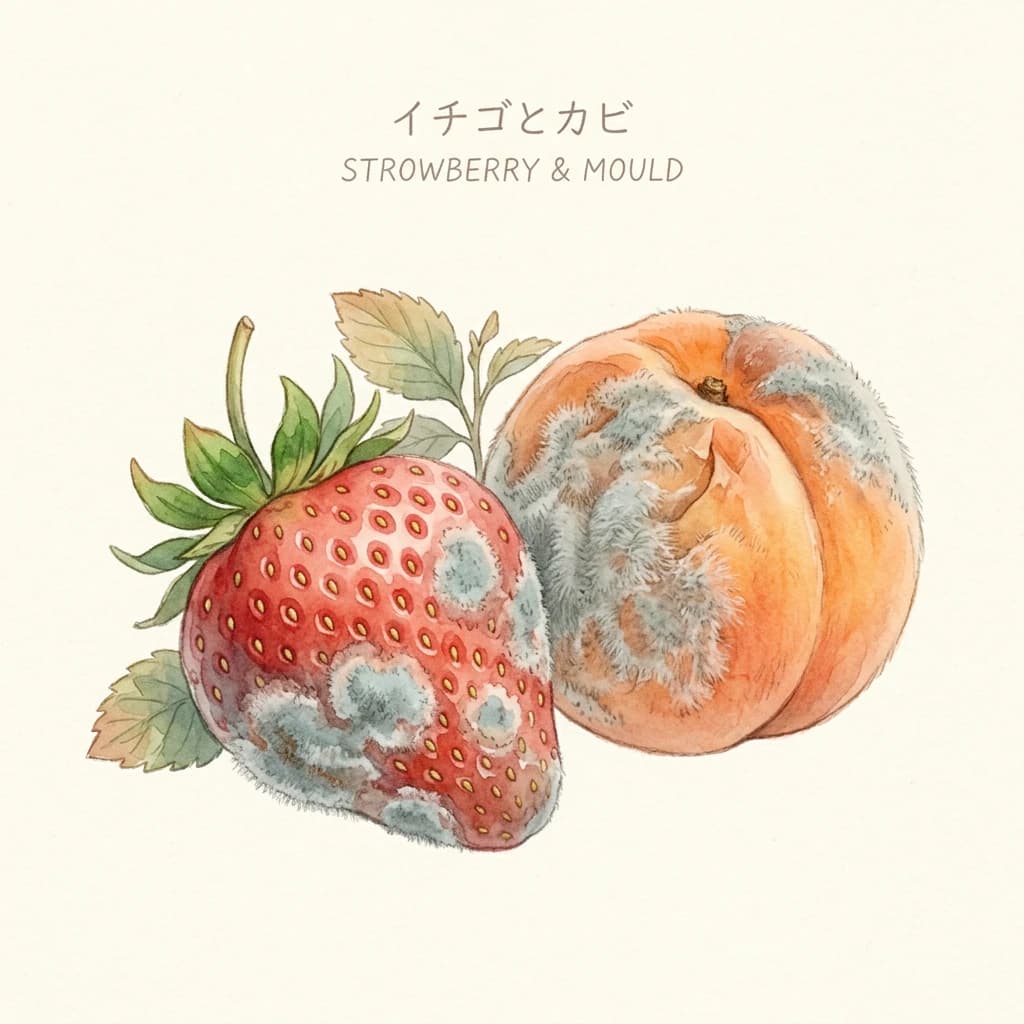
Botrytis (grey mould)
Also known as: botrytis, grey mould, gray mold, grey rot, Botrytis cinerea
The grey mould fungus, which rots flowers, fruit and soft tissue, covering them in a grey felt. It appears in damp, cool weather, especially on wounds and plant debris. The first step is to remove anything mouldy every day and improve ventilation.

How to recognise it (symptoms)
- Velvety grey mould on fruit, flowers and leaves
- Soft brown rot in fruit and stems, beneath the mould
- Flowers and newly set fruit dropping
- A cloud of grey dust when you touch the affected area: these are the spores being released
Crops affected
 TomatoMarmande tomato, flattened and ribbed, a good size for salads.
 StrawberryA strawberry with large, firm, deep red fruit, very productive and early.
 PepperCalifornia Wonder pepper, a blocky bell type with thick flesh, for stuffing or eating fresh.
 LettuceCos lettuce, with a long, crisp heart.
 BeansA dwarf green bean that does not need a support and is easy to grow in a bed.
 GrapevineA white grape with large, oval berries and a mild muscat flavour.
What favours it
- High humidity and poor ventilation, with leaves and fruit wet for hours
- Cool temperatures (around 15-20 °C), which favour spore germination
- Pruning wounds and damp plant debris, which provide a way in
- Too much nitrogen, which produces dense foliage that is slow to dry
Prevention
- Ventilate and do not crowd plants: without moving air, the foliage does not dry
- Prune in dry weather and clear away the prunings: damp wounds and debris are a way in
- Pick up dead leaves, flowers and fruit from the ground: that is where the fungus overwinters
- Water at the base without wetting the foliage or the flowers
Organic treatment
Always start here: these remedies are kind to the garden, the soil and pollinators.
- First: every day, gather up all mouldy tissue without shaking it and put it in the rubbish bin, not on the compost heap. Then ventilate, thin the leaves and lower the humidity; without that change, no product will solve the problem
- Mulch with straw so that the fruit does not touch damp soil, and harvest as soon as it ripens
- As a preventive during flowering, Bacillus subtilis (a registered product) reduces spores before the fungus takes hold
- Horsetail decoction diluted 1:5, once a week, may help as a tonic, but its effect is modest
Chemical treatment (with caution)
There are specific fungicides for botrytis (registered by crop). Use them as a last resort, because the fungus easily develops resistance.
Don't confuse it with…
With other rots. The key feature of botrytis is the velvety grey mould that releases a cloud of spores when touched.
In-depth guide — botrytis (Botrytis cinerea)
This fungus attacks flowers, fruit and wounds. Ventilate, stop dew lingering on the plants and remove dead tissue, especially in damp coastal climates.
Points of entry
- Withered flowers stuck to the fruit (tomato, strawberry, grape).
- Wounds from pruning, hail or sunscald.
- Plant debris lying on damp soil.
Cultural management
- Every week, remove dead flowers and damaged fruit.
- Use drip irrigation at the base and do not wet the flowers.
- Stake tomatoes and mulch strawberries with straw to keep the fruit off the soil.
Organic treatments
- Bacillus subtilis as a preventive during flowering, using a registered product.
- Copper in moderate amounts, according to the label, on crops for which it is authorised.
- Horsetail decoction 1:5 every week as a tonic.
After harvest
Refrigerate strawberries and soft fruit as soon as possible. Check the boxes and discard any pieces with grey mould so that they do not contaminate the rest. Do not eat mouldy fruit.
Use plant protection products responsibly, even organic ones. Always read and follow the label, the doses and the harvest interval, and never treat plants in flower or while bees are flying, in order to protect pollinators. If in doubt, put prevention and organic methods first.

In the plant catalogue you'll see what to plant, how and when: a well-tended plant resists pests much better.