In this article (13 sections)
In the garden, confidence is worth more than the manual. Start with plants that give you early successes, and in a couple of years you will dare to try the more difficult ones.
The times are indicative and count from sowing, unless it says otherwise. They vary with temperature and variety.
The 10 that almost never fail


1. Radish “Cherry Belle”
- 25-30 days from sowing to harvest: it is about the quickest there is for starting out.
- It is sown directly in the soil, in spring and autumn. In the strong heat of summer it bolts and turns hot.
- Water regularly so that it does not turn hot or go hollow.
2. Rocket
- 30-40 days. You cut the outer leaves and the plant keeps producing.
- It puts up with light shade, so it does well on east-facing balconies.
- In high summer it flowers straight away: better spring and autumn.
3. Oak-leaf or batavia lettuce
- 50-70 days. You can keep cutting the outer leaves for two months.
- Regular watering, without waterlogging.
- With partial shade in summer it produces for longer.
4. Courgette (one plant is enough)
- 50 days to the first fruit, and an enormous production.
- It needs at least 1 m² (11 sq ft) and full sun.
- With a single plant you eat courgette all summer. With two, you are already giving it away.
5. Dwarf green bean
- 60 days to harvest and it needs no stake.
- It fixes nitrogen in its roots and leaves the soil somewhat better for the next crop.
- Sow every 15 days to have a continuous harvest.
6. Cherry tomato (Sungold, Yellow Pear)
- 70-80 days from transplanting. They are very productive and hardy.
- They need a stake and for you to remove the side shoots (“suckers”).
- They split less than big tomatoes when watering is irregular, although it is worth watering steadily.
7. Rainbow chard
- 60 days. You can cut outer leaves for many months.
- It copes well with heat and light cold.
- It is the star of balconies and small beds.
8. Spinach
- 40-50 days. Perfect for spring and autumn.
- It does not like heat: sow at the end of winter or in autumn, never in high summer.
- It is demanding in nitrogen, so add compost before sowing.
9. Parsley
- About 80 days from seed, and then it lasts a very long time.
- The seed is slow to come up, sometimes three or four weeks: be patient. If not, buy a small, already grown plant at a nursery.
- It tolerates partial shade. Cut the outer sprigs, not the whole plant at once.
10. Chives
- It is a perennial plant that forms a clump and lasts for many years. It is divided every few years to renew it.
- It needs hardly any care. Its lilac flowers are pretty and edible.
- Plant it scattered around the garden: it is credited with a slight repelling effect on some aphids, although it is not a guarantee.
An example bed

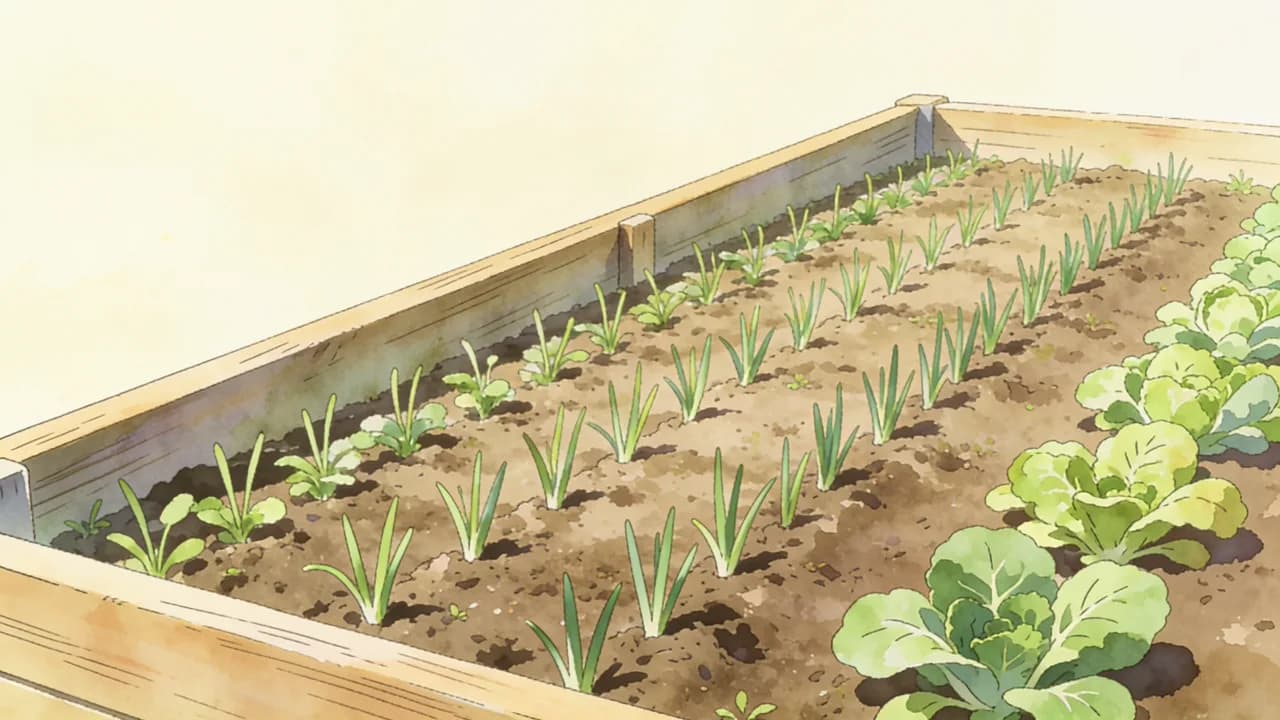
A bed of 1×2 m (6.6 ft) to start with could be organised like this. The courgette, which needs its own square metre, is left out of the scheme and goes somewhere else or in a large pot.
| RADISH   | LETTUCE  | LETTUCE |
| ROCKET   | ROCKET   | RADISH  |
| Cherry TOMATO (stake)          |
| Green BEAN                     |
| CHIVES     | PARSLEY  | CHIVES |
| Rainbow CHARD                  |
With this you have a continuous harvest from day 25 to day 200 or so, and if something fails, the rest does fine.
When to sow
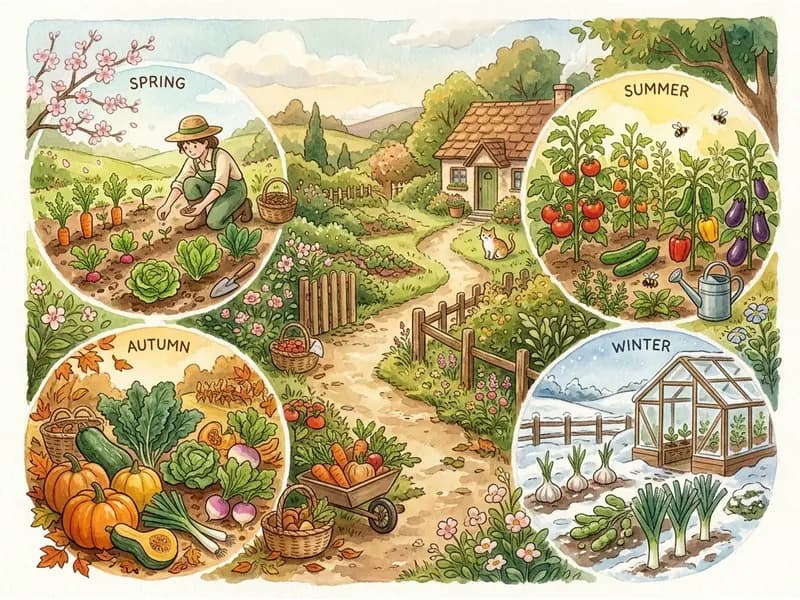
Check the Calendar with your zone. As a basic rule:
- March-April: radish, rocket, lettuce, chard, spinach and chives.
- May: transplant tomato and courgette (when there is no longer a risk of frost) and sow the bean.
- September: rocket, lettuce, spinach and chard again.
When you have energy to spare, look at the rest of the tips to take the next step.

Set it up by zones, elements and crops.