In this article (7 sections)
The short rule: if your soil is good and you have space, sow in the ground; if it is poor, there are trees nearby or your back hurts, make a raised bed. The details are below.
When to choose direct soil
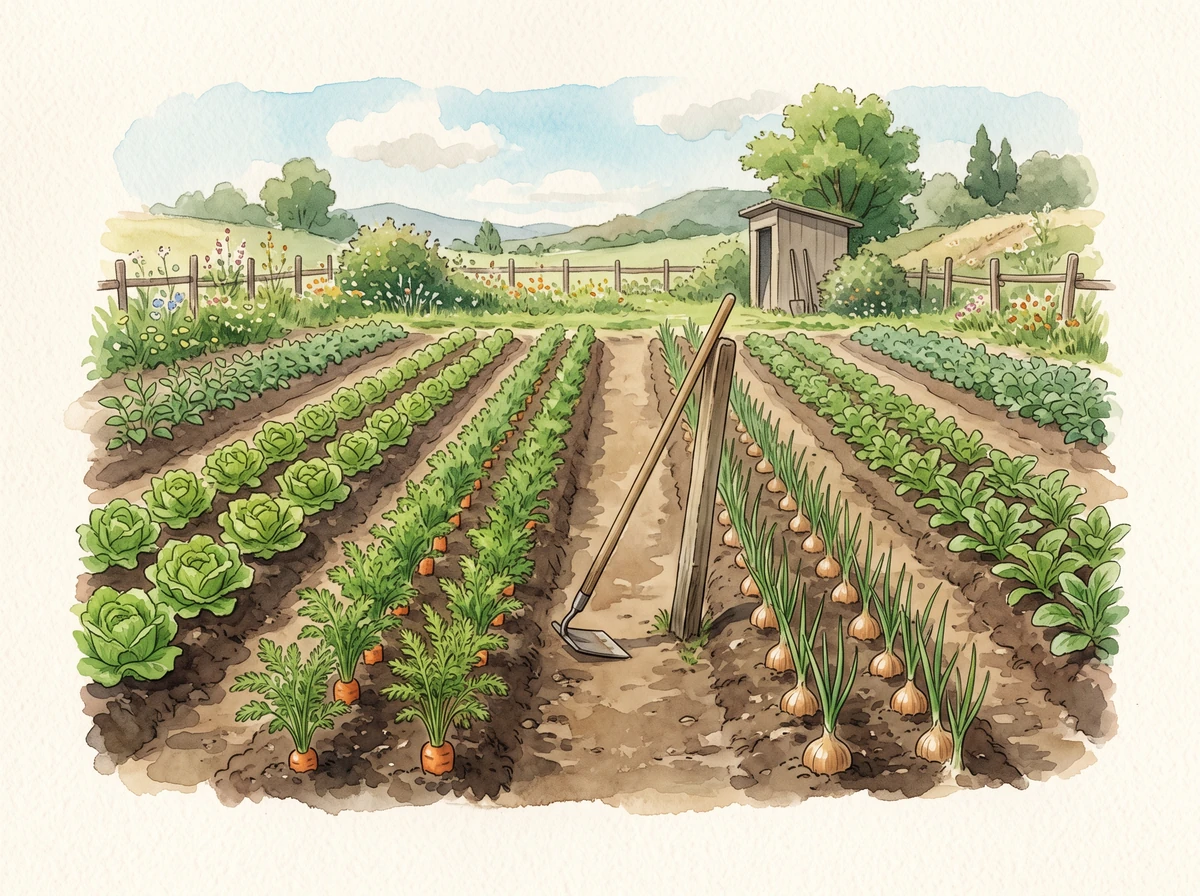
- Your soil is already fertile and drains well (you see worms when digging).
- You have plenty of space (from about 30 m², 323 sq ft).
- You do not mind bending your back.
- Budget: €0.
Advantages: the roots have no limit, the soil temperature is more stable in summer, deep rooting gives more drought resistance and everything is integrated into the biological system of the garden.
When to choose a raised bed
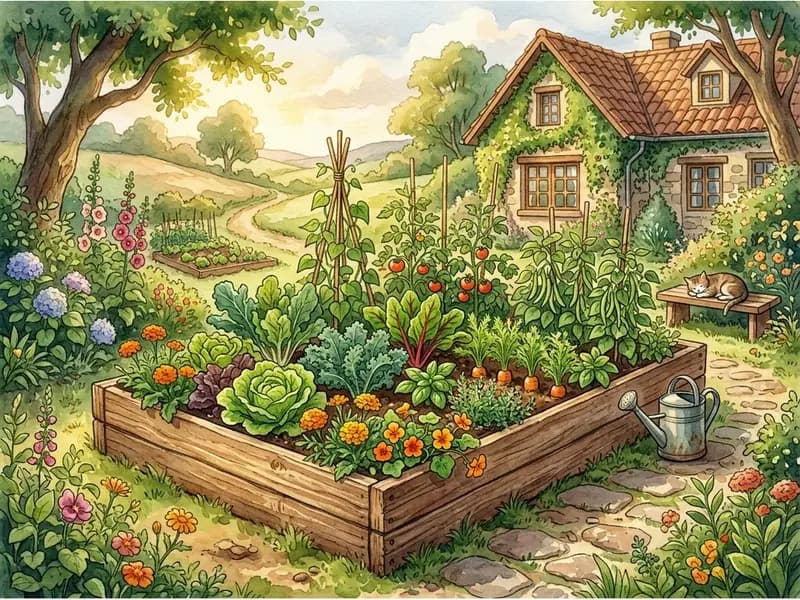
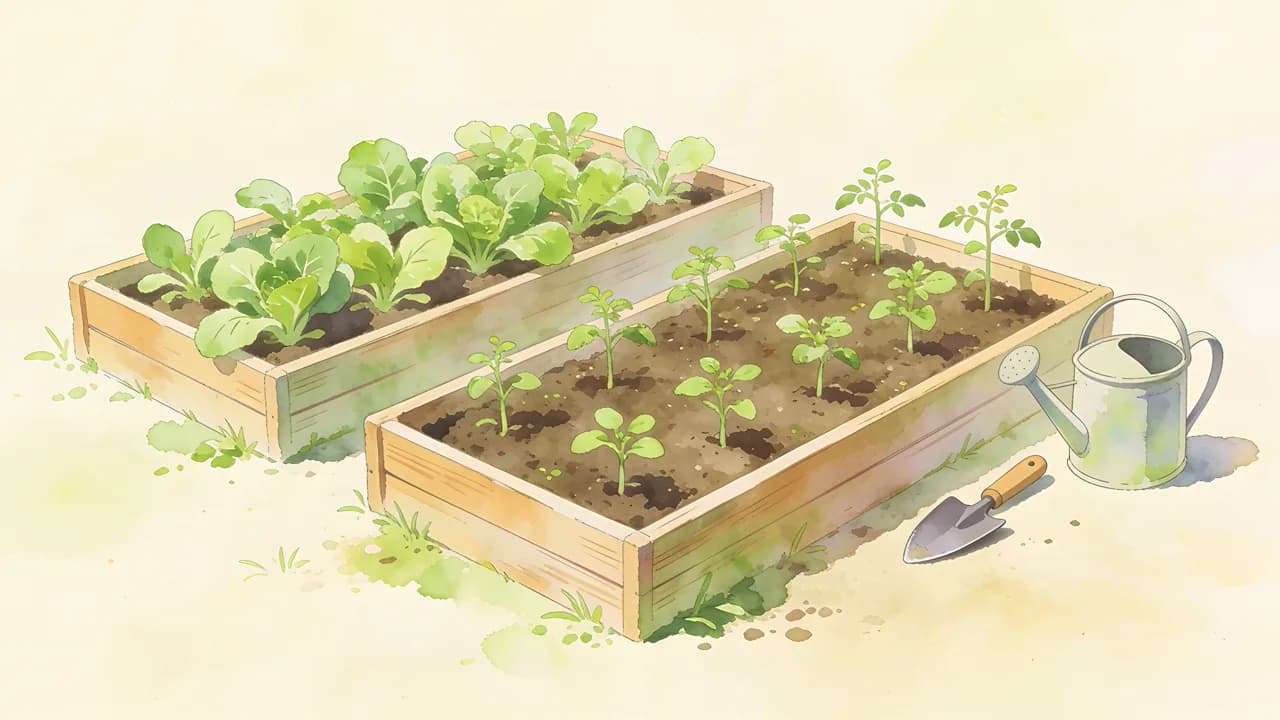
- Your soil is hard, clayey or poor (high water table, lots of stones).
- You have little space and want density.
- You have knee or back problems: you are not going to bend down.
- You live in a very rainy area: raised beds drain better.
- There are large trees or aggressive-rooted plants around. If you put the growing medium straight onto the soil, their roots will end up finding the compost and the watering. In that case it is worth reading trees and plants around the garden.
- Budget: from about €40 to €200 in materials.
Advantages: you completely control the growing medium (you fill it as you like), it drains better, it warms up sooner in spring (the harvest can come one or two weeks earlier), it does not compete with the garden's weeds and you bend down less.
Drawback: because it drains better and warms up more, it also dries out sooner, so in summer you will need to water more often than in the ground.
Recommended dimensions for a raised bed
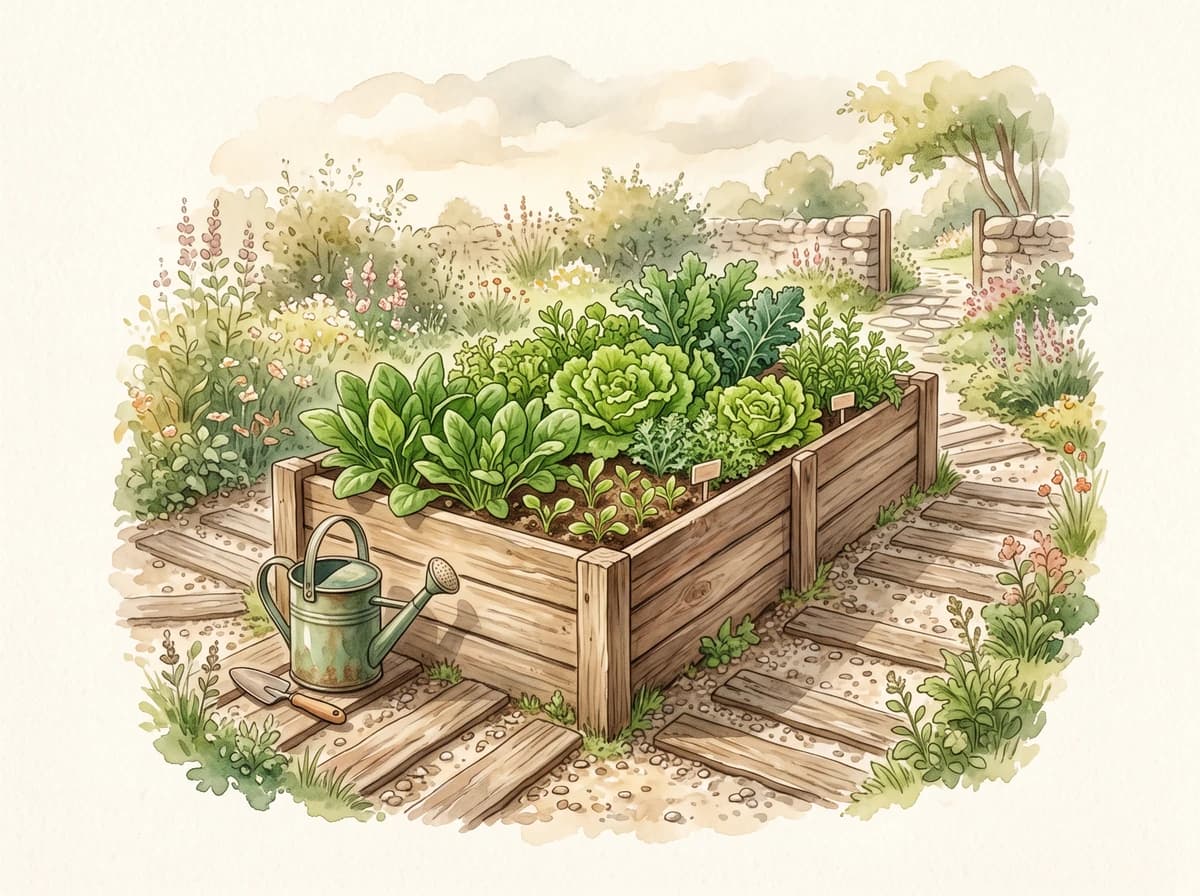
- Width: 60-120 cm (23.6–47.2 in). With 120 cm (47.2 in) you can reach the middle without stepping on it if you access from both sides; if you can only access from one, do not go beyond 60-80 cm (23.6–31.5 in).
- Length: whatever you like. 2-3 m (6.6–9.8 ft) is comfortable.
- Height: minimum 30 cm (11.8 in). If on a slab, 45-60 cm (17.7–23.6 in).
- Paths: minimum 50 cm (19.7 in) between beds, and 70-80 cm (27.6–31.5 in) if you want to pass with the wheelbarrow.
What to build it from
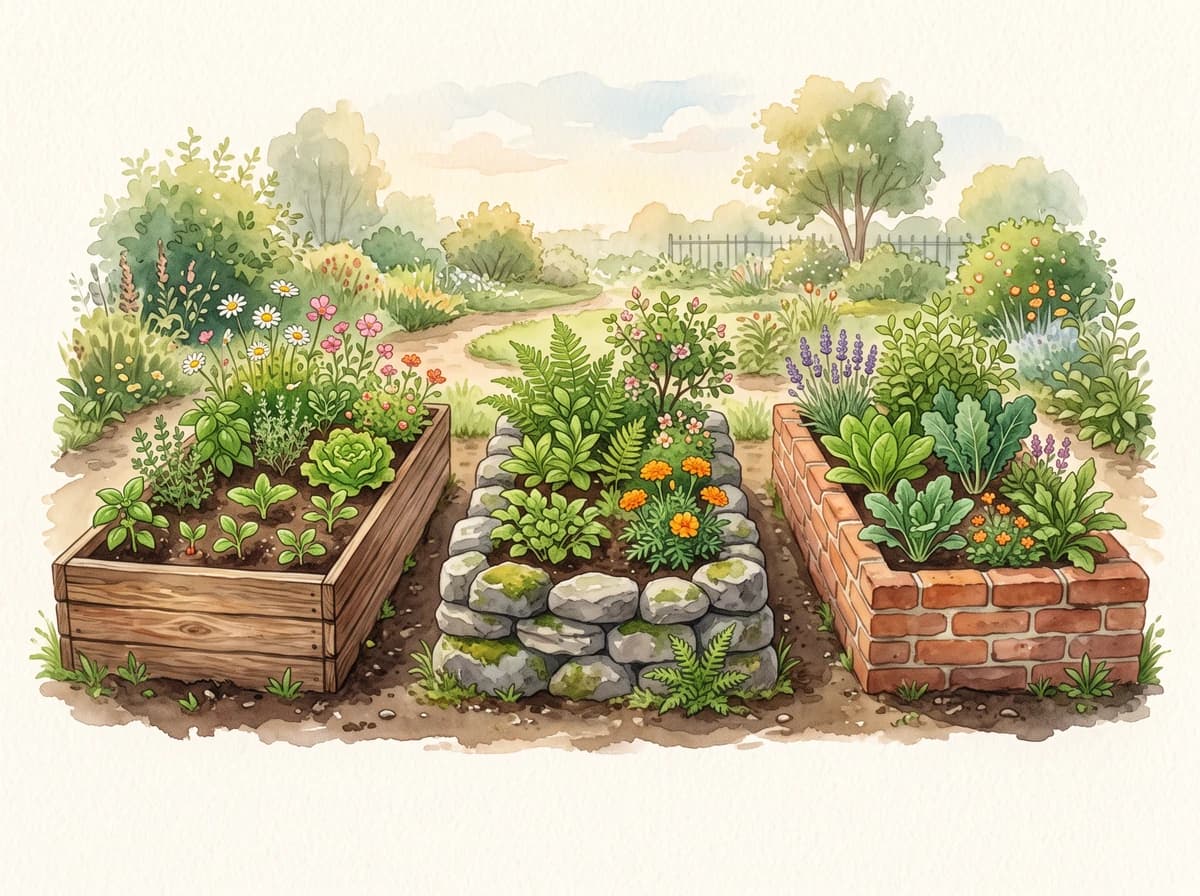
- Outdoor wood: it is the classic and lasts about 5-10 years. My recommendation is to use naturally durable wood, such as larch or chestnut, which carries no chemical preservatives. Autoclave-treated pine lasts well, but its preservatives (today almost always copper-based) can pass little by little into the soil; if you use it, avoid old timber of doubtful origin and line the inside with a sheet.
- Concrete or stone blocks: they last almost forever, but take up a lot of space.
- Recycled strawberry crates: free but only 1-2 seasons.
- Galvanised corrugated sheet: pretty and very durable, but beware of the heat the metal picks up in summer.
Avoid old railway sleepers (they carry creosote, which is toxic) and pallets that are not trustworthy: use only those marked “HT” (heat treatment) and discard those marked “MB” (methyl bromide).
Filling the bed (simplified hügelkultur method)
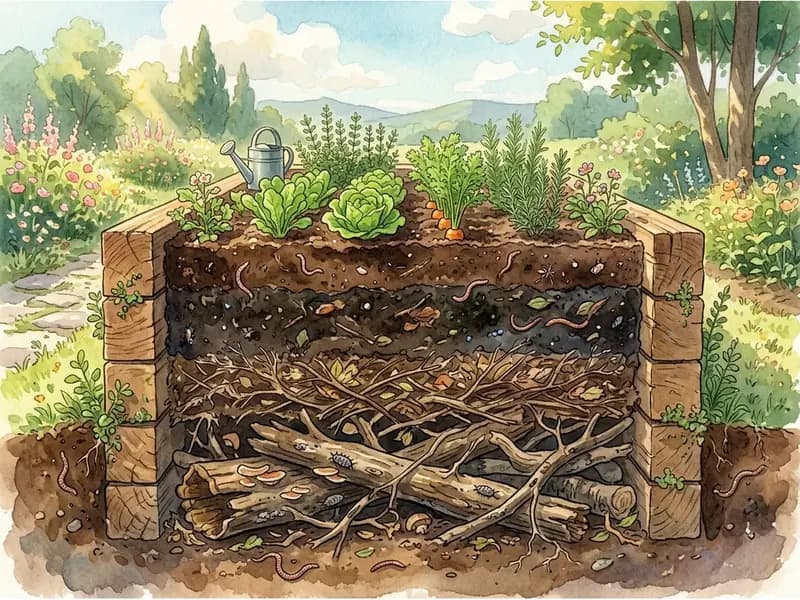
This layered filling is for a bed about 50 cm (19.7 in) high. From the bottom to the top:
- 20 cm (7.9 in) of branches and logs: they hold moisture and break down slowly.
- 10 cm (3.9 in) of dry leaves and straw: they supply carbon.
- 10 cm (3.9 in) of compost or very well-rotted manure: they supply nitrogen.
- 10-15 cm (3.9–5.9 in) of good topsoil: it is where the roots grow.
If your bed is only 30 cm (11.8 in), leave out the logs: put 5-10 cm (2–3.9 in) of fine branches and leaves, and the rest with soil mixed with compost. Over time the filling settles and sinks, so each season it is worth adding 3-5 cm (1.2–2 in) of compost on top and topping up from time to time to the rim.
Combination (what I do)
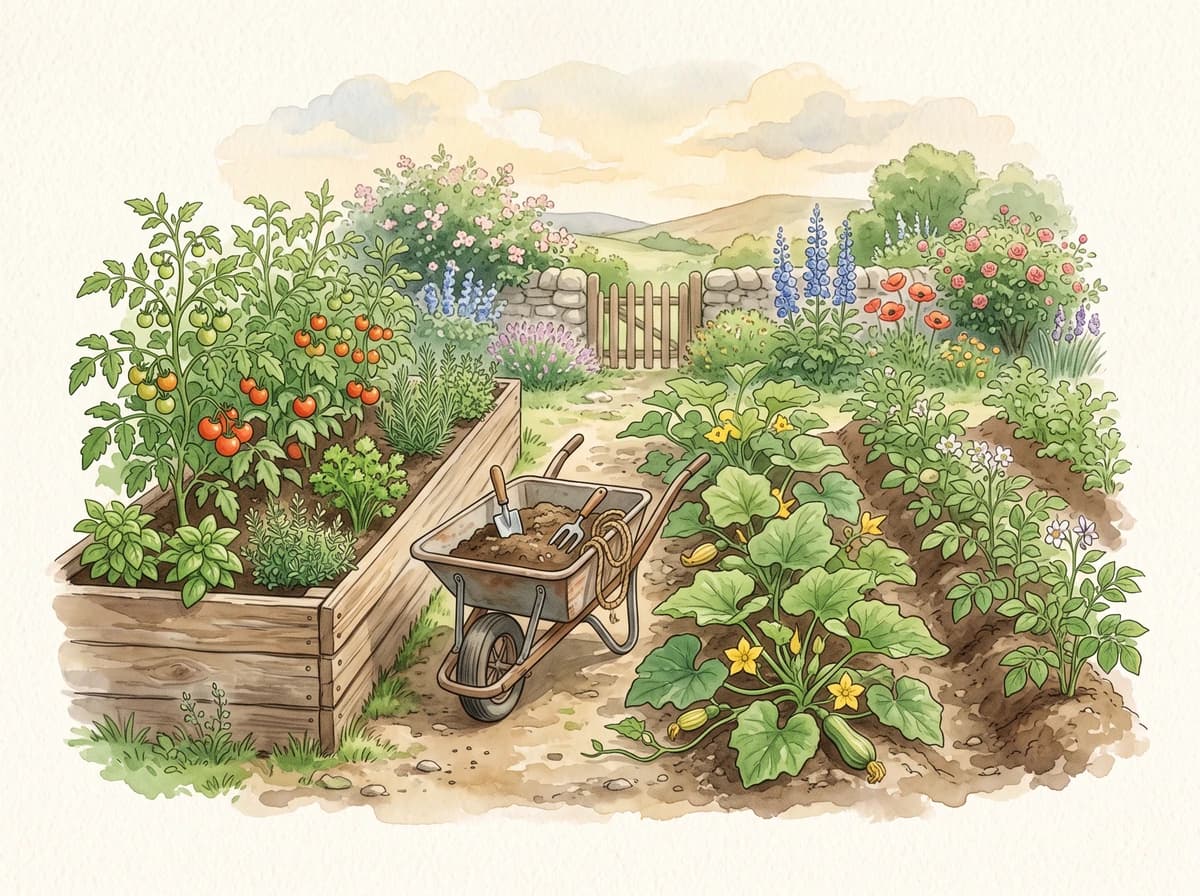
Direct soil for the big crops (pumpkin, maize, climbing bean) if the ground is decent. Raised beds for the delicate (herbs, leaves, seed trays). If in doubt, start with a single bed and expand as you see how it works in your garden.
Realistic budget
- 1 bed 100×200×30 cm (11.8 in): €40-70 in wood + €60-100 in growing medium/compost = ~€130 the first year. Then €15 a year in compost.
- Direct soil same size (2 m², 22 sq ft): €10-20 in compost. Then nothing.

Set it up by zones, elements and crops.