Credits and licences
- #1 — vueltaalhuerto illustration
- #2 — vueltaalhuerto illustration
- #3 — vueltaalhuerto illustration
- #4 — vueltaalhuerto illustration
- #5 — vueltaalhuerto illustration
- #6 — vueltaalhuerto illustration
- #7 — vueltaalhuerto illustration
- #8 — vueltaalhuerto illustration
- #9 — vueltaalhuerto illustration
- #10 — vueltaalhuerto illustration
Malabar spinach
and 3 more names
basella, Basella alba, Basella rubraMalabar spinach is sown in seed trays from March to April or directly outdoors from May to June, and planted out from May to June. It is harvested from June to October (about 60 days to the first harvest). Grow it in full sun, 30 cm apart, with plenty of watering. Dates are for a mild temperate climate in the northern hemisphere; the calendar below adjusts them to your zone.
What else to sow in March, April, May and June
A climbing leaf vegetable with thick, fleshy, glossy heart-shaped leaves that grows vigorously in the summer heat, when ordinary spinach has already bolted. In the tropics it is perennial; in Spain it is grown as an annual because it cannot survive the cold. There are green-stemmed forms and others with reddish-purple stems (sometimes called Basella rubra). The leaves and tender shoots are eaten raw or cooked and have a mild, slightly mucilaginous flavour. The dark purple berries stain and are not eaten. It is neither a true spinach (Spinacia oleracea) nor New Zealand spinach (Tetragonia tetragonioides).
Family and origin: Basella family (Basellaceae) · native to Tropical Asia (India and South-East Asia) · More plants from South Asia
01In your area
How will it do in your garden?
Year calendar
| Task | J | F | M | A | M | J | J | A | S | O | N | D |
|---|---|---|---|---|---|---|---|---|---|---|---|---|
| Seed trayMar–Apr | no | no | yes | yes | no | no | no | no | no | no | no | no |
| Direct sowingMay–Jun | no | no | no | no | yes | yes | no | no | no | no | no | no |
| Plant / transplantMay–Jun | no | no | no | no | yes | yes | no | no | no | no | no | no |
| HarvestJun–Oct | no | no | no | no | no | yes | yes | yes | yes | yes | no | no |
Its life cycle at a glance
Swipe and tap a stage to see its details.
02Planting
Where and how to plant it
Sow the seed 1 cm deep; leave 30 cm between plants and 60 cm between rows; give it a stake from the start.
30 cm between plants · 60 cm between rows
Seed at a depth of 1 cm; seedlings go in with the root ball level with the soil.
- In a square-foot bed
- 1 plant per square30 × 30 cm squares
- Transplanting
- May–Jun
- Seed tray
- Mar–Apr
- Direct sowing
- May–Jun
- TipGive it a stake, a string or a net: it climbs easily and grows upwards, which saves space in the vegetable garden.
- TipAvoid sowing too early: cold stops it dead.
- TipSow in succession, a little every two or three weeks, so you get tender leaves without everything maturing at once.
- Common mistakeSowing in heat and long days: many bolt as soon as temperatures rise; better in the cool seasons.
03Care
Care through the year
Sun and aspectFull sun · 8 h of sun · South or south-west, with nothing casting shade at midday
- Too little sun
- Ideal range
- Plenty of sun
South or south-west, with nothing casting shade at midday
Strong sun: Loves full midday sun and high temperatures.
Full sun and warmth; with less than about 6 hours of sun it grows slowly.
WateringConstantly moist · summer: daily or every 2 days above 30 °C
- Summerdaily or every 2 days above 30 °C3.5 L per plant/week
- Spring / Autumnevery 3-4 days1.6 L per plant/week
- Winterevery 2 weeks if dry0.4 L per plant/week
Constantly moist: The soil should always feel cool and damp. Ideal with mulch and drip irrigation. Mulch: straw or dry plant material cuts watering by 30-50 %.
Water often in summer so the leaves stay tender and do not turn fibrous. It accepts moist soil but needs good drainage, and appreciates a mulch.
When to water? Push your finger 2 cm into the soil next to the base of the plant:
- Damp: soil sticks to your finger. Do not water, although for this plant it is just right — check again tomorrow.
- Cool but clean, no mud. Water today: it likes to stay constantly moist.
- Dry and dusty. Water urgently and add mulch to hold in moisture.
Soil and feedingpH 6–7 · Rich, airy loam
Rich, airy loam.
40 % topsoil · 40 % well-rotted compost · 20 % perlite or sand.
Medium: moist but never waterlogged.
This plant prefers a pH between 6.0 and 7.0 (slightly acidic to neutral).
- Well-rotted compost every season and well-decomposed manure in autumn.
- Mulch with straw or dry plant material to hold moisture and smother weeds.
- Rotate crops: do not grow the same family in the same spot two years running.
- Compacted soil or unbroken clay can halve the harvest.
- Watering with a hose from above compacts the soil: drip irrigation or watering at the base is better.
Pruning
- TipFlower spikes appear in the heat; pinch them out if you do not want berries, because if you let them ripen the plant self-sows readily.
04Harvest
Harvesting and storing
Harvest in Jun–Oct; the first, about 60 days after sowing.
- TipDo not harvest the whole plant: pinch out the tips and the most tender leaves, and the plant will branch and keep cropping all summer.
- TipWater lightly and often, and harvest young or pick the outer leaves: it regrows and stays tender.
- Common mistakeLeaving the harvest too late: the leaves turn stringy or bitter.
05Propagation
Make new plants
It is propagated by seed and by stem cuttings. The seed has a hard coat: soak it for a few hours before sowing and sow in a seed tray with warmth, or directly once the soil is warm (above about 18 to 20 °C). Germination is rather slow. Stem cuttings of 15 to 20 cm root in water or moist soil within a few days, and are useful for getting plants earlier or for keeping a plant going through the winter in a pot.
Seeds: how to germinate them~14 days
06Uses and health
What it is used for, and with what care
Like ordinary spinach, it contains oxalates: if you have kidney stones or follow a low-oxalate diet, check with your doctor and eat only small amounts; blanching the leaves and discarding the water reduces the oxalates. Always wash the leaves. The purple berries stain clothes and skin and are not eaten. For dogs and cats, eating a lot of leaf can cause digestive upset.
- Properties
- A leaf with a high water content that provides vitamins A and C, fibre and minerals such as iron and calcium, although oxalates limit their absorption.
- Uses
- The leaves and tender shoots are eaten raw in salads, stir-fried, in soups, in omelettes or in any stew where spinach is used; when cooked they thicken the dish slightly because of their mucilage. In some places the berries are used as a colouring, but they are not eaten fresh.
For guidance only; this is not medical treatment and does not replace advice from a doctor or vet.
07Companions and related plants
What to plant it with
Good companions
Group it in the same bedPlants with the same watering or the same sun
They are not essential companions, but you will not have to water or position them differently.
Same watering · Lots of water
Compare with similar varieties
| Variety | Sowing | Harvest | Days | Spacing | Difficulty |
|---|---|---|---|---|---|
| Spinach | Feb–Mar, Sep–Oct | Apr–May, Nov–Dec | ~45 | 15 cm | Easy |
| New Zealand spinach | Mar–Jun | Jun–Oct | ~60 | 50 cm | Easy |
| Strawberry spinach | Mar–May, Sep–Oct | May–Oct | ~60 | 30 cm | Easy |
| Malabar spinach | Mar–Jun | Jun–Oct | ~60 | 30 cm | Easy |
08Pests and diseases
Critters and ailments to keep an eye on
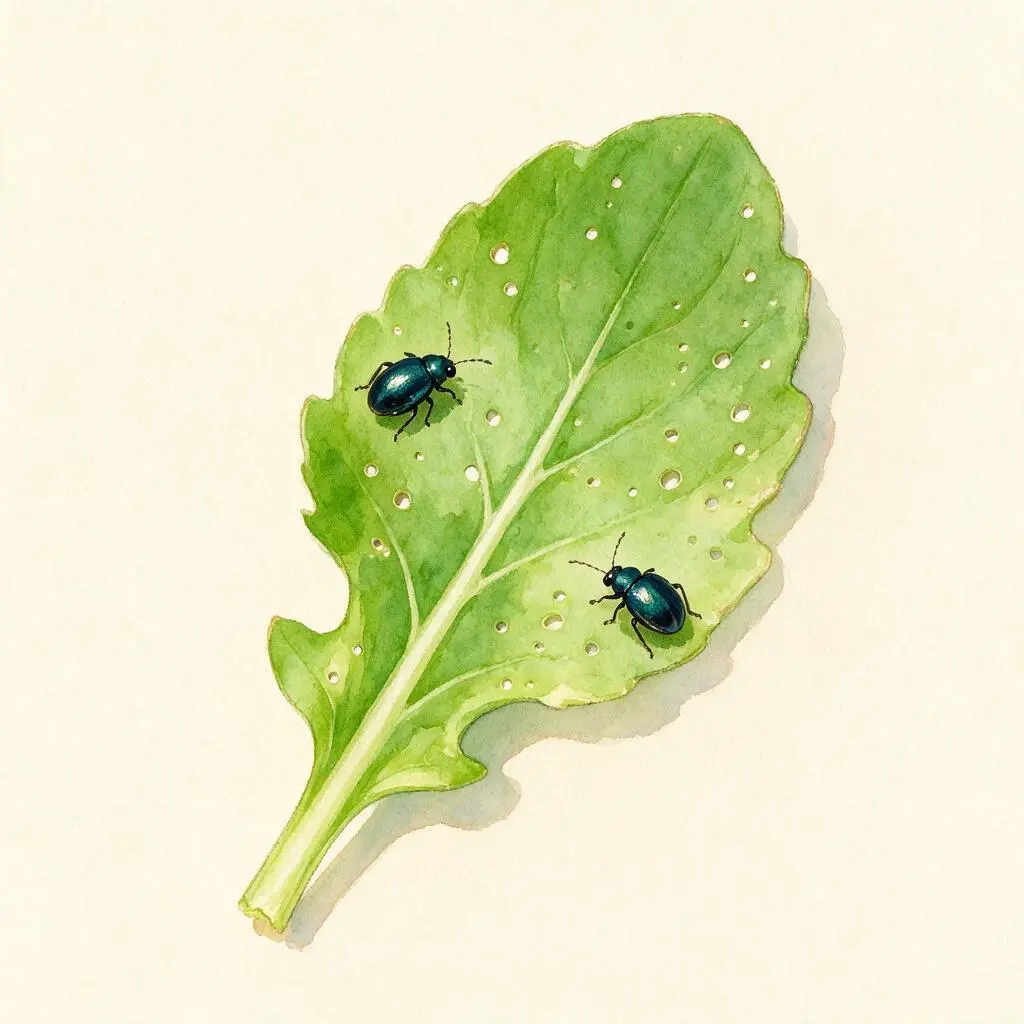
The most common ones on this plant. Tap one to see how to recognise it and what to do.