
Credits and licences
- #1 — vueltaalhuerto illustration
- #2 — vueltaalhuerto illustration
- #3 — vueltaalhuerto illustration
- #4 — vueltaalhuerto illustration
- #5 — vueltaalhuerto illustration
- #6 — vueltaalhuerto illustration
- #7 — vueltaalhuerto illustration
- #8 — vueltaalhuerto illustration
- #9 — vueltaalhuerto illustration
- #10 — vueltaalhuerto illustration
Ackee
and 1 more names
Blighia sapidaAckee is sown in seed trays from April to June, and planted out from April to June. Grow it in full sun, 800 cm apart, with moderate watering. Dates are for a mild temperate climate in the northern hemisphere; the calendar below adjusts them to your zone.
What else to sow in April, May and June
A tropical evergreen tree with a dense, rounded crown that reaches 10 or 20 m in its native lands, with compound leaves of three to five pairs of large, smooth, glossy leaflets, and hanging clusters of small, greenish-white, highly fragrant flowers. The fruit, reddish-orange and pear-shaped with three lobes, splits open on its own when ripe to reveal three shiny black seeds, each with a fleshy cream-coloured aril. In Jamaica this aril is a national ingredient, but the plant is highly toxic unless you know it well. It only thrives without frost, in the Canary Islands, on the warmest subtropical coast or in a large greenhouse, and in Spain it is a collector's rarity. Do not confuse it with other edible members of the soapberry family (Sapindaceae), such as lychee or longan, which are different plants. LEGAL AND SAFETY NOTICE: the unopened fruit, unripe fruit, overripe fruit, the seeds and the pink part of the aril contain hypoglycin, a substance that causes vomiting and a dangerous drop in blood sugar, and which has caused deaths. Do not plant it if there are small children or pets around, do not eat any part of it and do not grow it for its fruit. If anyone has swallowed any part of it, in Spain call the Toxicology Information Service (91 562 04 20) or 112 immediately; if it was a pet, go to the vet without waiting for symptoms to appear. It is not listed in the Spanish Catalogue of Invasive Alien Species (Real Decreto 630/2013) or in the CITES appendices.
Family and origin: Soapberry family (Sapindaceae) · native to West Africa, from Senegal to Cameroon; grown for centuries in Jamaica and other Caribbean islands · More plants from Africa
01In your area
How will it do in your garden?
Year calendar
| Task | J | F | M | A | M | J | J | A | S | O | N | D |
|---|---|---|---|---|---|---|---|---|---|---|---|---|
| Seed trayApr–Jun | no | no | no | yes | yes | yes | no | no | no | no | no | no |
| Plant / transplantApr–Jun | no | no | no | yes | yes | yes | no | no | no | no | no | no |
| PruningMar–Apr | no | no | yes | yes | no | no | no | no | no | no | no | no |
Its life cycle at a glance
Swipe and tap a stage to see its details.
02Planting
Where and how to plant it
Sow the seed 3 cm deep; leave 8 m between plants and 9 m between rows.
8 m between plants · 9 m between rows
Seed at a depth of 3 cm; seedlings go in with the root ball level with the soil.
- In a square-foot bed
- 1 plant every 729 squares30 × 30 cm squares
- Transplanting
- Apr–Jun
- Seed tray
- Apr–Jun
- Germination
- ~25 days
03Care
Care through the year
Sun and aspectFull sun · 8 h of sun · South or south-west, with nothing casting shade at midday
- Too little sun
- Ideal range
- Plenty of sun
South or south-west, with nothing casting shade at midday
Strong sun: Loves full midday sun and high temperatures.
Full sun and gentle warmth. It is very sensitive to cold: young plants suffer below 0 °C and mature trees can die at around -3 °C, so in Spain it can only be kept outdoors in frost-free areas or in a large, protected pot. The cold-tolerance figures are approximate, because there have been almost no trials in our climate.
WateringMoist but never waterlogged · summer: every 2-3 days
- Summerevery 2-3 days30 L per tree/week
- Spring / Autumnevery 4-5 days15 L per tree/week
- Winterevery 2-3 weeks4.5 L per tree/week
Moist but never waterlogged: Water before the surface is completely dry. Never puddles. Mulch: straw or dry plant material cuts watering by 30-50 %.
Water regularly for the first few years, keeping the potting mix moist but not waterlogged. After that, water less often but more deeply. It needs deep, loose soil, rich in organic matter and well drained.
When to water? Push your finger 3 cm into the soil next to the base of the plant:
- Damp: soil sticks to your finger. Do not water today. The moisture is fine.
- Cool but clean, no mud. Water early tomorrow if it stays like this, or this evening.
- Dry and dusty. Water now, and deeply. This is not where it likes to be.
Soil and feedingpH 6–7.5 · A deep planting hole and well-drained soil
A deep planting hole and well-drained soil.
The site's own topsoil + 1/3 well-rotted compost + a handful of sand if there is clay.
Good: prolonged waterlogging rots the roots.
This plant prefers a pH between 6.0 and 7.5 (slightly acidic to slightly alkaline).
- Dig a hole at least 60×60×60 cm before planting.
- A thick mulch around the tree (not touching the trunk) reduces water stress.
- Spread compost on the surface every autumn; never bury the graft union.
- A narrow hole in hard ground: the roots end up trapped as if in a pot.
- Burying the graft encourages rot and takes vigour away from the rootstock.
- TipIf you decide to grow it as a botanical curiosity or shade tree in a frost-free climate, plant it in spring in a sheltered spot, in deep, loose soil, or in a very large pot with drainage.
- Common mistakeDo not bury the graft union (the bulge on the trunk): if it ends up below ground it rots. Leave it a little above the soil.
Common mistakes and tips
- TipTemperatures, germination times and time to fruiting are approximate.
04Harvest
Harvesting and storing
- TipDo not pick or handle the fruits and remove any that fall to the ground, wearing gloves and keeping them out of reach of children and pets; we do not give instructions for eating them.
- TipA good mulch and drip irrigation in summer make all the difference to the harvest.
05Propagation
Make new plants
It is propagated by seed and by grafting. The seeds, which are toxic, must be fresh because they soon lose viability, and in warmth they germinate in about three or four weeks; seedling trees are variable and take about four or five years to fruit. Grafted trees, bud-grafted or cleft-grafted onto a young seedling rootstock, can fruit in one or two years, as a rough guide. The most sensible option is to buy a nursery-grown tree. Always handle the seeds with gloves, wash your hands afterwards and keep them out of reach of children and animals.
Seeds: how to germinate them~25 days
06Uses and health
What it is used for, and with what care
SERIOUS WARNING: a highly toxic plant. The unopened or unripe fruit, overripe fruit, the seeds and the pink part joining the aril to the seed contain hypoglycin A (and B in the seeds), which blocks glucose production and causes severe vomiting, hypoglycaemia, seizures, coma and, in serious cases, death (so-called 'Jamaican vomiting sickness'). Children and malnourished people are the most vulnerable. The seeds are always toxic. Do not plant it where there are small children or pets, do not pick the fruits and, if anyone has eaten any part of it, in Spain, call 112 or the Toxicology Information Service (91 562 04 20) and go to A&E; for an animal, go to the vet. Do not confuse it with lychee or longan, which are other members of the soapberry family (Sapindaceae).
- Properties
- It is an ornamental and shade tree for tropical climates. It has no home medicinal use and none is recommended.
- Uses
- Do not grow it for food: do not eat any part of this plant. In Jamaica only the creamy, ripe aril of fruits that have opened on their own on the tree is used; the unopened, unripe or overripe fruit, the seeds, the pink membrane joining the aril to the seed and the rest of the plant are highly toxic. We do not give preparation instructions.
For guidance only; this is not medical treatment and does not replace advice from a doctor or vet.
07Companions and related plants
What to plant it with
Good companions
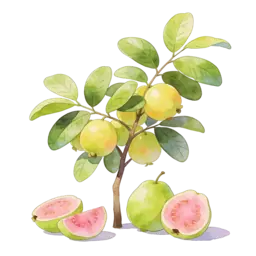
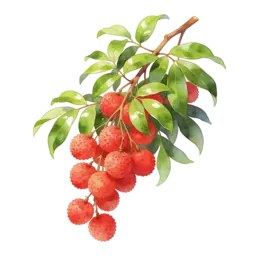
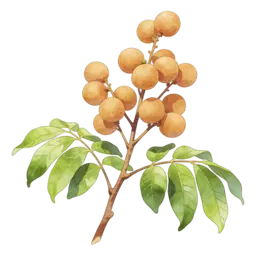
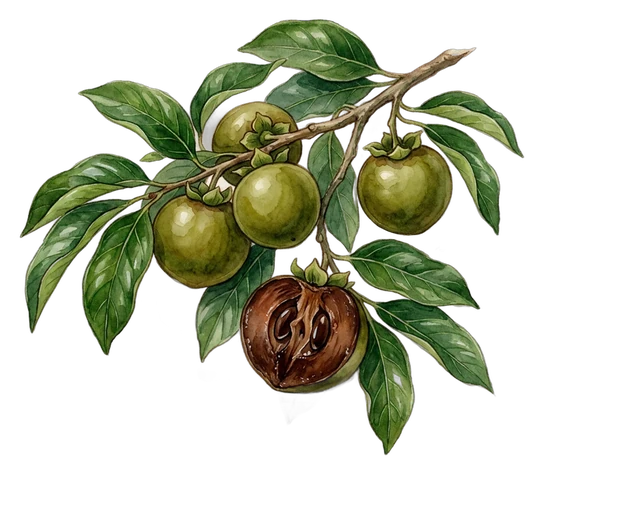
Group it in the same bedPlants with the same watering or the same sun
They are not essential companions, but you will not have to water or position them differently.