
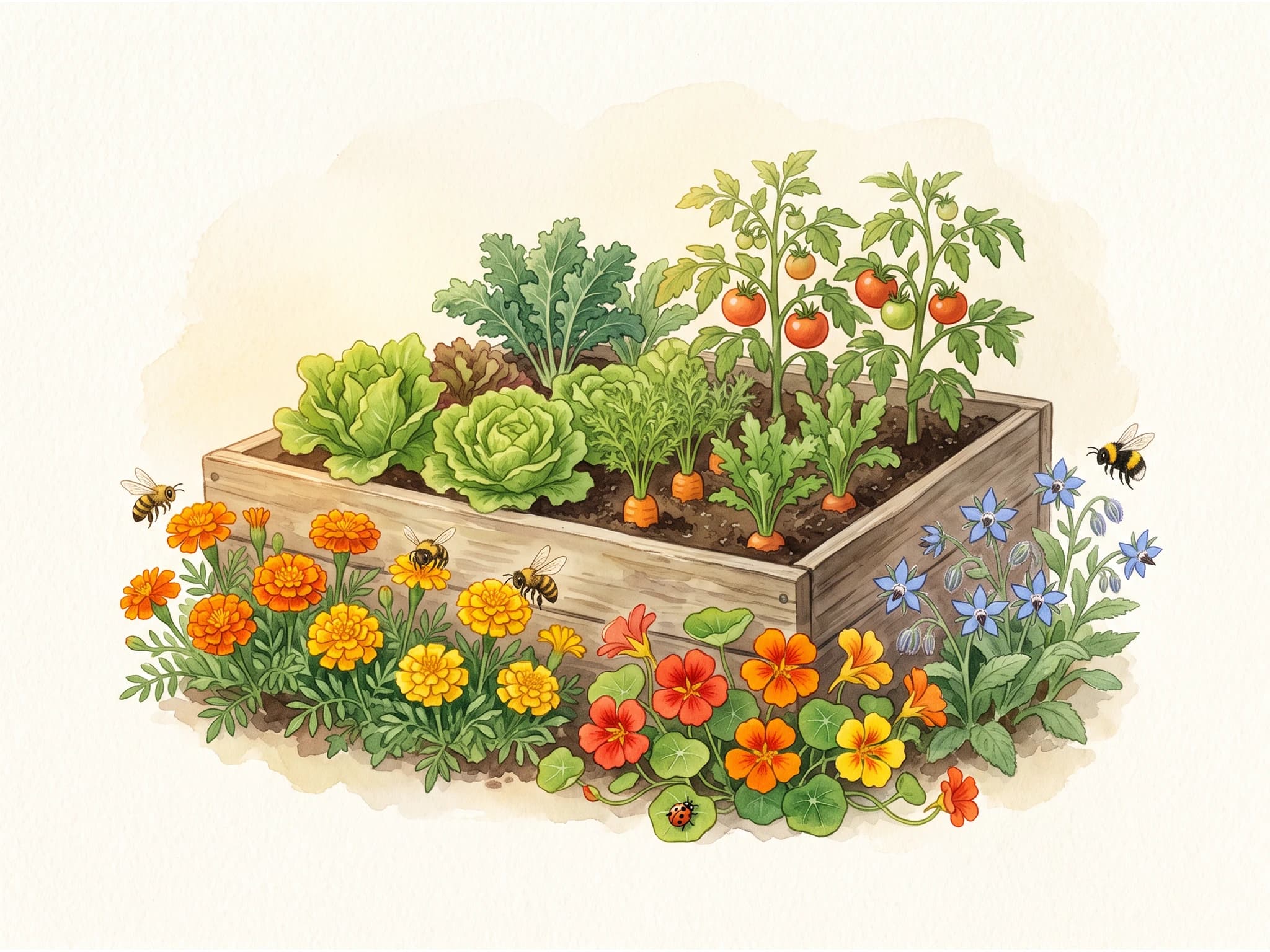
In this article (21 sections)
- 1. Why planting flowers among vegetables works
- 2. The four reasons to put a flower in the bed
- 3. Complete table: which flower, with which plant, for what
- Calendula (Calendula officinalis)
- Nasturtium (Tropaeolum majus)
- Marigold / French marigold (Tagetes patula)
- Borage (Borago officinalis)
- Phacelia (Phacelia tanacetifolia)
- Dill, fennel and flowering coriander
- Rosemary, thyme and sage
- Lavender
- Sunflower (dwarf for small beds)
- Sweet alyssum (Lobularia maritima)
- Yarrow (Achillea millefolium)
- Chamomile
- Cosmos, zinnia and verbena
- 4. Classic vegetable + vegetable combinations (as a bonus)
- 5. What to avoid: common antagonisms
- 6. How to design flower strips in your bed
- 7. Continuous flowering calendar
- 8. What not to do
Putting flowers among the vegetables is not just decoration. Each species offers nectar and pollen to a particular kind of helpful insect, and some can distract certain visitors or improve the soil. This guide goes from the general (why companion planting works) to a concrete review of which flower to plant with which crop and what it is for. Keep in mind that the best-proven effects are those of attracting beneficial insects; those of repelling visitors are more modest, and I will point that out as I go.
1. Why planting flowers among vegetables works
A garden of vegetables alone is a very poor dining room for helpful insects. Most vegetables (lettuce, chard, potato...) hardly flower before being harvested, or their flower is small and unshowy. With no nectar or pollen for most of the year, beneficial insects, both the ones that pollinate and the ones that hunt visitors, have no reason to stay.

Flowers solve three things at once:
- They feed pollinators (bees, bumblebees, butterflies), which you need so that courgette, cucumber, strawberry or bean sets fruit.
- They feed and shelter predators of crop-nibbling insects. The larvae of hoverflies and lacewings devour aphids, but the adults live on nectar and pollen, so without flowers they go off to another garden. Ladybirds, on the other hand, eat aphids as adults too, although they also make use of pollen and nectar when prey is scarce.
- Some can distract or confuse certain visitors, either through their scent or because the visitor prefers them to your vegetable (what is called a "trap plant"). This effect is the least certain of the three.

This technique is called companion planting, and flowers are one more piece of it, along with rotation and the vegetable-with-vegetable combinations you already know.
2. The four reasons to put a flower in the bed
Before going through each flower, it is worth distinguishing what it is for, because not all of them do the same thing:
- Attracting pollinators, so more fruit sets (tomato, courgette, cucumber, strawberry, bean...).
- Attracting predators and parasitoids of crop-nibbling insects, which give free biological control of aphids, whitefly or caterpillars.
- Trap plant: a flower that a specific visitor likes more than your vegetable, so it concentrates on it and leaves the harvest in more peace.
- Repellent: the plant's scent may confuse or drive away some visitor. It is the function with the least scientific backing.
One flower can fulfil several functions at once. Calendula, for example, attracts predators and is also said to work as a trap plant.
3. Complete table: which flower, with which plant, for what
Calendula (Calendula officinalis)


- Profile: Calendula
- Attracts: hoverflies, ladybirds and bees.
- Main function: a lure for aphid predators. It is also credited with a trap plant effect, although studies on this are scarce.
- Plant it next to: tomato, pepper, aubergine and any vegetable prone to aphids.
- Why it works: its open flowers feed hoverflies and other predators, which then stay to hunt aphids on nearby crops. If aphids settle on the calendula, it is a good sign: there they will find their natural predators.
Nasturtium (Tropaeolum majus)
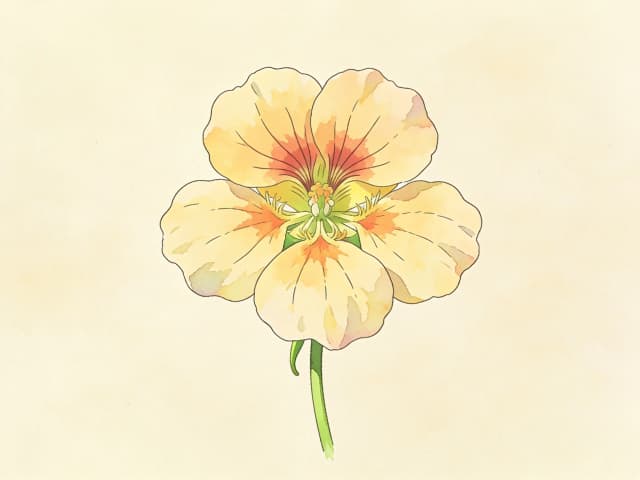

- Profile: Nasturtium
- Attracts: aphids (yes, it attracts them, and that is the point) and butterflies, including the cabbage white.
- Main function: trap plant, especially against black aphid.
- Plant it next to: courgette, bean and broad bean, crops that suffer a lot from black aphid.
- Why it works: aphids prefer it to many vegetables, so they concentrate on it and you can cut and remove the most affected stems without touching the crop. Its effect is not as well proven as that of other flowers in this guide, and it works better as a complement than as the only defence. Its leaves and flowers are edible, with a peppery taste similar to watercress.
Marigold / French marigold (Tagetes patula)

- Profile: French marigold
- Attracts: few helpful insects; it is not its strong point.
- Main function: reducing soil nematodes. Marigold roots release compounds that affect them, but field trials are mixed, so don't expect miracles. Its scent is also said to drive away whitefly, but I have not found studies that confirm it.
- Plant it next to: tomato and pepper. If you have had nematode problems (roots with knots or galls), grow marigolds in that area for a full season before the next crop.
Borage (Borago officinalis)
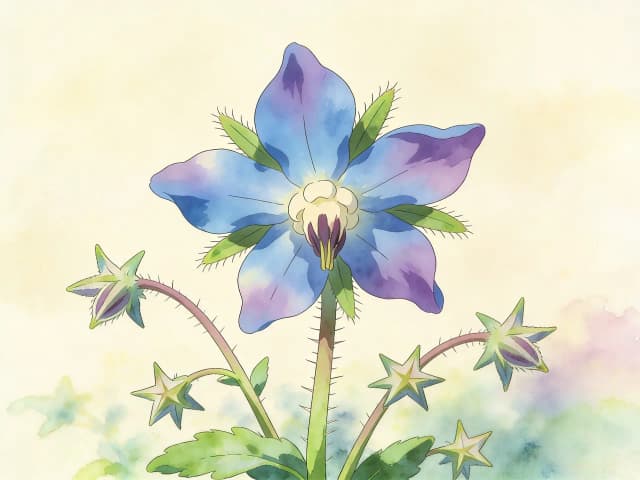

- Profile: Borage
- Attracts: bees and bumblebees in large numbers; it is one of the flowers with the most nectar in the garden.
- Main function: pollination. It is a classic companion of tomato and strawberry for that reason.
- Plant it next to: tomato, strawberry and courgette, or any crop that depends on pollinators to set fruit.
- Extra: it self-seeds easily (watch that it doesn't spread too much) and its blue flowers are edible.
Phacelia (Phacelia tanacetifolia)
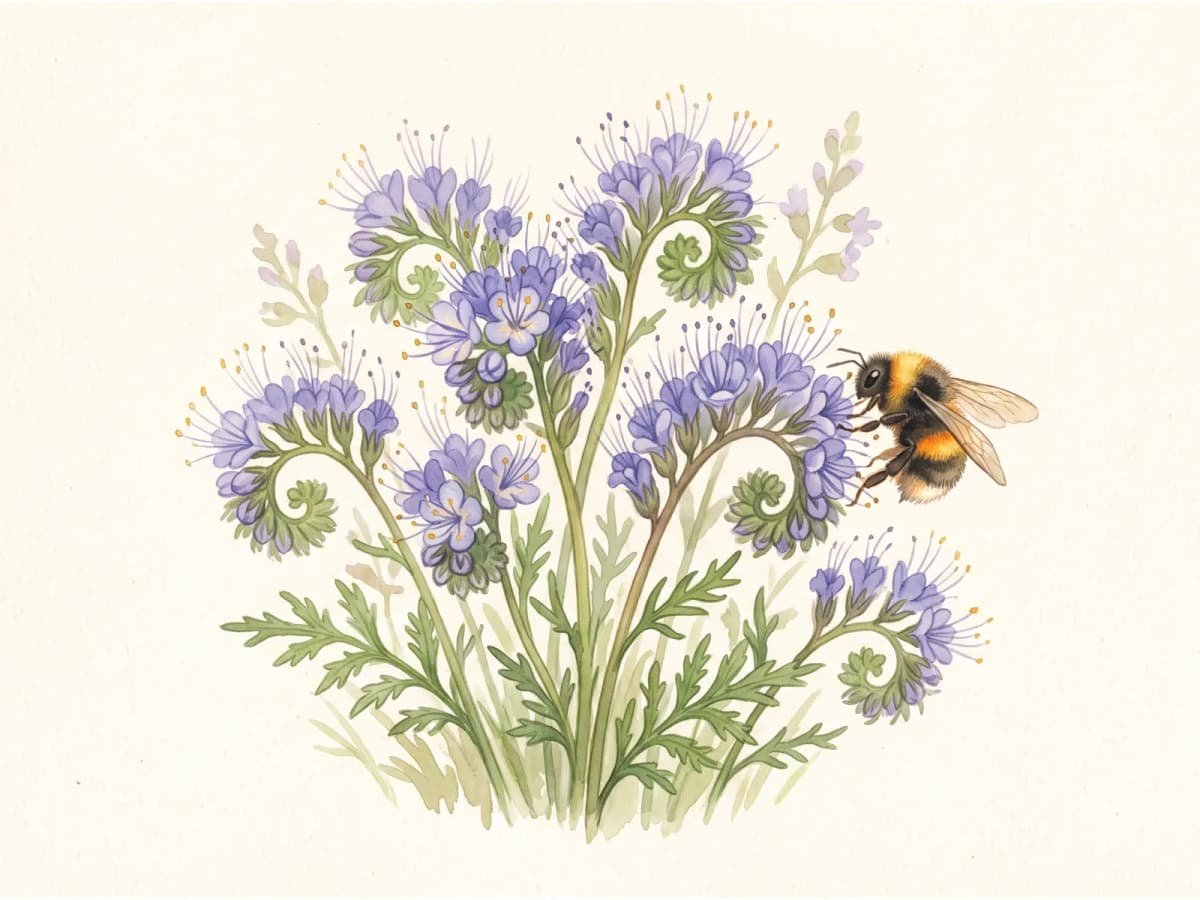
- Profile: Phacelia
- Attracts: bumblebees and bees in large numbers, as well as hoverflies and lacewings. It is one of the most nectar-generous flowers.
- Main function: pollination and a lure for predators. It is also used as a green manure, to improve the soil between crops.
- Plant it next to: edging the whole bed or as a strip between rows. It works better over wide areas than plant by plant.
Dill, fennel and flowering coriander
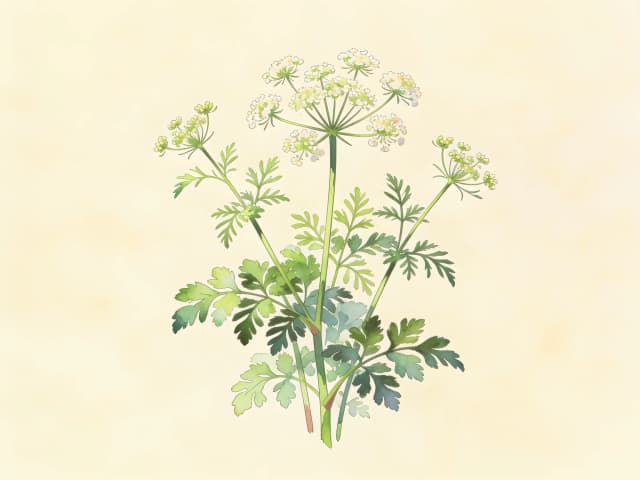
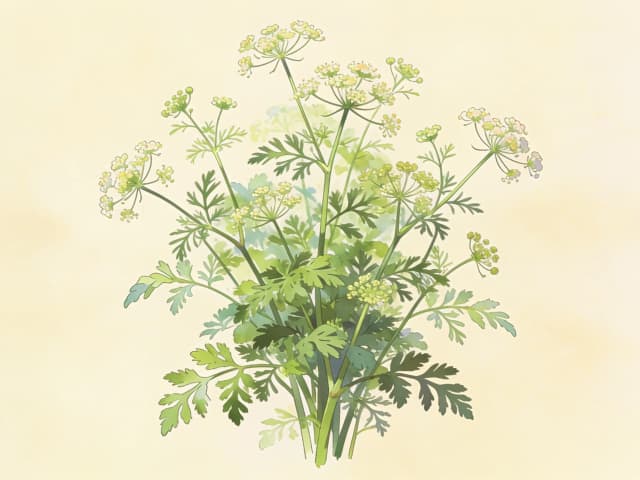
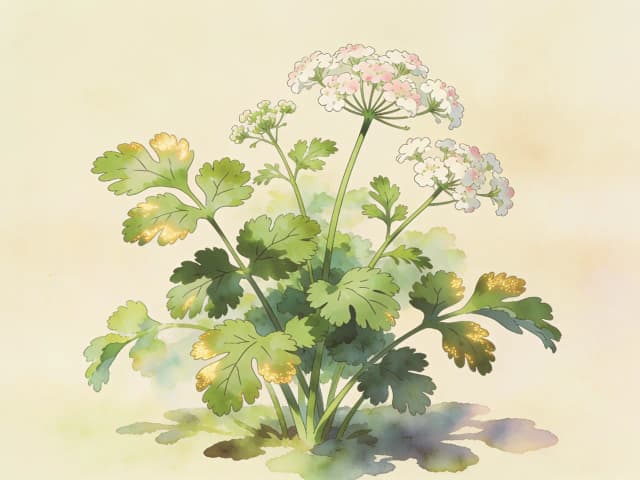

- Profiles: Dill · Fennel · Coriander
- Attracts: hoverflies and parasitoid wasps, drawn by the small umbel-shaped flowers typical of this family (the umbellifers).
- Main function: biological control of aphids. Hoverfly larvae feed on aphid colonies, and parasitoid wasps lay their eggs inside aphids and caterpillars.
- Plant them next to: the areas where you have recurring problems with aphids or small caterpillars. Let some plants flower instead of cutting them all for the kitchen.
- Watch out with fennel: it is usually recommended to keep it away from other vegetables because it may slow the germination of nearby seeds. There are few studies that confirm it, but to be on the safe side put it on an edge and not intercropped.
Rosemary, thyme and sage
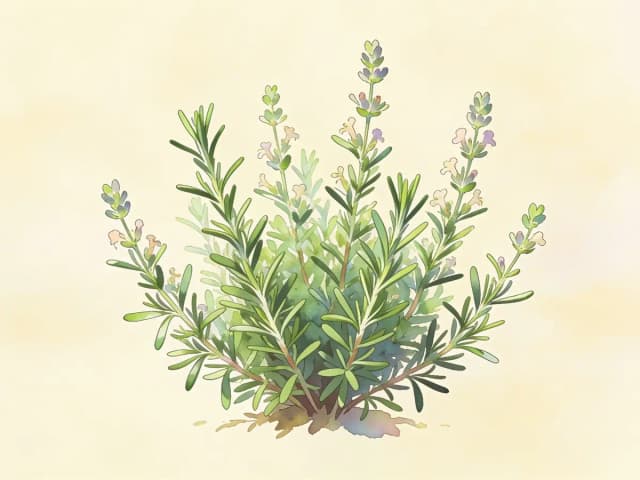

- Profiles: Rosemary · Thyme · Sage
- Attracts: bees, for their nectar-rich flowers. Rosemary flowers from late winter and is a very valuable source when almost nothing else is in bloom.
- Main function: pollination. Their intense aroma is said to be able to confuse some visitors, but that effect is modest and variable.
- Plant them: as a low hedge around the garden's perimeter. Near brassicas they can help disorient the cabbage white butterfly, although they don't eliminate it.
Lavender
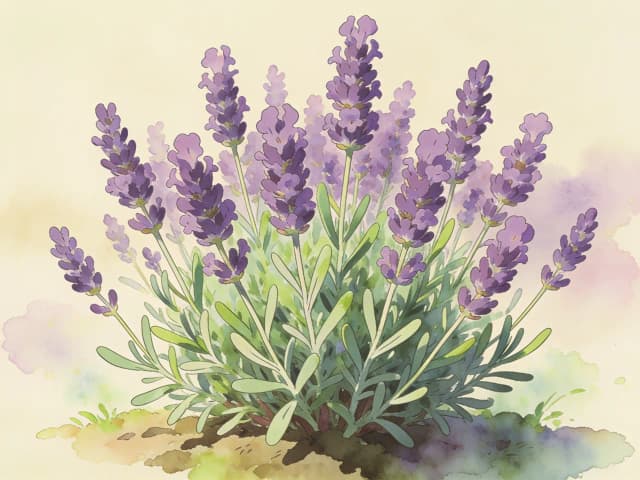
- Profile: Lavender
- Attracts: bees and bumblebees en masse when it flowers, between late spring and summer.
- Main function: pollination. Its aroma can disorient some visitors, but the effect is mild and should not be counted on.
- Plant it: around the perimeter or on the edges of the bed. It is perennial and woody, so it is best not to intercrop it among annual vegetables that you will turn over each season.
Sunflower (dwarf for small beds)
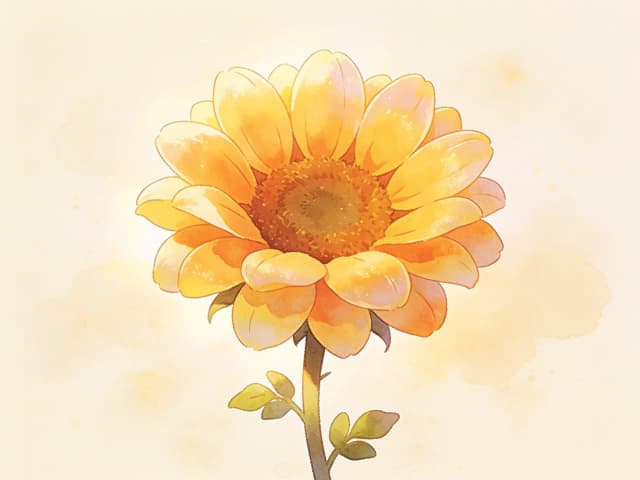
- Profile: Dwarf sunflower
- Attracts: bees, bumblebees and, when they set seed, birds (a nice extra in autumn if you let a head or two dry).
- Main function: pollination. Aphids sometimes concentrate on its stem, which relieves the neighbouring vegetables. It also gives light shade to crops that welcome it in high summer.
- Plant it: next to corn, bean and squash (some call it the "fourth sister" of that classic combination) or as a windbreak around the perimeter, on the north side so it doesn't cast shade.
Sweet alyssum (Lobularia maritima)
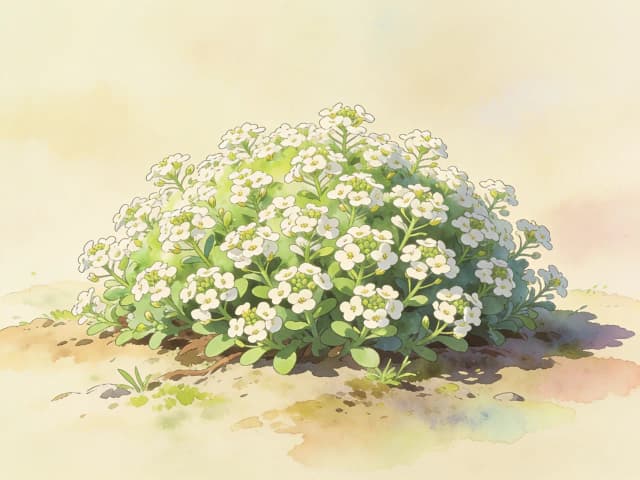

- Profile: Sweet alyssum
- Attracts: hoverflies and parasitoid wasps. It is one of the best-studied flowers for biological control, thanks to its almost continuous flowering and its tiny flowers, perfect for small insects.
- Main function: biological control of aphids.
- Plant it: as a low border for any bed, because it stays small and casts no shade. A warning: in one study with cabbages it increased flea beetle damage, so on brassicas keep an eye on this visitor.
Yarrow (Achillea millefolium)
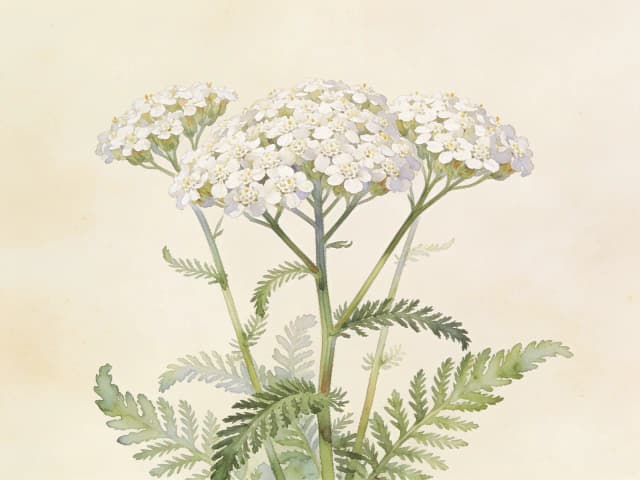
- Profile: Yarrow
- Attracts: hoverflies, ladybirds and parasitoid wasps.
- Main function: a lure for predators. It is also said that its roots enrich the soil for neighbouring plants, but this is not proven.
- Plant it: around the perimeter; it is perennial and hardy.
Chamomile
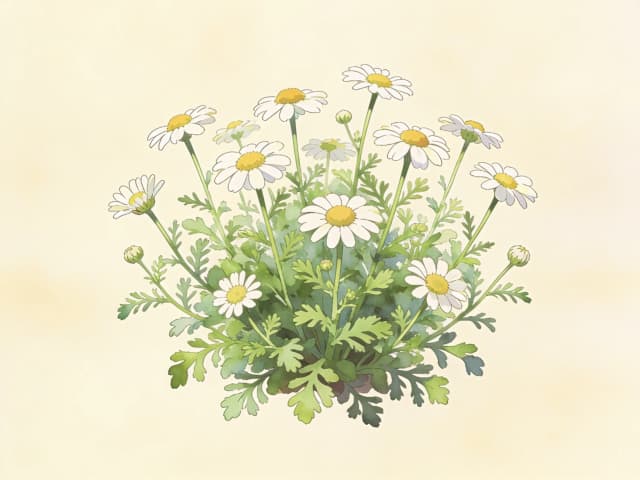

- Profile: German chamomile
- Attracts: hoverflies, parasitoid wasps and bees.
- Main function: biological control. Among gardeners it also has a reputation for improving the health of neighbouring plants, something science has not proven.
- Plant it next to: onion and cabbage, a traditional combination in old-fashioned gardens.
Cosmos, zinnia and verbena
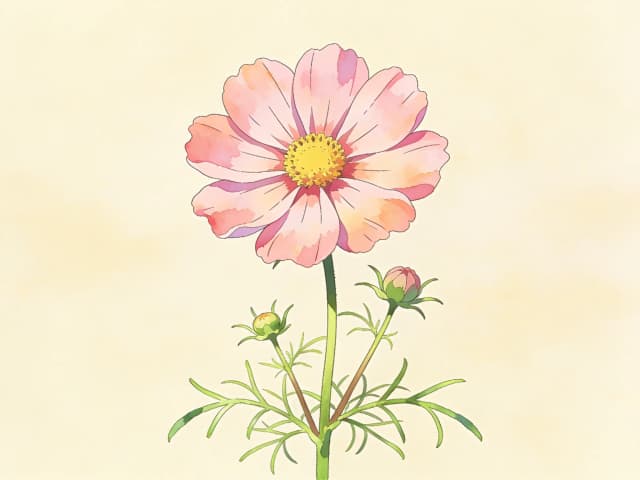
- Profiles: Cosmos · Zinnia · Verbena
- Attracts: butterflies, bees and hoverflies. They are generalist flowers with a long flowering period, from June until the first frosts, which keep food available when other flowers have already finished.
- Main function: extending the nectar season, filling the gap of late summer and autumn.
- Plant them next to: any crop; they are among the easiest and most rewarding flowers, and they need no special care.
4. Classic vegetable + vegetable combinations (as a bonus)

Companion planting is not only with flowers. These time-honoured combinations are based on the same principle: attracting helpful insects, confusing visitors or making better use of space and soil.
- Tomato + basil: it is a very widespread tradition and they go well together in the kitchen. Basil is said to drive away whitefly and thrips, but the effect is limited.
- Carrot + leek (or onion): the carrot fly finds the crop by smell, and the smell of onion or leek can throw it off. It reduces the damage, but doesn't prevent it entirely.
- Corn + squash + bean ("the three sisters"): the corn acts as a support for the climbing bean, the bean enriches the soil with nitrogen over time and the squash covers the ground, holds back weeds and keeps moisture in.
- Cabbage + celery or dill: umbellifers in flower attract the natural predators of cabbage caterpillars.
Each variety profile in the catalogue has its own "Planting companions" section with the specific combinations for that plant. This guide explains the general reasons behind those recommendations.
5. What to avoid: common antagonisms

Not everything goes well together. These are the best-known cases:
- Fennel: ideally grow it in an isolated corner. It is credited with a negative effect on neighbouring seeds and seedlings, although it is little studied.
- Garlic or onion next to bean or pea: tradition says alliums hold back legumes. It is a much-repeated recommendation in organic gardening, and to be on the safe side it is best to respect it.
- Potato next to tomato (and other nightshades): they share visitors and diseases, such as blight and the Colorado potato beetle, so putting them together encourages spread. For the same reason it is best not to repeat nightshades in the same bed two years in a row.
- Very tall plants next to full-sun crops: here there is no "chemical incompatibility"; they simply take away the light. Bear it in mind when choosing according to the plant's final height.
6. How to design flower strips in your bed

You don't need to plant one flower per vegetable. It works better to think in terms of flower strips or borders that serve the whole bed at once:
- Low border (alyssum, calendula, nasturtium): around the perimeter, they cast no shade and are at hand for checking visitors.
- Middle strip (borage, phacelia, cosmos): between rows of medium-sized vegetables.
- Tall back or perimeter (sunflower, lavender, rosemary): on the north side of the bed so they don't cast shade, or as a windbreak.
- Set aside about 10 % of the area for flowers if you want to notice the effect on helpful insects. It is a rough figure: the fewer the flowers, the fewer insects will stay.
7. Continuous flowering calendar

The goal is that there is always something in flower. A gap of several weeks without flowers is a gap without pollinators or predators in your garden:
- Late winter and early spring (February-April): rosemary, calendula, borage and alyssum.
- Spring-summer (May-July): nasturtium, phacelia, marigold, sunflower and lavender in full bloom.
- Summer-autumn (August-October): cosmos, zinnia, verbena and yarrow, which best withstand the heat and keep flowering until the first frosts.
- Almost all year in mild climates: chamomile and thyme, which flower in several waves.
Stagger the sowing of the annuals (calendula, cosmos, zinnia) every 3 or 4 weeks in spring, so you don't have all the flowering at once and then a void for the rest of the season.
8. What not to do
- Don't treat with broad-spectrum insecticides while there are open flowers, not even with organic ones (potassium soap, pyrethrin): they also destroy pollinators and predators on contact. If there is no other option, treat at dusk, when fewer insects are flying, only on the affected plant and following the dose and safety interval on the label.
- Don't pull out all the spent flowers. The seeds feed birds in autumn and winter, and some flowers (phacelia, cosmos) self-seed if you let them.
- Don't concentrate all the flowers in a far corner. For biological control to work, the flowers must be within a few metres of the vegetable you want to protect: a predator won't cross the whole garden just because there is food at the far end.
To learn more about who eats whom, the profile of each garden ally includes its own "how to attract it" list, with the flowers it likes best.
The creatures that work in your favour and how to attract them.