In this article (22 sections)
- 1. Row marker (with toothpicks)
- 2. Watering can with a fine rose (bottle)
- 3. Seed starters (paper rolls)
- 4. Slow watering (upside-down bottle)
- 5. Yellow sticky trap (for insects)
- 6. Snail trap (beer)
- 7. Windbreak (homemade reed screen)
- 8. Protective tunnel (homemade cloche tunnel)
- 9. Tomato stakes (canes + twine)
- 10. Homemade compost bin from pallets
- Useful extras
- Reusable plastic labels
- Twig broom
- Bed leveller
- Sowing line
- Compost thermometer
- Old kitchen sieve
- Cut-down drum
- Old rubbish bin
- The DIY garden philosophy
- When you SHOULD buy
- The real budget of a DIY garden
Before buying anything for the garden, look at what you already have at home. These 10 tools are made from materials that would normally end up in the rubbish.
1. Row marker (with toothpicks)
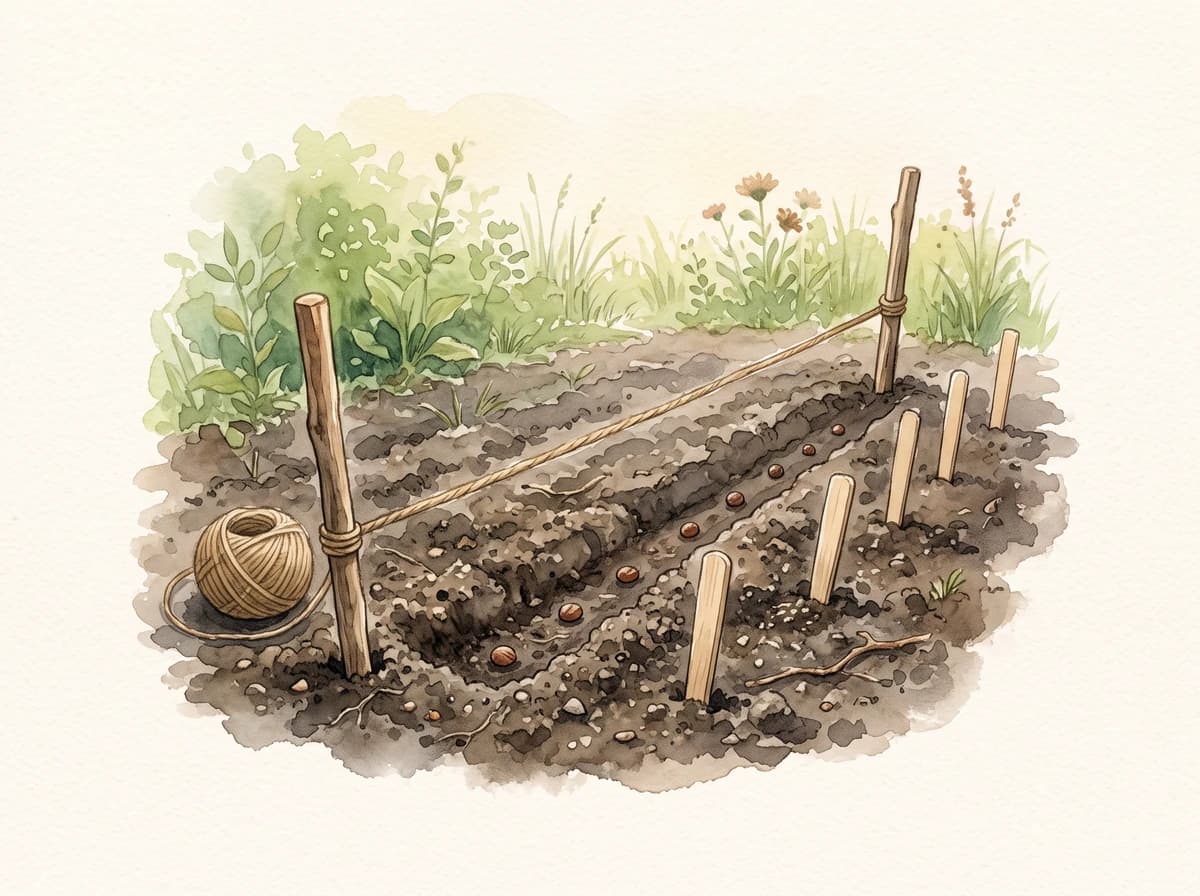
- Material: long skewers or lolly sticks, white tape and a permanent marker.
- How: write the name and date on the tape, stick it to the stick and push it in at the start of the row.
- Cost: 0 €.
- Alternative: disposable white plastic spoons, which last longer and are easy to write on.
2. Watering can with a fine rose (bottle)
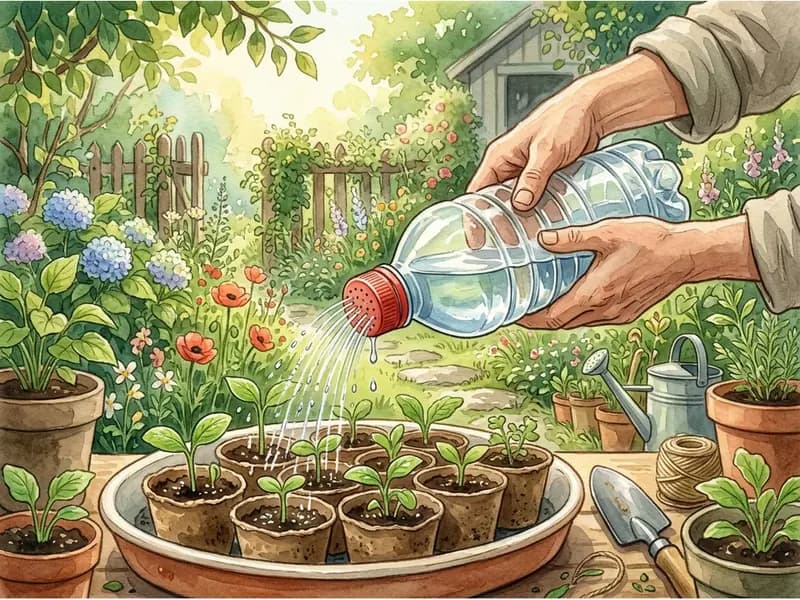
- Material: a 1.5 L (about 1.6 quarts) bottle with its cap.
- How: pierce the cap with a hot nail and make 15-20 very fine holes (1-2 mm, 0.04–0.08 in).
- Use: perfect for watering seed starters without displacing the seeds.
- Cost: 0 €.
3. Seed starters (paper rolls)
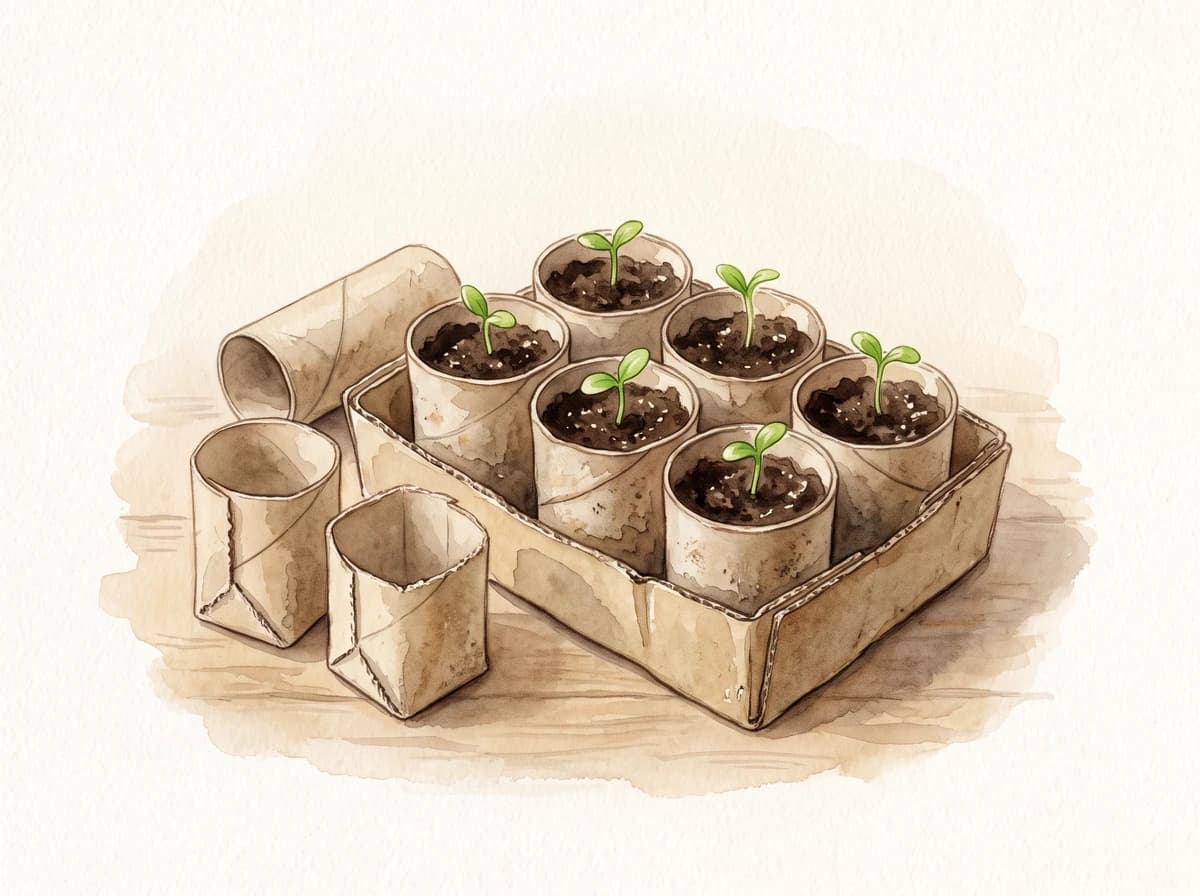
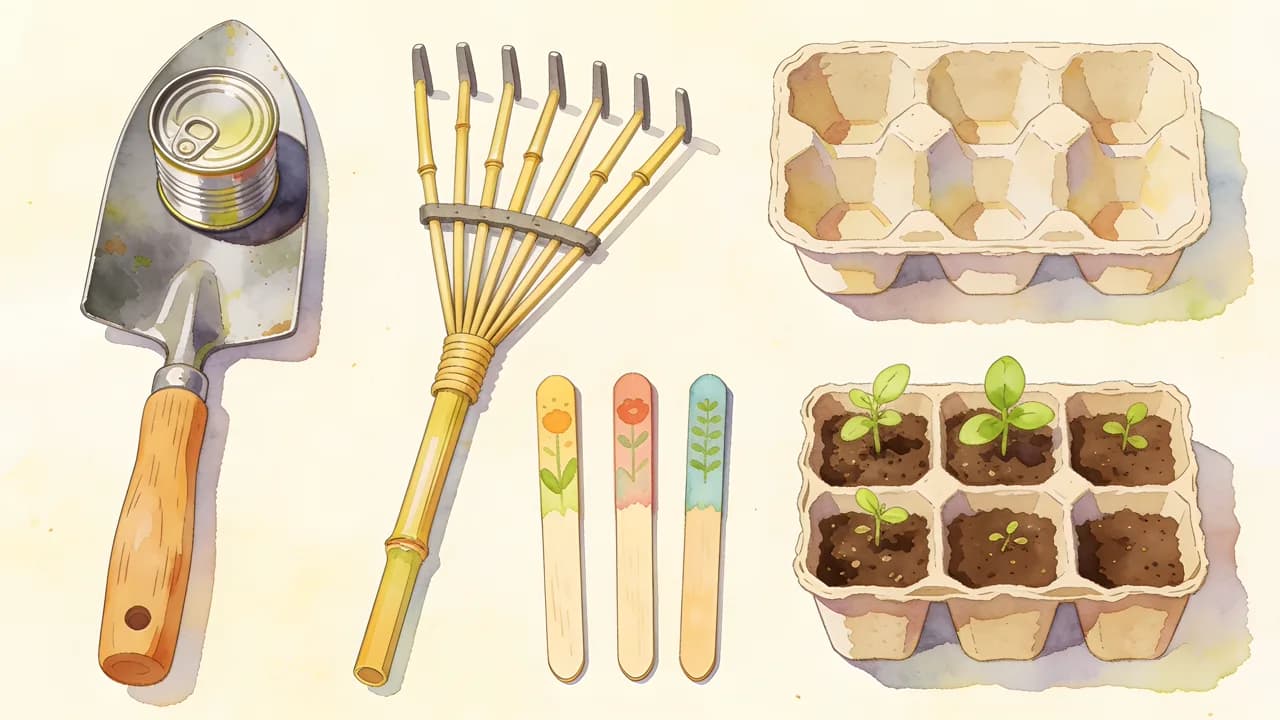
See Homemade seed starters from paper rolls and egg cartons, where it is explained step by step.
4. Slow watering (upside-down bottle)
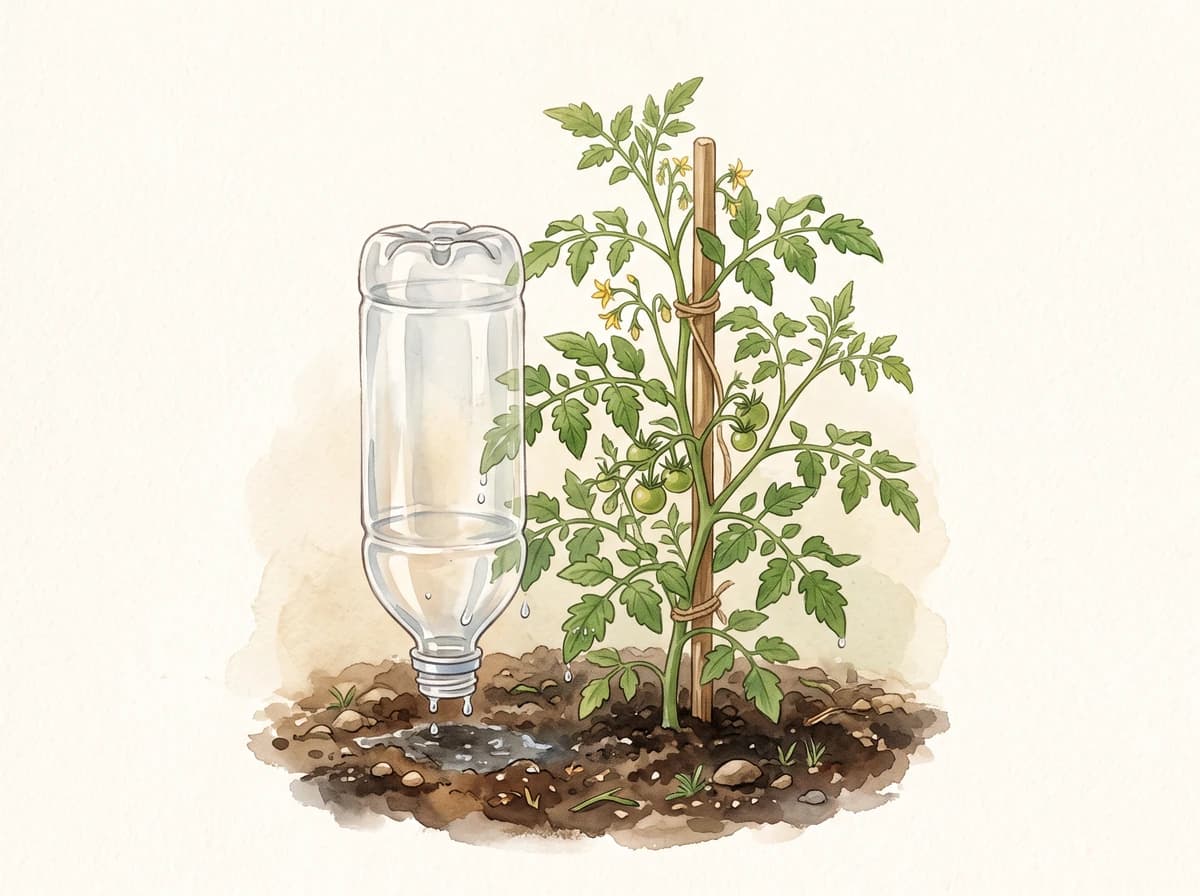
- Material: a 1.5-2 L (about 1.6–2.1 quarts) bottle with a pierced cap.
- How: make 1-3 holes of 1-2 mm (0.04–0.08 in) in the cap (test it first: if it empties in a few hours, there are too many holes), cut off the bottom of the bottle, fill it and bury it upside down next to the plant.
- Use: gives slow watering for a few days away or as a summer boost. For longer absences, drip irrigation with a timer is more reliable.
- Cost: 0 €.
5. Yellow sticky trap (for insects)
- Material: yellow card or plastic and vegetable oil or clear grease (petroleum jelly).
- How: cut a 15×20 cm (7.9 in) rectangle of bright yellow, smear it with oil or petroleum jelly and hang it among the plants. If you use card, protect it from rain with a plastic sleeve.
- Use: it catches whitefly, leaf miner and winged aphids. It helps you spot a visitor and bring its numbers down, but it won't eliminate it on its own.
- Cost: under 1 €. Replace it every month.
6. Snail trap (beer)
- Material: a plate or shallow glass and beer.
- How: bury the container level with the soil and fill it with 1-2 fingers of beer.
- Use: snails and slugs are drawn in and drown. Top up the beer every few days and after rain.
- Cost: almost 0 €.
7. Windbreak (homemade reed screen)
- Material: bamboo or wicker canes and string or wire.
- How: set canes upright and tie them every 20 cm (7.9 in) to two horizontal canes.
- Use: it works as a windbreak, as a support for climbers and it also looks nice.
- Cost: 0 € if you have canes nearby.
8. Protective tunnel (homemade cloche tunnel)
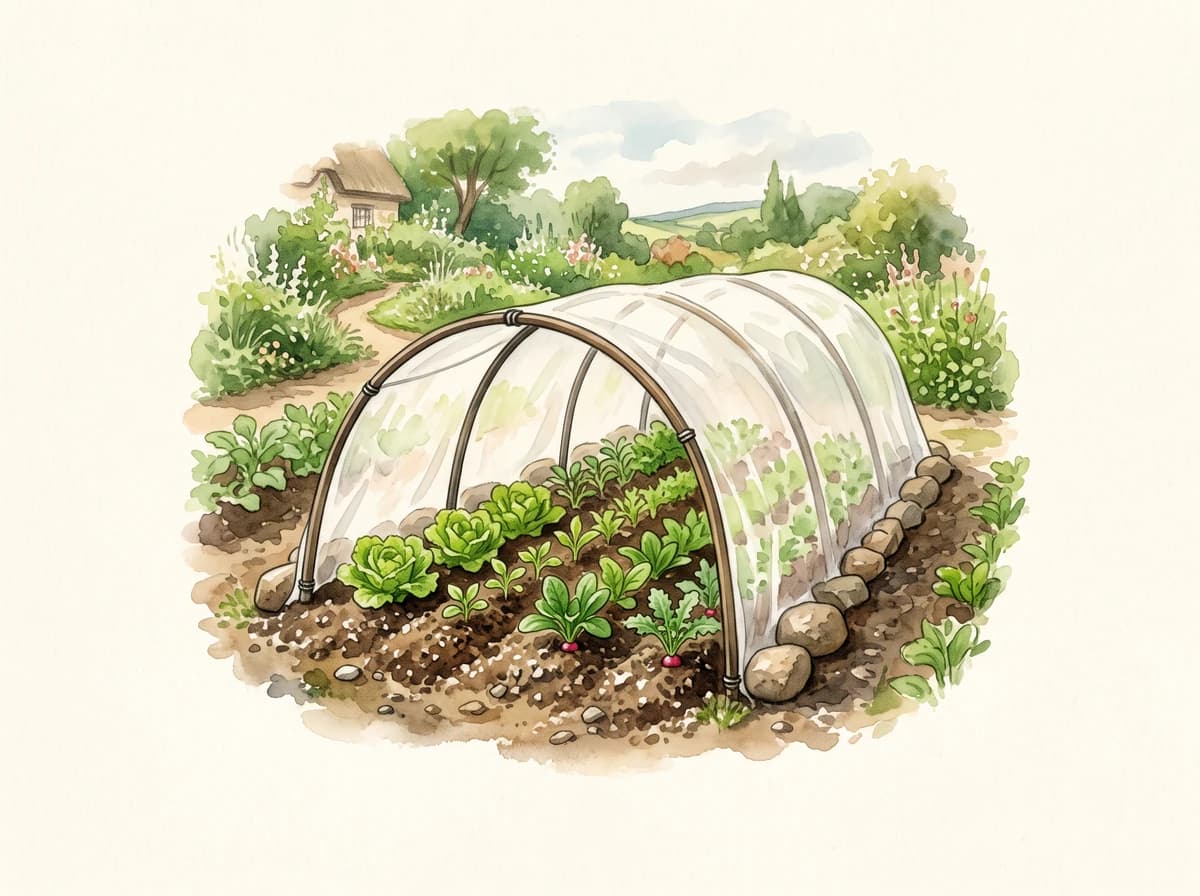
- Material: hoops of old hose or wire, and clear plastic or horticultural fleece.
- How: bend wires into arches over the bed, spaced 40 to 100 cm (15.7–39.4 in) apart. Cover with the plastic or fleece and hold the edges down with stones or soil.
- Use: it raises the temperature a few degrees (roughly 2-5 °C, 36–41 °F with plastic), protects from light frosts and can bring the harvest forward by a week or two. On sunny days, open it or ventilate it so that what is inside doesn't cook.
- Cost: 5-10 €.
9. Tomato stakes (canes + twine)
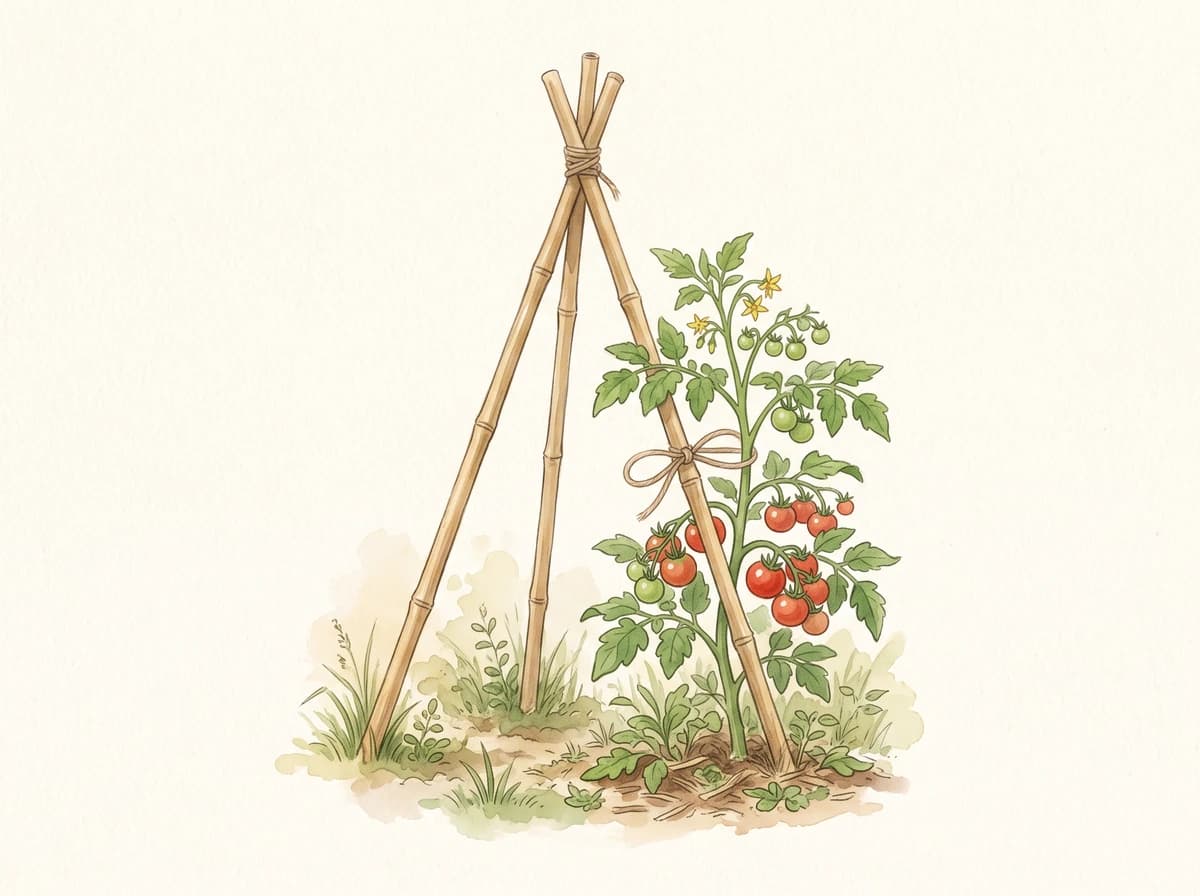
- Material: a 1.5-2 m (4.9–6.6 ft) cane and jute twine or soft tape.
- How: push the cane about 30 cm (11.8 in) into the soil next to the tomato. Tie the stem every 20-25 cm (7.9–9.8 in) with a loose knot.
- Use: it supports indeterminate tomatoes.
- Cost: 1-2 € per cane.
10. Homemade compost bin from pallets
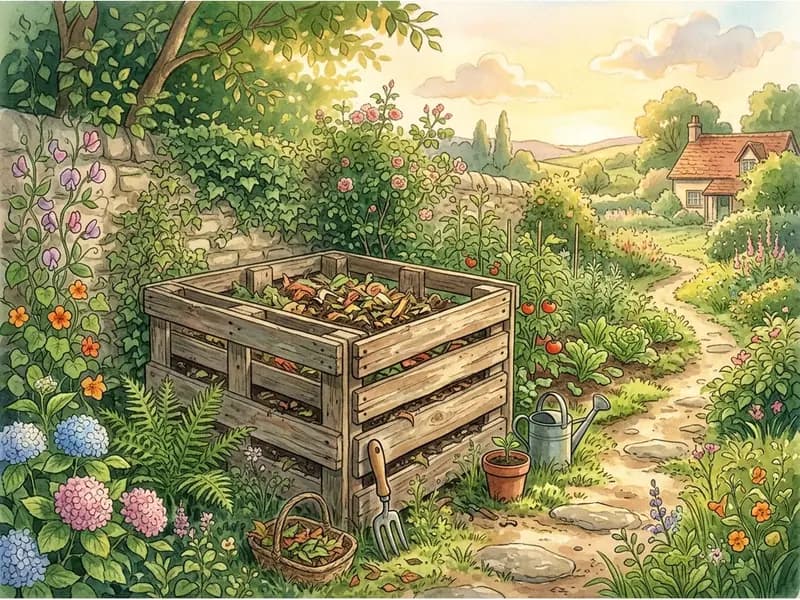
- Material: 4 recycled pallets and screws or string. Use only pallets stamped HT (heat treated) and avoid those marked MB (methyl bromide).
- How: build a bin with three fixed pallets, and the fourth tied with string as a door, so you can open it and take out the compost.
- Volume: between 0.5 and 1 m (3.3 ft)³, a good size.
- Use: homemade compost.
- Cost: 0-10 € (pallets are often given away at shops or industrial estates).
Useful extras
Reusable plastic labels
Cut strips of 3×15 cm (5.9 in) from plastic packaging (yoghurt, milk) and write with a permanent marker. They last several seasons.
Twig broom
A bunch of twigs tied to the end of a stick. It is good for sweeping the paths and for lightly covering the furrows after sowing.
Bed leveller
A smooth board of 1-1.5 m (3.3–4.9 ft). Drag it over the bed to level the soil before sowing.
Sowing line
A string tied between two stakes for sowing in a straight line. It is essential for a tidy garden.
Compost thermometer
A kitchen or oven probe thermometer (5-10 €). It is useful to check the temperature of active compost: in the hot phase it usually hovers around 50-65 °C (122–149 °F).
Old kitchen sieve
Perfect for sifting seed-starting mix.
Cut-down drum
A 60 L (about 15.9 US gal) drum cut in half gives two giant pots for tomato or courgette. Check that it never held chemicals.
Old rubbish bin
With holes in the bottom, it works as a big pot for potatoes: plant with little soil and keep covering with straw or soil as it grows.
The DIY garden philosophy
- First question before buying: do I have something that will do?
- Second: does a neighbour have something that will do?
- Almost everything in the garden can be made from recycled or local materials.
- Making your own tools is part of the craft and part of the pleasure.
When you SHOULD buy
There are tools where saving money ends up costing more:
- Pruning shears: bargain-shop ones are no good. Buy a good pair (Bahco, Felco).
- Watering can: 8-10 L (about 2.1–2.6 US gal) with a detachable rose. It costs about 15 €.
- Gloves: mixed latex and fabric.
- Tape measure.
The rest you can make yourself without any problem.
The real budget of a DIY garden
A 20 m² (215 sq ft) garden with the maximum of DIY and recycling:
- Compost bin: 0 € (pallets).
- Beds: 30-60 € (recycled wood or boards).
- DIY irrigation system: 20-40 € (bottles and old hose).
- Minimum new tools: 60-100 €.
- Seeds: 15-25 € (or a local swap: 0 €).
Total for the first year: 125-225 €. After that, less than 50 € a year.
With a few seasons of home-grown vegetables, it is a hobby that can pay for itself.

Each tool, what it is for and when you need it.