In this article (11 sections)
- The 6 essentials
- 1. Digging spade or double-handled broadfork (€25-45)
- 2. Hand hoe (€5-10)
- 3. Bypass secateurs (€15-30)
- 4. Watering can of 8-10 L (about 2.1–2.6 US gal) with a fine rose (€10-20)
- 5. Tape measure of 3-5 m (9.8–16.4 ft) (€3-8)
- 6. Short latex and fabric gloves (€5-15)
- With €100 you have enough
- What you do NOT need (yet)
- A trick: lending between neighbours
- Additions as you grow
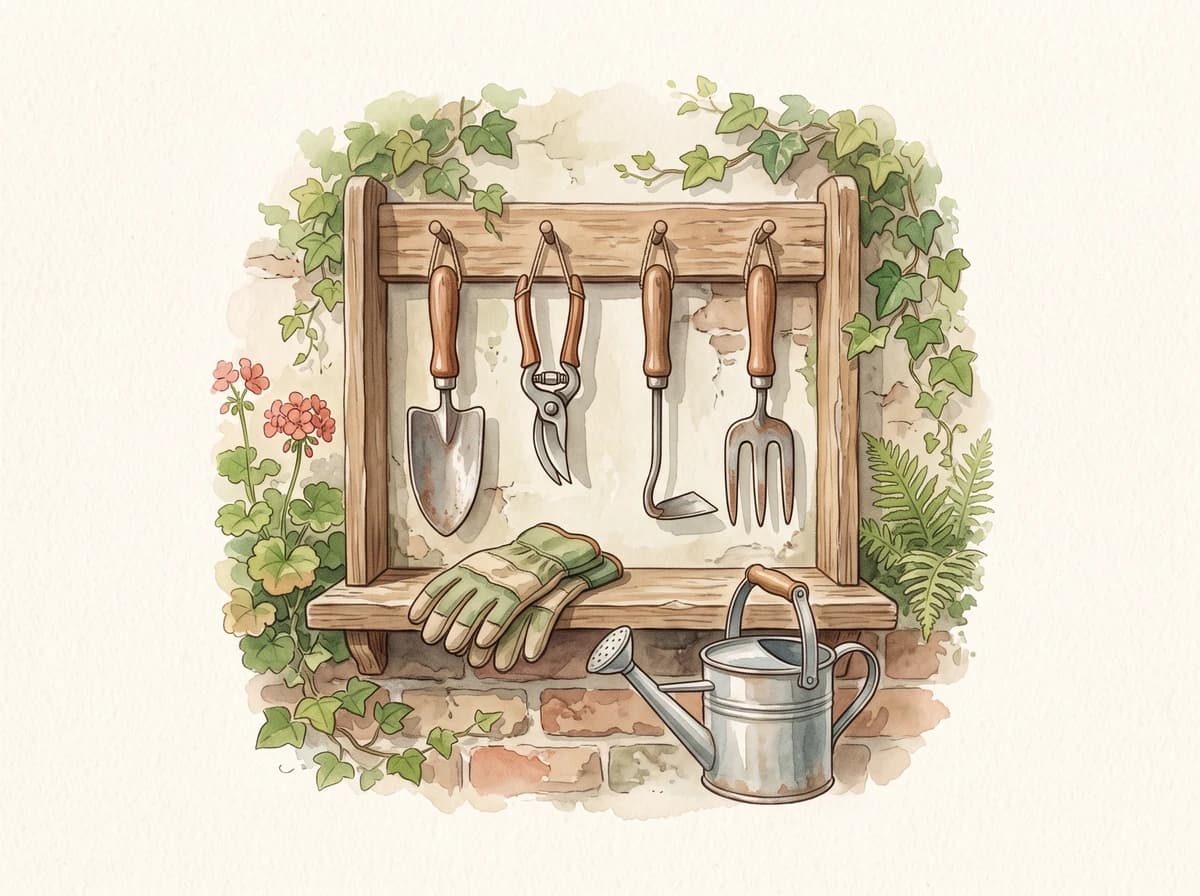
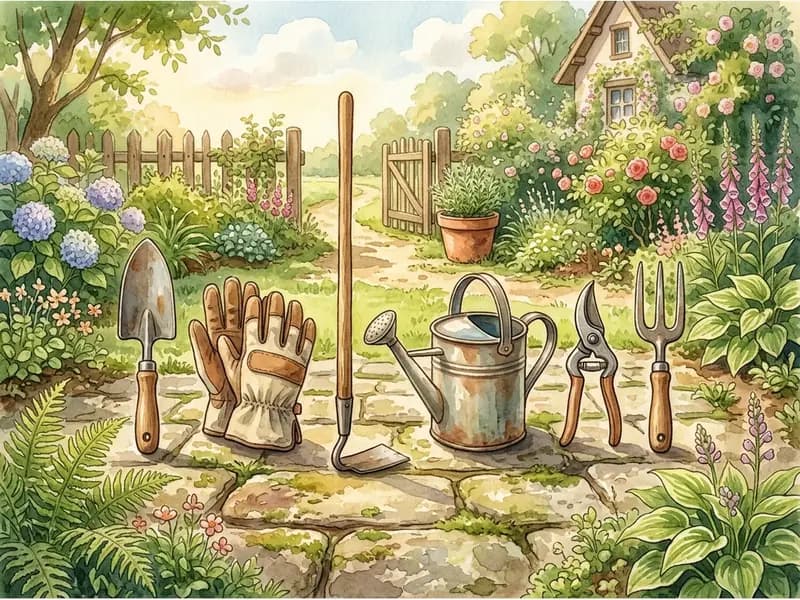
In farm shops they offer you 40 tools, but you will use six. These are they, with approximate corner-shop prices (2026).
The 6 essentials
1. Digging spade or double-handled broadfork (€25-45)
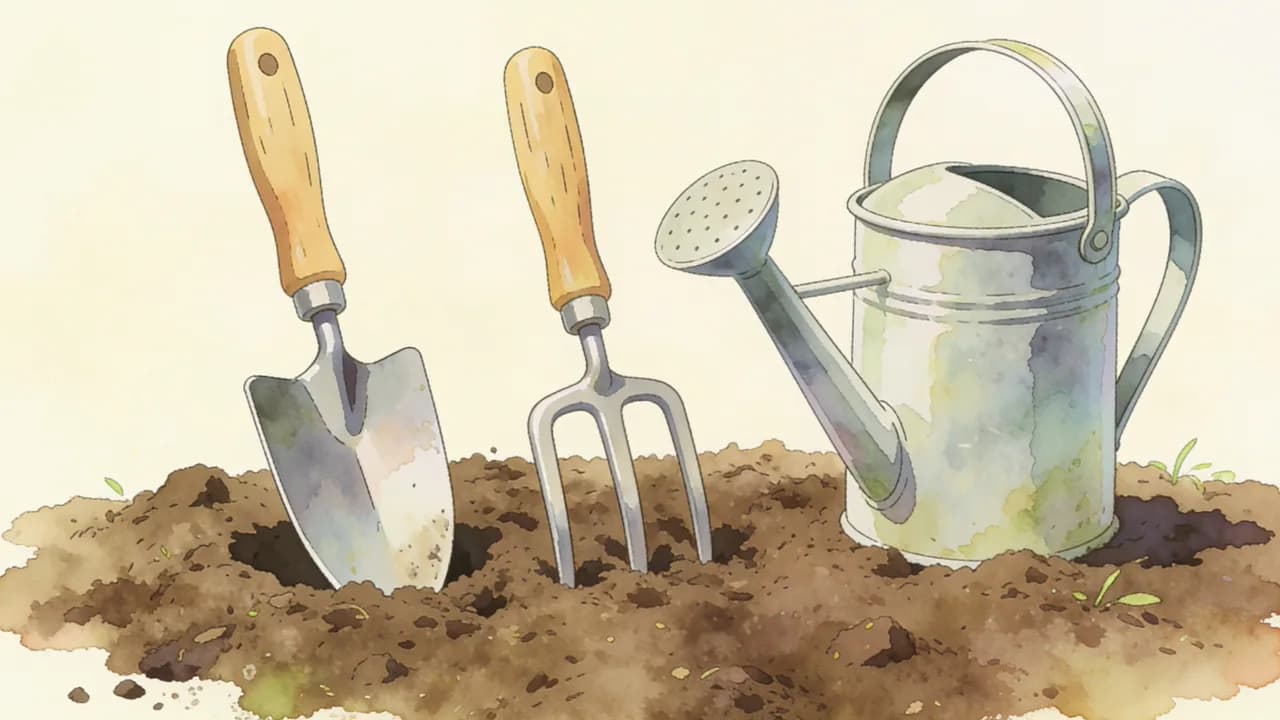
It is for loosening the soil without turning it over. By not turning the soil over, its structure and the life of the soil are better preserved. If the soil is very hard or the budget is tight, a classic 4-tine fork will do.
2. Hand hoe (€5-10)
For weeding and making small furrows. Buy a good-quality one with a sharp edge: the very cheap ones bend straight away.
3. Bypass secateurs (€15-30)
Bypass ones (two blades that cross) cut cleanly; anvil ones (one blade against a stop) crush the stem. For tomato, herbs and small fruit trees, choose bypass. Those from brands such as Bahco or Felco last about 10 years; bazaar ones last a season.
4. Watering can of 8-10 L (about 2.1–2.6 US gal) with a fine rose (€10-20)
Light to fill and with a fine detachable rose for seed trays. If the rose gives a strong jet, you dig up or drown the seeds.
5. Tape measure of 3-5 m (9.8–16.4 ft) (€3-8)
Yes, seriously: it is for marking out planting distances. Sowing “by eye” gets expensive when you find that the cabbages do not fit.
6. Short latex and fabric gloves (€5-15)
Rubber ones make you sweat and leather ones shrink. Mixed ones hold up well and leave you a feel for small seeds.
With €100 you have enough
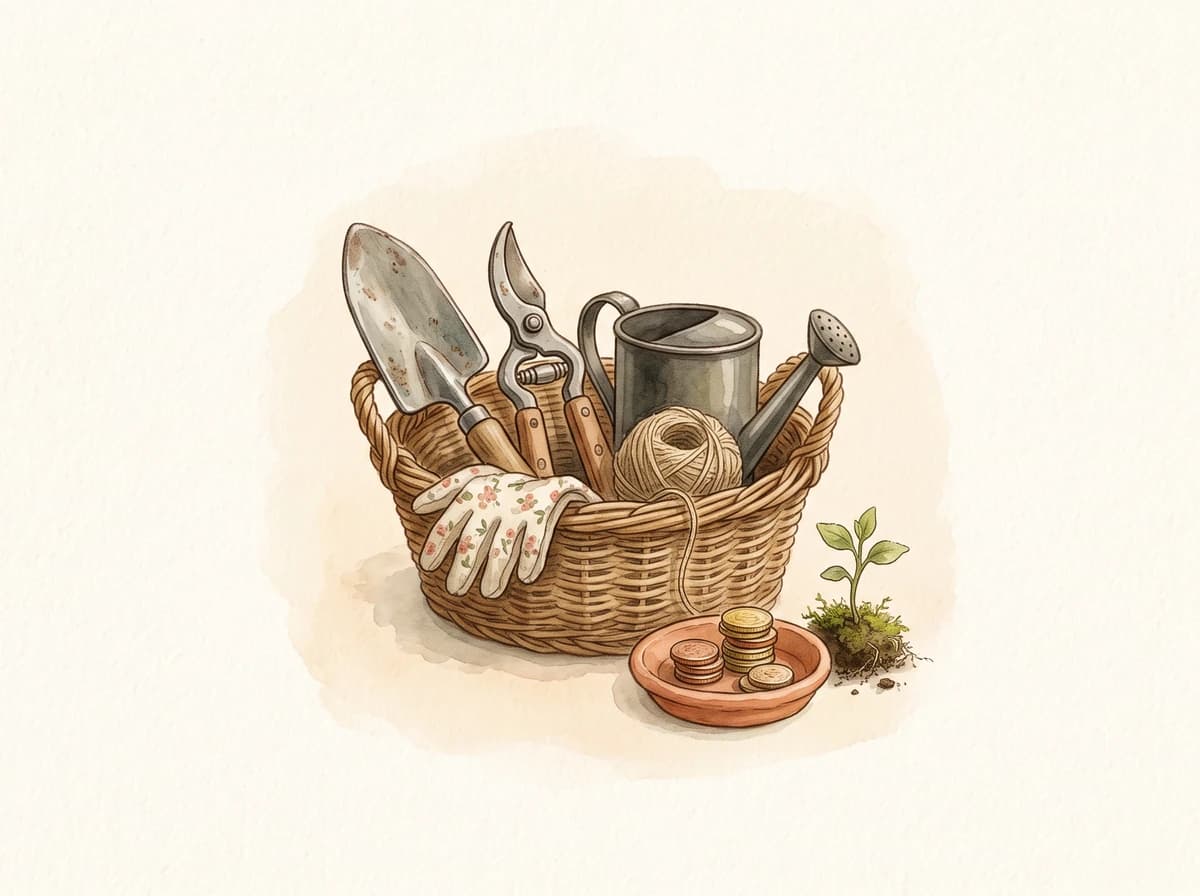
The six together come to between €63 and €128, and with €100 you have enough left over to start if you choose well. Buy them once, look after them and they will last a decade.
What you do NOT need (yet)
- Electric rotavator: only worth it from about 100 m² (1076 sq ft), and even so it tends to pulverise the soil and spoil its structure.
- Expensive automatic irrigation system: a basic drip (pipe with drippers and a simple timer) is enough and cheap. You do not need sensors or apps.
- €40 growing medium thermometer: to know whether to water, push your finger a few centimetres into the soil.
- Odd atomiser guns: a cheap hand sprayer will do for any treatment.
- Chemical herbicides: small weeds come out by hand in five minutes, and the soil will thank you.
- Cheap digital pH meters: they are usually unreliable. If you need to measure the pH, use a soil test kit or a laboratory analysis.
A trick: lending between neighbours
In villages and rural areas, much of the heavy machinery is lent or shared: rotavator, brush cutter, shredder. Ask before buying.
Additions as you grow
After two years, if the garden is still alive and you want to expand:
- Shredder (for serious composting).
- 30 % shade netting (for intense summer).
- Insect mesh (mainly for cabbages, against the cabbage white butterfly).
- Tunnel covers with hoops (they bring spring forward and extend autumn by a few weeks).
None is urgent and none replaces the basics.
Each tool, what it is for and when you need it.