
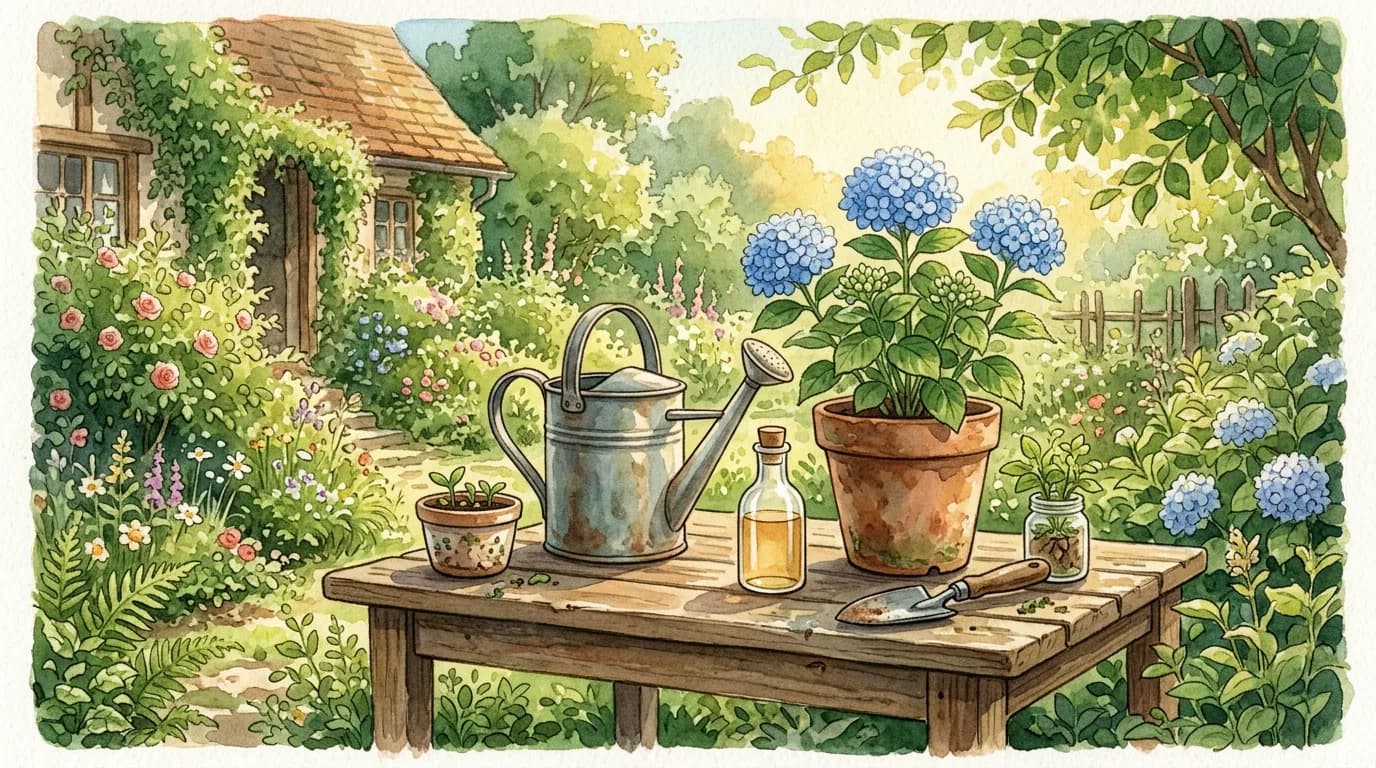
Vinegar in the watering water to lower the pH (with great care)
A few drops of vinegar acidify hard irrigation water for acid-loving plants in pots, but they do not correct the soil.
Use with care. Neutralising the alkalinity (bicarbonates) of water with acids is documented in horticulture, and vinegar is accepted as an acid on a small scale, although it is more expensive and less predictable than citric acid. It is a patch for potted plants, not a solution for chalky soil.
Before you start, read the precautions
You will need
- white vinegar
- water
- pH test strips
When to use it
On potted acid-loving plants (hydrangeas, blueberries, azaleas, camellias) watered with hard water, when the leaves turn yellow between the veins.
Step by step
1Measure the pH of the water with a strip. If it is above 7.5 and the plant is acid-loving, it makes sense to acidify it.

2Add white kitchen vinegar (5 %) little by little to a watering can of water and stir; measure again until you reach pH 6–6.5.
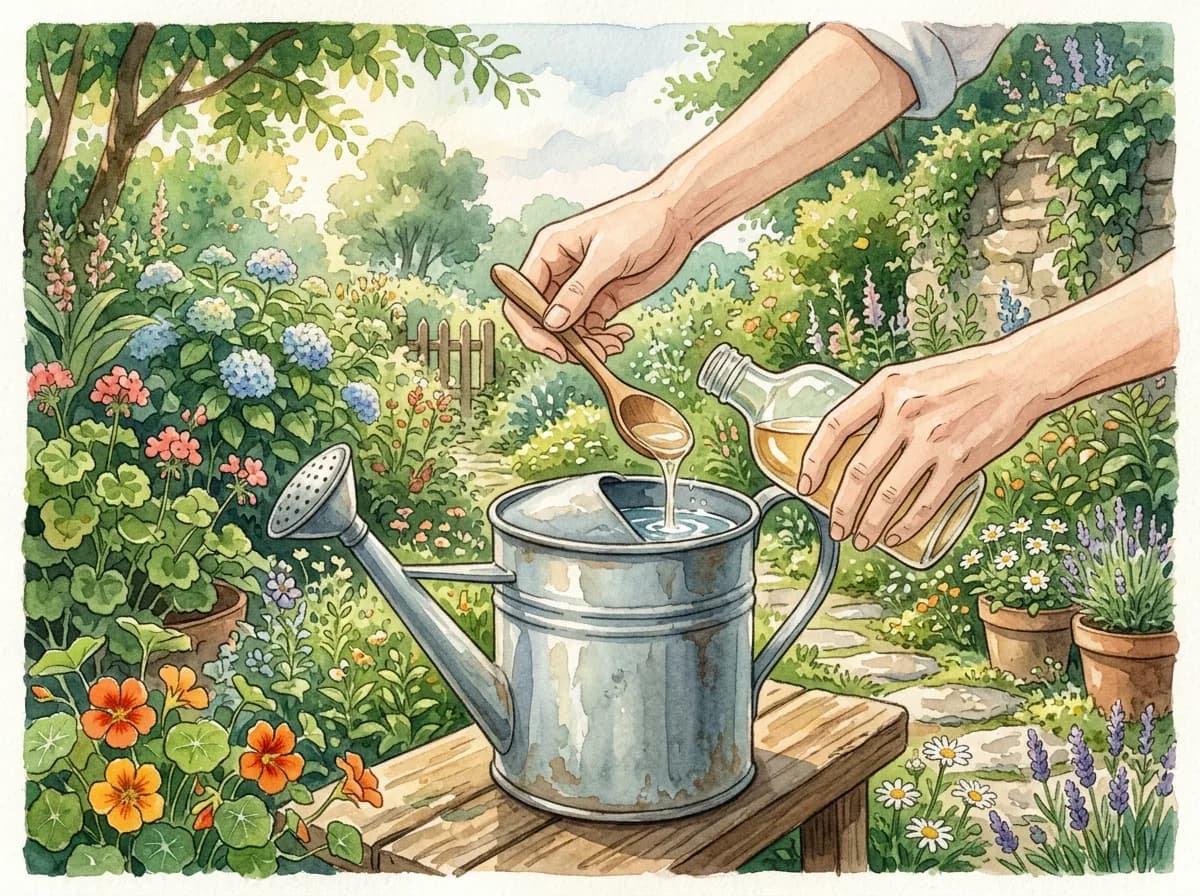
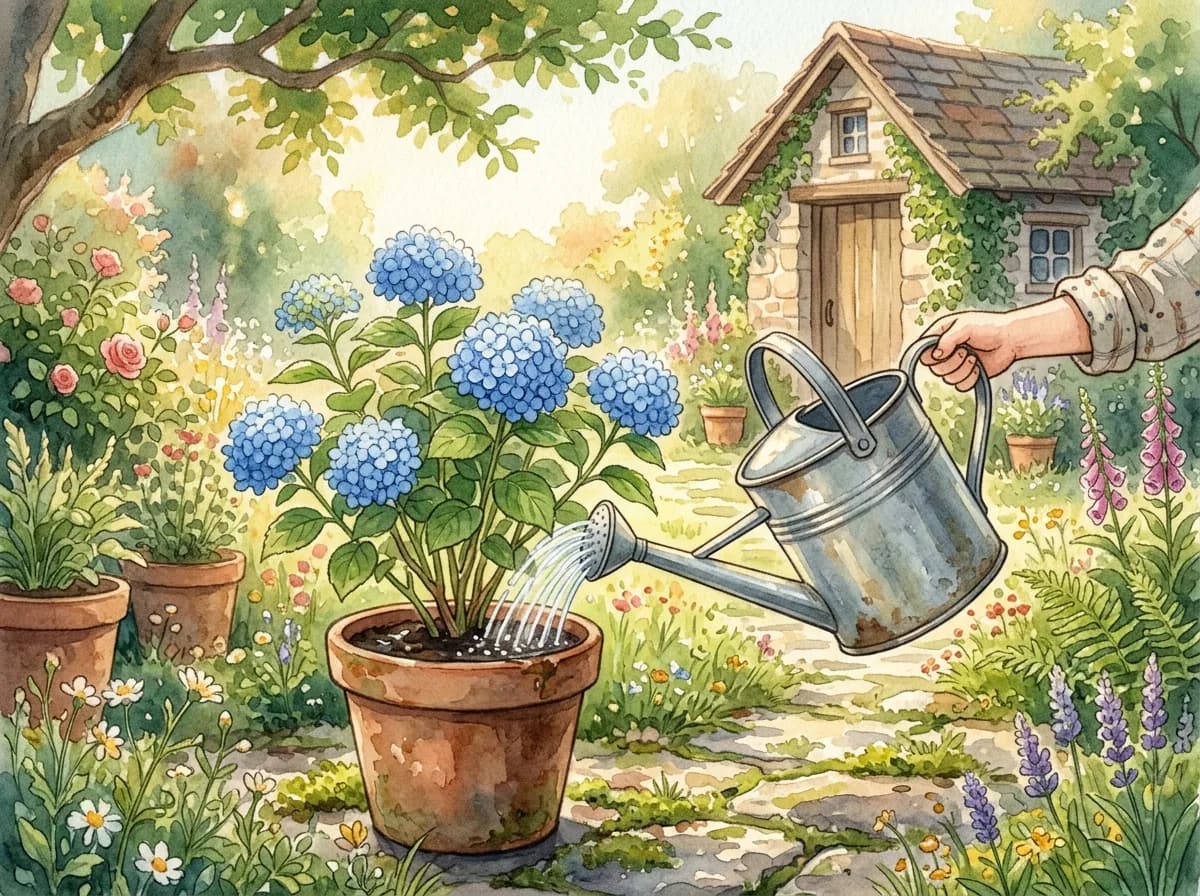
3Water only the soil of the pot, without wetting leaves or flowers, and no more than once every 1–2 weeks.
Dose
Indicative dose: start with 1–2 mL (0.03–0.07 fl oz) of white vinegar (5 %) per litre and keep adding with a pH strip until you reach 6–6.5. A reference figure is about 66 fluid ounces of 5 % vinegar per 100 gallons (≈1.7 mL/L) for a particular alkalinity reduction; your water may need more or less. Never more than 5 mL/L.
Which plants
Hydrangeas, blueberries, azaleas, camellias, rhododendrons in pots. Not on other vegetables.
Plants mentioned in this remedy
 Hydrangea (bigleaf hydrangea)A shrub with large flower heads whose colour depends on the soil pH: blue in acid soil, pink in alkaline soil.
 Legacy blueberryA late-ripening highbush blueberry with large, tasty berries.
 Japanese azaleaA compact shrub that is completely covered in flowers in spring, in shades ranging from white to magenta.
 CamelliaA shrub with glossy evergreen leaves and large, elegant flowers in winter and early spring.
 Rhododendron (Rhododendron ponticum)A large shrub with clusters of lilac flowers in spring and leathery evergreen leaves.
Precautions
- Use only food-grade 5 % vinegar; never concentrated acetic acid or strong cleaning vinegar (up to 20 %).
- Never mix it with bleach or other cleaning products: chlorine gas is released, which is dangerous for people.
- Do not use it on plants that are not acid-loving, nor on chalky soil to “fix” it: the effect disappears and you can damage roots.
- It does not replace acid growing medium or iron chelates if there is chlorosis.
Why it works
Acetic acid neutralises some of the bicarbonates in hard water, which lowers its pH and alkalinity. But with each watering the chalky soil or growing medium buffers it again, which is why it has to be repeated.
Sources
- University of Massachusetts Amherst Extension: adjusting water alkalinity with acids (water pH versus alkalinity)
- Pennsylvania State University Extension: pH and water quality in vegetables and small fruits
- Vinegar dose for a home: no specific extension trial; it is a cautious approximation