Credits and licences
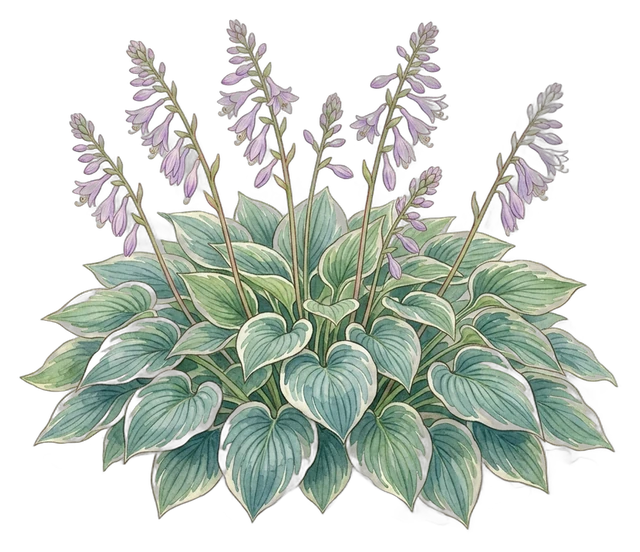
- #1 — vueltaalhuerto illustration
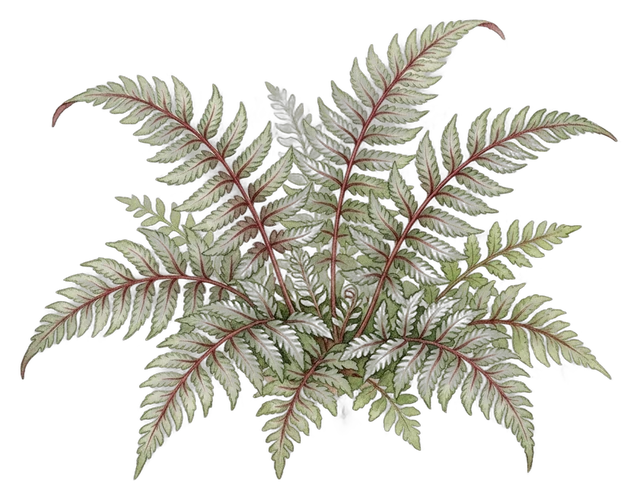
- #2 — vueltaalhuerto illustration
- #3 — vueltaalhuerto illustration
- #4 — vueltaalhuerto illustration
- #5 — vueltaalhuerto illustration
- #6 — vueltaalhuerto illustration
- #7 — Daniel Fuchs · CC BY-SA 2.5 see on Wikimedia
- #8 — belvedere04 · CC BY 4.0 see on Wikimedia
- #9 — Mokkie · CC BY-SA 3.0 see on Wikimedia
- #10 — Sun Jiao (Interaccoonale) · CC BY 4.0 see on Wikimedia
Hydrangea (bigleaf hydrangea)
and 2 more names
Hydrangea macrophylla, French hydrangeaHydrangea (bigleaf hydrangea) is planted from February to March and from October to November. It flowers from June to September. Grow it in sun or partial shade, 150 cm apart, with plenty of watering. Dates are for a mild temperate climate in the northern hemisphere; the calendar below adjusts them to your zone.
A shrub with large flower heads whose colour depends on the soil pH: blue in acid soil, pink in alkaline soil. It needs plenty of water in summer and protection from direct midday sun.
Family and origin: Hydrangea family (Hydrangeaceae) · native to East Asia (Japan, China) · More plants from Far East
01In your area
How will it do in your garden?
Year calendar
| Task | J | F | M | A | M | J | J | A | S | O | N | D |
|---|---|---|---|---|---|---|---|---|---|---|---|---|
| Plant / transplantFeb–Mar, Oct–Nov | no | yes | yes | no | no | no | no | no | no | yes | yes | no |
| FloweringJun–Sep | no | no | no | no | no | yes | yes | yes | yes | no | no | no |
| PruningFeb–Mar | no | yes | yes | no | no | no | no | no | no | no | no | no |
Its life cycle at a glance
Swipe and tap a stage to see its details.
02Planting
Where and how to plant it
Leave 1.5 m between plants.
1.5 m between plants
Seedlings are planted with the root ball level with the soil.
- Transplanting
- Feb–Mar, Oct–Nov
- Common mistakePlanting too deep smothers the crown of the plant.
03Care
Care through the year
Sun and aspectSun and shade · 5 h of sun · shade in summer
- Too little sun
- Ideal range
- Plenty of sun
East-facing, or south-facing with light shade in the middle of the day
Moderate sun: Copes with full sun, but give it some shade during heatwaves.
WateringConstantly moist · summer: daily or every 2 days above 30 °C
- Summerdaily or every 2 days above 30 °C10.5 L per plant/week
- Spring / Autumnevery 3-4 days4.8 L per plant/week
- Winterevery 2 weeks if dry1.2 L per plant/week
Constantly moist: The soil should always feel cool and damp. Ideal with mulch and drip irrigation. Mulch: straw or dry plant material cuts watering by 30-50 %.
When to water? Push your finger 2 cm into the soil next to the base of the plant:
- Damp: soil sticks to your finger. Do not water, although for this plant it is just right — check again tomorrow.
- Cool but clean, no mud. Water today: it likes to stay constantly moist.
- Dry and dusty. Water urgently and add mulch to hold in moisture.
- TipWater generously in summer, preferably with rainwater rather than hard water.
- TipWater generously in the first year until it is established; after that it looks after itself.
Soil and feedingDeep soil with good drainage
Deep soil with good drainage.
Medium/high.
This plant prefers a pH between 6.0 and 7.5 (slightly acidic to slightly alkaline).
- Water generously in the first year until it is established.
- A thick mulch all year round, not touching the trunk.
- TipBlue only appears in acid soil, where the plant can take up aluminium; in chalky soil it comes out pink, and white varieties do not change.
PruningWhen: Feb–Mar
Pruning time for this plant: Feb–Mar.
- TipDo not prune it hard in winter, because it flowers on buds formed the previous summer.
- TipIn February or March, it is enough to cut the dead flowers back to just above the first pair of plump buds and to remove the odd old, exhausted stem at ground level.
- TipFormative pruning after flowering keeps the shape compact.
- Common mistakePruning at the wrong time removes the year's flower buds.
04Uses and health
What it is used for, and with what care
The leaves and flowers contain cyanogenic glycosides: vomiting, diarrhoea and lethargy in dogs and cats if they eat a quantity. If eaten, see a vet.
- Properties
- Large flower heads that change colour with the pH; ornamental.
For guidance only; this is not medical treatment and does not replace advice from a doctor or vet.
05Companions and related plants