
Diluted urine as fertiliser
Human urine is a very effective nitrogen fertiliser, but it calls for dilution and hygiene.
Use with care. A Finnish barley trial (Frontiers, 2018, a single season, preliminary) used stored urine with no detectable pathogens, undiluted, on a cereal. In a home garden it should be diluted (the convention is 1:3 to 1:10) and stored: a common recommendation is 6 months at 20 °C (68 °F) or more if someone outside the household will eat the crop. It has salts (chlorides) and ammonia that can burn or make the soil salty.
Before you start, read the precautions
You will need
- urine from healthy people
- water
- watering can
- closed container
When to use it
During the growth phase of plants that demand nitrogen (maize, cabbage, courgette, leek) and not close to harvest.
Step by step
1Collect urine from healthy people who are not on medication in a closed, opaque container. For greater safety, store it closed for about 6 months at 20 °C (68 °F) or more before using it on vegetables.

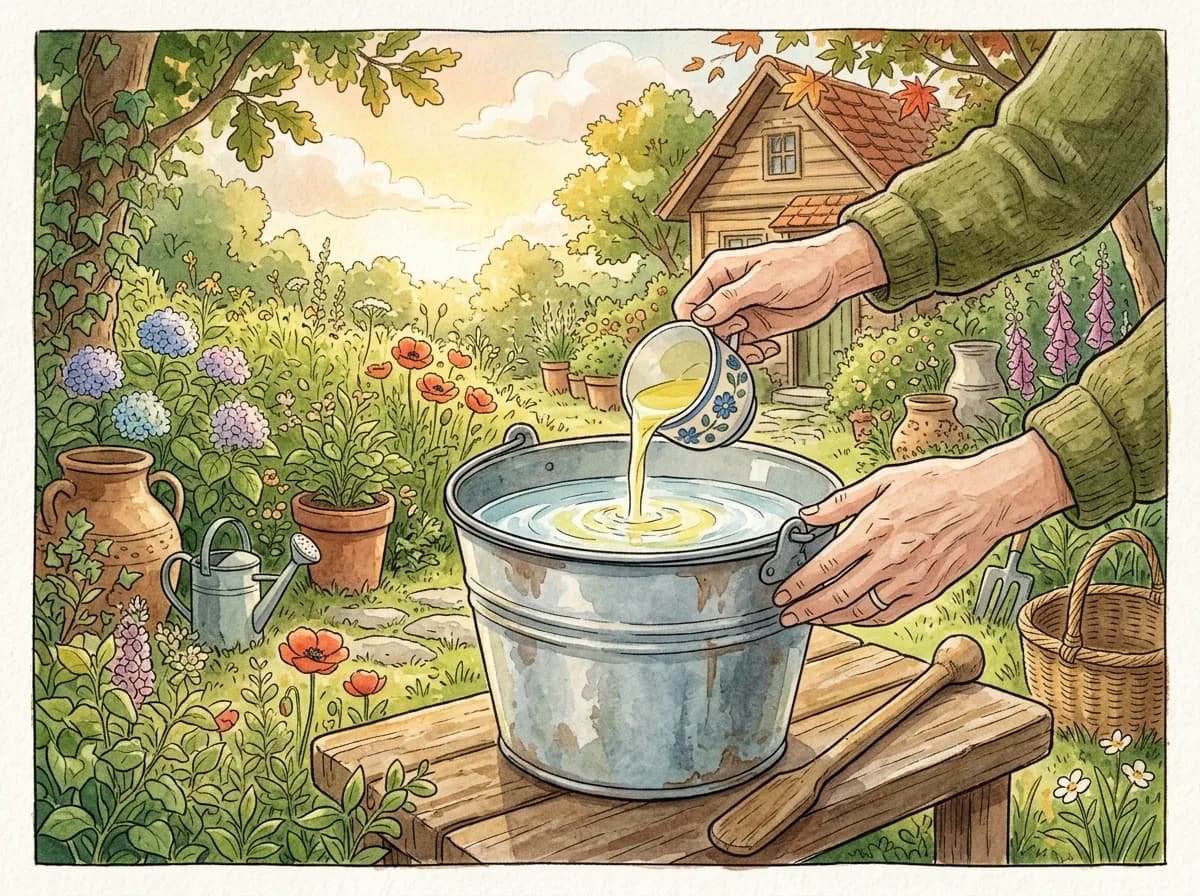
2Always dilute it in the home garden: the convention is 1:3 to 1:10; start with 1 of urine to 10 of water (more water on young plants).
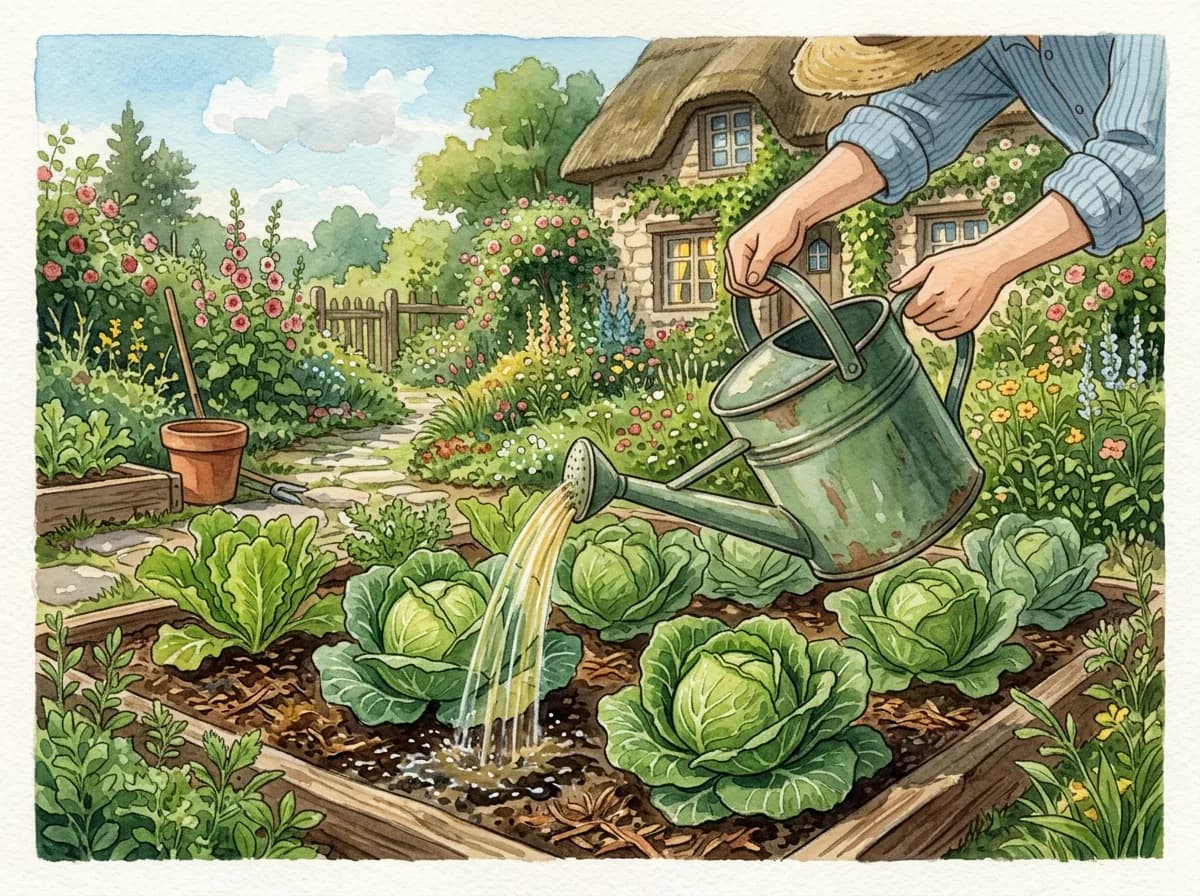
3Water only the soil, never the leaves or fruit, and rinse afterwards with clean water.
Dose
Indicative and cautious dose: 1:10 dilution watered onto the soil, once every 2–3 weeks during growth. For vegetables eaten raw, do not apply it in the last month before harvest (the usual caution rule in household guides) and do not use it on raw ones if you have not stored it.
Which plants
Good for maize, cabbage, courgette, leek, fruit trees. Avoid strawberries, blueberries and houseplants.
Plants mentioned in this remedy
 SweetcornMaize with tender, sugary kernels for eating on the cob.
 Savoy cabbageSavoy cabbage, with blistered, crinkled leaves, which grows sweeter with the cold; it does best in autumn…
 Courgette 'Nero di Milano'A cylindrical, very dark green courgette, productive and early, the classic bush type for continuous picking.
 Leek 'Monstrueux de Carentan'A thick, hardy leek from Carentan that copes well with cold.
 Camarosa strawberryA strawberry with large, firm, deep red fruit, very productive and early.
 Legacy blueberryA late-ripening highbush blueberry with large, tasty berries.
Precautions
- Only urine from healthy people in your own household who are not on medical treatment. With medication or infections, no.
- Never apply it undiluted or on leaves: it burns because of the ammonia and salts.
- Salts build up: alternate with waterings of clean water, especially in pots and in soils with hard water.
- Do not use it on plants that are very sensitive to salt (strawberries, acid-loving plants).
- It smells; apply it early in the morning or at dusk.
Why it works
It contains nitrogen (urea), some phosphorus and potassium. Stored closed, the urea turns into ammonia, the pH rises and most pathogens disappear; the urine of healthy people has few pathogens to begin with.
Sources
- Frontiers in Sustainable Food Systems (2018): stored human urine as a fertiliser on barley, preliminary one-season trial; warns of the risk of salt build-up
- Rich Earth Institute: household urine-use manual (storage 6 months at ≥20 °C; apply to the soil, not to leaves)
- Sustainable Agriculture Research and Education: urine as fertiliser (urine:water ratios of 1:3 to 1:10)