
Credits and licences
- #1 — vueltaalhuerto illustration
- #2 — vueltaalhuerto illustration
- #3 — vueltaalhuerto illustration
- #4 — vueltaalhuerto illustration
- #5 — vueltaalhuerto illustration
- #6 — vueltaalhuerto illustration
- #7 — vueltaalhuerto illustration
- #8 — vueltaalhuerto illustration
- #9 — vueltaalhuerto illustration
- #10 — vueltaalhuerto illustration
Water forget-me-not (Myosotis scorpioides)
and 2 more names
Myosotis scorpioides, Myosotis palustrisWater forget-me-not (Myosotis scorpioides) is sown in seed trays from March to April or directly outdoors from April to June, and planted out from April to May and from September to October. It flowers from May to August. Grow it in sun or partial shade, 25 cm apart, with plenty of watering. Dates are for a mild temperate climate in the northern hemisphere; the calendar below adjusts them to your zone.
What else to sow in March, April, May and June
A short-lived perennial, 15 to 40 cm tall, with sprawling stems that root at the nodes and turn upwards. The leaves are lance-shaped, light green and slightly rough to the touch. From May to September, and sometimes into October, it bears spirally curled sprays of small sky-blue flowers 8 to 10 mm across, with a yellow centre and pink buds, very showy beside water. In a pond it is planted at the edge, with its roots in mud or under a few centimetres of water, and it also works in pots that are kept permanently moist. Shops often sell it as Myosotis palustris, which is a synonym of the accepted name, Myosotis scorpioides. It is not the garden forget-me-not (Myosotis sylvatica), which is biennial and grows in moist soils. It self-seeds readily and is invasive in some countries; in Spain it is native and not regulated. It is not edible.
Family and origin: Borage family (Boraginaceae) · native to Europe and temperate Asia (including the northern half of Spain), on the banks of streams, ponds and waterlogged meadows · More plants from Temperate Europe
01In your area
How will it do in your garden?
Year calendar
| Task | J | F | M | A | M | J | J | A | S | O | N | D |
|---|---|---|---|---|---|---|---|---|---|---|---|---|
| Seed trayMar–Apr | no | no | yes | yes | no | no | no | no | no | no | no | no |
| Direct sowingApr–Jun | no | no | no | yes | yes | yes | no | no | no | no | no | no |
| Plant / transplantApr–May, Sep–Oct | no | no | no | yes | yes | no | no | no | yes | yes | no | no |
| FloweringMay–Aug | no | no | no | no | yes | yes | yes | yes | no | no | no | no |
| CuttingsApr–Jul | no | no | no | yes | yes | yes | yes | no | no | no | no | no |
| Divide the clumpMar–Apr, Sep–Oct | no | no | yes | yes | no | no | no | no | yes | yes | no | no |
Its life cycle at a glance
Swipe and tap a stage to see its details.
02Planting
Where and how to plant it
The seed goes on the surface, uncovered; leave 25 cm between plants and 30 cm between rows.
25 cm between plants · 30 cm between rows
Seed at ground level; seedlings go in with the root ball level with the soil.
- Transplanting
- Apr–May, Sep–Oct
- Seed tray
- Mar–Apr
- Direct sowing
- Apr–Jun
- Germination
- ~14 days
- TipRenew the plant every two or three years, because it ages and becomes woody and straggly.
- Common mistakeSowing out of season: many need warmth or a cold spell beforehand to sprout.
03Care
Care through the year
Sun and aspectSun and shade · 5 h of sun · shade in summer
- Too little sun
- Ideal range
- Plenty of sun
East, or south with light shade in the middle of the day
Gentle sun: Morning or afternoon sun. Midday summer sun stresses and scorches it.
Partial shade or morning sun. In strong sun during a hot summer it scorches and dries out, and in too much shade it flowers poorly. It withstands hard frosts down to about -20 °C, losing some of its leaves in winter and shooting again.
WateringVery moist, tolerates waterlogging · summer: soil always saturated; in a pot, keep water in the saucer
- Summersoil always saturated; in a pot, keep water in the saucer2.1 L per plant/week
- Spring / Autumnevery 3-4 days1 L per plant/week
- Winteronly if the soil dries out; for the rest of the winter rain is enough0.2 L per plant/week
Very moist, tolerates waterlogging: Saturated or nearly saturated soil. Still watch out for fungal disease. Mulch: straw or dry plant material cuts watering by 30-50 %.
A marginal plant: plant it at the edge of the pond, with its roots in mud or with 2 to 5 cm of water above, or in a pot standing in a saucer of water. If the soil dries out, the leaves wilt and the flowers do not last long.
This is a plant for waterlogged soil or pond margins: the finger test does not help, because the soil must stay wet all the time. Make sure the mud never dries out and, if it grows in a pond, that the water covers the base as the profile says; in summer, top up what evaporates.
Soil and feedingpH 5.5–7.5 · Loose soil with organic matter and good drainage
Loose soil with organic matter and good drainage.
50 % topsoil · 30 % well-rotted compost · 20 % sand or perlite.
Medium/high.
This plant prefers a pH between 5.5 and 7.5 (slightly acidic to slightly alkaline).
- Overfeeding gives lots of leaf and few flowers.
- Compacted, poorly drained soil rots the roots in winter.
- TipPlant it at the edge of the pond, about 25 cm apart, in moist garden soil, or in a pot standing in a saucer of water.
- Common mistakeOverfeeding gives lush leaves but few flowers.
Pruning
- TipRemove spent flowers if you do not want it to seed everywhere; if you want it to self-seed, leave them until they dry.
- TipRemove faded flowers to prolong flowering.
Common mistakes and tips
- TipFrequencies and timings are a guide only.
04Propagation
Make new plants
It is propagated by seed, by division and by stem cuttings. The tiny black seeds are sown on the surface, barely covered, in spring, in a permanently moist mix at 12-20 °C; they germinate in about two weeks with light. It also self-seeds, and the seedlings can be moved elsewhere. Divide the clump in spring or autumn, and since the stems root at the nodes, a piece of rooted stem can be cut off and planted. Tip cuttings also root in water or wet mud in spring and summer.
Seeds: how to germinate them~14 days
05Uses and health
What it is used for, and with what care
Like other members of the borage family, it contains pyrrolizidine alkaloids (they have been isolated in this species, especially in the flowers), which damage the liver if eaten repeatedly. A single nibble is not usually serious, but treat it as inedible and keep it out of reach of children and pets. There is no reliable toxicity data for dogs and cats. If a child or an animal has eaten a significant amount, consult a doctor or a vet.
- Properties
- It is an ornamental plant; it is not used as a remedy and there is no basis for recommending it for medicinal purposes.
- Uses
- It is not edible. Do not use it in food, infusions or remedies.
For guidance only; this is not medical treatment and does not replace advice from a doctor or vet.
06Companions and related plants
What to plant it with
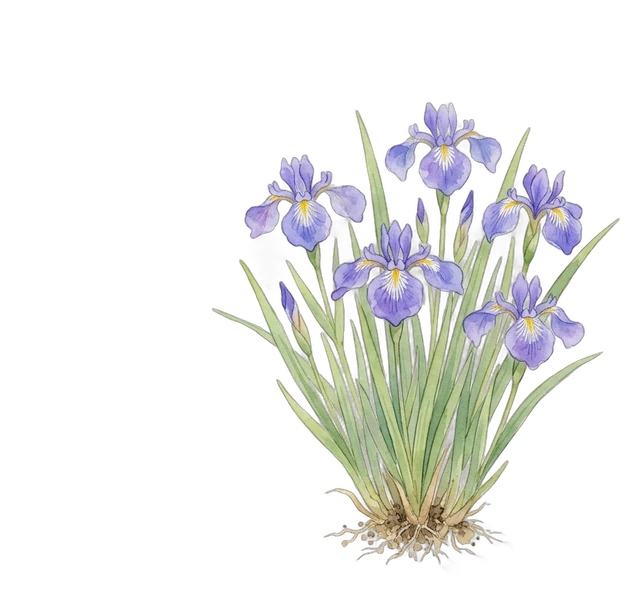
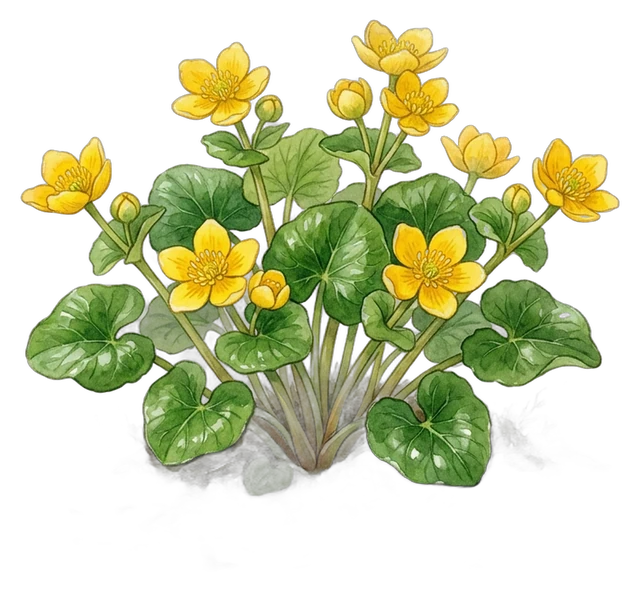
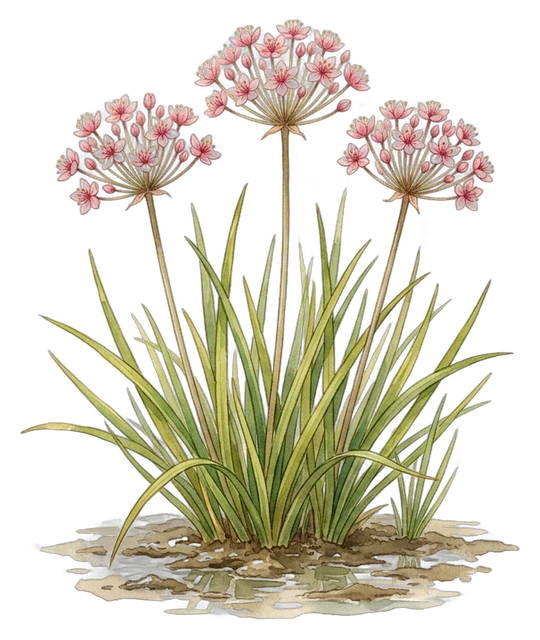
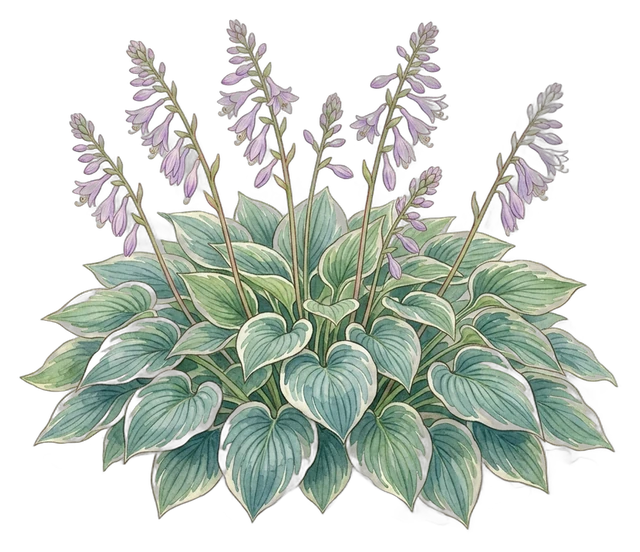
Compare with similar varieties
| Variety | Sowing | Harvest | Days | Spacing | Difficulty |
|---|---|---|---|---|---|
| Forget-me-not (Myosotis sylvatica) | May–Jul | Mar–May | ~270 | 20 cm | Easy |
| Water forget-me-not (Myosotis scorpioides) | Mar–Jun | — | — | 25 cm | Easy |