
Credits and licences
- #1 — vueltaalhuerto illustration
- #2 — vueltaalhuerto illustration
- #3 — vueltaalhuerto illustration
- #4 — vueltaalhuerto illustration
- #5 — vueltaalhuerto illustration
- #6 — vueltaalhuerto illustration
- #7 — vueltaalhuerto illustration
- #8 — vueltaalhuerto illustration
- #9 — vueltaalhuerto illustration
- #10 — vueltaalhuerto illustration
Pulque agave (Agave salmiana)
and 2 more names
Agave salmiana, agavePulque agave (Agave salmiana) is sown in seed trays from March to May, and planted out from April to June and in September. Grow it in full sun, 300 cm apart, with little watering. Dates are for a mild temperate climate in the northern hemisphere; the calendar below adjusts them to your zone.
What else to sow in March, April and May
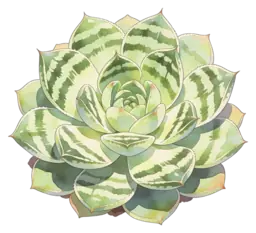
Agave salmiana, known in Mexico as maguey pulquero, is one of the largest agaves: it forms a rosette up to 2 m tall and 3 or 4 m wide, of fleshy, broad, arching, greyish-green leaves with sturdy brown teeth along the margin and a long, dark terminal spine. It surrounds the mother rosette with plenty of offsets. After 15 to 25 years of growth it sends up a branched flower spike up to 7 or 8 m tall, with yellow flowers arranged like a candelabra, and the rosette dies. In Mexico it has been grown for centuries to obtain aguamiel and pulque, and also for mezcal and as an ornamental. In Spain it only makes sense in a large, sunny garden, or in a very large pot while young, because it needs a lot of space. LEGAL AND SAFETY WARNING: It is not in the Spanish Catalogue of Invasive Alien Species (RD 630/2013), which does include another agave, the common century plant (Agave americana), with which it is easily confused. Even so, it has gone wild in the Canary Islands, where naturalised populations have been recorded (Verloove et al., 2019), and regional regulations may be stricter: the MITECO (Spanish Ministry for the Ecological Transition) factsheet on Agave americana cites a Valencian decree (213/2009) that would affect the whole genus Agave; check the rules of your Spanish region before planting it outdoors, do not plant it next to natural areas, dunes or the coast, and do not throw offsets, trimmings or seeds out into the countryside. We have not found it listed in CITES. Risks: its spines are very large and can cause deep wounds, and the sap is irritant and can cause dermatitis; it is harmful if swallowed, also to dogs and cats. Wear thick gloves and goggles when pruning, do not plant it next to paths or play areas, and do not consume its sap or make aguamiel or pulque from garden plants.
Family and origin: Asparagus family (Asparagaceae) · native to Central highlands of Mexico (San Luis Potosí, Hidalgo, Tlaxcala, Puebla and neighbouring states) · More plants from Mesoamerica
01In your area
How will it do in your garden?
Year calendar
| Task | J | F | M | A | M | J | J | A | S | O | N | D |
|---|---|---|---|---|---|---|---|---|---|---|---|---|
| Seed trayMar–May | no | no | yes | yes | yes | no | no | no | no | no | no | no |
| Plant / transplantApr–Jun, Sep | no | no | no | yes | yes | yes | no | no | yes | no | no | no |
| Divide the clumpApr–Jun | no | no | no | yes | yes | yes | no | no | no | no | no | no |
Its life cycle at a glance
Swipe and tap a stage to see its details.
02Care
Care through the year
Sun and aspectFull sun · 8 h of sun · South or south-west, with nothing casting shade at midday
- Too little sun
- Ideal range
- Plenty of sun
South or south-west, with nothing casting shade at midday
Strong sun: Loves full midday sun and high temperatures.
Full sun. It withstands light or moderate frosts (around -6 °C) in dry, well-drained soil; young plants in pots are more sensitive.
- Common mistakeLack of light makes them stretch and go soft (etiolation).
WateringLet it dry out between waterings · summer: every 5-7 days
- Summerevery 5-7 days0.2 L per plant/week
- Spring / Autumnevery 10-14 days0.1 L per plant/week
- Winteronly in extreme drought (once a month)0 L per plant/week
Let it dry out between waterings: A Mediterranean favourite: better thirsty than overwatered.
Once established, it hardly needs watering in a Mediterranean climate; in a pot, water thoroughly only when the potting mix has dried out completely, and hardly at all in winter. Avoid any waterlogging.
When to water? Push your finger 5 cm into the soil next to the base of the plant:
- Damp: soil sticks to your finger. Do not water yet. It has more than enough; wait for it to dry out more.
- Cool but clean, no mud. Wait another 1-2 days before watering.
- Dry and dusty. Water now, but moderately. Do not overdo it: it prefers thirst to excess.
- TipThe size, cold and watering figures are approximate.
- TipWater thoroughly and leave long gaps: better thirsty than overwatered.
- Common mistakeWatering often rots the crown and the roots.
Soil and feedingpH 6–8 · Very gritty, free-draining mix
Very gritty, free-draining mix.
30 % multi-purpose compost · 40 % coarse sand · 30 % perlite or pumice.
Very high: standing moisture rots them.
This plant prefers a pH between 6.0 and 8.0 (slightly acidic to alkaline).
- Multi-purpose compost on its own with no drainage: rot sets in quickly.
- Watering the rosette or the leaves marks them and causes rot.
- TipPlant it in a sunny spot with stony, very free-draining soil, leaving at least 3 m clear around it, away from paths, the neighbours' fence and play areas because of its spines.
- TipOnce planted it needs almost no care; feed it once in spring at most.
- TipVery free-draining mix (with sand/perlite) and pots with a drainage hole.
03Propagation
Make new plants
It is propagated mainly by offsets: in spring or summer, carefully separate the pups that grow around the mother rosette, wearing gloves, let them dry for a few days and plant them in a mineral potting mix. It is an agave that produces lots of offsets: there is no shortage for propagating it. It can also be grown from seed: the black, flat, shiny seeds are sown in spring in a seed tray with a sandy mix at about 20 to 28 °C, and they germinate within a few weeks; the seedlings grow slowly. Seed-grown plants can vary from one another; offsets produce plants identical to the parent.
Seeds: how to germinate them~14 days
04Uses and health
What it is used for, and with what care
The sap contains saponins and calcium oxalate crystals that irritate the skin, mouth and stomach. Handle it with gloves and keep it out of reach of children and pets; the spines and leaf teeth cause wounds. It can go wild: do not throw offsets or trimmings out into the countryside.
- Properties
- An ornamental plant, with no recommended medicinal or food uses.
- Uses
- It is not edible: do not use it in home preparations. Although in Mexico it is used to make aguamiel, pulque and mezcal, this is a traditional craft process that should not be imitated with garden plants, and its raw sap is irritant.
For guidance only; this is not medical treatment and does not replace advice from a doctor or vet.
05Companions and related plants
What to plant it with
Compare with similar varieties
| Variety | Sowing | Harvest | Days | Spacing | Difficulty |
|---|---|---|---|---|---|
| Foxtail agave (Agave attenuata) | — | — | — | 120 cm | Easy |
| Squid agave (Agave bracteosa) | Mar–May | — | — | 40 cm | Easy |
| Agave chiapensis | Mar–May | — | — | 80 cm | Easy |
| Thread agave (Agave filifera) | Mar–May | — | — | 50 cm | Easy |
| Agave macroacantha | Mar–May | — | — | 60 cm | Easy |
| Agave nigra (Sharkskin agave) | Apr–Jun, Sep | — | — | 60 cm | Easy |
| Parry's agave (Agave parryi) | Mar–May | — | — | 60 cm | Easy |
| Butterfly agave (Agave potatorum) | Mar–May | — | — | 60 cm | Easy |
| Agave pygmaea ‘Dragon Toes’ (dragon toes agave) | Mar–May | — | — | 40 cm | Easy |
| Pulque agave (Agave salmiana) | Mar–May | — | — | 300 cm | Easy |
| Agave titanota | Mar–May | — | — | 60 cm | Moderate |
| Thorn-crested agave (Agave univittata) | Mar–May | — | — | 70 cm | Easy |
| Agave univittata ‘Quadricolor’ (four-colour agave) | Mar–May | — | — | 60 cm | Easy |
| Queen Victoria agave (Agave victoriae-reginae) | Mar–May | — | — | 40 cm | Moderate |
| Agave × romanii | Apr–Jun, Sep | — | — | 40 cm | Easy |