
Credits and licences
- #1 — vueltaalhuerto illustration
- #2 — vueltaalhuerto illustration
- #3 — vueltaalhuerto illustration
- #4 — vueltaalhuerto illustration
- #5 — vueltaalhuerto illustration
- #6 — vueltaalhuerto illustration
- #7 — vueltaalhuerto illustration
- #8 — vueltaalhuerto illustration
- #9 — vueltaalhuerto illustration
- #10 — vueltaalhuerto illustration
Agave chiapensis
Agave chiapensis is sown in seed trays from March to May, and planted out from April to June and in September. Grow it in full sun, 80 cm apart, with little watering. Dates are for a mild temperate climate in the northern hemisphere; the calendar below adjusts them to your zone.
What else to sow in March, April and May
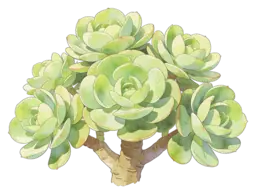
Agave chiapensis is a medium-sized agave forming an open, spreading rosette up to about 60 cm tall and 1 m wide, with broad, somewhat fleshy, light green leaves up to 50 cm long, with triangular teeth along the edge and a strong terminal spine 2 to 3.5 cm long. Over the years it produces offsets at the base and forms a clump. After several years of growth, the rosette sends up a flower spike about 2 m tall with greenish-yellow flowers tinged with red or purple; the rosette that flowers dies, but the clump carries on through its offsets. It copes well with drought and sun, but not with hard frosts or waterlogging. In shops it is sometimes sold as ‘multicolor’; we have not found a documented variegated cultivar of that name, so trust the label with the scientific name. It is an ornamental plant: it is not eaten. LEGAL AND SAFETY WARNING: The sap of agaves contains saponins and calcium oxalate crystals: it irritates the skin and can cause dermatitis, and if swallowed it causes discomfort in the mouth and stomach; it is rated a skin irritant and harmful to pets if eaten. The terminal spines and leaf teeth cause wounds. What to do: wear thick gloves and goggles when pruning, cleaning or separating offsets, wash off any splashes of sap with soap and water, keep the plant out of reach of children, dogs and cats and, after any ingestion, consult a doctor or a vet. Legal status: we have not found this species listed in CITES (in the genus Agave only A. parviflora, in Appendix I, and A. victoriae-reginae, in Appendix II, are listed; A. arizonica is no longer included) or in the Spanish Catalogue of Invasive Alien Species (Royal Decree 630/2013), but the Valencian regulations on invasive alien species (Decree 213/2009) include the whole genus Agave, so check the rules of your Spanish region before planting it outdoors; in any case, some agaves go wild along the Mediterranean coast, so do not throw offsets, trimmings or seeds out into the countryside. The IUCN Red List classes it as Vulnerable, with small, isolated populations threatened by urban development and farming in Chiapas: buy only nursery-grown plants and do not collect plants or seeds in the wild.
Family and origin: Asparagus family (Asparagaceae) · native to Southern Mexico, in the states of Chiapas and Oaxaca, on limestone slopes with pine and oak forest, between about 900 and 2,500 m above sea level · More plants from Mesoamerica
01In your area
How will it do in your garden?
Year calendar
| Task | J | F | M | A | M | J | J | A | S | O | N | D |
|---|---|---|---|---|---|---|---|---|---|---|---|---|
| Seed trayMar–May | no | no | yes | yes | yes | no | no | no | no | no | no | no |
| Plant / transplantApr–Jun, Sep | no | no | no | yes | yes | yes | no | no | yes | no | no | no |
| Divide the clumpApr–Jun | no | no | no | yes | yes | yes | no | no | no | no | no | no |
Its life cycle at a glance
Swipe and tap a stage to see its details.
02Care
Care through the year
Sun and aspectFull sun · 6 h of sun · South or south-west, with nothing casting shade at midday
- Too little sun
- Ideal range
- Plenty of sun
South or south-west, with nothing casting shade at midday
Strong sun: Loves full midday sun and high temperatures.
Full sun or very bright light; in the harshest inland summers it appreciates some shade at midday if it has been kept under cover. Do not leave it exposed below about -2 °C: this is a cautious figure, because we have not found a reliable figure for its cold hardiness.
- Common mistakeLack of light makes them stretch and go soft (etiolation).
WateringLet it dry out between waterings · summer: every 10 to 15 days
- Summerevery 10 to 15 days0.2 L per plant/week
- Spring / Autumnevery 10-14 days0.1 L per plant/week
- Winternone, or once a month0 L per plant/week
Let it dry out between waterings: A Mediterranean favourite: better thirsty than overwatered.
Water thoroughly and let the potting mix dry out completely before watering again; in winter, almost none. Drainage is what matters: if waterlogged, it rots.
When to water? Push your finger 6 cm into the soil next to the base of the plant:
- Damp: soil sticks to your finger. Do not water yet. It has more than enough; wait for it to dry out more.
- Cool but clean, no mud. Wait another 1-2 days before watering.
- Dry and dusty. Water now, but moderately. Do not overdo it: it prefers thirst to excess.
Soil and feedingpH 6–7.5 · Very gritty, free-draining mix
Very gritty, free-draining mix.
30 % multi-purpose compost · 40 % coarse sand · 30 % perlite or pumice.
Very high: standing moisture rots them.
This plant prefers a pH between 6.0 and 7.5 (slightly acidic to slightly alkaline).
- Multi-purpose compost on its own with no drainage: rot sets in quickly.
- Watering the rosette or the leaves marks them and causes rot.
- TipPlant it in a deep pot with drainage holes or directly in very free-draining, sunny ground, with a mix of half cactus compost and half grit or pumice.
- TipFeed it once or twice between spring and summer with cactus fertiliser at half strength.
- TipVery free-draining mix (with sand/perlite) and pots with a drainage hole.
Common mistakes and tips
- TipGive it room: the rosette is wide and over time it forms a clump.
- TipThe sizes, temperatures and timings are approximate.
03Propagation
Make new plants
It is propagated mainly by offsets: in spring or summer, separate the pups that grow around the mother rosette, wearing gloves, ideally when they are a third of its size and have their own roots; let the wound dry for a few days and plant them in a mineral potting mix. It can also be grown from seed: the black, flat, shiny seeds are sown in spring in a sandy mix at 20 to 28 °C and germinate within a few weeks; the seedlings grow slowly. Always buy nursery-grown plants.
Seeds: how to germinate them~14 days
04Uses and health
What it is used for, and with what care
SAFETY WARNING: the sap contains saponins and calcium oxalate: it irritates the skin and can cause dermatitis, and if swallowed it causes discomfort in the mouth and stomach; it is rated irritant and harmful to pets. The spines and leaf teeth cause wounds. Wear gloves and goggles when handling it, wash off any splashes with soap and water, keep it out of reach of children, dogs and cats, and consult a doctor or vet after any ingestion. It is a Vulnerable species in the wild: buy only nursery-grown plants.
- Properties
- An ornamental plant, with no recommended medicinal or food uses.
- Uses
- It is not edible: do not use it in home preparations. Other agaves are used in Mexico, but there is no reliable data on this species and its sap is irritant.
For guidance only; this is not medical treatment and does not replace advice from a doctor or vet.
05Companions and related plants
What to plant it with
Compare with similar varieties
| Variety | Sowing | Harvest | Days | Spacing | Difficulty |
|---|---|---|---|---|---|
| Foxtail agave (Agave attenuata) | — | — | — | 120 cm | Easy |
| Squid agave (Agave bracteosa) | Mar–May | — | — | 40 cm | Easy |
| Agave chiapensis | Mar–May | — | — | 80 cm | Easy |
| Thread agave (Agave filifera) | Mar–May | — | — | 50 cm | Easy |
| Agave macroacantha | Mar–May | — | — | 60 cm | Easy |
| Agave nigra (Sharkskin agave) | Apr–Jun, Sep | — | — | 60 cm | Easy |
| Parry's agave (Agave parryi) | Mar–May | — | — | 60 cm | Easy |
| Butterfly agave (Agave potatorum) | Mar–May | — | — | 60 cm | Easy |
| Agave pygmaea ‘Dragon Toes’ (dragon toes agave) | Mar–May | — | — | 40 cm | Easy |
| Pulque agave (Agave salmiana) | Mar–May | — | — | 300 cm | Easy |
| Agave titanota | Mar–May | — | — | 60 cm | Moderate |
| Thorn-crested agave (Agave univittata) | Mar–May | — | — | 70 cm | Easy |
| Agave univittata ‘Quadricolor’ (four-colour agave) | Mar–May | — | — | 60 cm | Easy |
| Queen Victoria agave (Agave victoriae-reginae) | Mar–May | — | — | 40 cm | Moderate |
| Agave × romanii | Apr–Jun, Sep | — | — | 40 cm | Easy |