
Credits and licences
- #1 — vueltaalhuerto illustration
- #2 — vueltaalhuerto illustration
- #3 — vueltaalhuerto illustration
- #4 — vueltaalhuerto illustration
- #5 — vueltaalhuerto illustration
- #6 — vueltaalhuerto illustration
- #7 — vueltaalhuerto illustration
- #8 — vueltaalhuerto illustration
- #9 — vueltaalhuerto illustration
- #10 — vueltaalhuerto illustration
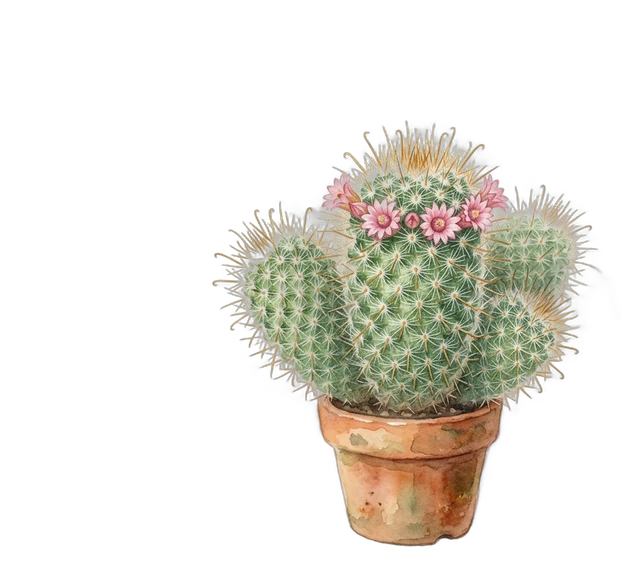
Mammillaria carmenae (white Tamaulipas cactus)
and 2 more names
pincushion cactus, mammillariaMammillaria carmenae (white Tamaulipas cactus) is sown in seed trays from March to May, and planted out from April to June. It flowers from March to May. Grow it in full sun, 10 cm apart, with little watering. Dates are for a mild temperate climate in the northern hemisphere; the calendar below adjusts them to your zone.
A small globular to egg-shaped cactus, 4 to 10 cm tall and 3 to 5 cm thick, dark green, which readily forms clumps until it fills the pot. The body is covered in more than a hundred fine, soft, flexible radial spines, about 5 mm long, white or pale yellow, with no central spines, giving it the look of a snowball. In spring and summer it opens small flowers of about 11 mm near the top, creamy white to pale pink with a pinker midrib, followed by greenish fruits and black seeds. It grows fast for a cactus, but rots easily if overwatered. Its name is spelt in two ways: Mammillaria carmenae, as it appears in many shops, and Mammillaria carmeniae, the spelling accepted by Kew. It is Critically Endangered according to the IUCN, with a tiny natural range (less than 100 km²) and a population that is declining mainly because of illegal collection. It is not edible. LEGAL AND SAFETY NOTICE: all cacti, and therefore all Mammillaria, are listed in Appendix I or II of the CITES convention, implemented in the EU by Regulation (EC) No 338/97; this species is listed in Appendix II. This means that international trade in wild plants and their parts, and bringing them into or out of the EU, requires permits or certificates, and that digging up plants from the wild is illegal in their country of origin and does real harm to wild populations. Buy only nursery-grown plants, with an invoice stating that they were cultivated, and do not collect wild plants or seeds. The spines prick and the wound can become infected; keep it out of reach of children and curious animals. It is a critically endangered species in the wild and illegal collection is its main threat: do not buy plants or seeds without a guarantee that they were cultivated.
Family and origin: Cactus family (Cactaceae) · native to North-east Mexico (Tamaulipas, between Ciudad Victoria and Jaumave), in rock crevices on north-facing slopes in pine forest · More plants from Mesoamerica
01In your area
How will it do in your home?
Year calendar
| Task | J | F | M | A | M | J | J | A | S | O | N | D |
|---|---|---|---|---|---|---|---|---|---|---|---|---|
| Seed trayMar–May | no | no | yes | yes | yes | no | no | no | no | no | no | no |
| Plant / transplantApr–Jun | no | no | no | yes | yes | yes | no | no | no | no | no | no |
| FloweringMar–May | no | no | yes | yes | yes | no | no | no | no | no | no | no |
| Divide the clumpApr–Jul | no | no | no | yes | yes | yes | yes | no | no | no | no | no |
Its life cycle at a glance
Swipe and tap a stage to see its details.
02Care
Care through the year
Sun and aspectFull sun · 6 h of sun · shade in summer
- Too little sun
- Ideal range
- Plenty of sun
South or south-west, with nothing casting shade at midday
Strong sun: Loves full midday sun and high temperatures.
It wants direct sun or very bright light: in full sun the green skin may turn brown, and strong midday sun in summer scorches it, so it is best shaded at that time of day. In low light it stretches and the spines become thinner. It tolerates cold down to about -5 °C only if the potting mix is dry, but it is best protected from rain and wet frosts.
WateringLet it dry out between waterings · summer: every 10 to 14 days, only when the potting mix is completely dry
- Summerevery 10 to 14 days, only when the potting mix is completely dry0.2 L per plant/week
- Spring / Autumnevery 10-14 days0.1 L per plant/week
- Winterno watering from November to February (at most a drop a month if central heating dries it out)0 L per plant/week
Let it dry out between waterings: A Mediterranean favourite: better thirsty than overwatered.
It rots easily if it gets too much water. Water from April to October, gently and without waterlogging, when the potting mix is dry right to the bottom, and let the water drain away well. In winter keep it dry and cool, at 5 to 12 °C: this rest encourages flowering in spring. A terracotta pot with drainage holes and a layer of gravel prevent almost all deaths.
When to water? Push your finger 5 cm into the soil next to the base of the plant:
- Damp: soil sticks to your finger. Do not water yet. It has more than enough; wait for it to dry out more.
- Cool but clean, no mud. Wait another 1-2 days before watering.
- Dry and dusty. Water now, but moderately. Do not overdo it: it prefers thirst to excess.
- TipIf it turns soft and black from the base, it is getting too much water: take it out, cut away the rot and let it dry before replanting.
- TipA dry winter rest: with hardly any water they flower better in spring.
- Common mistakeWatering in cold winter weather is the fast track to rot.
Potting mix and feedingpH 6–7.5 · Mineral mix with almost no organic matter
Mineral mix with almost no organic matter.
20 % multi-purpose compost · 40 % silica sand · 40 % pumice or lava rock.
Extreme.
This plant prefers a pH between 6.0 and 7.5 (slightly acidic to slightly alkaline).
- Rich, compact mix: certain rot within a few months.
- Watering in cold winter weather: the first step towards rot.
- TipUse a very porous cactus potting mix with at least half coarse sand, fine gravel or pumice, and a terracotta pot with drainage holes.
- TipRepot every two or three years, in spring, with the potting mix dry.
- TipFeed once a month from April to August with a potassium-rich, low-nitrogen cactus fertiliser.
- TipPlenty of light and a free-draining mineral mix.
- Common mistakeA mix that holds water drowns the roots.
03Propagation
Make new plants
It is propagated from offsets and from seed. The plant forms clumps naturally: offsets are separated in spring or early summer with a clean blade, left to dry for five to seven days and set on dry mineral potting mix until they root. The tiny black seeds are sown in spring on moist mineral potting mix, without covering them, in a propagator at 20-25 °C and in good light; they germinate in two or three weeks and the seedlings grow slowly.
Seeds: how to germinate them~14 days
04Uses and health
What it is used for, and with what care
- Properties
- Low-maintenance ornamental cactus. It has no home medicinal uses.
- Uses
- It is not grown for food. The fruits are not eaten.
For guidance only; this is not medical treatment and does not replace advice from a doctor or vet.
05Companions and related plants
What to plant it with
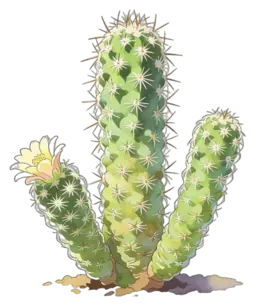
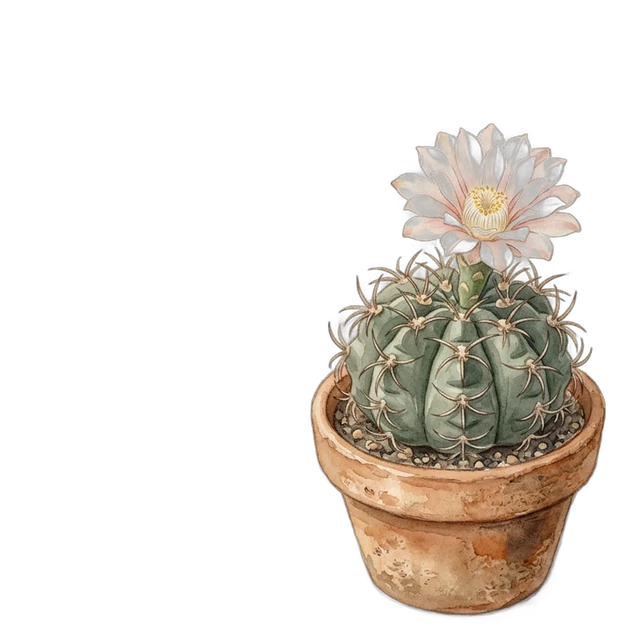
Compare with similar varieties
| Variety | Sowing | Harvest | Days | Spacing | Difficulty |
|---|---|---|---|---|---|
| Ladyfinger cactus (Mammillaria elongata) | May–Jul | — | — | 15 cm | Easy |
| Mammillaria bombycina (silken pincushion cactus) | Mar–May | — | — | 15 cm | Easy |
| Mammillaria carmenae (white Tamaulipas cactus) | Mar–May | — | — | 10 cm | Moderate |
| Mammillaria haageana (red-flowered globular cactus) | Mar–May | — | — | 10 cm | Easy |
| Old lady cactus (Mammillaria hahniana) | Mar–May | — | ~1825 | 15 cm | Easy |
| Feather cactus (Mammillaria plumosa) | Mar–May | — | ~1825 | 20 cm | Moderate |
| Mammillaria pseudoperbella (Mammillaria perbella) | Mar–May | — | ~1825 | 12 cm | Easy |
No known toxicity to people or pets
No toxic substances are known in this species. The risk is physical: the spines prick and the wound can become infected, so keep it out of reach of children and curious animals. A pet that bites the cactus may get spine pricks in the mouth and mild stomach upset.