Credits and licences
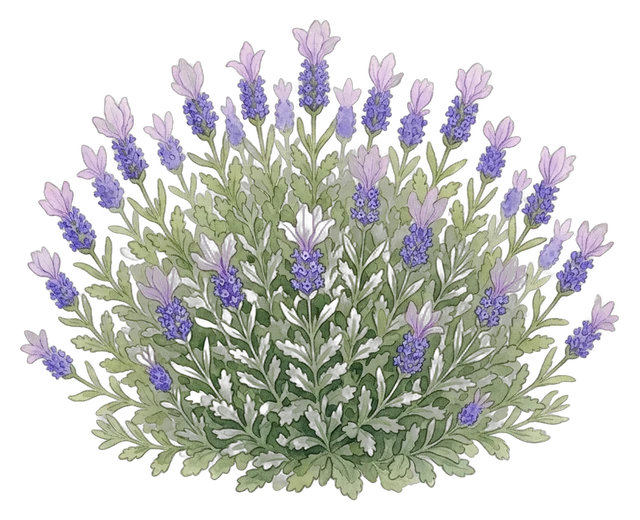
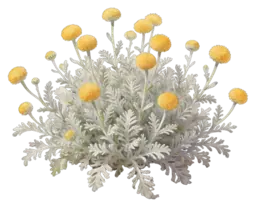
- #1 — vueltaalhuerto illustration
- #2 — vueltaalhuerto illustration
- #3 — vueltaalhuerto illustration
- #4 — vueltaalhuerto illustration
- #5 — vueltaalhuerto illustration
- #6 — vueltaalhuerto illustration
- #7 — vueltaalhuerto illustration
- #8 — vueltaalhuerto illustration
- #9 — vueltaalhuerto illustration
- #10 — vueltaalhuerto illustration
Eugenia myrtifolia (magenta lilly pilly)
and 3 more names
Australian brush cherry, Syzygium paniculatum, Eugenia NewportEugenia myrtifolia (magenta lilly pilly) is sown in seed trays from March to April, and planted out from March to May and from September to October. It flowers from May to July. Grow it in full sun, 50 cm apart, with moderate watering. Dates are for a mild temperate climate in the northern hemisphere; the calendar below adjusts them to your zone.
What else to sow in March and April
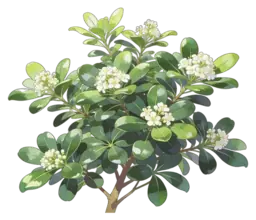
Eugenia, sold in nurseries as Eugenia myrtifolia and whose accepted name is Syzygium paniculatum, is an evergreen shrub or small tree with a dense crown, 3 to 6 m tall if left to grow freely, although it is kept at 1.5 to 3 m when clipped as a hedge. It has glossy, oval, pointed dark green leaves 3 to 7 cm long, with bronze or reddish new growth, which is why a freshly clipped hedge looks coppery. In spring and summer it bears white, tassel-like flowers with long stamens that attract bees, followed by oval magenta or purple fruits 1.5 to 2 cm long, with one large seed and spongy, edible white flesh with a mild, slightly sharp flavour. It is widely used for hedges and boundary screens on the coast and in the south of Spain because it takes pruning well, but it needs a climate without hard frosts. The variety ‘Newport’ is a more compact selection, about 2 m tall, very commonly used for hedges.
Family and origin: Myrtle family (Myrtaceae) · native to Eastern Australia (New South Wales and Queensland) · More plants from Oceania
01In your area
How will it do in your garden?
Year calendar
| Task | J | F | M | A | M | J | J | A | S | O | N | D |
|---|---|---|---|---|---|---|---|---|---|---|---|---|
| Seed trayMar–Apr | no | no | yes | yes | no | no | no | no | no | no | no | no |
| Plant / transplantMar–May, Sep–Oct | no | no | yes | yes | yes | no | no | no | yes | yes | no | no |
| HarvestMay–Jul | no | no | no | no | yes | yes | yes | no | no | no | no | no |
| FloweringMay–Jul | no | no | no | no | yes | yes | yes | no | no | no | no | no |
| PruningApr–May, Sep | no | no | no | yes | yes | no | no | no | yes | no | no | no |
| CuttingsJun–Aug | no | no | no | no | no | yes | yes | yes | no | no | no | no |
Its life cycle at a glance
Swipe and tap a stage to see its details.
02Planting
Where and how to plant it
Sow the seed 1 cm deep; leave 50 cm between plants and 50 cm between rows.
50 cm between plants · 50 cm between rows
Seed at a depth of 1 cm; seedlings go in with the root ball level with the soil.
- Transplanting
- Mar–May, Sep–Oct
- Seed tray
- Mar–Apr
- Germination
- ~30 days
- TipFor a hedge, plant 40 or 50 cm apart and trim several times a year, after each flush of growth in spring, summer and autumn, with very sharp shears.
- TipThe fruits can be eaten safely if the plant has not been treated with chemicals.
- TipDates, spacing and cold hardiness are a rough guide.
- Common mistakePlanting too deep smothers the crown of the plant.
03Care
Care through the year
Sun and aspectFull sun · 8 h of sun · South or south-west, with nothing casting shade at midday
- Too little sun
- Ideal range
- Plenty of sun
South or south-west, with nothing casting shade at midday
Strong sun: Loves full midday sun and high temperatures.
Sun or partial shade in a spot sheltered from cold winter winds. Once established, it withstands light, brief frosts down to about -2 °C; in colder areas it loses its leaves and may die.
- TipWatch for the eugenia psyllid, a tiny insect that feeds on the new leaves and leaves them blistered with sunken, reddish, distorted patches: cut off the affected shoots and remove the debris, and consult the plant health service if the attack is severe.
WateringMoist but never waterlogged · summer: every 2-3 days
- Summerevery 2-3 days6 L per plant/week
- Spring / Autumnevery 4-5 days3 L per plant/week
- Winterevery 2-3 weeks0.9 L per plant/week
Moist but never waterlogged: Water before the surface is completely dry. Never puddles. Mulch: straw or dry plant material cuts watering by 30-50 %.
Water deeply once a week in summer for the first two years, and after that once every two or three weeks on the coast. It prefers moisture-retentive soil and suffers in prolonged drought: it drops its leaves and becomes infested with pests. It does not tolerate waterlogging. In very chalky soil it turns yellow from iron deficiency; apply iron chelate.
When to water? Push your finger 3 cm into the soil next to the base of the plant:
- Damp: soil sticks to your finger. Do not water today. The moisture is fine.
- Cool but clean, no mud. Water early tomorrow if it stays like this, or this evening.
- Dry and dusty. Water now, and deeply. This is not where it likes to be.
- TipWater generously in the first year until it is established; after that it looks after itself.
Soil and feedingpH 5.5–7.5 · Deep soil with good drainage
Deep soil with good drainage.
Medium/high.
This plant prefers a pH between 5.5 and 7.5 (slightly acidic to slightly alkaline).
- Water generously in the first year until it is established.
- A thick mulch all year round, not touching the trunk.
- TipFeed it in spring with a fertiliser for acid-loving plants or with mature compost.
PruningWhen: Apr–May, Sep
Pruning time for this plant: Apr–May, Sep.
- TipFormative pruning after flowering keeps the shape compact.
- Common mistakePruning at the wrong time removes the year's flower buds.
Common mistakes and tips
- TipScale insects and aphids can also appear.
04Harvest
Harvesting and storing
Harvest in May–Jul.
05Propagation
Make new plants
It is propagated by cuttings and by seed. The most common method for hedges is semi-ripe cuttings: in summer take pieces 10 to 15 cm long from the current year’s shoots, remove the lower leaves, dip them in rooting hormone and plant them in a sand and peat mix, in partial shade and with constant moisture; they root in 6 to 10 weeks. The large, round seed is taken from the ripe fruit, sown fresh 1 cm deep with warmth of 20 to 28 °C, and germinates in 3 to 6 weeks, but seed-raised plants are variable, which is why cuttings are preferable for hedges. Varieties such as ‘Newport’ are always propagated by cuttings.
Seeds: how to germinate them~30 days
06Uses and health
What it is used for, and with what care
The fruits are edible, although eating a lot of them can upset the stomach, and the seed is not eaten. There are no reliable data on the toxicity of the leaves, or for dogs and cats, so as a precaution do not let them chew branches or leaves. If you trim a hedge, do not use clippings treated with insecticides for anything edible.
- Properties
- A dense, glossy hedge that takes pruning well and gives shelter to birds; its flowers attract bees and its fruits are edible.
- Uses
- The ripe magenta fruits are eaten raw and have a mild, slightly sharp flavour, with a large seed that is not eaten; they are also used in jams and jellies. Only eat fruit from plants that have not been treated with chemicals, and wash it well. The leaves are not used in cooking.
For guidance only; this is not medical treatment and does not replace advice from a doctor or vet.
07Companions and related plants