Credits and licences
- #1 — vueltaalhuerto illustration
- #2 — vueltaalhuerto illustration
- #3 — vueltaalhuerto illustration
- #4 — vueltaalhuerto illustration
- #5 — vueltaalhuerto illustration
- #6 — vueltaalhuerto illustration
- #7 — vueltaalhuerto illustration
- #8 — vueltaalhuerto illustration
- #9 — vueltaalhuerto illustration
- #10 — vueltaalhuerto illustration
Leopard plant (Farfugium japonicum)
and 3 more names
farfugium, tsuwabuki, Ligularia japonicaLeopard plant (Farfugium japonicum) is sown in seed trays from January to March, and planted out from March to April and from October to November. It flowers from October to December. Grow it in sun or partial shade, 60 cm apart, with plenty of watering. Dates are for a mild temperate climate in the northern hemisphere; the calendar below adjusts them to your zone.
What else to sow in January, February and March
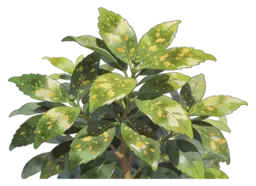
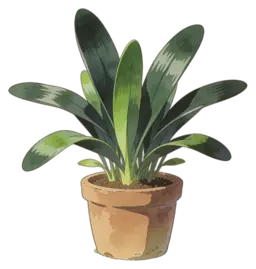
An evergreen perennial forming a wide clump of large, rounded or kidney-shaped leaves about 15 to 30 cm across, thick, glossy and dark green, with wavy or toothed edges, on long stalks. Because these leaves recall a Basque beret (txapela), in Spain it is called 'boina de vasco'. In autumn, from October to December, it sends up stems up to about 60 to 80 cm tall with yellow daisy-like flowers, just when almost nothing else is flowering in the shady corner. It is grown mainly for its foliage: there are forms with leaves spotted with yellow, such as 'Aureomaculatum' (the 'leopard plant'), and forms with silvery or very large leaves. The name 'ligularia' belongs to a related genus, which is why it is still sold as Ligularia tussilaginea. It needs shade or partial shade, fertile, moist soil with good drainage, and shelter from the wind. It stays as a clump about 40 to 60 cm tall. It contains pyrrolizidine alkaloids: it is not edible.
Family and origin: Daisy family (Asteraceae) · native to Japan, Korea, Taiwan and the east coast of China (cliffs, seashores and damp, shady woods) · More plants from Far East
01In your area
How will it do in your garden?
Year calendar
| Task | J | F | M | A | M | J | J | A | S | O | N | D |
|---|---|---|---|---|---|---|---|---|---|---|---|---|
| Seed trayJan–Mar | yes | yes | yes | no | no | no | no | no | no | no | no | no |
| Plant / transplantMar–Apr, Oct–Nov | no | no | yes | yes | no | no | no | no | no | yes | yes | no |
| FloweringOct–Dec | no | no | no | no | no | no | no | no | no | yes | yes | yes |
| PruningMar–Apr | no | no | yes | yes | no | no | no | no | no | no | no | no |
| Divide the clumpMar–Apr | no | no | yes | yes | no | no | no | no | no | no | no | no |
Its life cycle at a glance
Swipe and tap a stage to see its details.
02Planting
Where and how to plant it
Sow the seed 2 mm deep; leave 60 cm between plants and 80 cm between rows.
60 cm between plants · 80 cm between rows
Seed at a depth of 2 mm; seedlings go in with the root ball level with the soil.
- Transplanting
- Mar–Apr, Oct–Nov
- Seed tray
- Jan–Mar
- Germination
- ~21 days
- TipWash your hands after handling it and do not plant it where children or animals eat.
- TipPlant in a grid or at wide spacing: they will fill in on their own with runners.
03Care
Care through the year
Sun and aspectSun and shade · 4 h of sun · shade in summer
- Too little sun
- Ideal range
- Plenty of sun
East, or south with light shade in the middle of the day
Gentle sun: Morning or afternoon sun. Midday summer sun stresses and scorches it.
Shade or partial shade: gentle morning sun and shade for the rest of the day. In strong afternoon sun, especially in southern and inland Spain, the large leaves wilt and scorch even if the soil is moist. Protect it from the wind, which tears the leaves, and from hard frosts. Grown in the north of Spain it can take more sun if the soil does not dry out.
WateringConstantly moist · summer: 2 or 3 times a week in a pot; in the ground, when the surface dries
- Summer2 or 3 times a week in a pot; in the ground, when the surface dries1.4 L per plant/week
- Spring / Autumnevery 3-4 days0.6 L per plant/week
- Winteronly if it does not rain0.2 L per plant/week
Constantly moist: The soil should always feel cool and damp. Ideal with mulch and drip irrigation. Mulch: straw or dry plant material cuts watering by 30-50 %.
It likes cool, moist soil all summer, but with good drainage: standing water rots the roots. With its broad leaves it loses a lot of water on hot days, so it looks 'droopy' before other plants do; do not hesitate to water it first thing in the morning. A mulch of bark or compost keeps in moisture.
When to water? Push your finger 2 cm into the soil next to the base of the plant:
- Damp: soil sticks to your finger. Do not water, although for this plant it is just right — check again tomorrow.
- Cool but clean, no mud. Water today: it likes to stay constantly moist.
- Dry and dusty. Water urgently and add mulch to hold in moisture.
- TipIn areas with frost, put a thick, dry mulch around the base in winter: it may lose its leaves, but it regrows if the roots do not freeze.
- TipRegular watering at the start helps them carpet the ground sooner.
Soil and feedingpH 5.5–7.5 · Airy soil with some organic matter
Airy soil with some organic matter.
Medium.
This plant prefers a pH between 5.5 and 7.5 (slightly acidic to slightly alkaline).
- Regular watering at the start speeds up coverage by runners.
- Edging to contain it if the species tends to spread.
- Very compacted soil holds back its spread and leaves bare patches.
- Without proper spacing they do not cover well and weeds appear in between.
- TipPlant it in autumn or spring, in a cool, shady corner, in humus-rich, well-drained, slightly acid to neutral soil.
- TipIn a pot, use a large container and a light potting mix with bark.
- Common mistakeCompacted soil holds back their spread.
PruningWhen: Mar–Apr
Pruning time for this plant: Mar–Apr.
- TipRemove damaged or dead leaves in spring; it needs no other pruning.
04Propagation
Make new plants
The most reliable method is to divide the clump in spring, with a few buds and roots per piece, especially for named forms, which do not come true from seed. It can also be grown from seed sown in winter or spring in a pot, in a cool, sheltered spot. Seed-raised plants take longer to reach a good size and may vary.
Seeds: how to germinate them~21 days
05Uses and health
What it is used for, and with what care
WARNING: this plant contains pyrrolizidine alkaloids, substances that can damage the liver if swallowed, especially repeatedly. Do not eat it or use it in herbal teas or home remedies, and stop children, dogs, cats, rabbits and other animals chewing the leaves or stems. If a significant amount is swallowed, consult a doctor or vet. Data on its specific toxicity are scarce; the classification is a cautious guide.
- Properties
- An ornamental plant with very decorative foliage and yellow autumn flowers, useful for damp, shady corners. It is not grown for any health benefit.
- Uses
- Eating it or using it in herbal teas, syrups or home remedies is not recommended: it contains pyrrolizidine alkaloids, which can damage the liver.
For guidance only; this is not medical treatment and does not replace advice from a doctor or vet.
06Companions and related plants