
Credits and licences
- #1 — vueltaalhuerto illustration
- #2 — vueltaalhuerto illustration
- #3 — vueltaalhuerto illustration
- #4 — vueltaalhuerto illustration
- #5 — vueltaalhuerto illustration
- #6 — vueltaalhuerto illustration
- #7 — vueltaalhuerto illustration
- #8 — vueltaalhuerto illustration
- #9 — vueltaalhuerto illustration
- #10 — vueltaalhuerto illustration
Elecampane
and 1 more names
inulaElecampane is sown in seed trays from February to March or directly outdoors from March to April and in October, and planted out from April to May and in October. It is harvested from October to November (about 540 days to the first harvest). Grow it in full sun, 60 cm apart, with moderate watering. Dates are for a mild temperate climate in the northern hemisphere; the calendar below adjusts them to your zone.
What else to sow in February, March, April and October
A robust herbaceous perennial, 1.2 to 2 m tall, with a basal rosette of large, oval leaves, rough above and downy beneath, and upright stems with smaller leaves that clasp the stem. In summer it bears large yellow daisy-like flowers 6 to 8 cm across, with long, thin ray florets around a central disc and broad bracts beneath. Underground it has a thick, fleshy rhizome with aromatic, camphor-scented roots, which for centuries has been used in traditional medicine and to flavour liqueurs. It is a plant of temperate, cool climates: it thrives in deep, moist, rich soils, in full sun or partial shade, and struggles on hot, dry coasts. It is a tall plant for the back of the border; the flowers attract bees and butterflies. Note: like other members of the daisy family, it can cause contact allergy, and its medicinal use has not been shown to be safe, so no doses or recipes are given here.
Family and origin: Daisy family (Asteraceae) · native to Western and Central Asia; naturalised across much of Europe · More plants from Central Asia
01In your area
How will it do in your garden?
Year calendar
| Task | J | F | M | A | M | J | J | A | S | O | N | D |
|---|---|---|---|---|---|---|---|---|---|---|---|---|
| Seed trayFeb–Mar | no | yes | yes | no | no | no | no | no | no | no | no | no |
| Direct sowingMar–Apr, Oct | no | no | yes | yes | no | no | no | no | no | yes | no | no |
| Plant / transplantApr–May, Oct | no | no | no | yes | yes | no | no | no | no | yes | no | no |
| HarvestOct–Nov | no | no | no | no | no | no | no | no | no | yes | yes | no |
| FloweringJul–Sep | no | no | no | no | no | no | yes | yes | yes | no | no | no |
| Divide the clumpMar, Oct–Nov | no | no | yes | no | no | no | no | no | no | yes | yes | no |
Its life cycle at a glance
Swipe and tap a stage to see its details.
02Planting
Where and how to plant it
Sow the seed 2 mm deep; leave 60 cm between plants and 90 cm between rows.
60 cm between plants · 90 cm between rows
Seed at a depth of 2 mm; seedlings go in with the root ball level with the soil.
- In a square-foot bed
- 1 plant every 4 squares30 × 30 cm squares
- Transplanting
- Apr–May, Oct
- Seed tray
- Feb–Mar
- Direct sowing
- Mar–Apr, Oct
03Care
Care through the year
Sun and aspectFull sun · 8 h of sun · South or south-west, with nothing casting shade at midday
- Too little sun
- Ideal range
- Plenty of sun
South or south-west, with nothing casting shade at midday
Strong sun: Loves full midday sun and high temperatures.
Full sun or partial shade; in hot climates it appreciates a cool spot with afternoon shade. In low light it becomes leggy and the wind knocks it over.
WateringMoist but never waterlogged · summer: every 2-3 days
- Summerevery 2-3 days0.8 L per plant/week
- Spring / Autumnevery 4-5 days0.4 L per plant/week
- Winterevery 2-3 weeks0.1 L per plant/week
Moist but never waterlogged: Water before the surface is completely dry. Never puddles. Mulch: straw or dry plant material cuts watering by 30-50 %.
Water regularly, especially in summer: it needs soil that is always somewhat moist, deep and rich in organic matter. It does not cope well with prolonged drought or dry heat, but nor does it like continual waterlogging.
When to water? Push your finger 3 cm into the soil next to the base of the plant:
- Damp: soil sticks to your finger. Do not water today. The moisture is fine.
- Cool but clean, no mud. Water early tomorrow if it stays like this, or this evening.
- Dry and dusty. Water now, and deeply. This is not where it likes to be.
- TipPlant it in a deep, moist spot, about 60 cm between plants, and leave room: it forms a large clump.
- Common mistakeOverwatering: most prefer to dry out between waterings.
Soil and feedingpH 6–7.5 · Free-draining, airy mix
Free-draining, airy mix.
40 % topsoil · 30 % coarse sand or perlite · 30 % well-rotted compost (less compost for Mediterranean herbs).
High: almost all prefer being thirsty to being wet.
This plant prefers a pH between 6.0 and 7.5 (slightly acidic to slightly alkaline).
- Mediterranean herbs in very rich, heavily watered soil: they grow a lot but lose their aroma.
- A pot without a drainage hole: the roots rot within weeks.
Pruning
- TipPinch out the tips often so it branches and does not run to seed so soon.
Common mistakes and tips
- TipCut off faded flower stems to prolong flowering and stop it self-seeding too freely.
- TipDo not trust recipes with doses from the internet for medicinal use: consult a health professional, and do not use it during pregnancy or with children.
- TipWatch out for powdery mildew, aphids and slugs on young leaves.
- Common mistakeLetting them flower early makes the leaves bitter (in leafy herbs).
04Harvest
Harvesting and storing
Harvest in Oct–Nov; the first, about 540 days after sowing.
05Propagation
Make new plants
It is propagated from seed and, better, by division. The seed needs light and a little cold: sow it on the surface without covering, in autumn or late winter, and it germinates in two to four weeks at about 10 to 15 °C. Seed-grown plants flower in their second year. Divide in autumn or early spring, separating pieces of rhizome with buds and roots and replanting them about 60 cm apart; pieces of root with a bud can also be used.
Seeds: how to germinate them~21 days
- TipTo use the root, lift it in autumn of the second or third year, when the leaves die back, with a fork and without cutting it; wash it and dry it thoroughly before storing.
06Uses and health
What it is used for, and with what care
WARNING: the root contains sesquiterpene lactones (such as alantolactone), which can cause contact dermatitis in people allergic to the daisy family (daisies, ragweed, arnica) and digestive upset if taken in quantity. Internal use is not recommended during pregnancy, while breastfeeding or in children, nor alongside medication without advice. No doses or preparations are given. There is no reliable data for dogs and cats: as a precaution, do not let them eat it. If itching, redness or hives appear after handling it, wash with water and consult a doctor.
- Properties
- A plant with a long tradition in folk medicine, above all for its aromatic root, but its effectiveness and safety are not well established; here it is treated as a garden plant of historical interest, with no recommended therapeutic uses.
- Uses
- Historically the root has been candied and used to flavour liqueurs and sweets, for its bitter, camphor-like taste. No recipes or doses are given; if you want to use it, consult a reliable source and do not take it in quantity.
For guidance only; this is not medical treatment and does not replace advice from a doctor or vet.
07Companions and related plants
What to plant it with
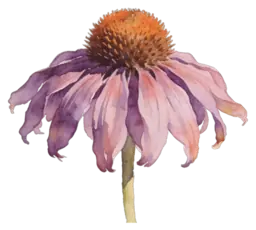
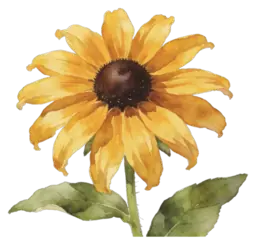
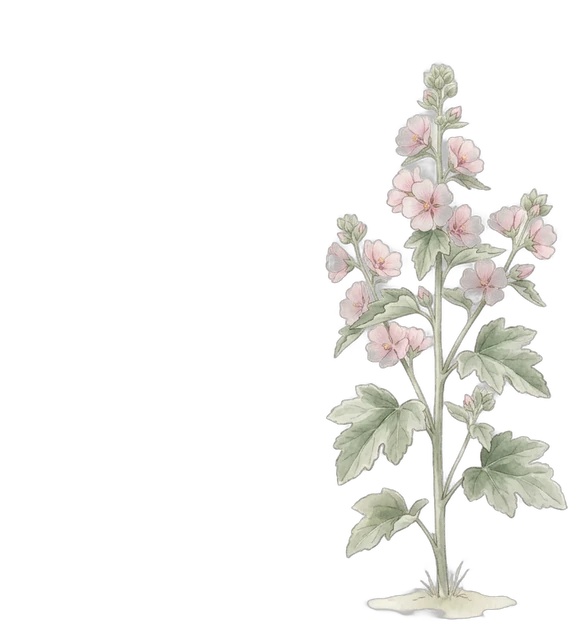
Group it in the same bedPlants with the same watering or the same sun
They are not essential companions, but you will not have to water or position them differently.