
Credits and licences
- #1 — vueltaalhuerto illustration
- #2 — vueltaalhuerto illustration
- #3 — vueltaalhuerto illustration
- #4 — vueltaalhuerto illustration
- #5 — vueltaalhuerto illustration
- #6 — vueltaalhuerto illustration
- #7 — vueltaalhuerto illustration
- #8 — vueltaalhuerto illustration
- #9 — vueltaalhuerto illustration
- #10 — vueltaalhuerto illustration
Caraway
Caraway is sown directly outdoors from March to April and from September to October. It is harvested from June to August (about 365 days to the first harvest). Grow it in full sun, 25 cm apart, with moderate watering. Dates are for a mild temperate climate in the northern hemisphere; the calendar below adjusts them to your zone.
What else to sow in March, April, September and October
A biennial plant in the carrot family (Apiaceae): in its first year it forms a rosette of finely divided leaves, like a carrot's, and in its second year it sends up a stem about 40 to 60 cm tall with umbels of small white flowers. What is used are its fruits, which we call seeds, curved, brown and with a strong, distinctive aroma used in breads, cheeses, cabbage, cured meats and liqueurs. It is hardy, withstands a great deal of cold and prefers sun and loose, cool soil. Do not confuse it with cumin (Cuminum cyminum), a different species with a different flavour. Note: the leaves resemble those of other members of the carrot family, some highly toxic, such as hemlock (Conium maculatum); never forage wild caraway unless you are completely sure.
Family and origin: Carrot family (Apiaceae) · native to Europe and western Asia · More plants from Temperate Europe
01In your area
How will it do in your garden?
Year calendar
| Task | J | F | M | A | M | J | J | A | S | O | N | D |
|---|---|---|---|---|---|---|---|---|---|---|---|---|
| Direct sowingMar–Apr, Sep–Oct | no | no | yes | yes | no | no | no | no | yes | yes | no | no |
| HarvestJun–Aug | no | no | no | no | no | yes | yes | yes | no | no | no | no |
| FloweringMay–Jul | no | no | no | no | yes | yes | yes | no | no | no | no | no |
Its life cycle at a glance
Swipe and tap a stage to see its details.
02Planting
Where and how to plant it
Sow the seed 8 mm deep; leave 25 cm between plants and 45 cm between rows.
25 cm between plants · 45 cm between rows
Seed at a depth of 8 mm.
- In a square-foot bed
- 1 plant per square30 × 30 cm squares
- Direct sowing
- Mar–Apr, Sep–Oct
- Germination
- ~14 days
03Care
Care through the year
Sun and aspectFull sun · 8 h of sun · South or south-west, with nothing casting shade at midday
- Too little sun
- Ideal range
- Plenty of sun
South or south-west, with nothing casting shade at midday
Strong sun: Loves full midday sun and high temperatures.
Full sun or light partial shade; in very hot areas it appreciates shade in the mid-afternoon.
WateringMoist but never waterlogged · summer: every 2-3 days
- Summerevery 2-3 days0.8 L per plant/week
- Spring / Autumnevery 4-5 days0.4 L per plant/week
- Winterevery 2-3 weeks0.1 L per plant/week
Moist but never waterlogged: Water before the surface is completely dry. Never puddles. Mulch: straw or dry plant material cuts watering by 30-50 %.
Moderate, regular watering while it germinates and forms its rosette; once established it copes well with short droughts. Avoid waterlogging and do not wet the leaves in the hottest hours.
When to water? Push your finger 3 cm into the soil next to the base of the plant:
- Damp: soil sticks to your finger. Do not water today. The moisture is fine.
- Cool but clean, no mud. Water early tomorrow if it stays like this, or this evening.
- Dry and dusty. Water now, and deeply. This is not where it likes to be.
Soil and feedingpH 6–7.5 · Free-draining, airy mix
Free-draining, airy mix.
40 % topsoil · 30 % coarse sand or perlite · 30 % well-rotted compost (less compost for Mediterranean herbs).
High: almost all prefer being thirsty to being wet.
This plant prefers a pH between 6.0 and 7.5 (slightly acidic to slightly alkaline).
- Mediterranean herbs in very rich, heavily watered soil: they grow a lot but lose their aroma.
- A pot without a drainage hole: the roots rot within weeks.
- TipSow in a bed of loose, crumbly, stone-free soil where the root can go deep, and thin the plants to about 25 cm apart.
- TipMany Mediterranean herbs prefer poor soil and little water: more aroma.
Pruning
- TipPinch out the tips often so it branches and does not run to seed so soon.
Common mistakes and tips
- TipCut the umbels when the seeds turn brown, before they shed, and leave them to dry in a well-ventilated place, on a cloth or inside a paper bag, until you can thresh them.
- TipIf you want leaves, chop the young ones from the first year, which are used like parsley in salads and soups.
- Common mistakeLetting them flower early makes the leaves bitter (in leafy herbs).
04Harvest
Harvesting and storing
Harvest in Jun–Aug; the first, about 365 days after sowing.
05Propagation
Make new plants
It is propagated only from seed. Sow direct, because it forms a long taproot that does not take well to transplanting: in autumn in mild climates, or in early spring where frosts are hard, about 5 to 10 mm deep. The seed comes up in two or three weeks, sometimes longer. The plant flowers and sets seed in its second year, so to save your own seed just leave a few plants in the garden until the following summer.
Seeds: how to germinate them~14 days
06Uses and health
What it is used for, and with what care
CONFUSION WARNING: its leaves and first-year rosette look very like those of other members of the carrot family, and some are highly toxic, such as hemlock (Conium maculatum), cowbane (Cicuta virosa) or fool's parsley. Never forage wild caraway without a certain identification; always grow it from bought, labelled seed. Like other members of the carrot family, it can cause an allergic reaction in people sensitive to celery, cumin or carrot. The pure essential oil is highly concentrated and must not be taken internally. There is no reliable toxicity data for dogs and cats.
- Properties
- The fruits, which we call seeds, provide fibre and aromatic oils and have long been used in central European cooking to flavour heavy dishes and pulses.
- Uses
- The seeds, whole or ground, flavour breads, cheeses, cabbage and sauerkraut, potatoes, cured meats, stews and liqueurs. The young leaves from the first year are chopped like parsley in salads and soups, and the root in its second season has been eaten boiled, like a parsnip.
For guidance only; this is not medical treatment and does not replace advice from a doctor or vet.
07Companions and related plants
What to plant it with
Good companions
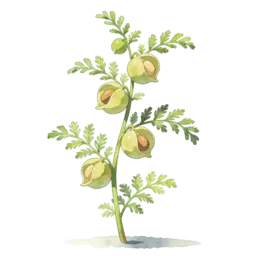
Keep apart
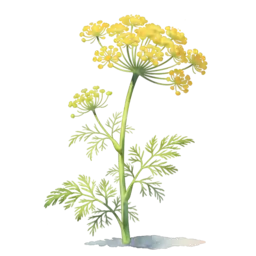
Group it in the same bedPlants with the same watering or the same sun
They are not essential companions, but you will not have to water or position them differently.