
Credits and licences
- #1 — vueltaalhuerto illustration
- #2 — vueltaalhuerto illustration
- #3 — vueltaalhuerto illustration
- #4 — vueltaalhuerto illustration
- #5 — vueltaalhuerto illustration
- #6 — vueltaalhuerto illustration
- #7 — vueltaalhuerto illustration
- #8 — vueltaalhuerto illustration
- #9 — vueltaalhuerto illustration
- #10 — vueltaalhuerto illustration
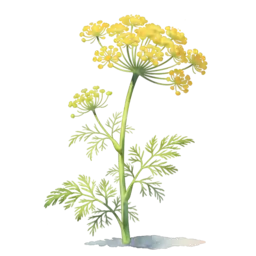
Cumin
Cumin is sown directly outdoors from March to May. It is harvested from July to September (about 110 days to the first harvest). Grow it in full sun, 15 cm apart, with little watering. Dates are for a mild temperate climate in the northern hemisphere; the calendar below adjusts them to your zone.
What else to sow in March, April and May
A low-growing annual of the carrot family, with fine leaves and tiny pinkish or white flowers, grown for its aromatic seeds (actually fruits), essential in the cooking of the Maghreb, India and the Middle East. It needs heat, sun and little water, and its life cycle is short but demanding in terms of temperature. Do not confuse it with caraway (Carum carvi), which has a different flavour and is a biennial, or with black cumin (Nigella sativa), a plant from another family.
Family and origin: Carrot family (Apiaceae) · native to The eastern Mediterranean, the Middle East and Central Asia · More plants from Fertile Crescent
01In your area
How will it do in your garden?
Year calendar
| Task | J | F | M | A | M | J | J | A | S | O | N | D |
|---|---|---|---|---|---|---|---|---|---|---|---|---|
| Direct sowingMar–May | no | no | yes | yes | yes | no | no | no | no | no | no | no |
| HarvestJul–Sep | no | no | no | no | no | no | yes | yes | yes | no | no | no |
| FloweringJun–Jul | no | no | no | no | no | yes | yes | no | no | no | no | no |
Its life cycle at a glance
Swipe and tap a stage to see its details.
02Planting
Where and how to plant it
Sow the seed 6 mm deep; leave 15 cm between plants and 35 cm between rows.
15 cm between plants · 35 cm between rows
Seed at a depth of 6 mm.
- In a square-foot bed
- 4 plants per square30 × 30 cm squares
- Direct sowing
- Mar–May
- Germination
- ~10 days
- TipIt is a small, delicate plant: wind can flatten it and late frosts kill it, so do not sow too early.
03Care
Care through the year
Sun and aspectFull sun · 8 h of sun · South or south-west, with nothing casting shade at midday
- Too little sun
- Ideal range
- Plenty of sun
South or south-west, with nothing casting shade at midday
Strong sun: Loves full midday sun and high temperatures.
WateringLet it dry out between waterings · summer: every 5-7 days
- Summerevery 5-7 days0.4 L per plant/week
- Spring / Autumnevery 10-14 days0.2 L per plant/week
- Winteronly in extreme drought (once a month)0.1 L per plant/week
Let it dry out between waterings: A Mediterranean favourite: better thirsty than overwatered.
Keep the soil slightly moist until the seedlings come up and then water sparingly: too much moisture encourages fungal diseases such as powdery mildew and fusarium. Let it dry out between waterings.
When to water? Push your finger 5 cm into the soil next to the base of the plant:
- Damp: soil sticks to your finger. Do not water yet. It has more than enough; wait for it to dry out more.
- Cool but clean, no mud. Wait another 1-2 days before watering.
- Dry and dusty. Water now, but moderately. Do not overdo it: it prefers thirst to excess.
- Common mistakeOverwatering: most prefer to dry out between waterings.
Soil and feedingpH 6–7.5 · Free-draining, airy mix
Free-draining, airy mix.
40 % topsoil · 30 % coarse sand or perlite · 30 % well-rotted compost (less compost for Mediterranean herbs).
High: almost all prefer being thirsty to being wet.
This plant prefers a pH between 6.0 and 7.5 (slightly acidic to slightly alkaline).
- Mediterranean herbs in very rich, heavily watered soil: they grow a lot but lose their aroma.
- A pot without a drainage hole: the roots rot within weeks.
- TipChoose loose, well-drained, sunny soil.
- TipMany Mediterranean herbs prefer poor soil and little water: more aroma.
Pruning
- TipPinch out the tips often so it branches and does not run to seed so soon.
Common mistakes and tips
- TipIt needs about three to four months of warmth to ripen, so in cool or damp climates it may not set seed well.
- Common mistakeLetting them flower early makes the leaves bitter (in leafy herbs).
04Harvest
Harvesting and storing
Harvest in Jul–Sep; the first, about 110 days after sowing.
- TipHarvest when the umbels and fruits turn brown, cutting the stems in the morning and drying them in the shade on a cloth; then rub out the seeds and store them in an airtight jar.
05Propagation
Make new plants
Only by seed, sown directly in its final position: the root is fine and does not take well to transplanting. Sow very shallowly in drills when the soil is above 15 to 18 °C and there is no more frost, thin to about 10 to 15 cm apart and keep the soil slightly moist until germination.
Seeds: how to germinate them~10 days
06Uses and health
What it is used for, and with what care
No toxicity in culinary quantities. In large amounts it can cause digestive upset. Do not confuse it with black cumin (Nigella sativa) or with caraway. If you save your own seed, only collect the umbels from the plants you sowed: some highly toxic wild members of the carrot family, such as hemlock, look similar and can come up among crops. If you are pregnant, do not use medicinal or concentrated amounts without consulting your doctor. In pets, culinary use is not a problem, but do not give them the spice in quantity.
- Properties
- An aromatic spice traditionally used in cooking as a digestive; it provides iron and essential oils, but in cooking quantities its effect is purely culinary.
- Uses
- The whole or ground seeds flavour pulses, meat, marinades, cheeses, breads, chickpeas and blends such as garam masala or ras el hanout; it is worth toasting them briefly in a dry pan to bring out the aroma.
For guidance only; this is not medical treatment and does not replace advice from a doctor or vet.
07Companions and related plants
What to plant it with
Keep apart
Group it in the same bedPlants with the same watering or the same sun
They are not essential companions, but you will not have to water or position them differently.