
Credits and licences
- #1 — vueltaalhuerto illustration
- #2 — vueltaalhuerto illustration
- #3 — vueltaalhuerto illustration
- #4 — vueltaalhuerto illustration
- #5 — vueltaalhuerto illustration
- #6 — vueltaalhuerto illustration
- #7 — vueltaalhuerto illustration
- #8 — vueltaalhuerto illustration
- #9 — vueltaalhuerto illustration
Alocasia micholitziana 'Frydek' (green velvet alocasia)
and 4 more names
green velvet taro, Frydek, elephant ear, alocasiaAlocasia micholitziana 'Frydek' (green velvet alocasia) is planted from April to June. Grow it in sun or partial shade, 50 cm apart, with moderate watering. Dates are for a mild temperate climate in the northern hemisphere; the calendar below adjusts them to your zone.
Alocasia micholitziana, almost always sold as 'Frydek' or 'green velvet', is an upright aroid from the Philippines, between 50 cm and 1 m tall in cultivation, that forms a tuft of large arrow-shaped leaves on long, pale green leaf stalks. The leaf blade, about 30 to 40 cm long, is very dark green, with a velvety texture and very prominent greenish-white veins, which makes it one of the most decorative alocasias. It grows from an underground rhizome or corm that forms small daughter corms over the years. Indoors it hardly ever flowers; when it does, it produces a pale green spathe with a cream spadix which, if pollinated, gives red berries. It needs warmth, humidity and an airy potting mix that does not become waterlogged. With the cold or the lack of light in winter it is normal for it to lose leaves or go dormant; with the first warm weather it shoots again. It is an ornamental houseplant; it is not eaten. LEGAL AND SAFETY NOTICE: like other aroids, all its parts contain calcium oxalate crystals and other irritant substances: if chewed or swallowed, they cause intense pain, burning and swelling of the mouth and throat, drooling, vomiting and difficulty swallowing, and the sap can irritate the skin and eyes; the plant is toxic to dogs and cats. What to do: keep it out of reach of children and pets, wear gloves when pruning or dividing it and wash your hands afterwards, and do not confuse it with edible taro (Colocasia esculenta), which is only edible when cooked and is not this plant; if any is swallowed, see a doctor or vet. Legal status: I have not found Alocasia micholitziana listed in the CITES Convention or in the Spanish Catalogue of Invasive Alien Species (Real Decreto 630/2013), so in Spain it can be freely sold, kept and grown; buy only nursery-grown plants.
Family and origin: Arum family (Araceae) · native to The Philippines, in the north of the island of Luzon, in humid mountain forests · More plants from Southeast Asia
01In your area
How will it do in your home?
Year calendar
| Task | J | F | M | A | M | J | J | A | S | O | N | D |
|---|---|---|---|---|---|---|---|---|---|---|---|---|
| Plant / transplantApr–Jun | no | no | no | yes | yes | yes | no | no | no | no | no | no |
| Divide the clumpApr–Jun | no | no | no | yes | yes | yes | no | no | no | no | no | no |
Its life cycle at a glance
Swipe and tap a stage to see its details.
02Care
Care through the year
Sun and aspectSun and shade · 4 h of sun · East, or south with light shade in the middle of the day
- Too little sun
- Ideal range
- Plenty of sun
East, or south with light shade in the middle of the day
Gentle sun: Morning or afternoon sun. Midday summer sun stresses and scorches it.
Bright, indirect light; more than one or two hours of direct sun scorches the leaves. It is sensitive to cold: keep it between about 18 and 29 °C, not below about 12 to 15 °C and never near cold draughts; to be safe, do not leave it outdoors below 10 °C.
- TipTurn the pot every week so it grows evenly towards the light.
WateringMoist but never waterlogged · summer: every 5 to 7 days
- Summerevery 5 to 7 days0.6 L per plant/week
- Spring / Autumnevery 4-5 days0.3 L per plant/week
- Winterevery 10 to 14 days0.1 L per plant/week
Moist but never waterlogged: Water before the surface is completely dry. Never puddles.
Keep the potting mix moist but never waterlogged: water when the top 2 or 3 cm feel dry to the touch and empty the saucer. In winter, with less light and cooler temperatures, water much less, because excess water rots the rhizome. It appreciates high humidity (ideally above 60 %).
When to water? Push your finger 3 cm into the soil next to the base of the plant:
- Damp: soil sticks to your finger. Do not water today. The moisture is fine.
- Cool but clean, no mud. Water early tomorrow if it stays like this, or this evening.
- Dry and dusty. Water now, and deeply. This is not where it likes to be.
- TipPlace it near a bright window without direct midday sun, away from radiators and air conditioning, and mist it or group several plants together to raise the humidity.
- TipIf it loses its leaves in winter, do not throw it away: reduce watering and wait for spring.
- TipAdjust watering to the light and the season: in winter almost all of them need much less water.
- Common mistakeOverwatering is the number one killer: let it dry out as the species requires.
Potting mix and feedingpH 5.5–6.5 · Multi-purpose compost lightened with perlite
Multi-purpose compost lightened with perlite.
70 % multi-purpose compost · 20 % perlite · 10 % coir.
High: always a pot with a drainage hole and a shallow saucer.
This plant prefers a pH between 5.5 and 6.5 (slightly acidic to neutral).
- Repot every 2-3 years into a pot a finger's width wider, not much more.
- A handful of worm castings a year keeps the potting mix alive.
- Reusing old potting mix without refreshing it compacts and rots the roots.
- No drainage in the pot = waterlogged roots = dead plant.
- TipPlant it in a pot with drainage holes, in an airy mix of houseplant potting compost, coir or bark and perlite in roughly equal parts, in a pot not much bigger than the root ball.
- TipFeed it once a month in spring and summer with liquid fertiliser at half strength.
- Common mistakePots without drainage waterlog the roots and rot the plant.
Common mistakes and tips
- TipWipe the dust off the leaves with a damp cloth and watch out for red spider mite and mealybugs, which love it.
- TipDimensions, temperatures and timings are approximate.
03Propagation
Make new plants
It is propagated mainly by division: in spring or early summer, when repotting, separate the rhizome or the daughter corms that already have roots and at least one growing point or leaf, and plant each piece in a pot with an airy potting mix. Small corms that come loose can also sprout in warm, moist potting mix, although they take weeks. It is difficult to propagate from stem cuttings, because it grows from a central rhizome.
04Uses and health
What it is used for, and with what care
SAFETY WARNING: like other aroids, it contains calcium oxalate crystals in its leaves, stems and sap. If bitten or swallowed it causes intense pain, burning and swelling of the mouth and throat, drooling and vomiting, and the sap can irritate the skin and eyes; the genus Alocasia is considered toxic to dogs and cats. Keep it out of reach of children and pets, wear gloves when pruning or dividing it, wash your hands afterwards and consult a doctor or vet if any is swallowed.
- Properties
- An ornamental houseplant; it has no safe medicinal or culinary uses.
- Uses
- It is not edible. Do not use it in food, herbal teas or remedies; do not confuse it with edible taro (Colocasia).
For guidance only; this is not medical treatment and does not replace advice from a doctor or vet.
05Companions and related plants
What to plant it with
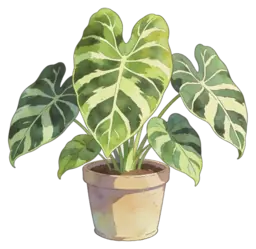
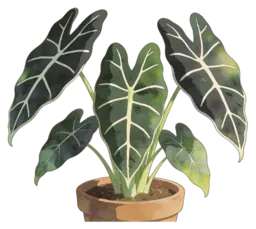
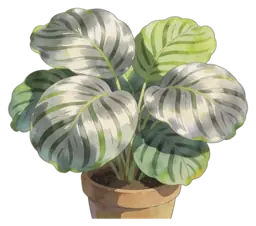
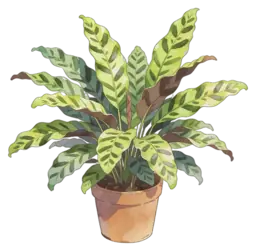
Compare with similar varieties
| Variety | Sowing | Harvest | Days | Spacing | Difficulty |
|---|---|---|---|---|---|
| Alocasia 'Black Velvet' | — | — | — | 30 cm | Moderate |
| Alocasia 'Polly' | — | — | — | 30 cm | Moderate |
| Alocasia cucullata (Chinese taro, Buddha's palm) | Mar–Jun | — | — | 50 cm | Moderate |
| Alocasia micholitziana 'Frydek' (green velvet alocasia) | Apr–Jun | — | — | 50 cm | Moderate |
| Alocasia zebrina | — | — | — | 40 cm | Moderate |