
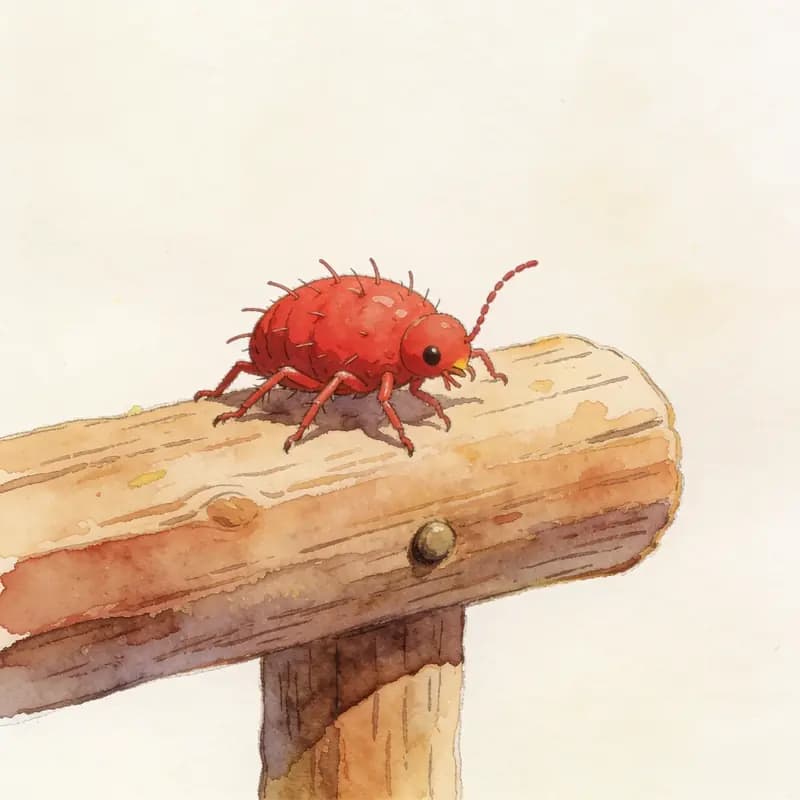
What to look for
- Red or black dots on the perches when you run a finger along them in the morning
- Very pale comb, tired and anaemic birds
- Laying that suddenly collapses
- Reluctance to go into the nest box or to sleep on the perch
Possible causes
- Cracks in old wood of perches and nest boxes: the classic daytime refuge of the red mite
- Lack of regular deep cleaning: red mites hide in cracks by day and come back to attack at night
- Introducing new birds without quarantine is the quickest way to bring mites and diseases into a healthy flock
What to do now
- Remove all the bedding and nest material and dispose of it far from the coop: mites and eggs hide there too
- Treat all the cracks with an acaricide authorised for use on birds, which your vet will recommend
- Repeat the treatment several times, at the pace the product indicates (normally every 5-7 days), to break the cycle
- Replace old perches with round plastic or metal bars, which have fewer cracks where the mites hide during the day.
Prevention
- Use perches that are easy to take apart and clean or renew them every spring so as not to leave refuge for the mites
- Check the cracks of perches and nest boxes monthly with a torch: by day the red mites hide there
- Apply food-grade diatomaceous earth on perches and in nests
- Strict quarantine for new birds (separate accommodation, separate equipment) until you confirm they are healthy
When to call the vet
If the infestation is massive or any bird is very weak from anaemia, consult your vet: it may need supportive treatment.
This guide is for guidance only. If you have any reasonable doubt, it is always better to ask. Note down the symptoms, how they progress and the times, to help the professional.
Other skin, feather and fur problems
- Feather loss (moult vs feather pecking)If it is the annual moult (autumn), it is normal and new feathers will grow. If there are wounds, peck marks or only one bird is affected, it is feather pecking.
- Lice and mites in feathers or furSmall yellowish or reddish insects among the feathers or fur. The comb looks pale, there is itching and laying drops.
- Mange (scabs and fur/feathers)Whitish scabs on rabbit ears, thick scales on chicken legs or bald patches with scabs in goats.
- Pododermatitis or 'bumblefoot' (inflamed sole of the foot)An infected wound on the sole of a bird's foot, typical in heavy birds or with hard perches. A black/brown plug can be seen in the centre.