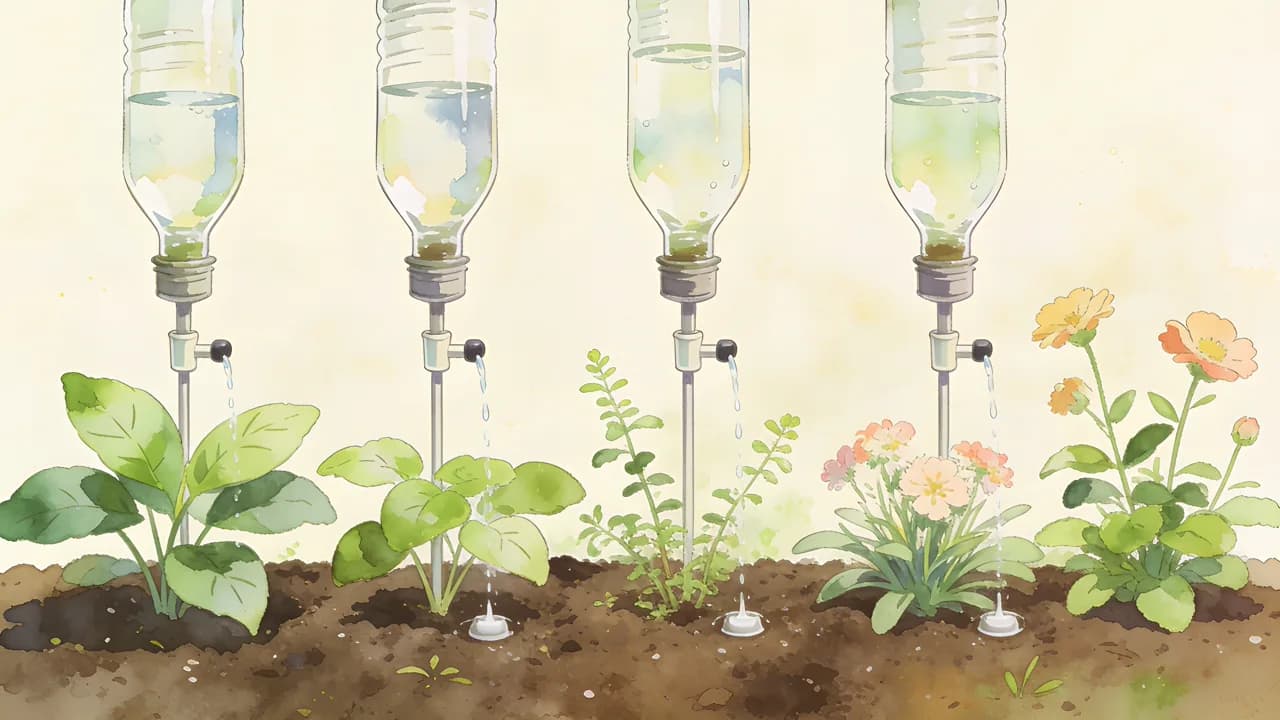
In this article (5 sections)
Watering every day with a little water is one of the most common ways of spoiling a garden in the ground: the roots stay at the surface, fungi are favoured and the plants grow weak. (In pots and seed trays the situation changes, as you will see below.) The app tells you when not to water; here I explain the logic.
The basic rule
A garden in healthy, mulched soil needs, in high Mediterranean summer, about 20-30 L/m² per week (1 L/m² is equivalent to 1 mm of rain). In spring and autumn, roughly half. In winter, hardly anything, except in a long drought. These are indicative figures: they depend on the soil, the crop and the heat.
That water comes from three sources:
- Rain, which is free.
- The watering you add.
- The water the soil already holds from previous days. A crumbly soil with organic matter holds a lot.
Your job is to cover the difference between what it already has (1 and 3) and what it needs. If what is there already reaches the target, there is no need to water.
When not to water
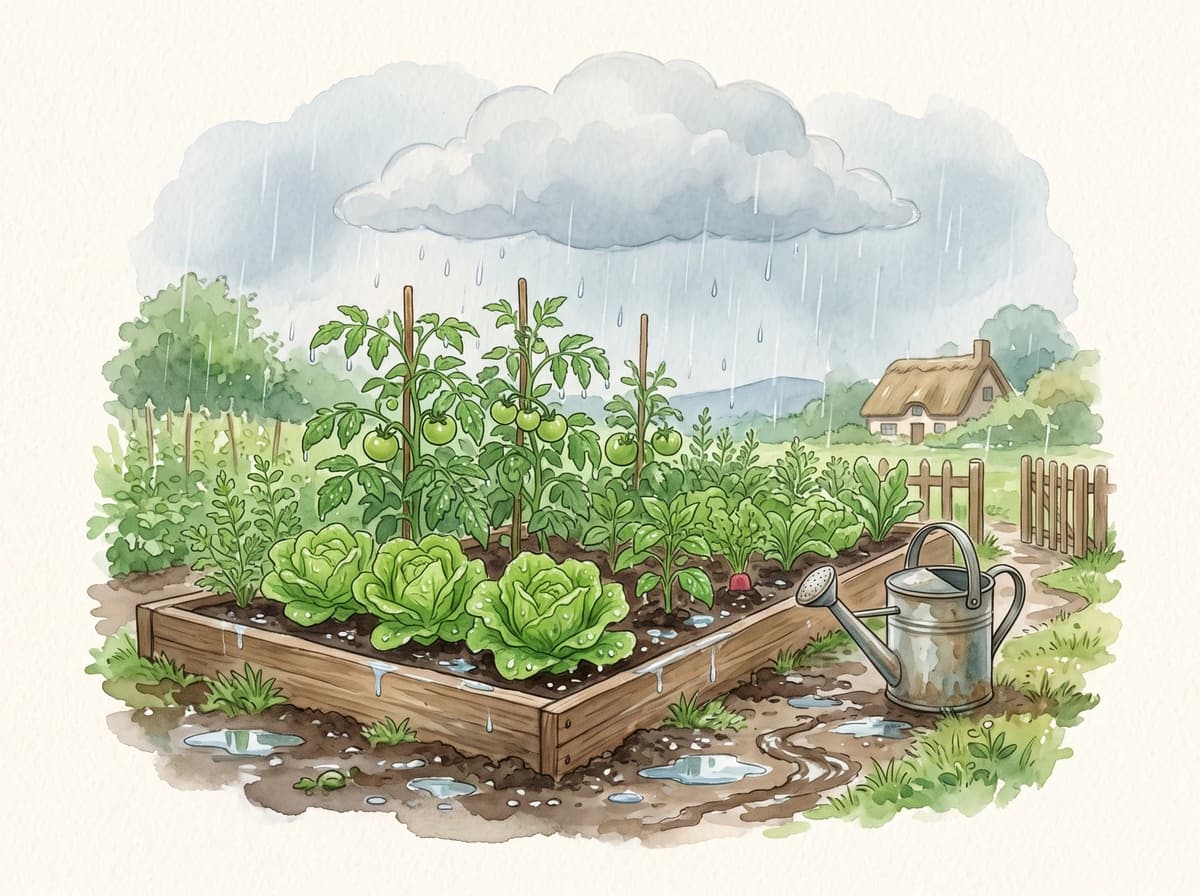
The app warns you not to water when 5 mm (0.2 in) or more of rain is expected for the next day. Besides, it is worth skipping or reducing the watering in these situations:
- 5 mm (0.2 in) or more of rain is due in the next 24 h. 5 mm (0.2 in) is 5 L/m², what a summer day uses.
- 10 mm (0.39 in) or more has fallen in the last 48 h. The soil is still loaded.
- The forecast maximum is below 20 °C (68 °F). With mild temperatures the plant uses little water: water less than usual and check the soil before watering.
- It is midday and very sunny. A good part of the water evaporates before the root can use it. Wetting the leaves with the sun very high does not usually scorch them, but it is best to avoid it all the same.
When to water
- When you have gone three days in a row without rain and the maximum is 28 °C (82 °F) or more.
- On recent transplants, during the first 7-10 days.
- During flowering and fruit set of tomatoes and peppers: with irregular watering the fruit splits or blossom end rot appears (the “black bottom”).
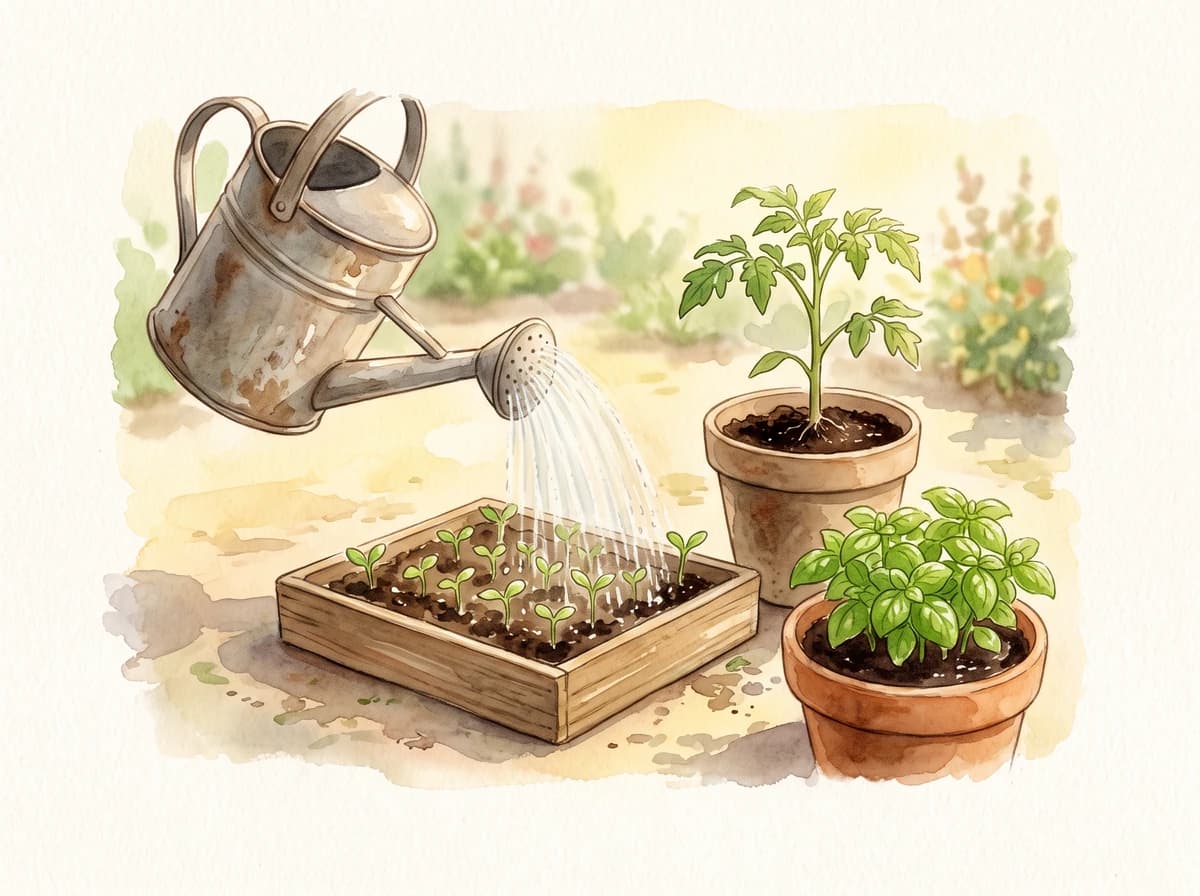
- In seed trays: the surface should be damp every day until the plants come up.
- In pots, which dry out much sooner than the soil: in summer they may need watering daily.
How to water well
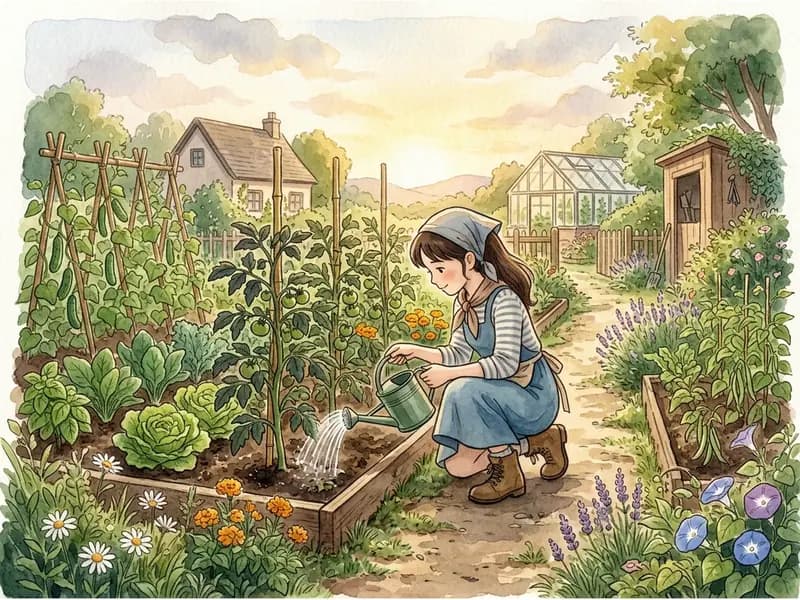
- Infrequent and abundant. A long watering twice a week is better than a little every day: the root goes down to look for the water. The weekly amount above is split between those waterings (for example, 10-15 L/m² each time).
- At the base, not on the leaves. Use drip, weeping hose or a watering can at the foot. Leaves wetted at night favour downy mildew.
- First thing in the morning or at dusk. Morning is ideal, because it gives time for whatever got wet to dry. In high summer, dusk also works, as long as the water does not fall on the leaves.
- Mulch: straw, leaf litter, cardboard or dry grass. It greatly reduces evaporation and keeps the soil moisture steadier.
Quick tricks
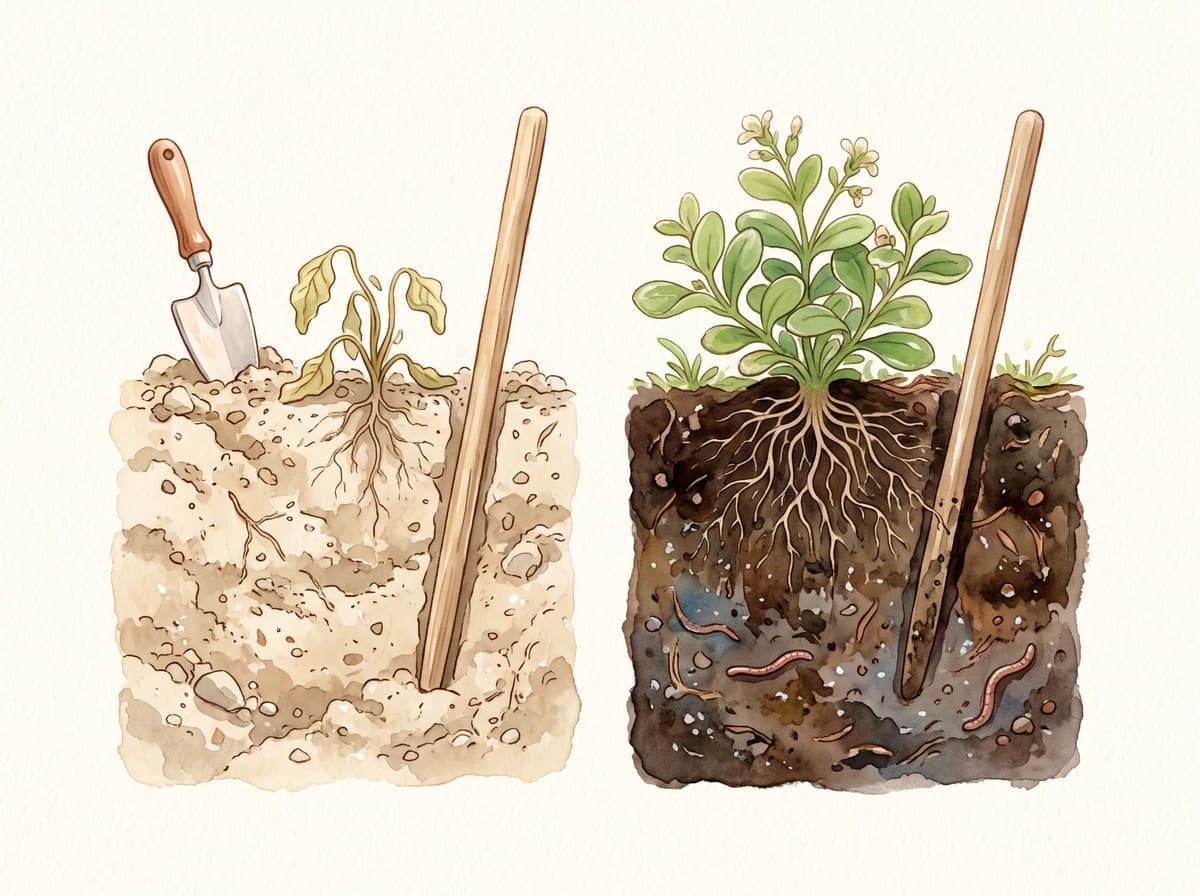
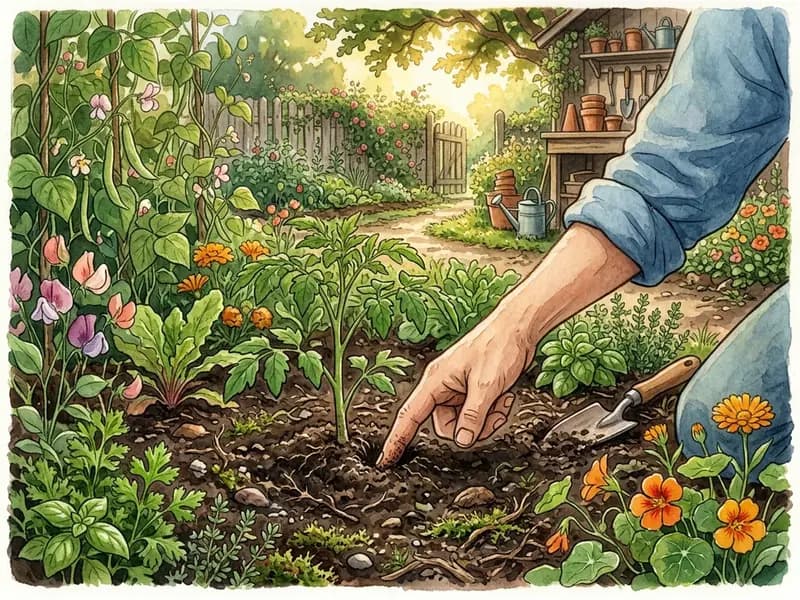
- Finger test: push your finger about 5 cm (2 in) into the soil. If it comes out dry, water. If it comes out damp and cool, wait.
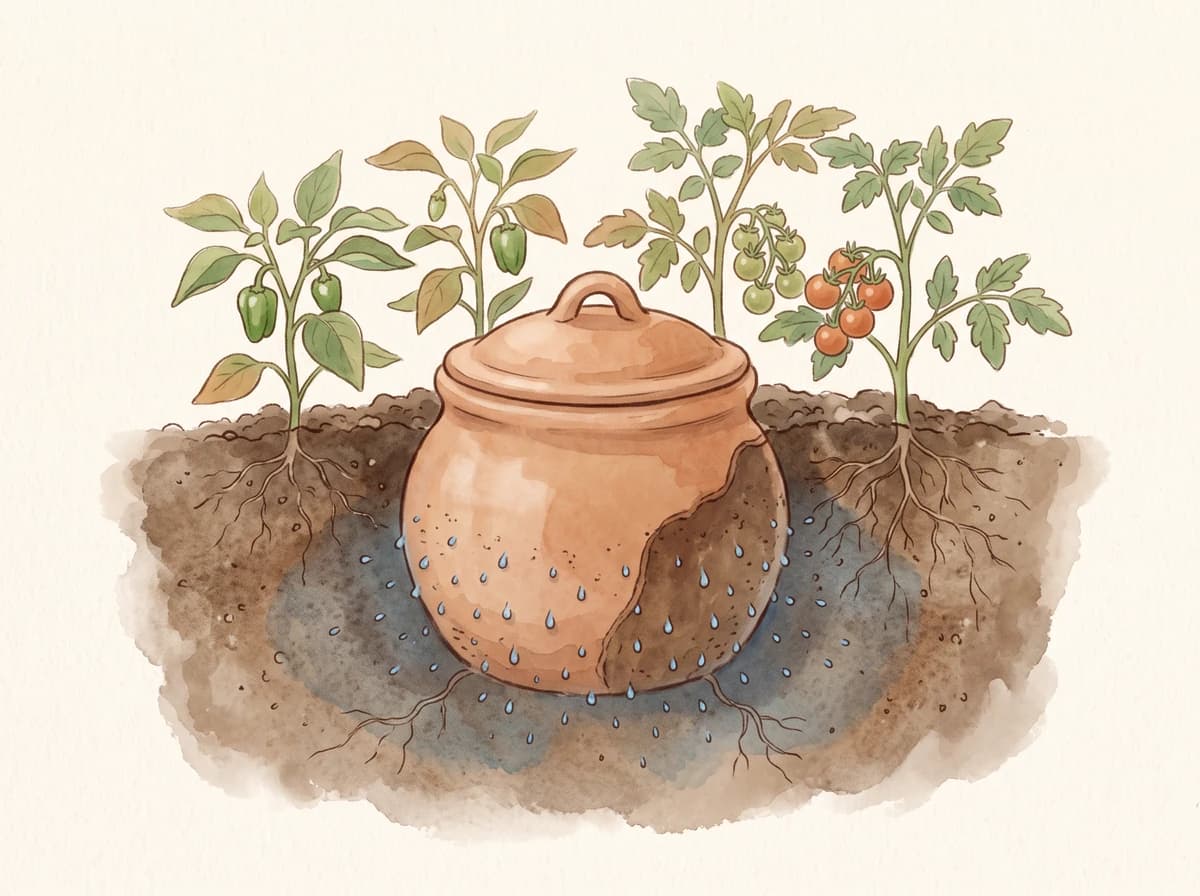
- Buried clay pots (ollas): bury an unglazed clay pot among the plants and fill it every 3-4 days. The water comes out slowly through the pores of the pot. It is an ancient and very effective system.
- Hard water: in many Mediterranean areas tap water is rich in lime and, over the years, raises the pH of the soil or pots. If you have blueberries or other acid-loving plants, water them with rainwater whenever you can.
In My garden vueltaalhuerto already crosses your weather forecast with your active plantings and tells you whether today is a watering day or a day to stay on the sofa.

Rain tank, drip, clay pots and holiday bottles.