In this article (16 sections)
- 1. Short absence (3-5 days)
- 2. Medium absence (1 week)
- Upturned bottle (pots and plant by plant)
- Capillary cord (for 2-3 pots)
- Dish of water under the pot
- 3. Long absence (2 weeks)
- Irrigation timer with drip or weeping hose
- Gravity drip kit with a tank
- Trusted neighbour
- 4. Very long absence (1 month)
- Extra tricks
- Group the plants
- Rake the soil crust
- Remove the new tomato flowers
- Family or neighbourly harvest
- What you learn from holidays
You go away for a week or two in August and come back fearing the worst. It does not have to be a disaster. These four solutions cover almost any absence: choose the one that matches the days you will be away. Each one adds things to the one before.
1. Short absence (3-5 days)
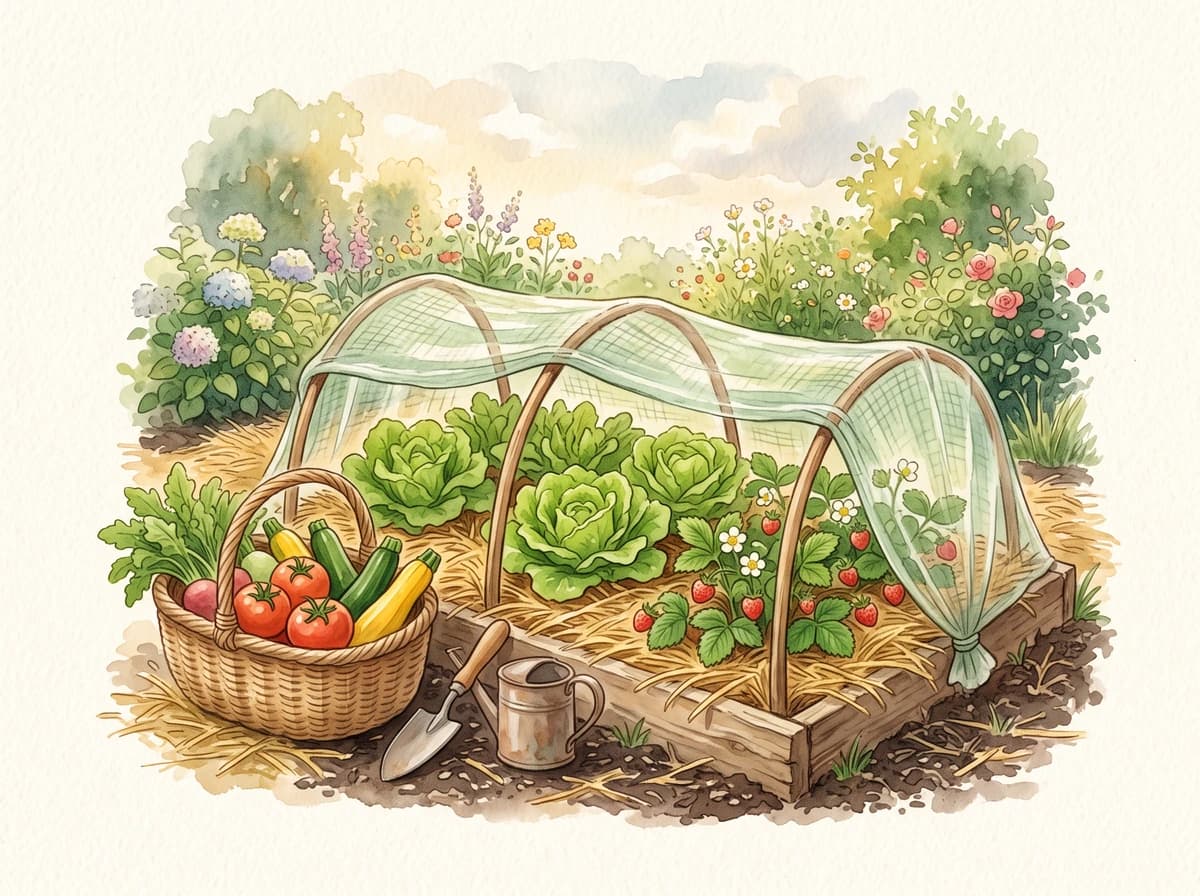
No complicated systems are needed. Before you leave:
- Water thoroughly the day before, until the moisture reaches 20-30 cm (7.9–11.8 in) deep.
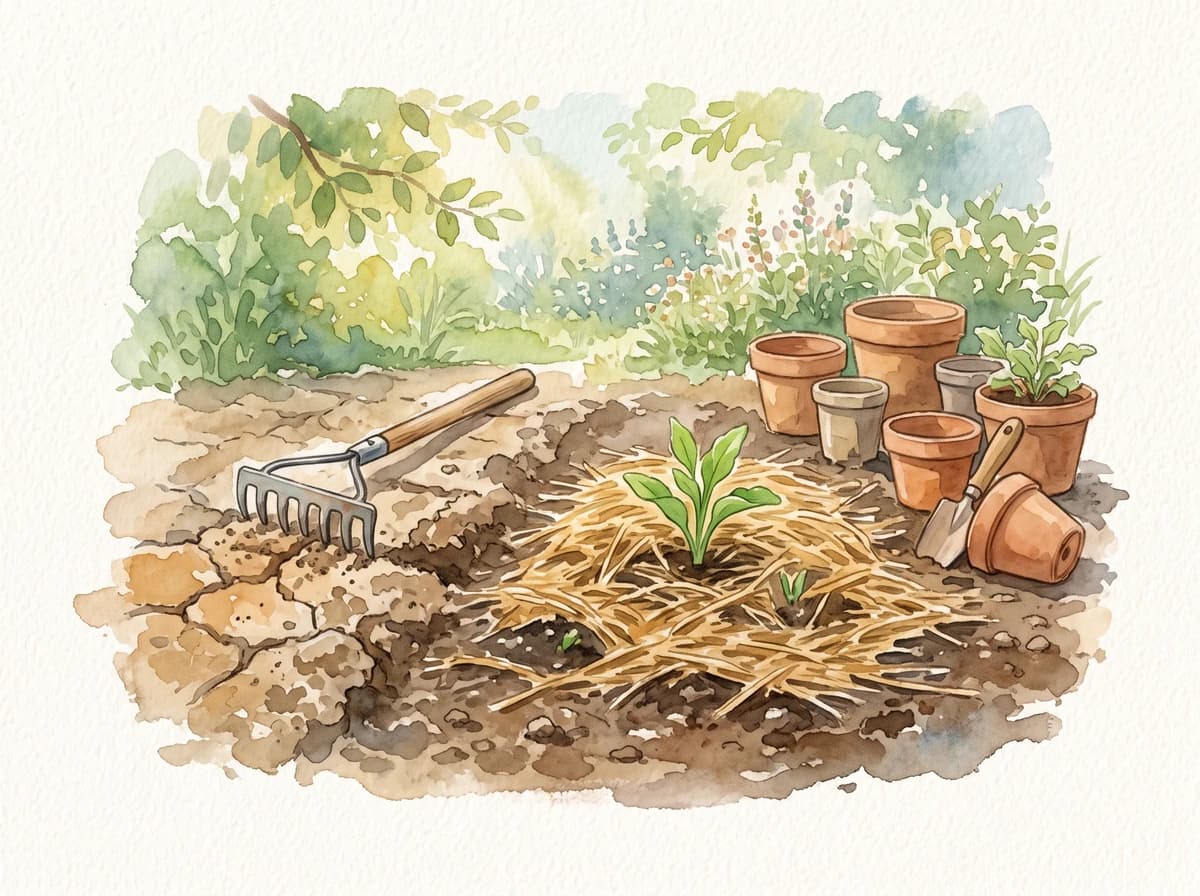
- Mulch the beds with a thick layer (5-8 cm, 2–3.1 in of straw).
- Give extra shade with a 30 % net to the most sensitive plants (strawberry, lettuce).
- Pick everything that is ready, such as courgette or ripe tomato: that way the plant does not spend strength on fruit you will not eat.
- Move the pots to partial shade: they dry out much more slowly.
With this, an established garden copes well for those days. Mature plants have deeper roots and tolerate the wait better.
2. Medium absence (1 week)
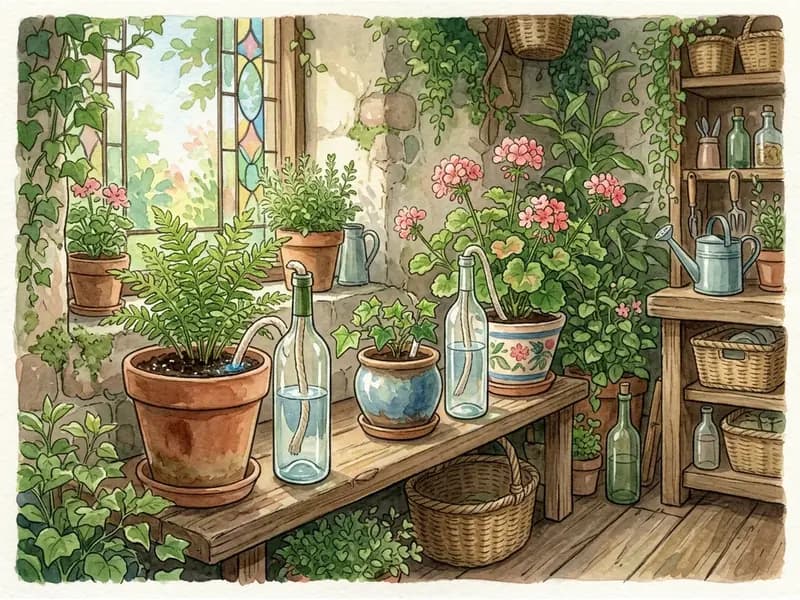
Add to the above one of these systems, designed mainly for pots.
Upturned bottle (pots and plant by plant)
- Take a bottle of 1.5-2 L (about 1.6–2.1 quarts) and make a small hole in the cap, or two at most.
- Fill it with water and bury it upside down next to the stem.
- It releases the water little by little. Test it before you leave, because the rate depends on the size of the hole and the soil: if it empties in a day, make the hole smaller.
It costs nothing, because you use recycled bottles.
Capillary cord (for 2-3 pots)
- Put a large bucket of water somewhat higher than the pots.
- Use a thick cotton cord or a lamp wick: one end in the water and the other buried about 5 cm (2 in) in each pot.
- The water rises up the cord and moistens the soil.
It is an old, silent method that needs no electricity.
Dish of water under the pot
Place the pot in a deep dish with 2-3 cm (0.8–1.2 in) of water, so that the soil absorbs from below. It works for 5-7 days with mulch, on plants that tolerate damp (vegetables, basil). Do not use it with Mediterranean herbs such as rosemary or lavender, which rot with wet roots.
3. Long absence (2 weeks)
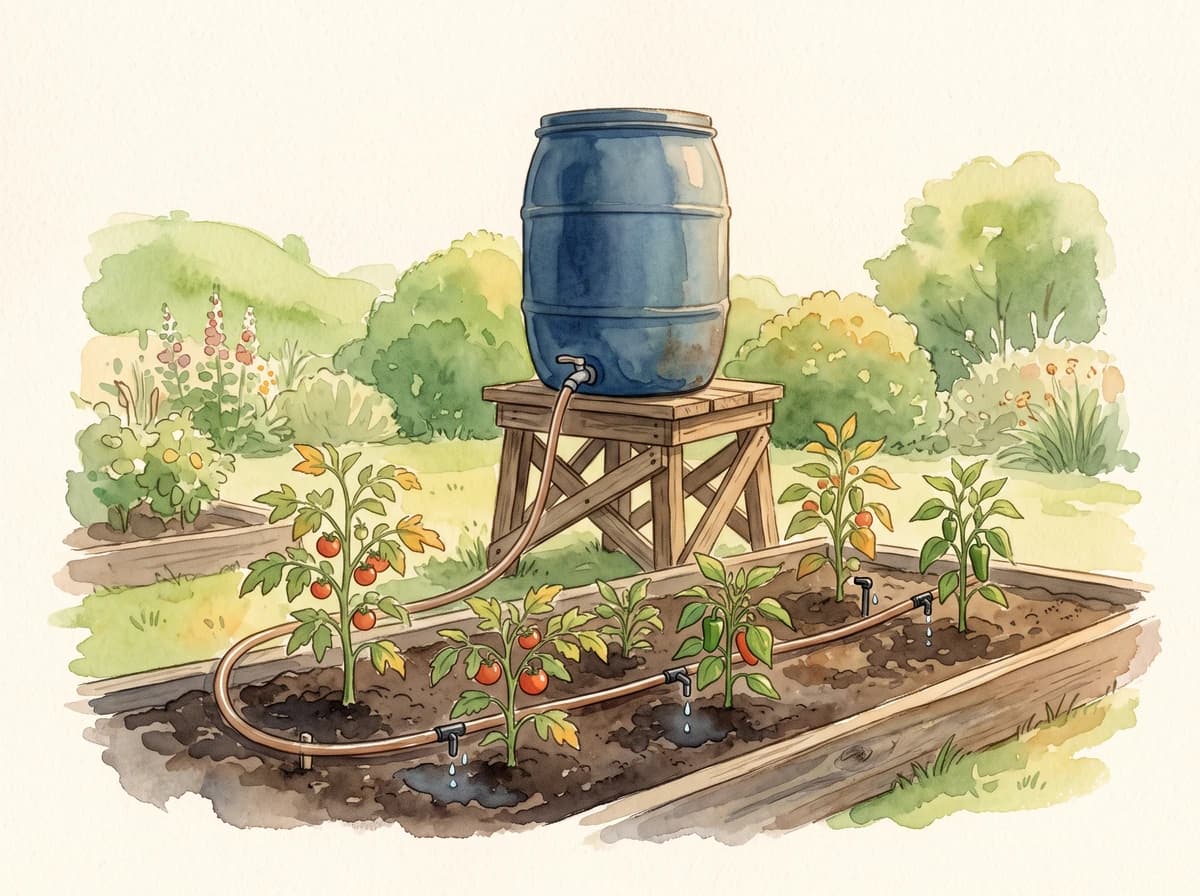
Here you already need a system that waters by itself.
Irrigation timer with drip or weeping hose
- A battery timer costs €15-25.
- Connect it to a weeping hose or a drip line that runs through each bed.
- In soil beds, programme a long watering, of half an hour or more depending on the flow, every one or two days, rather than two short waterings a day. That way the water goes down deep and the root goes with it.
- In pots, watering is usually daily and short.
- Test the system about 3 days before you leave to check that it works and that it wets what it should.
Gravity drip kit with a tank
If you have no tap nearby:
- Set up a tank raised on blocks or a table. The more height, the more pressure: with half a metre the drip is very weak, and with a metre or more it works better.
- Connect a drip hose to it.
- Add a solenoid valve with a battery timer. Check that it is designed to work at low pressure.
It costs about €50-80 and does not depend on the mains electricity.
Trusted neighbour
- Show them beforehand what to look at and what to water.
- Leave them short written instructions, such as “water only if the straw is dry to the touch underneath”, better than “water every 2 days”.
- Leave them your mobile number in case they have doubts.
The ideal is to combine automatic drip with a neighbour who checks the garden every five days.
4. Very long absence (1 month)
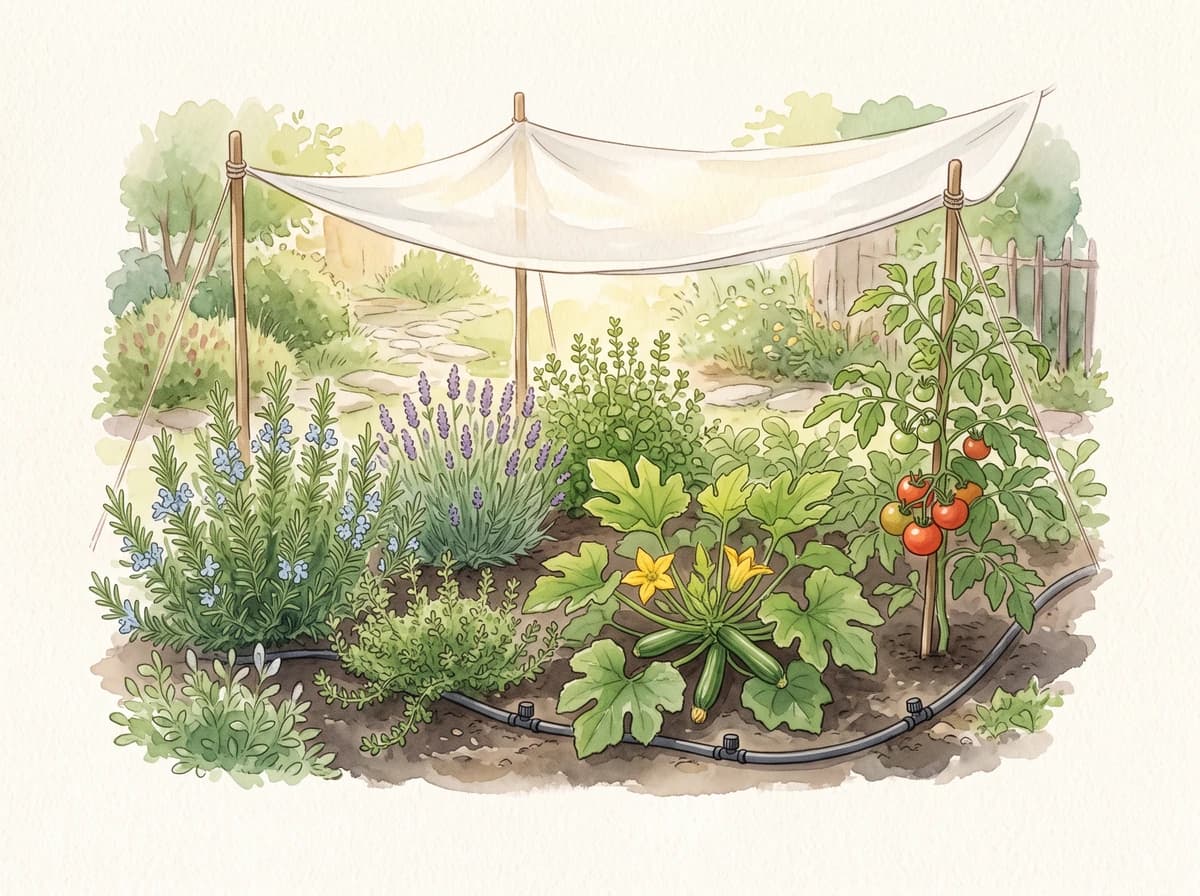
Here you have to combine everything and accept that you will lose part of the harvest:
- Automatic drip irrigation with a timer.
- A neighbour with instructions and access to the garden.
- Harvest everything that is half-ready before you leave.
- Reduce what you have sown: leave only the hardiest and well-established plants (Mediterranean herbs, courgette, tomato with drip) and do not plant new crops before you go. Avoid strawberry and leaf vegetables, which need constancy.
- Put up shade netting to reduce evaporation.
You lose harvest, but not the plants. You come back and carry on.
Extra tricks
Group the plants
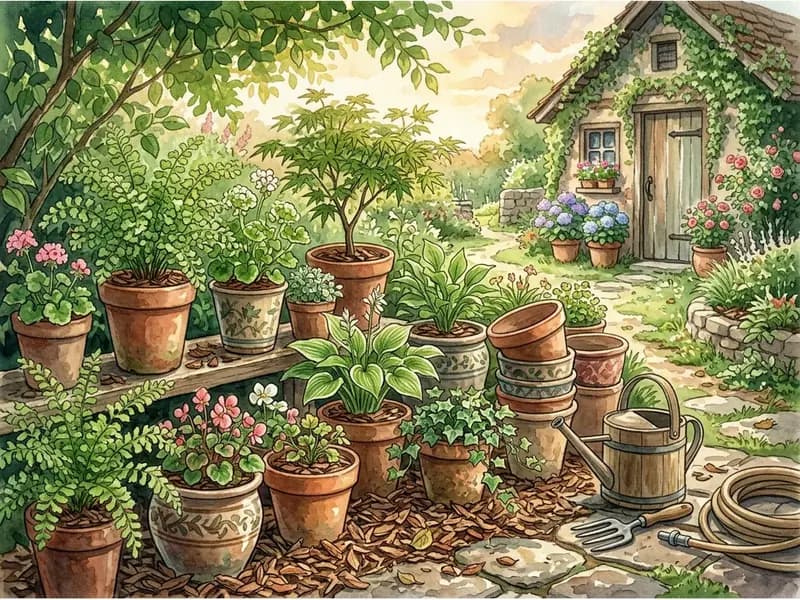
Put the pots together: they shade each other and the humidity of the air around them rises a little.
Rake the soil crust
When the soil gets dusty and forms a crust, the water runs off instead of soaking in. Before you leave, gently rake the surface and mulch on top.
Remove the new tomato flowers
Before you leave, remove the new flowers and the very small fruit. The plant will concentrate its resources on the fruit that has already set.
Family or neighbourly harvest
Let a neighbour take what ripens. For them it is a gift and you save yourself coming back to a pile of giant courgettes.
What you learn from holidays
A well-mulched garden, with automatic watering and established plants can go two weeks without you. Without watering, in August, it cannot: summer crops, such as tomato or courgette, need water every few days. Each season will go better.
Rain tank, drip, clay pots and holiday bottles.