In this article (16 sections)
- What you need
- Choose your seeds
- The growing medium
- Sowing
- Large seeds (courgette, bean, pumpkin, pea)
- Small seeds (lettuce, tomato, basil)
- Very fine seeds (thyme, oregano, marjoram)
- Watering during germination
- Temperature
- Light during growth
- Hardening off (before transplanting)
- Transplanting to the bed
- Approximate calendar (Mediterranean zone)
- Frequent mistakes
- When it goes wrong
- Saving
A good seed tray brings the season forward by four to six weeks and saves you buying seedlings. This is the method that almost always works.
What you need
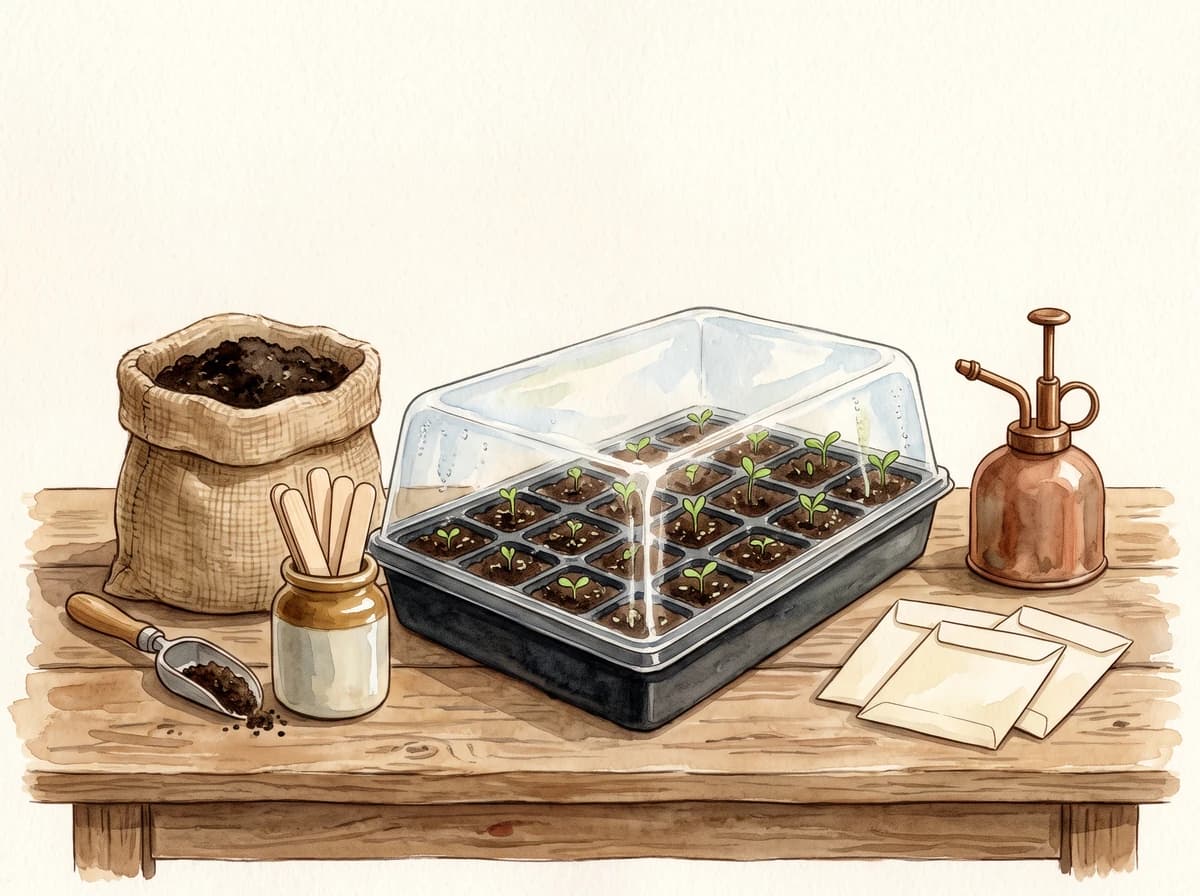
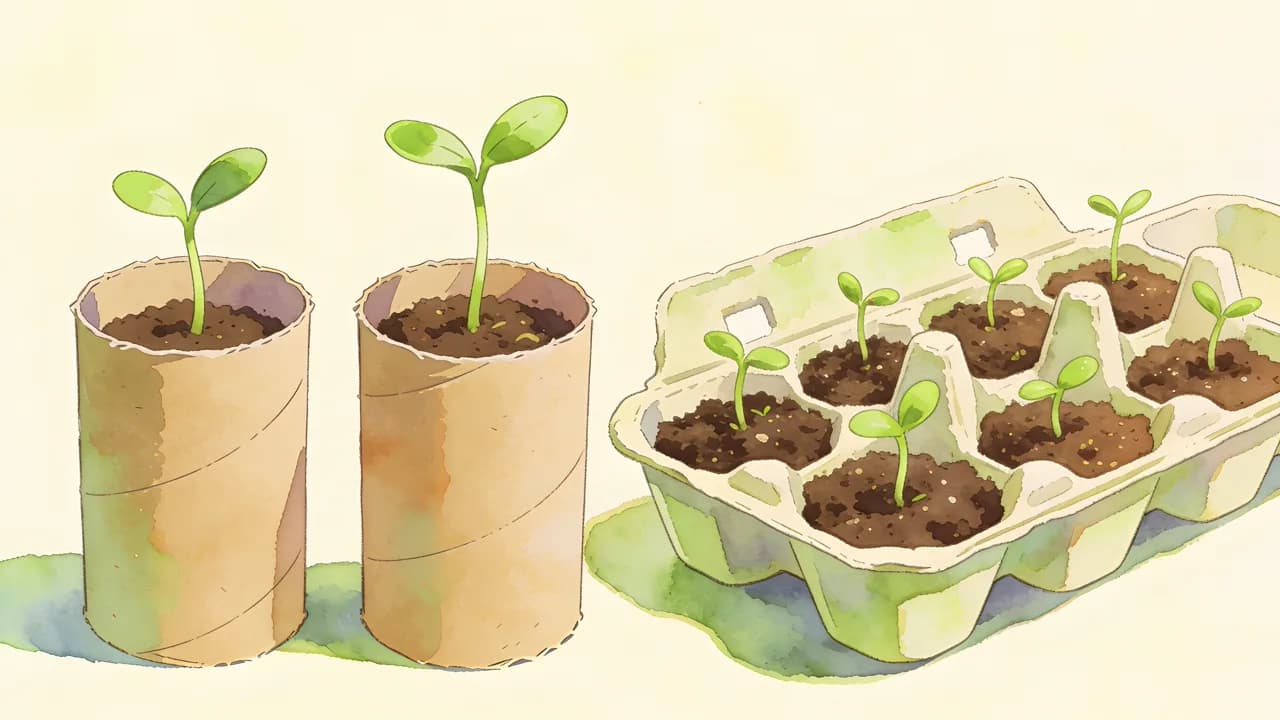
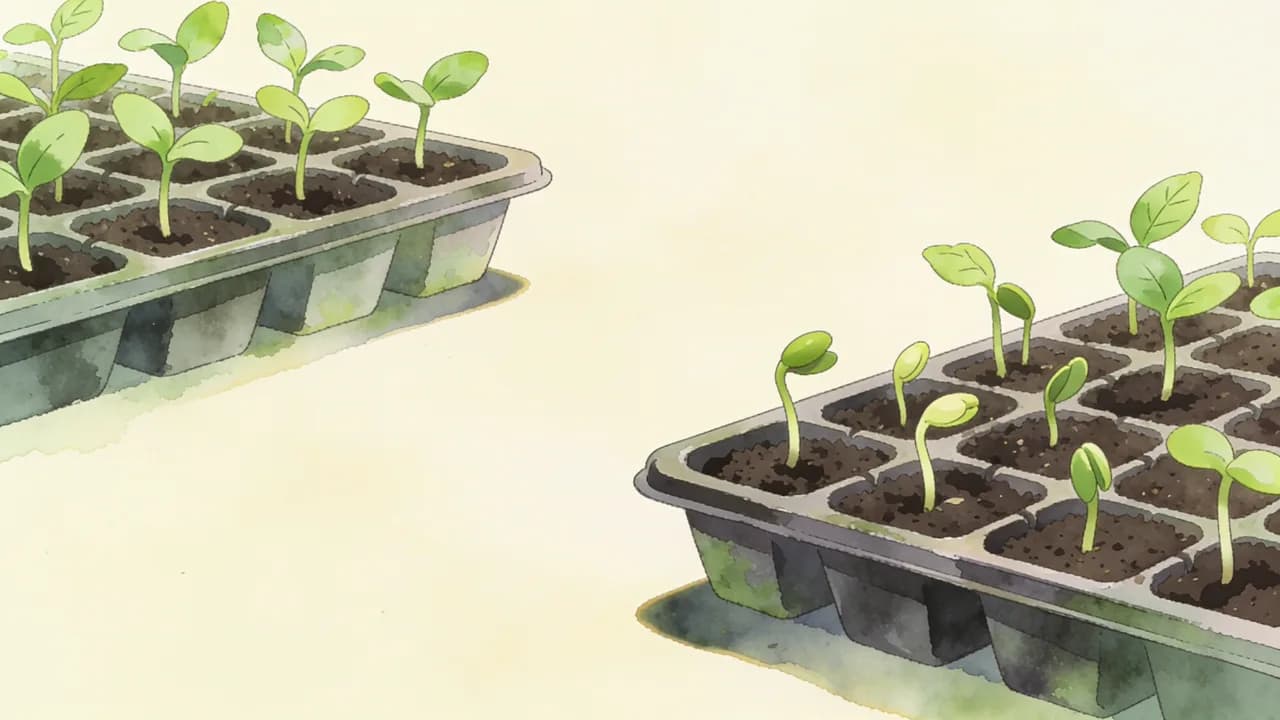
- Cell trays (little compartments) or individual pots of 4 to 6 cm (1.6–2.4 in).
- Specific seed-starting compost, which is the most convenient and safe. If you prefer to mix it yourself, use 60 % sphagnum peat or coconut fibre, 20 % perlite and 20 % vermiculite.
- A very bright window or, better still, an LED grow light.
- A spray bottle for gentle watering.
- Labels with the name and the sowing date.
Choose your seeds
- Local or swapped seeds: if they come from gardens in your area, they are usually better adapted to your climate.
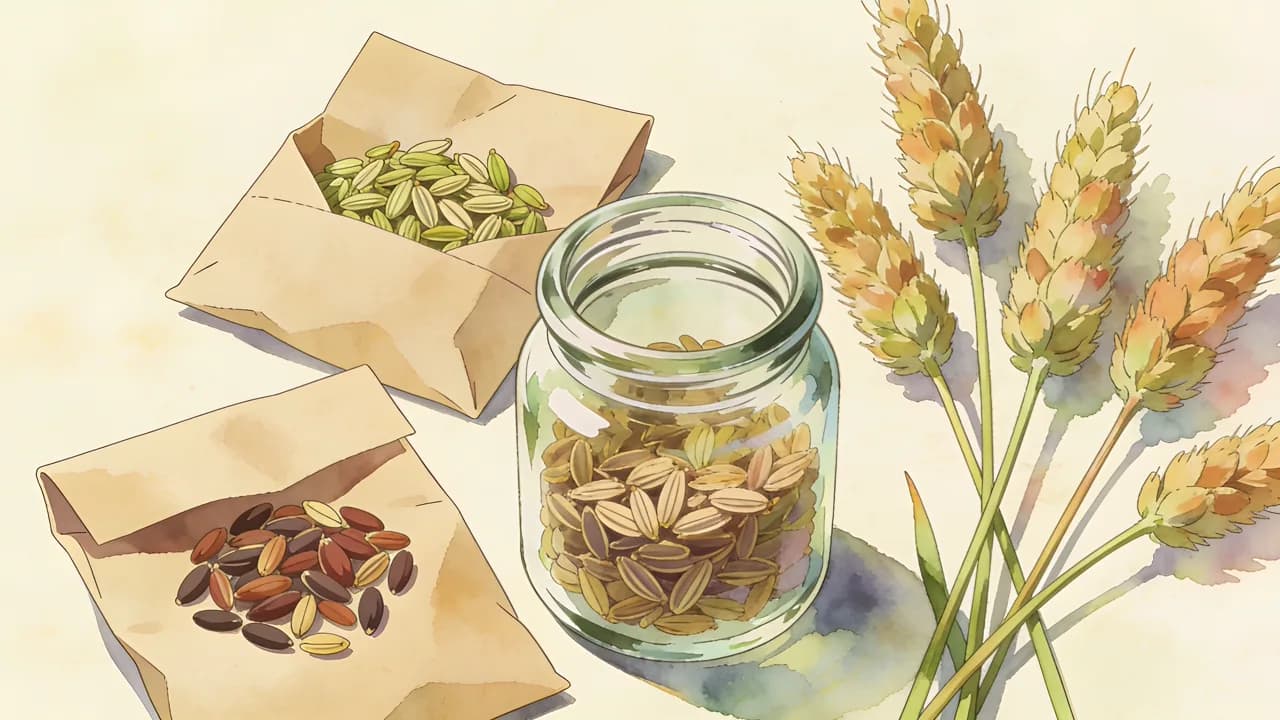
- Expiry date: seed loses its ability to germinate over the years, and the rate depends on the species. Onion and leek seeds last a short time, while tomato or courgette seeds keep for several years stored somewhere cool and dry.
- Hybrid (F1) or open-pollinated varieties: F1s are vigorous and uniform, but you cannot save seed from their fruit that will come true. Open-pollinated ones let you save your own seed year after year.
You can buy them from well-known brands (Vilmorin, Semillas Batlle, Ramiro Arnedo) or in local swap networks, such as the Red de Semillas “Resembrando e Intercambiando”.
The growing medium
- Do not use garden soil in the seed tray: it carries fungi and compacts.
- The ideal growing medium is light, fluffy and sterile.
- Before filling the cells, sieve it to remove clods.
- Moisten it well before sowing, until it is like a squeezed-out sponge without being waterlogged.
Sowing
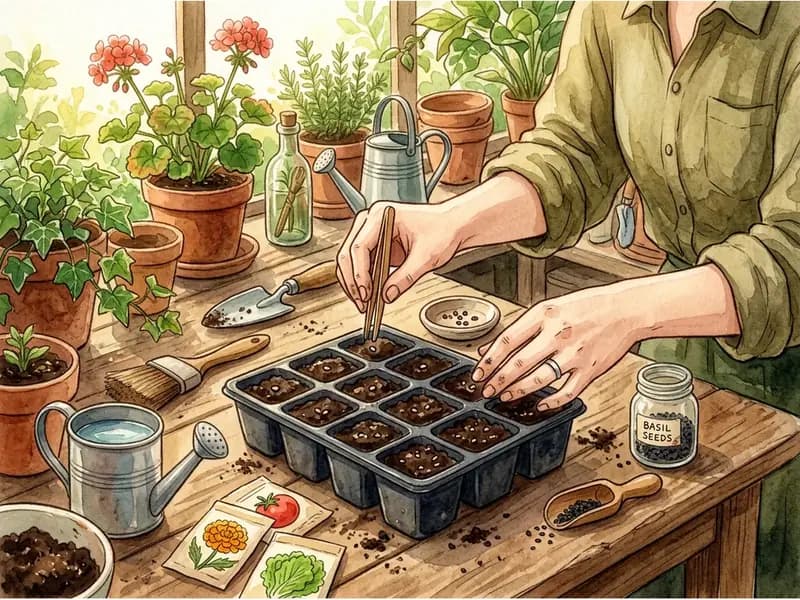
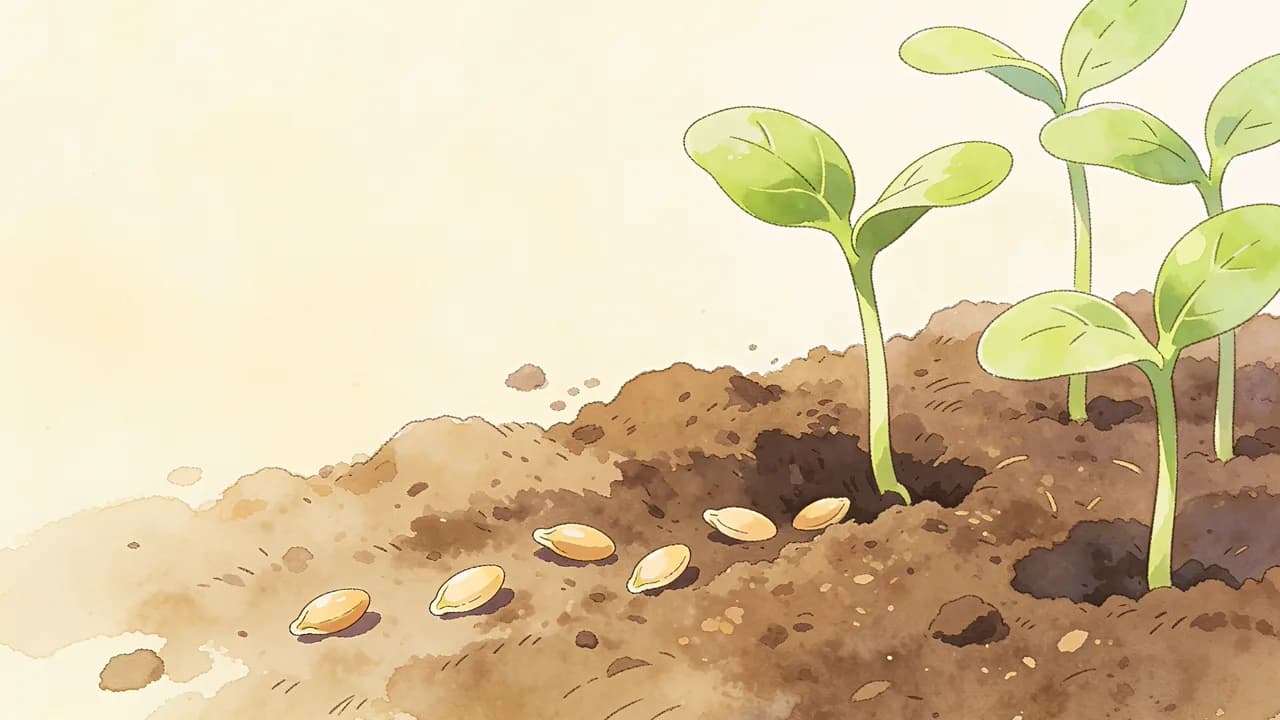
As a general rule, seed is buried to a depth of about two or three times its size. Depending on the size, it is done like this:
Large seeds (courgette, bean, pumpkin, pea)
Put one seed per cell, at a depth of 2 to 3 times its size. Cover and press gently with your finger.
Small seeds (lettuce, tomato, basil)
Place 2 or 3 seeds per cell and cover them with a thin layer, about 0.5 cm (0.2 in), of sieved growing medium or vermiculite. Press very gently. When they germinate, leave only the strongest seedling in each cell and cut the others off at the level of the growing medium, without pulling them out, so as not to damage the roots.
Very fine seeds (thyme, oregano, marjoram)
They are not buried: they are scattered over the surface and barely pressed down. Cover the tray with a sheet of clear plastic to hold in the moisture, and take it off as soon as you see the first seedlings.
Watering during germination
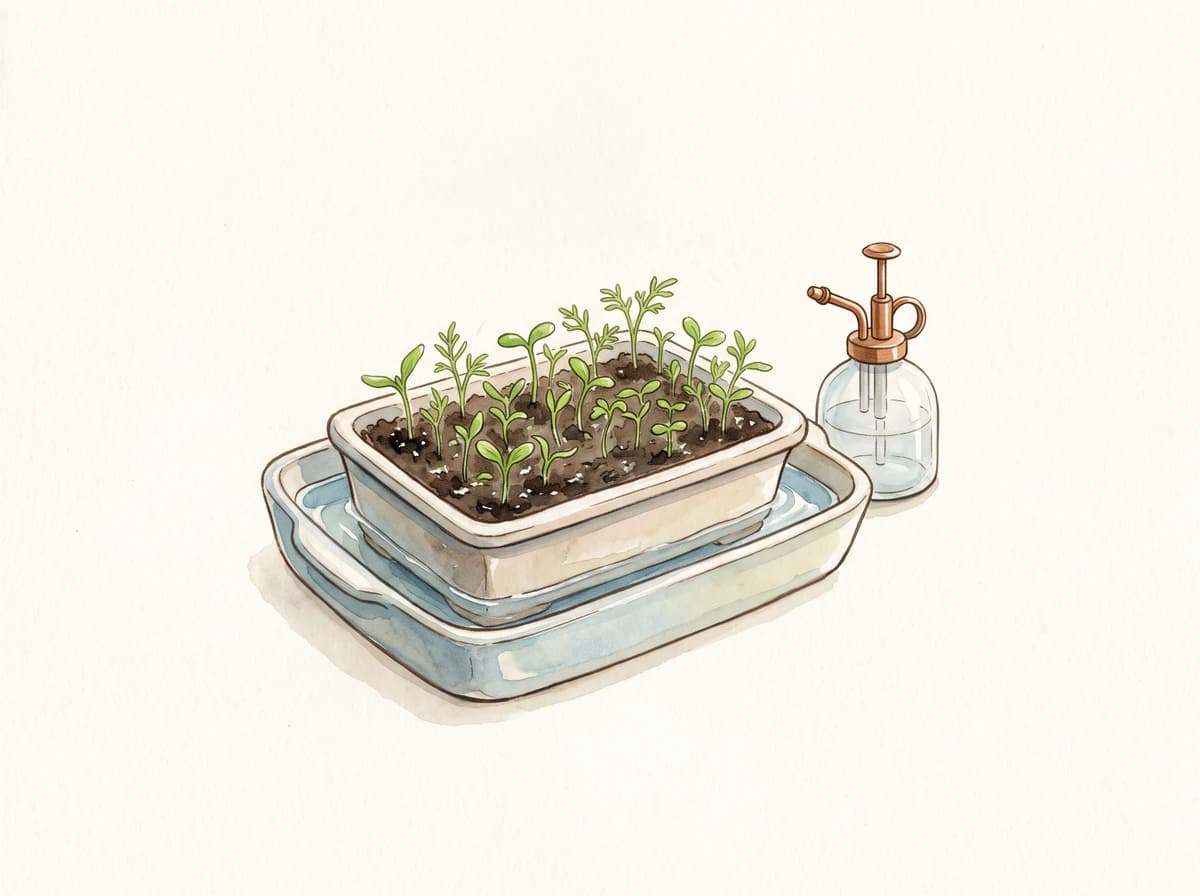
- Water with a spray bottle, never all at once with a watering can, because it washes the seeds away.
- Keep the growing medium constantly moist, without waterlogging it.
- The safest method is to water from below: fill the drip tray with water, let the growing medium soak it up by capillarity for about 15-20 minutes and remove the surplus. That way you do not drown the seeds or the seedlings.
Temperature
Many seeds need warmth to germinate:
- Tomato, pepper, aubergine and courgette: between 20 and 28 °C (82 °F) (pepper and aubergine appreciate up to 30 °C, 86 °F). In cold areas, a heat mat (€20-40) under the seed tray makes the difference.
- Lettuce, spinach and cabbages: between 12 and 20 °C (68 °F). Above 25 °C (77 °F) lettuce germinates badly.
- Herbs: between 15 and 22 °C (72 °F). Basil prefers somewhat more warmth, about 20-25 °C (68–77 °F).
Light during growth
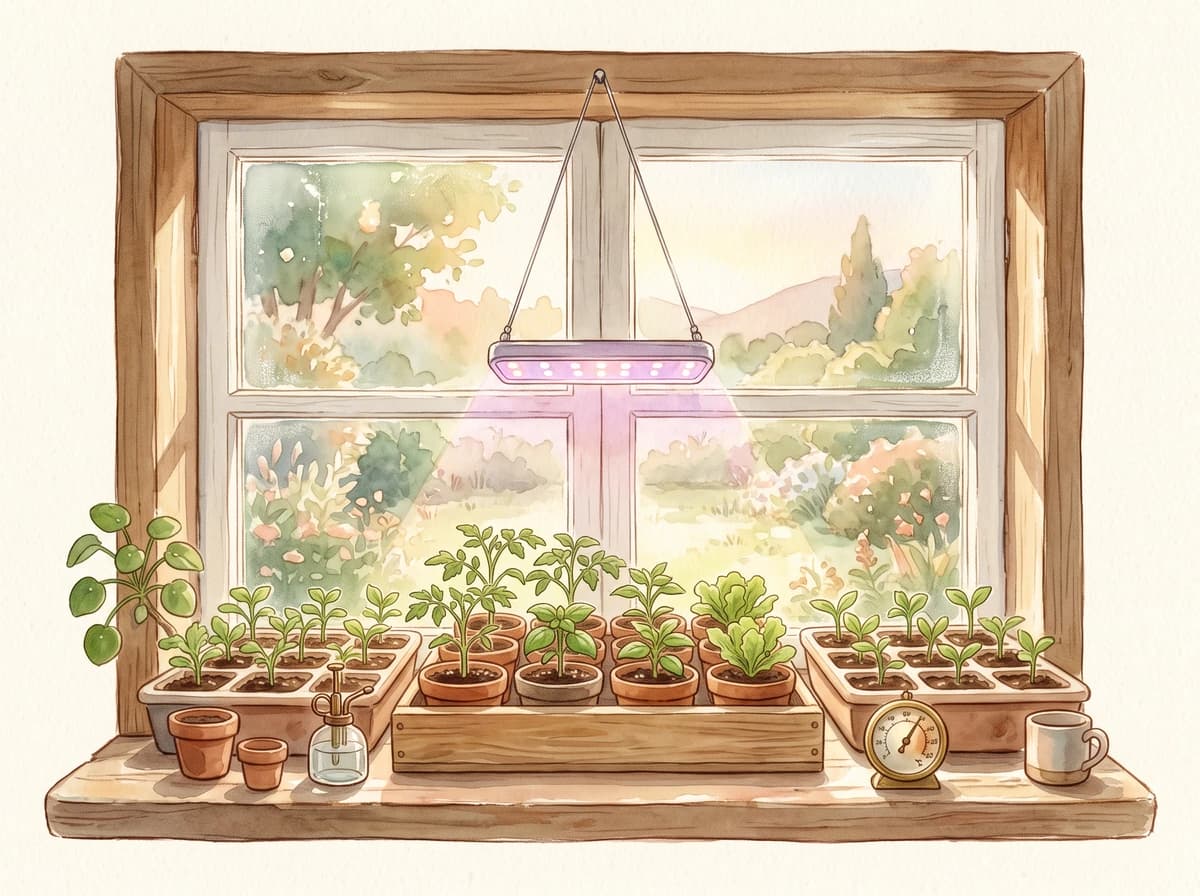
Lack of light is the most frequent mistake: seedlings get “leggy”, that is, they stretch, end up long and thin and finish by falling over.
- South-facing window: it is the acceptable minimum, but it usually falls short in February and March.
- LED grow light (€30-50): place it 20-30 cm (7.9–11.8 in) from the seedlings and turn it on for about 14 hours a day. It is the improvement that gives the best result.
- Turn the trays every two days if you depend on the light from a window, so that the seedlings grow straight. With an overhead LED light it is not needed.
Hardening off (before transplanting)
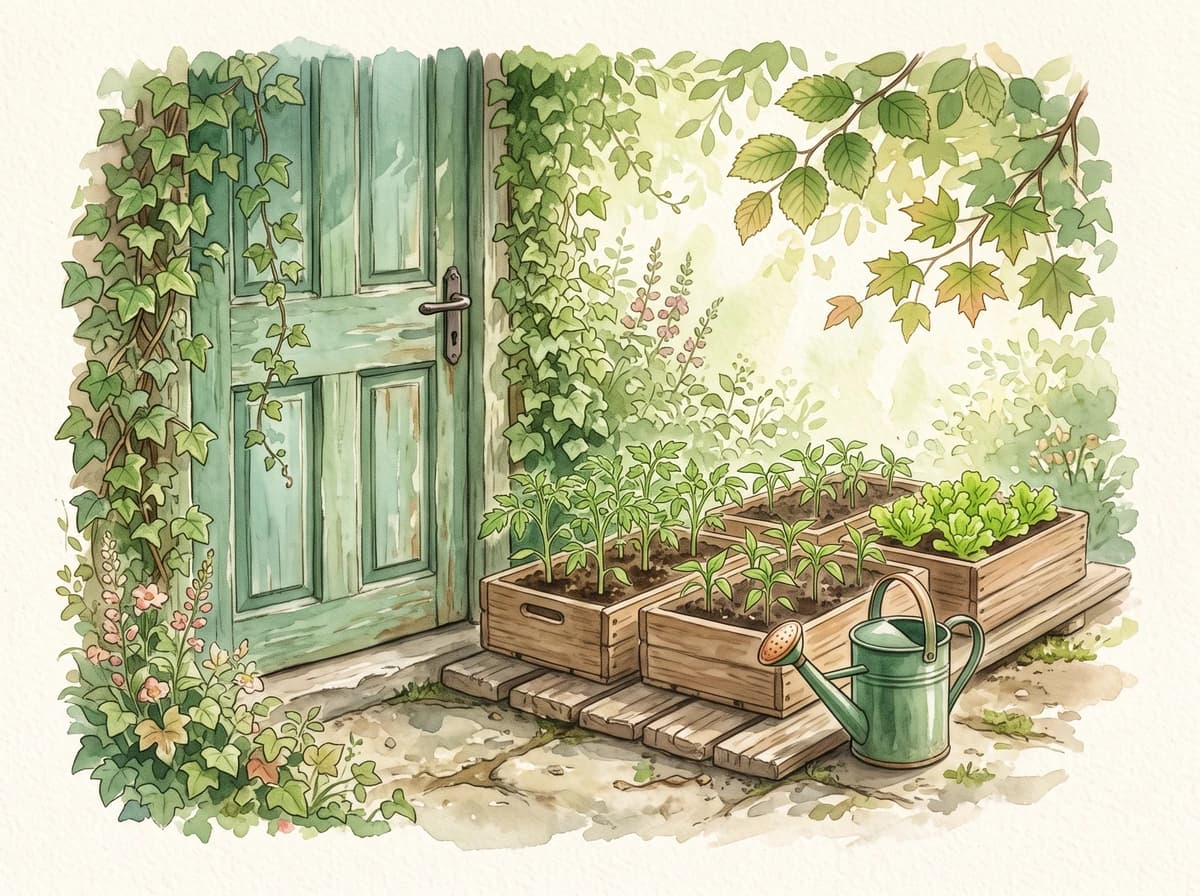
During the last 7 to 10 days before taking the seedlings outdoors, get them used to it gradually:
- Take them out for two hours to a sheltered spot, without direct sun.
- Lengthen the time by an hour or two each day and gradually expose them more to the sun.
- When they can stand a whole day outside, they are ready to go to the bed.
Without this step, the leaves get scorched by the sun and the plants suffer from the sudden change of temperature.
Transplanting to the bed
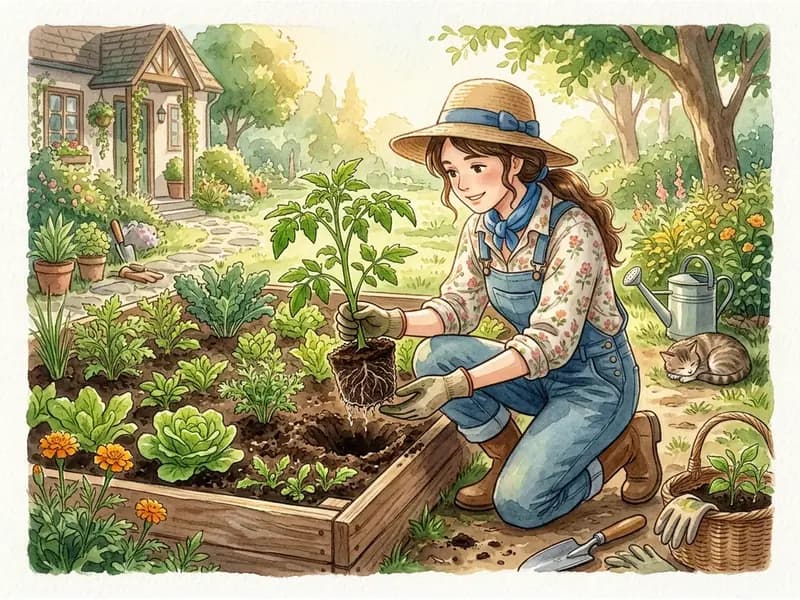
- When: when the seedling has between 4 and 6 true leaves (cucurbits, such as courgette and cucumber, are transplanted earlier, with 2 or 3 leaves, because they put up badly with having their root damaged).
- How to take it out: gently squeeze the cell from below until the whole root ball comes out, without breaking it.
- Hole: a little deeper than the root ball. Tomato is the best-known exception: it can be buried up to the first leaves, because it puts out new roots along the stem (except if it is grafted, because the graft must stay above the soil).
- Watering: plenty, right after planting.
- Protection: if it is hot, give shade for three or four days with straw, cardboard or mesh.
Approximate calendar (Mediterranean zone)
These dates suit the coast and the inland areas with a mild climate. In cold areas, delay them by two to four weeks.
| Crop | Seed tray | To the bed |
|---|---|---|
| Tomato | 15 Feb - 15 Mar | 20 Apr - 20 May |
| Pepper / aubergine | 1-25 Feb | 10 May - 10 Jun |
| Courgette / cucumber | 15 Mar - 15 Apr | 15 Apr - 20 May |
| Autumn lettuce | 15 Aug - 15 Sep | 15 Sep - 15 Oct |
| Cabbage / broccoli | 15 Jul - 15 Aug | 1-25 Sep |
| Herbs | Spring (and autumn in mild areas) | When they have about 4 true leaves |
Check the calendar with your real zone to fine-tune.
Frequent mistakes
- Sowing too deep: the seed uses up its reserves before reaching the surface and does not germinate.
- Watering with a lot of pressure: it dislodges or buries the seeds.
- Giving little light: weak, elongated seedlings result.
- Not hardening off: the leaves get scorched when transplanting.
- Transplanting in full sun: the seedlings wilt from the shock.
- Using trays with no drainage: excess water rots the roots.
When it goes wrong
- The seeds do not germinate: check the temperature, the moisture and the age of the seed.
- The seedlings die suddenly (damping-off): it is caused by soil fungi that thrive with excess moisture. Ventilate more, use new, sterile growing medium and do not water from above.
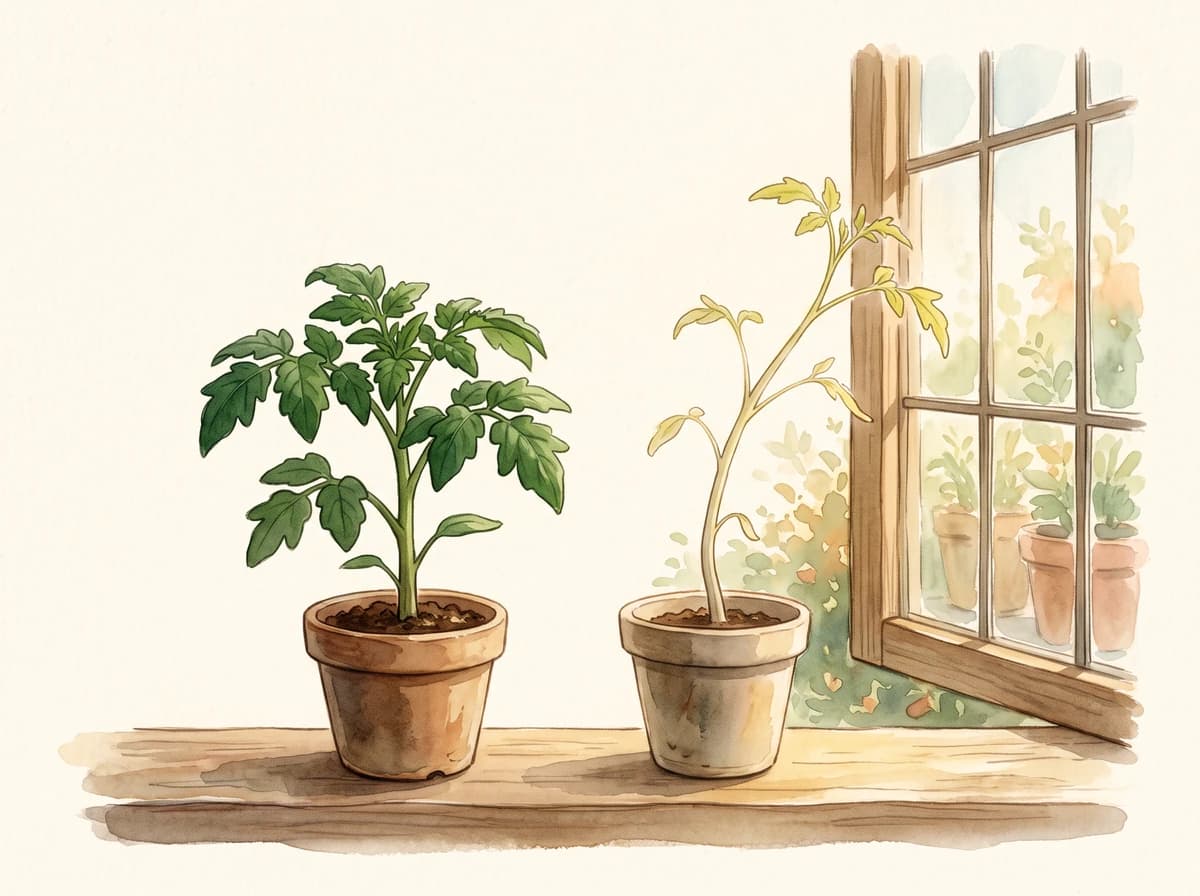
- They stretch: they need more light.
- They turn yellow: seed-starting compost carries almost no nutrients. Transplant them into a larger container with richer growing medium or give them a very diluted organic liquid feed, at a quarter of the stated dose.
Saving
A packet of seeds costs little more than one or two seedlings and gives dozens of plants. If you need a lot, above all of leaves, cabbages or tomatoes, the seed tray is the cheapest way to have a big garden.
What to sow each month according to your climate.