
In this article (7 sections)
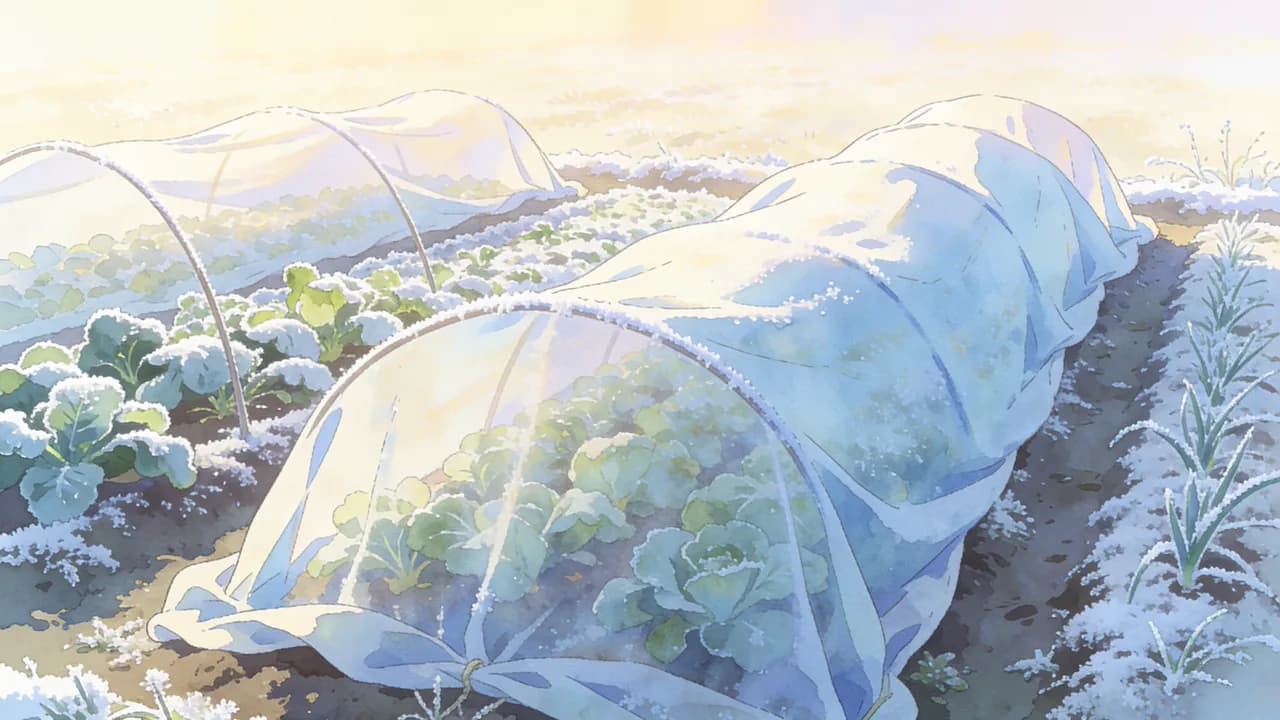
A late frost in April can wipe out a seed tray in a single night. The good news is that, with a day or two of warning and a quarter of an hour of work, you can save most of the garden. This is the complete guide.
1. Find out when it is going to freeze

- vueltaalhuerto warns you 24-48 h ahead when the forecast minimum in your area is equal to or below +2 °C (36 °F). It is a safety margin: at ground level the temperature can be 2-3 °C (36–37 °F) lower than the one measured by the weather station, which is at 1.5 m (4.9 ft) height.
- Also look at the sky. Clear, windless nights are the most dangerous, because the soil cools quickly. It can freeze at ground level even if the forecast says 3 °C (37 °F).
2. Water the day before
Although it seems contradictory, damp soil cools less than dry soil: water stores the day's heat and releases it during the night. A moderate watering the afternoon before the frost helps. Do not do it if the soil is already waterlogged.
3. Cover the sensitive plants
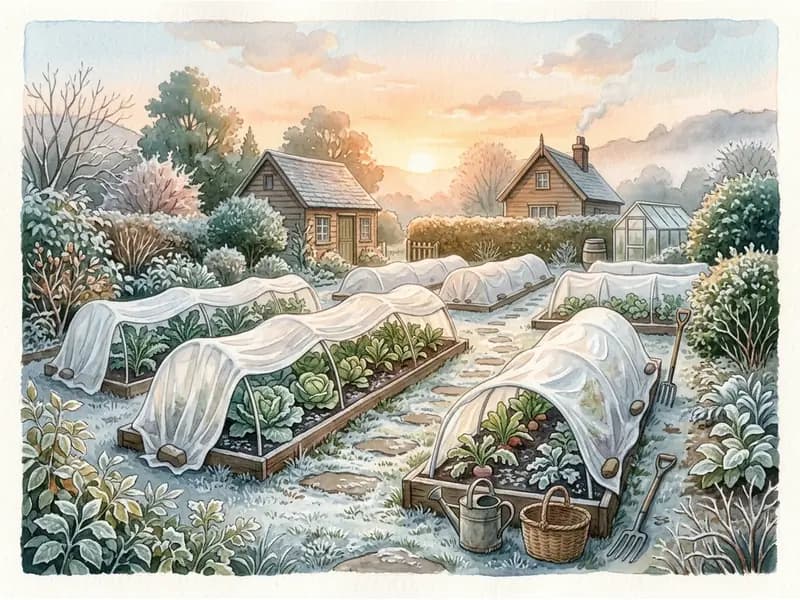
If you are only going to use one thing, make it the fleece. These are the options, from the lightest to the heaviest:
- Anti-frost fleece (17-30 g/m²): gains about 2-4 °C (36–39 °F), so it protects against light frosts (down to about -2 or -3 °C). It is reusable, lets air through and is the most convenient option. Hold the edges down with stones.
- Clear plastic over arches: gives similar or somewhat less protection, and must not touch the plant: where the plastic touches, the cold gets through and the leaf freezes. Ventilate it during the day.
- Wooden boxes or upturned buckets: spot protection for young plants. Take them off in the morning.
- Straw or dry grass around the trunk: for young fruit trees.
With frosts harder than -3 °C, these covers are not enough. The best thing is to move the pots to a sheltered place or cover with a double layer of fleece.
4. Prioritise what you cover

Order your time according to the sensitivity of each crop. The temperatures are indicative:
- Very sensitive (damaged around 0 °C, 32 °F): tomato, pepper, aubergine, bean, courgette, cucumber, basil, young avocado.
- Sensitive (damaged around -2 °C): sprouted potato, young beetroot, citrus, young kiwi.
- Stand up well (down to about -5 °C): mature lettuce, chard, spinach, garlic, onion, pea, broad bean.
- Very hardy (down to -10 °C or more): cabbage, lamb's lettuce, Brussels sprouts, leek, rosemary, thyme, bay.
5. Uncover in the morning

As soon as the sun comes up and the temperature goes above 4-5 °C (39–41 °F), take off the covers. If you leave the plastic or fleece on in the sun, humidity rises and fungi such as botrytis and downy mildew appear.
6. Advanced tricks

- Water bottle next to the plant: 2-3 L (about 2.1–3.2 quarts) of water release heat during the night. The effect is small, but it adds to that of the fleece.
- Fan: on a clear, windless night, cold air gathers close to the ground. An outdoor fan that moves it can soften the frost in a small area.
- Anti-frost sprinkling: on large fruit trees, spraying water continuously for as long as the frost lasts releases heat as it freezes and keeps the tissues close to 0 °C (32 °F). It requires an installation designed for it: do not improvise it.
7. After the frost
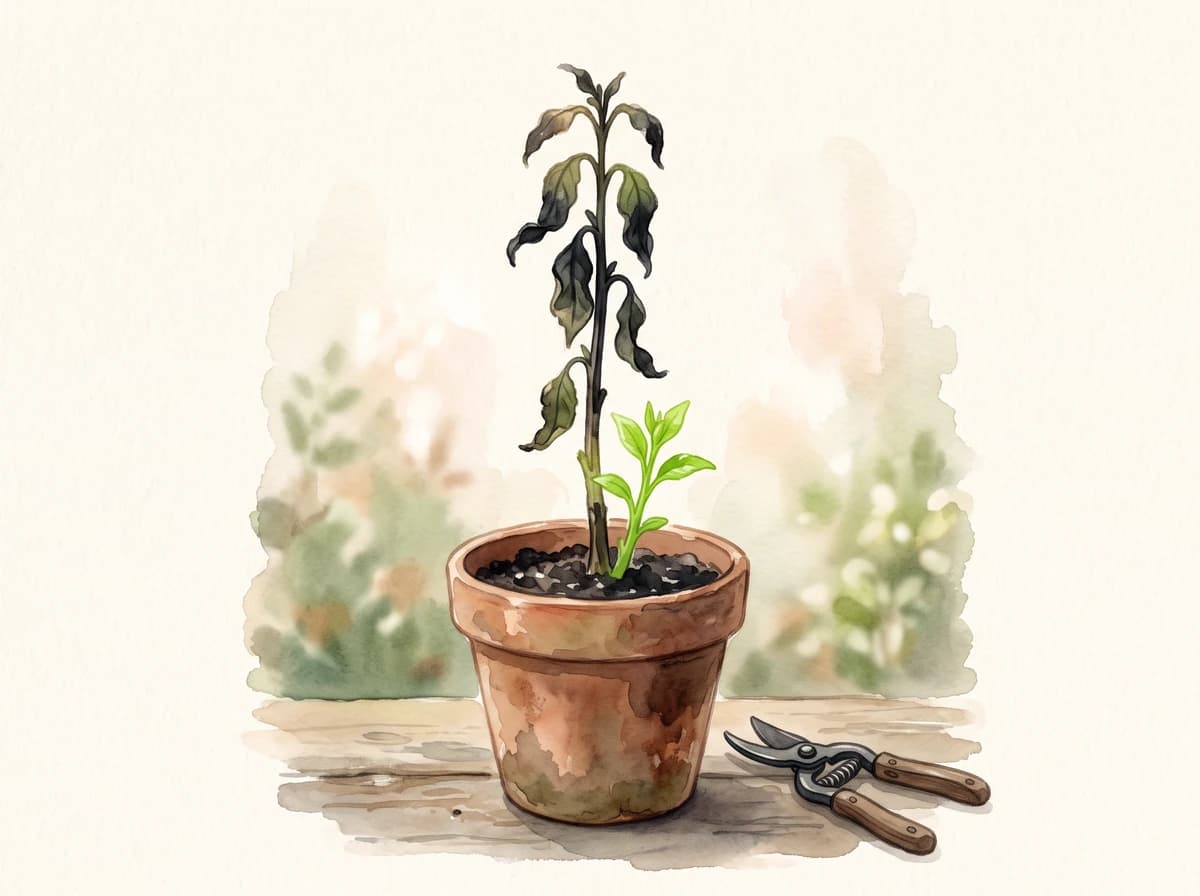
If, even so, a plant has frozen:
- Do not pull it up straight away: sometimes it regrows from the crown.
- Wait between 7 and 10 days and prune only the clearly dead part.
- Water moderately and avoid strong feeding until it sprouts again.
Do you already receive vueltaalhuerto alerts? In My garden mark your location on the map and switch on the frost warning.

What is harvested and what to do each month.