In this article (16 sections)
Manure is a complete organic fertiliser: it supplies nutrients and improves the structure of the soil. But badly used it burns plants and can bring pathogens. This is the practical guide, with a default recommendation so you do not go wrong.
Default recommendation: well-cured manure (horse, cow or sheep), between 1 and 2 kg (4.4 lb) per m² once a year, in autumn, mixed into the top few centimetres of soil.
State of the manure
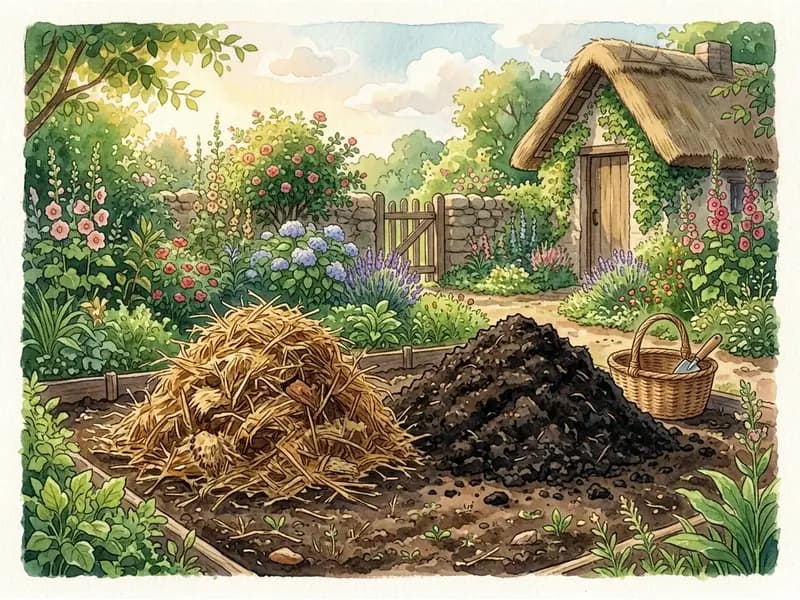
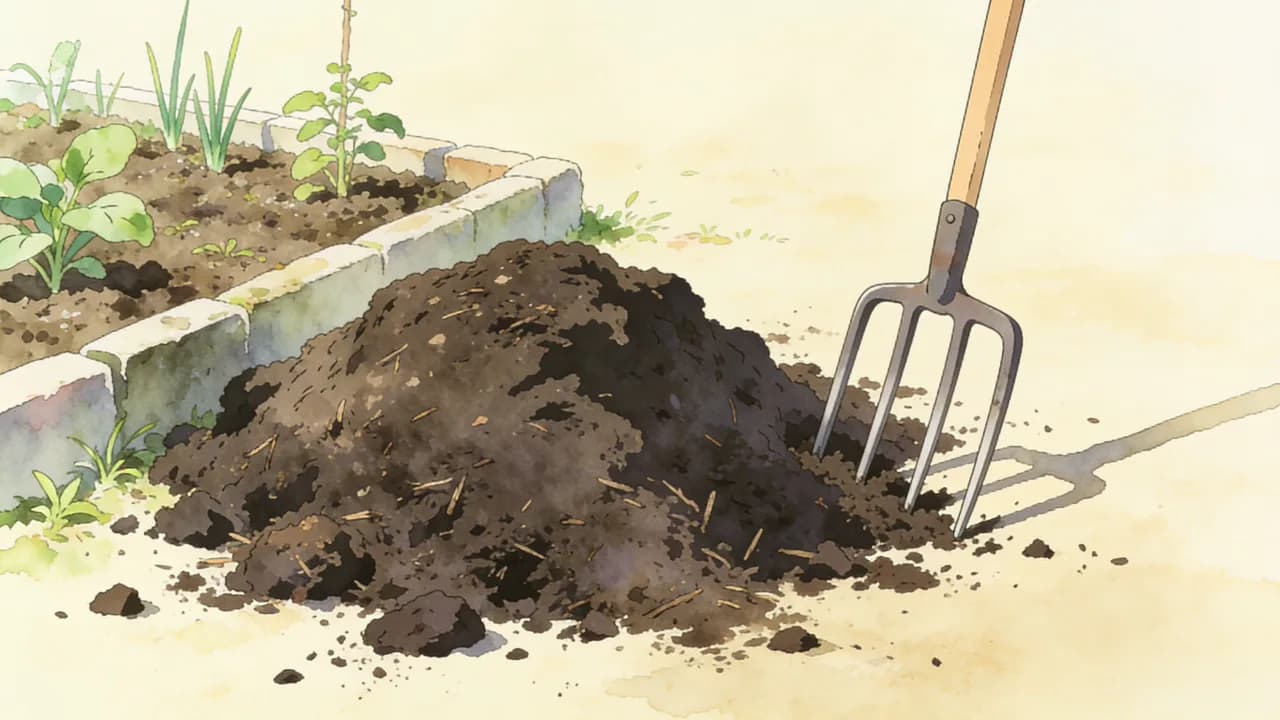
- Fresh (less than 3 months): it has a lot of ammonia, viable seeds and possible pathogens. Do not use it in the garden, not even buried. It is only good for composting or for leaving to cure in a separate heap.
- Half-made (3-6 months): it is still reactive. You can work it in in autumn to plant in spring, never on the surface or near living plants.
- Well-rotted (6 months to 2 years): dark, odourless and crumbly. It is the ideal: it gives slowly, does not burn and brings hardly any seeds.
- Excessively old (more than 3 years): it loses nitrogen and is left almost only as organic matter.
How much to apply
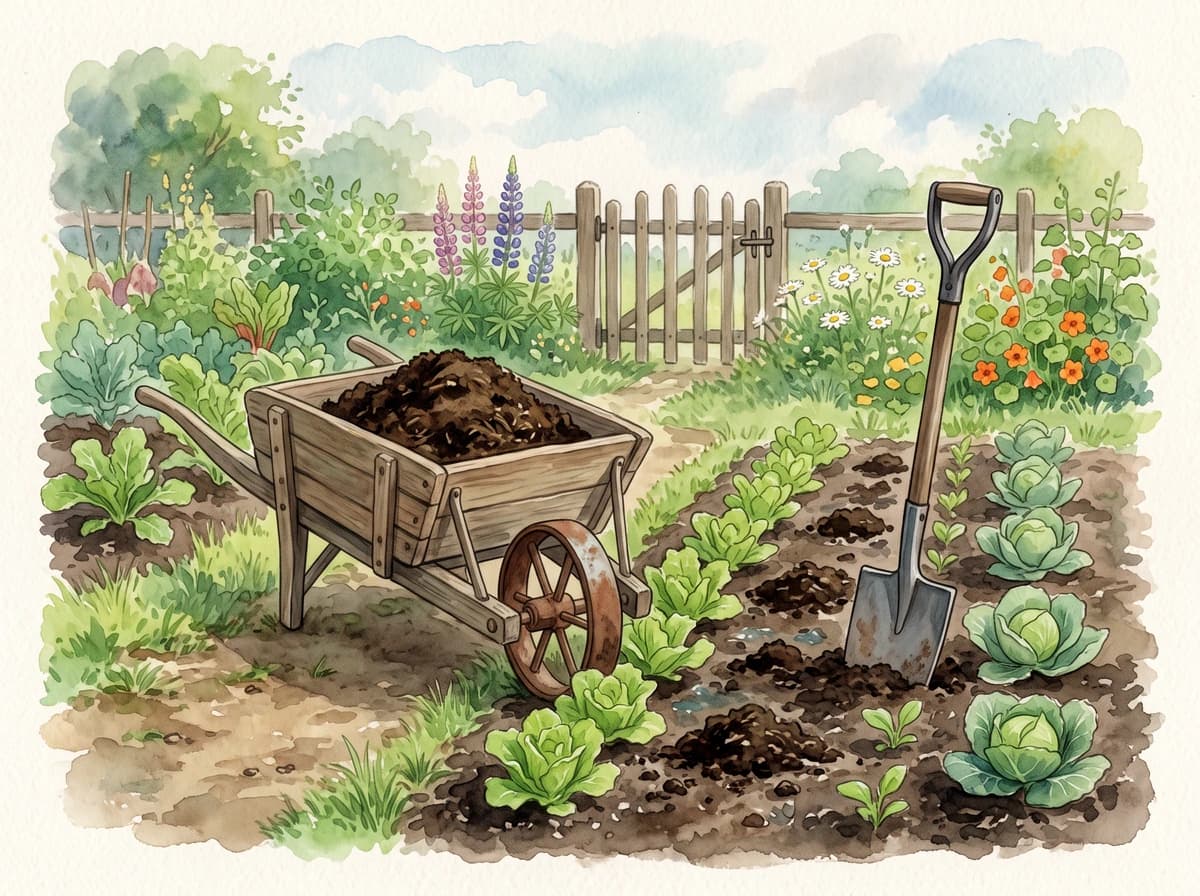
- Poor soils or a new garden: 3-5 kg/m² the first year.
- Annual maintenance: 1-2 kg/m².
- Very demanding crops (pumpkin, courgette): up to 4 kg/m².
- Mediterranean herbs (rosemary, thyme, sage): none. They prefer poor soil.
When to apply
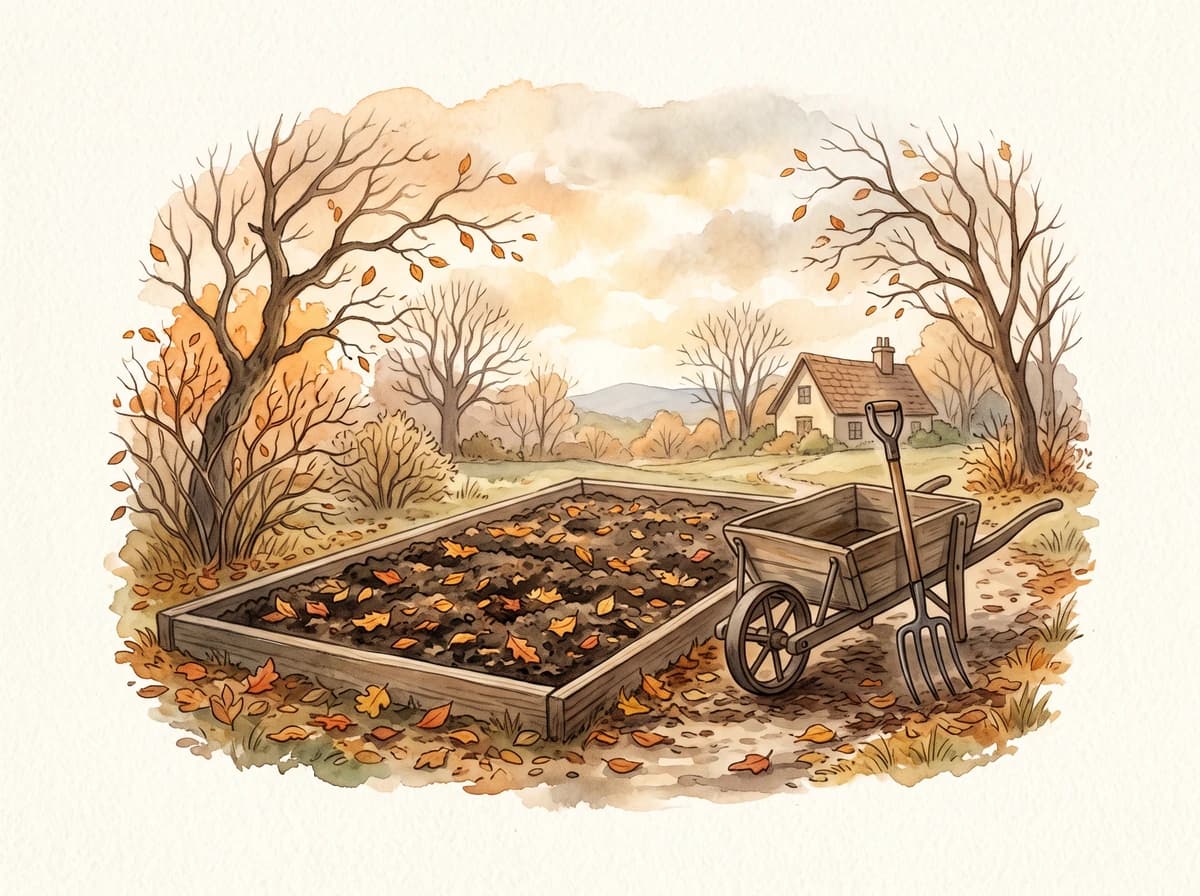
- Autumn (October-November): it is the best time for spring crops. You work it in before the rains and the soil integrates it by itself.
- End of winter (February): only if it is very well rotted, and at least 2-4 weeks before sowing or transplanting.
- Never on an active crop, buried next to living roots: it can burn them.
How to apply
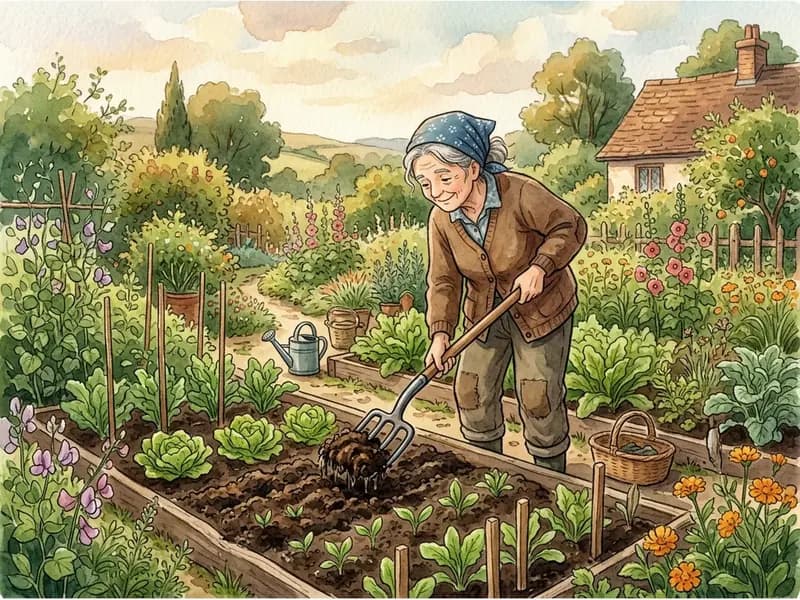
- Spread the well-rotted manure over the bed in a thin layer of a few millimetres. As a reference, a bucket of 10 L (about 2.6 US gal) goes round about 3-5 m² (32–54 sq ft).
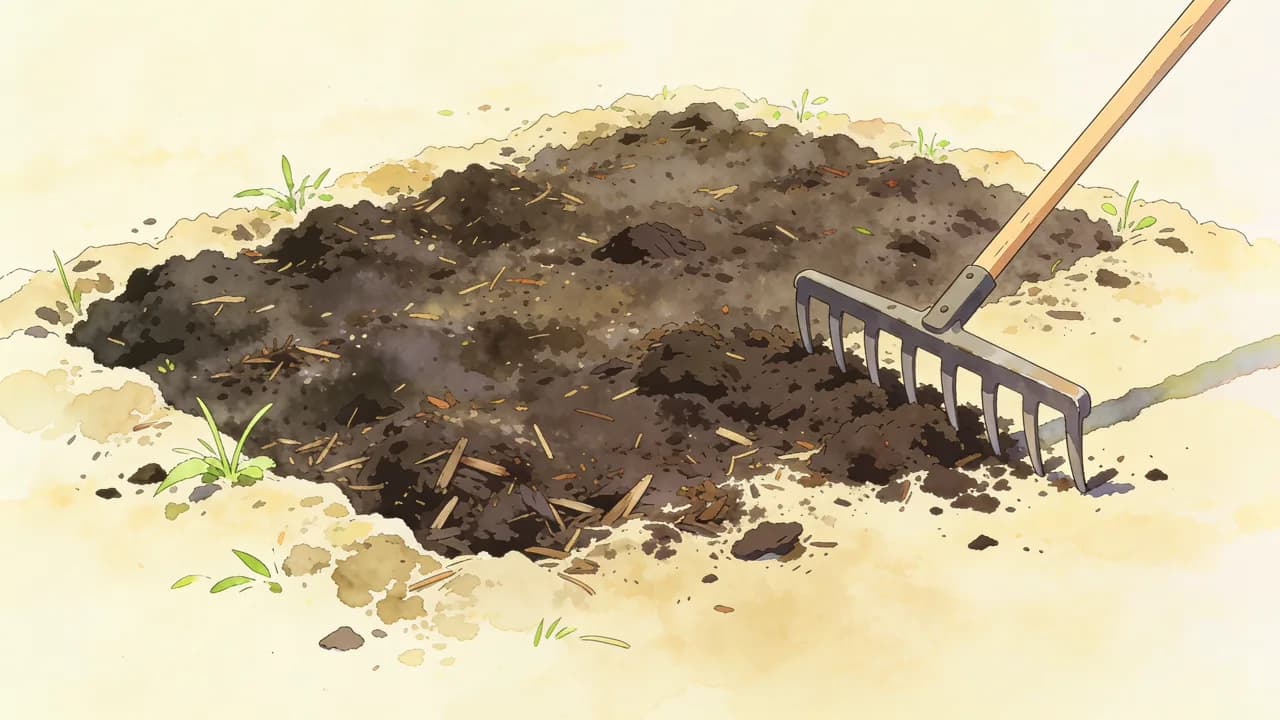
- Rake it in shallowly (0-10 cm, 0–3.9 in) to mix it with the soil, without burying it deep: the micro-organisms that break it down work better near the surface, where there is air.
- Water lightly.
- Leave 2-4 weeks before sowing.
Manure by animal
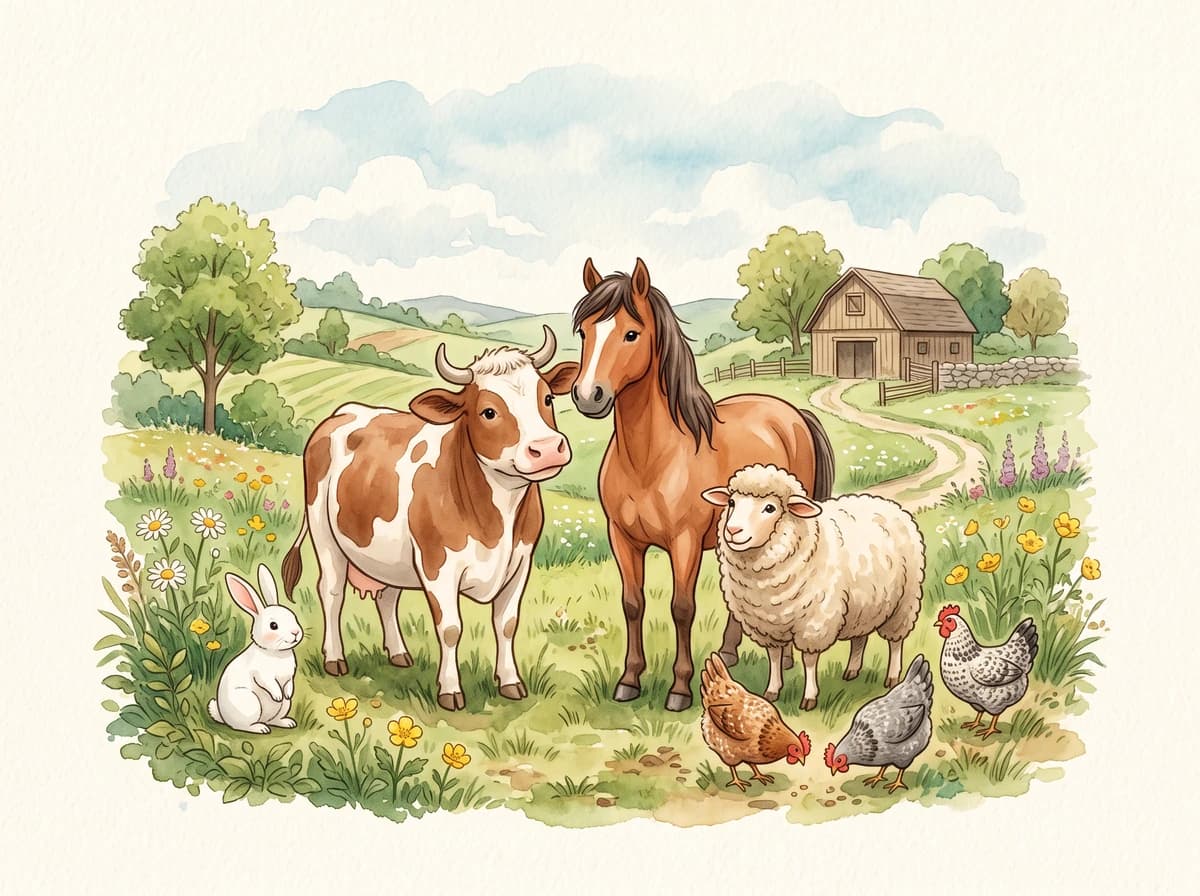
Horse
Rich in fibre and fairly balanced. It is the most common and a good all-rounder. It can bring grass seeds if the horses graze freely.
Cow
Denser and less airy, and fairly mild. It is a good base fertiliser for the whole garden, including tomato and fruit trees. It is usually somewhat colder than horse.
Sheep and goat
More concentrated in nitrogen and drier. Use roughly half the dose. It suits leaf crops (lettuce, chard).
Chicken
The most potent, very rich in nitrogen. It is dangerous fresh, because it can burn the roots. Use it only very well rotted or composted, with a maximum of 1 kg/m².
Pig
It composts slowly and is usually less controlled. It is hardly advisable if it is not very well cured.
Rabbit
Excellent: rich and balanced, and less “hot” than others. All the same, if you can, let it cure for a few weeks. It is the most convenient for a balcony, because of its little smell.
Bat or seabird guano
Very concentrated. Use it in very small doses, following the instructions on the pack (as a guide, 100-200 g/m²). It is excellent, but expensive.
How to know if it is “made”
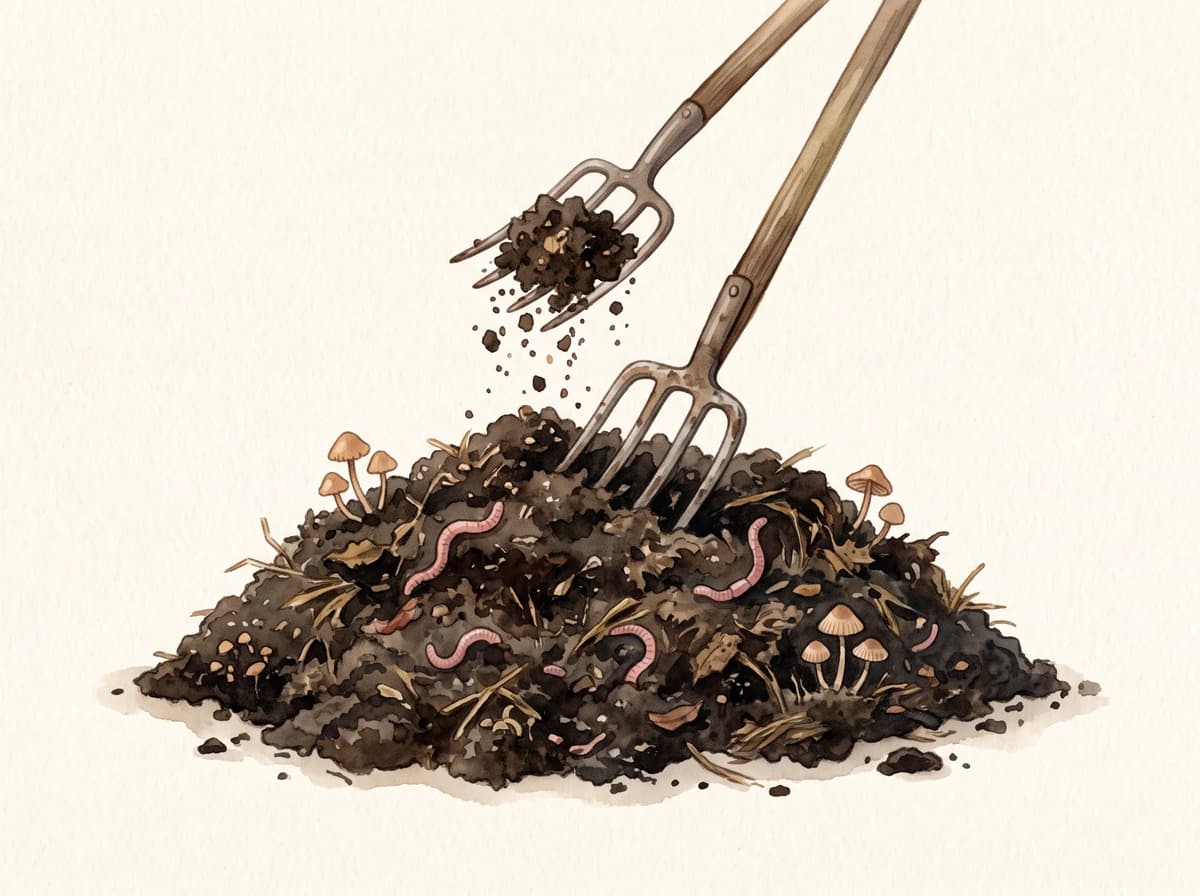
- Colour: dark black-brown, not yellowish.
- Smell: of earth, not of ammonia.
- Texture: it crumbles in the hand, neither in hard lumps nor a paste.
- Temperature: if you put your hand in the heap, it should not be hot.
Alternatives if you cannot get manure
- Worm castings (bought): a concentrated equivalent, free of pathogens.
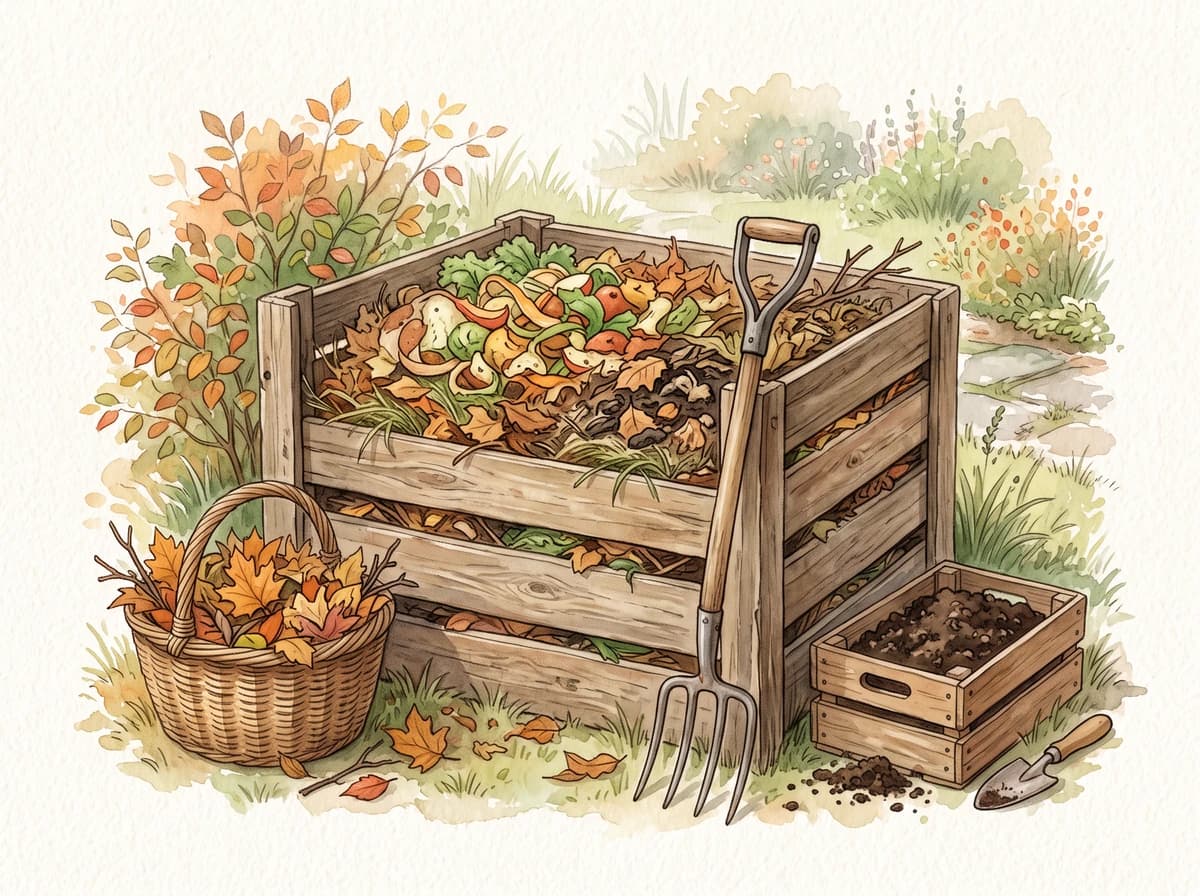
- Mature home compost: almost as good.
- Liquid organic fertiliser (liquid guano): acts quickly, but only supplies nutrients, it does not improve structure.
Warnings
- Manure from treated animals: ask the farmer whether they use antibiotics or antiparasitics, and whether the forage or straw carry persistent herbicides. Some residues can harm crops for months; if in doubt, better another manure.
- From horses that graze freely: it brings weed seeds. The ideal is to compost it first.
- Vegetables eaten raw (lettuce, radish, strawberry): use only very cured or composted manure. As a reference, the US organic standards (NOP) ask for at least 90 days between applying uncomposted manure and harvest, and 120 if the edible part touches the soil, because of the risk of E. coli and Salmonella.
- Hygiene: handle manure with gloves, wash your hands well afterwards and wash vegetables before eating them.
In short
Very well-rotted manure, 1-2 kg/m² once a year in autumn, mixed into the surface layer. With that your garden lives happily for many years.

Greens, browns, moisture and troubleshooting.