In this article (23 sections)
- Freezing (the quickest and safest)
- Vegetables that freeze well
- Vegetables that do not freeze well
- Dehydrating
- Ideal for
- How
- Fermenting (sauerkraut, kimchi)
- Homemade sauerkraut
- Other easy ferments
- In oil (read this carefully)
- Mushrooms in oil (cautious version)
- Roasted peppers in oil
- In vinegar (pickles)
- Salt curing
- Fresh storage
- Potato
- Onion and garlic
- Pumpkin
- Carrot
- Apple
- Indicative planning (per person/year)
- Useful tools
- Principles
In August there is a surplus of harvest; in January you miss garden vegetables. This guide sums up real methods and warns where the risk lies (above all oil and badly acidified jars).
Freezing (the quickest and safest)
Vegetables that freeze well
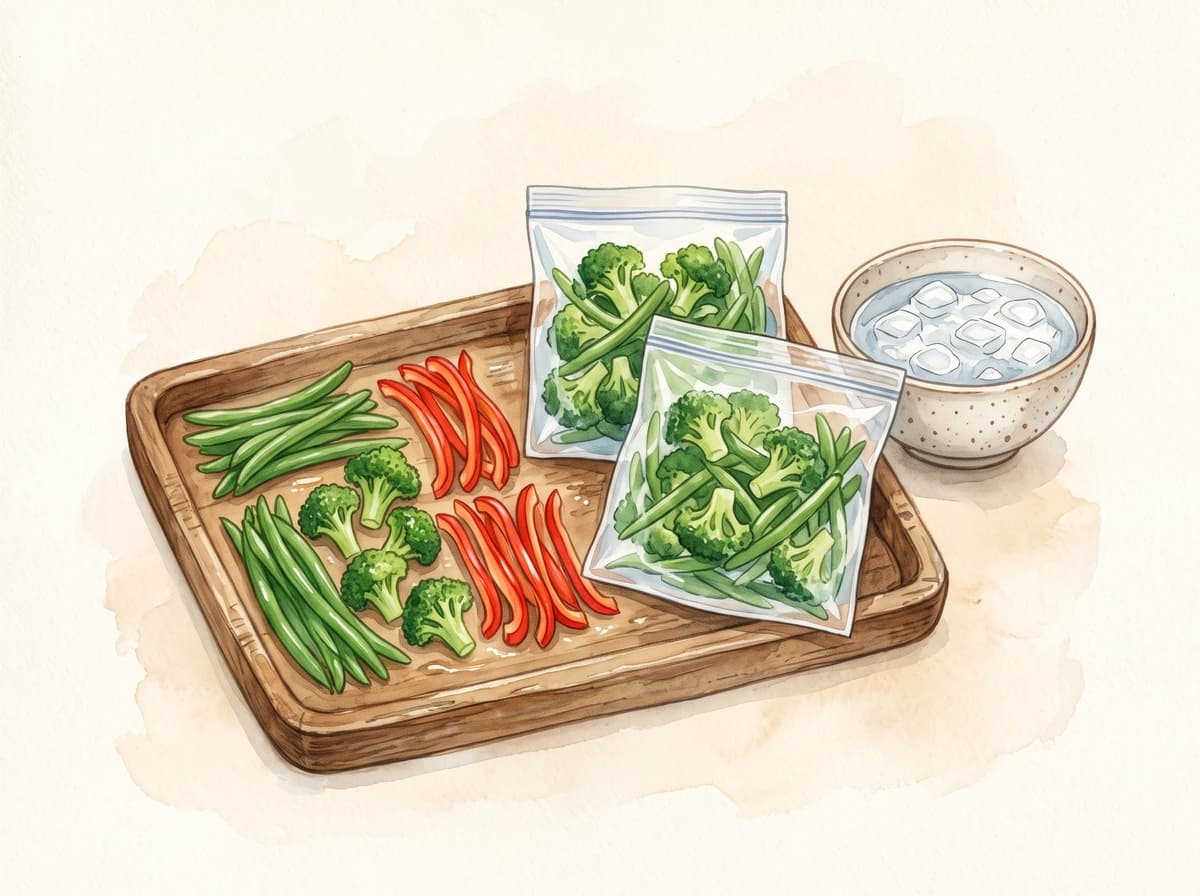
- Green bean: blanch 3 min, iced water, dry, freeze in a bag. Duration: ~12 months.
- Fresh pea: the same, 2 min of blanching.
- Spinach: 1 min, drain very well, freeze in portions.
- Broccoli / cauliflower: 3 min for the florets.
- Pepper: raw, in strips, straight into the freezer.
- Courgette: grated and well drained, or in slices blanched 3 min.
Vegetables that do not freeze well
- Lettuce and salad leaves.
- Salad tomato (it does freeze for cooking; see how in preserving tomato all year round).
- Cucumber and radish (they turn soft).
Dehydrating
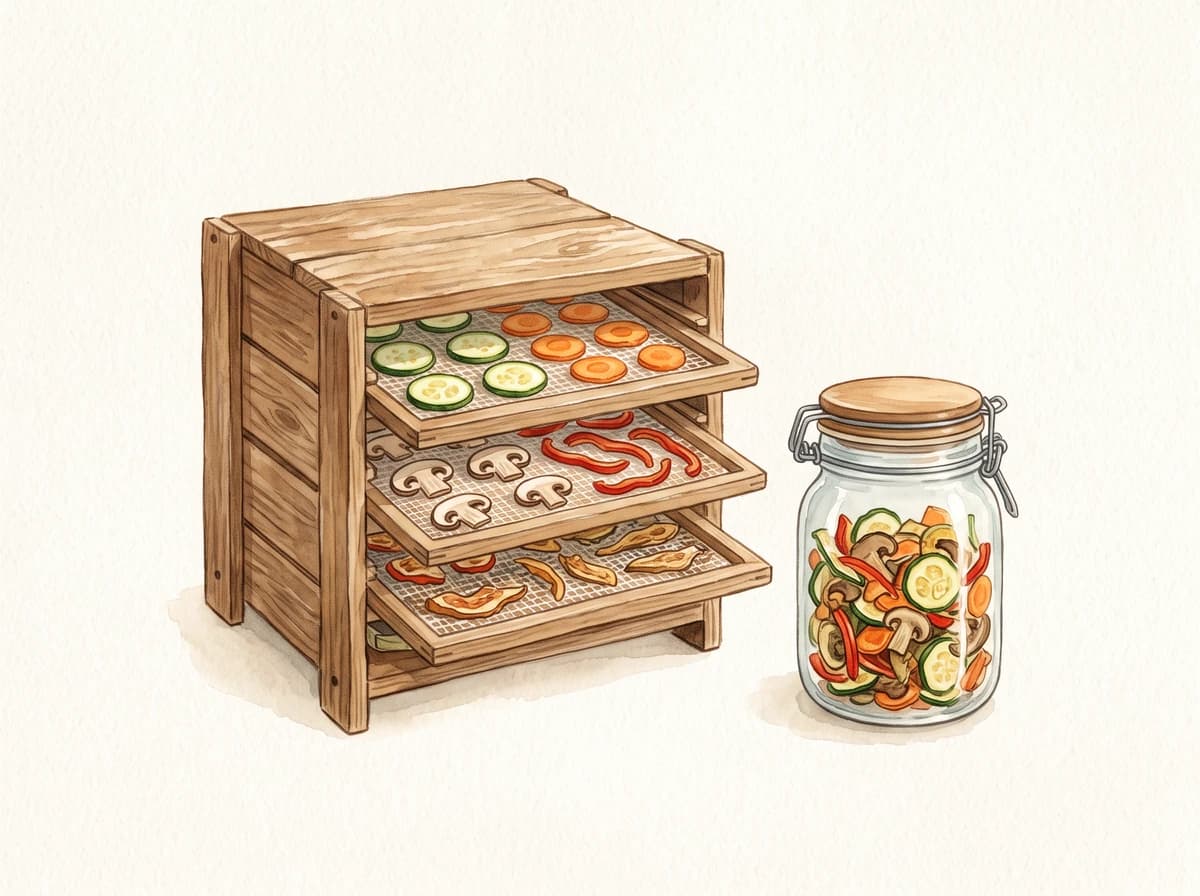
Ideal for
- Herbs: bunches upside down, ventilated area, 1–2 weeks.
- Mushrooms: thin slices (only cultivated mushrooms or ones identified with complete certainty).
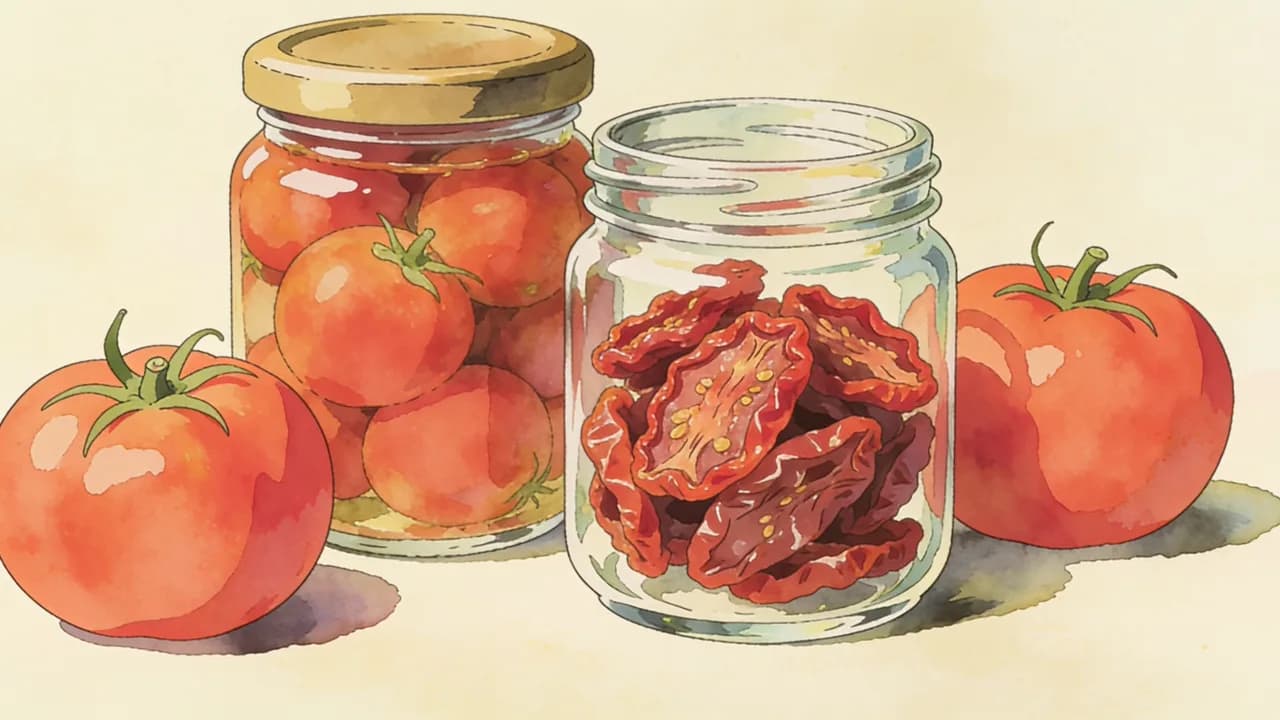
- Pepper, onion, tomato: strips or segments.
How
- Dehydrator: 50–60 °C (122–140 °F), 8–12 h (follow the manual).
- Oven: at the lowest possible temperature (ideally below 70 °C (158 °F)), with the door ajar.
- In the sun (dry climate): several days, bringing in at night.
Duration: herbs, about 12 months; dried vegetables, 6–12 months in an airtight jar, as long as they are well dried.
Fermenting (sauerkraut, kimchi)
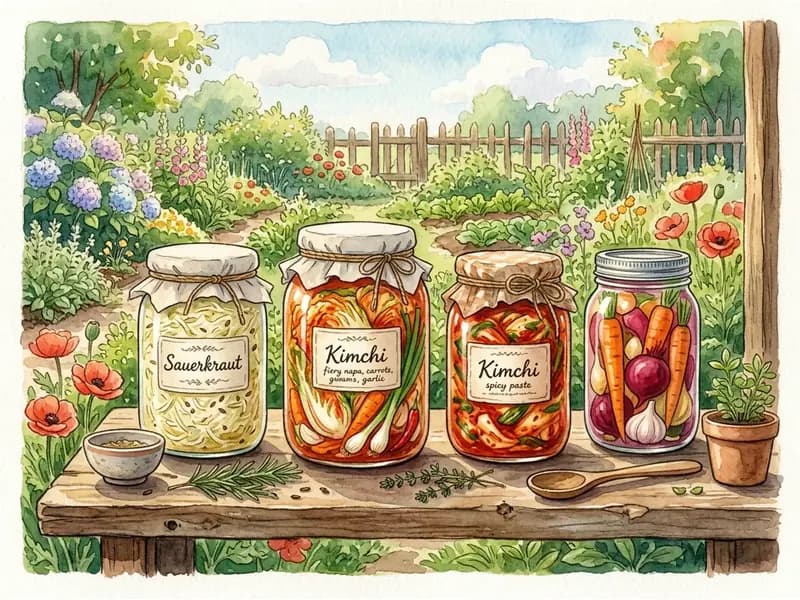
Fermentation uses salt and good bacteria. The risk is low if the vegetable stays always under the liquid, the salt is right (~2 %) and the jar is clean. It is not “zero risk”.
Homemade sauerkraut
- 1 kg (2.2 lb) of cabbage in fine strips + 20 g (0.7 oz) of salt (2 %).
- Knead until it releases juice.
- Press into a jar: everything submerged.
- Ferment 2–4 weeks at 18–22 °C (64–72 °F); then fridge.
A thin, whitish film on the surface (kahm yeast) is not dangerous: remove it. Fuzzy coloured mould (green, blue, black or pink) is: in that case, throw everything away.
Other easy ferments
- Carrot or radish in 3 % brine, about 2 weeks.
- Kimchi: more spices; it keeps for months in the fridge.
In oil (read this carefully)
Oil does not acidify, and in a jar without oxygen dangerous bacteria can grow, such as the one that causes botulism. That is why the rule is the same for any vegetable, mushroom or herb in oil:
- Keep it always in the fridge.
- Eat it within about 4 days or freeze it (without oil if possible).
- Do not leave it “2–3 weeks” or “several months” by guesswork, not even with a prior vinegar dip, because that short bath does not guarantee the acidity needed for storing at room temperature.
Mushrooms in oil (cautious version)
Use only cultivated mushrooms or ones identified with complete certainty. If in any doubt with a wild mushroom, consult a mycologist.
- Boil the mushrooms 5 min in salted water.
- Drain and dry very well.
- Put them in a jar, cover them with oil and keep them in the fridge.
- Eat them within about 4 days or freeze them.
Roasted peppers in oil
- Roast, peel and dry well.
- Cover them with oil and keep them in the fridge, to eat within about 4 days.
- To keep them for months, freeze the roasted peppers without oil.
In vinegar (pickles)
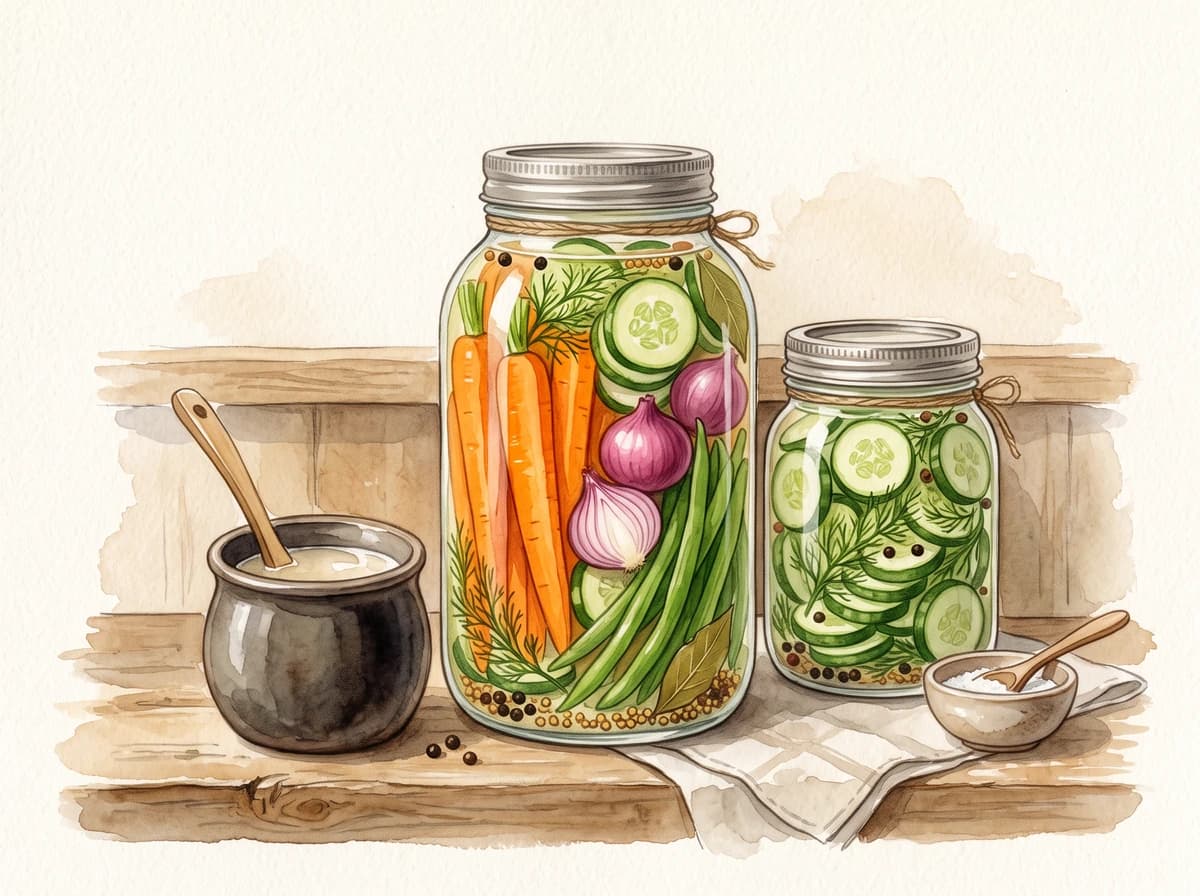
Ideal for: gherkin, spring onion, carrot, cauliflower.
Brine safe for the pantry (indicative):
- Use vinegar with 5 % acidity.
- If you improvise, use more vinegar than water (for example, 3 parts vinegar to 1 of water), with salt, a little sugar and the spices you like. Half and half is only safe for the pantry if you follow a tested recipe.
Method:
- Clean and cut the vegetables; blanch the harder ones 30 s.
- Fill clean jars.
- Pour on the boiling brine.
- Close. To keep them in the pantry, do a water bath of about 10-15 min; if not, keep them in the fridge.
- Label with the date.
Duration: several months in the pantry if you have done the water bath, the acidity is high and the seal is correct. If in doubt, fridge.
Salt curing
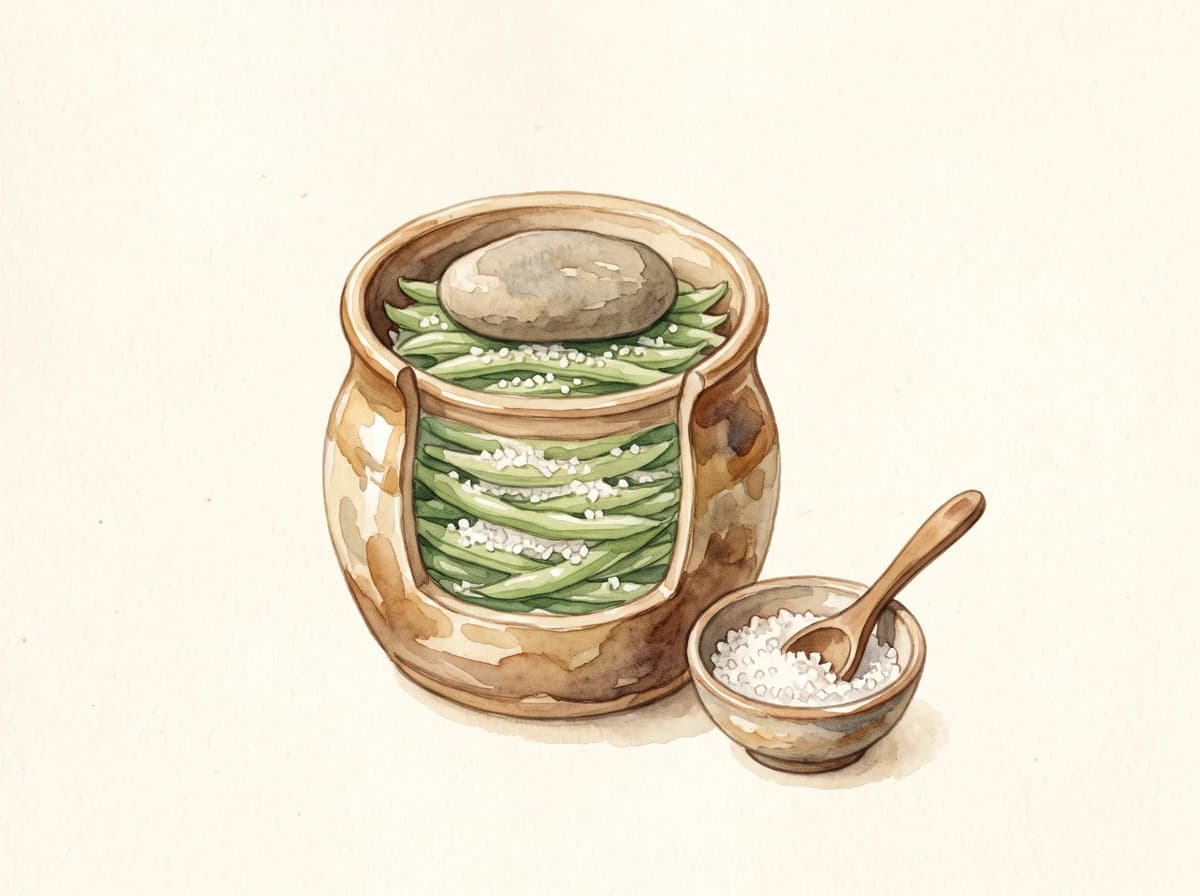
It is a traditional method that places the vegetable in layers with coarse salt and a weight on top, in a cool place. It needs a lot of salt, and as here we cannot give a proven proportion, if you do not have a reliable recipe it is better to use freezing or fermenting. Before eating the salted vegetable, desalt it by changing the water several times.
Fresh storage
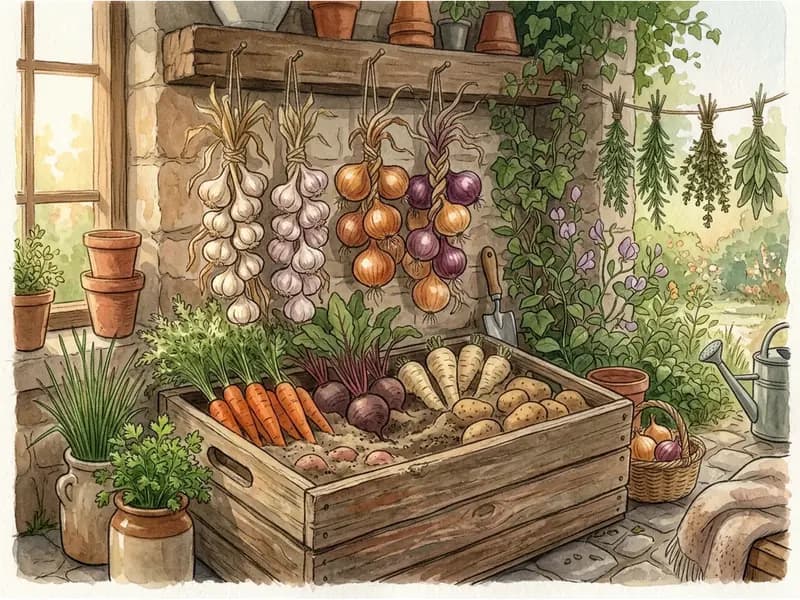
Potato
Dark, cool (5–10 °C, 41–50 °F), ventilated. Hessian sacks or crates. Not next to apples. ~4–6 months.
Onion and garlic
Braided or in nets, in a dry, ventilated place. They last about 4–8 months, depending on the variety.
Pumpkin
Cured in the sun for a few days; store with the stalk. ~4–6 months.
Carrot
In sand or sawdust, cool. ~3–5 months.
Apple
Crates with paper between fruit, cold (2–5 °C, 36–41 °F), late varieties.
Indicative planning (per person/year)
- 10–15 kg (22–33.1 lb) of tomato as properly acidified preserve (or frozen).
- 3–5 kg (6.6–11 lb) of frozen vegetables.
- A few jars of dried herbs.
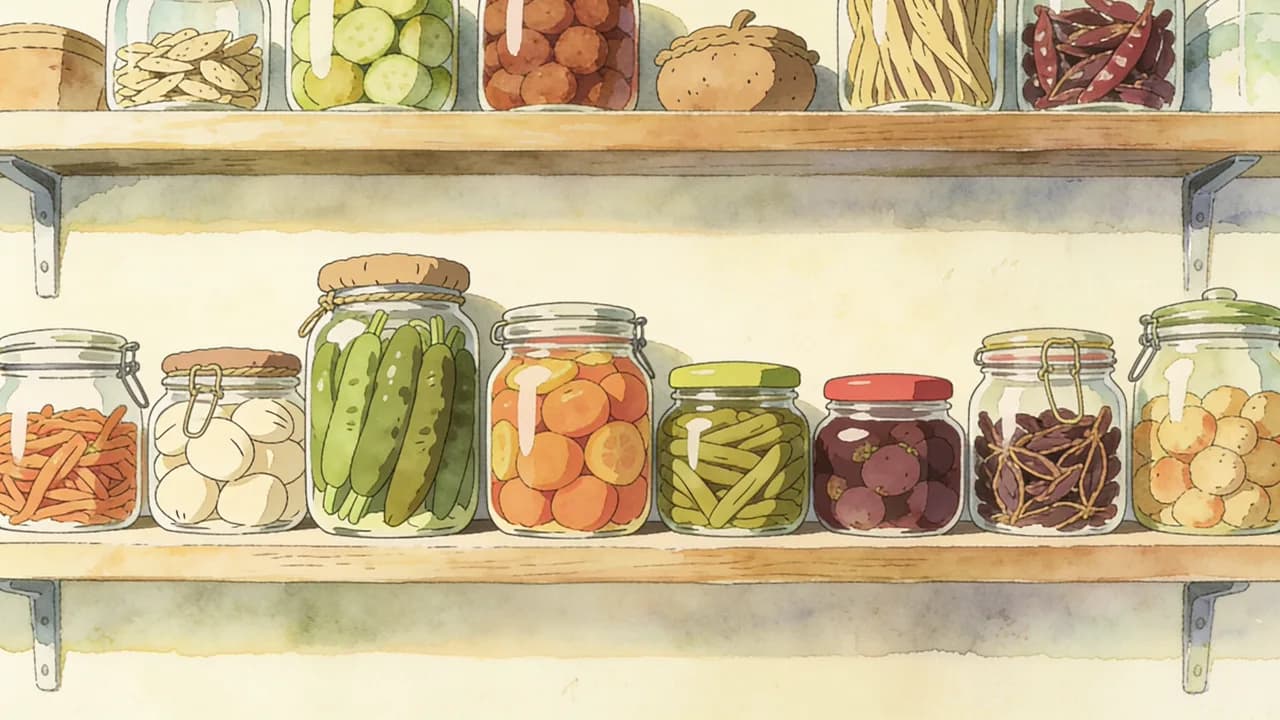
- Some jars of pickles and ferments.
- Potatoes, onions and garlic in a cool pantry.
Useful tools
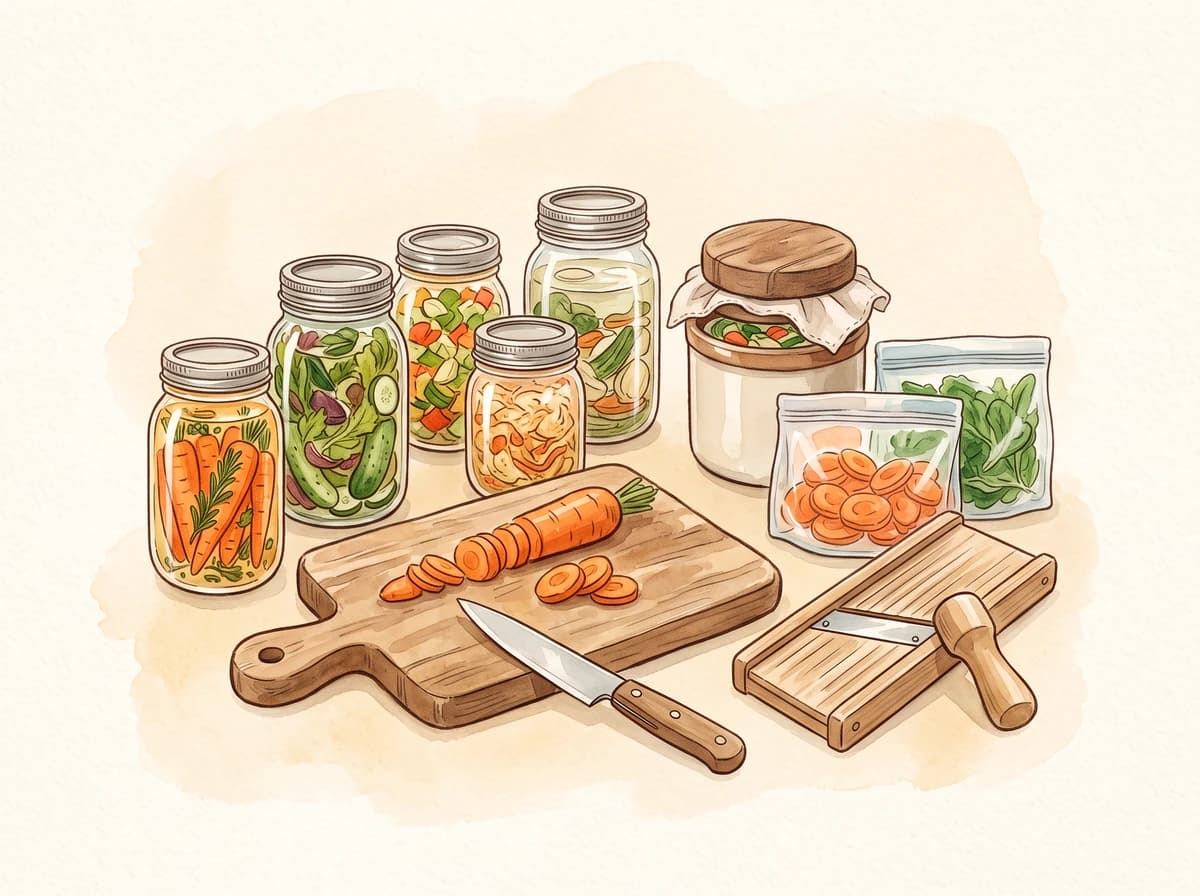
- Bags or tubs for freezing.
- Dehydrator (or oven with patience).
- Jars and new lids.
- Tall pan for water-bath canning.
Important: a kitchen pressure cooker is not a pressure canner. Do not use it to sterilise jars of low-acid vegetables.
Principles
- Hygiene: clean jars, clean hands, new lids.
- Label: contents + date.
- Rotation: oldest first.
- If it smells odd, the lid is bulging or the appearance is doubtful: throw it away without tasting.
- When in doubt between jar and freezer: freeze.

What is harvested each month in the garden and in the wild.