In this article (10 sections)
A good garden can give many kilos of tomato in summer. Here are six ways of keeping them, explained clearly. Start with the simplest method (freezing) if it is your first time.
Before starting: two key ideas
- Acidifying means adding an acid (bottled lemon juice, citric acid or 5 % vinegar) so that tomato in a jar is safer in the pantry. Tomato is right at the limit of acidity: without that step, the risk of botulism goes up.
- Water-bath canning consists of submerging closed jars in boiling water for the indicated time. It is not the same as a kitchen pressure cooker or a food processor: they do not replace a pressure canner, which is the appliance that low-acid foods need.
If in doubt, freeze: it is the safest and simplest option.
1. Frozen whole (the simplest)
- Ideal for: sauces, sofritos and soups later on.
- Not good for: salad (the texture is spoiled).
How:
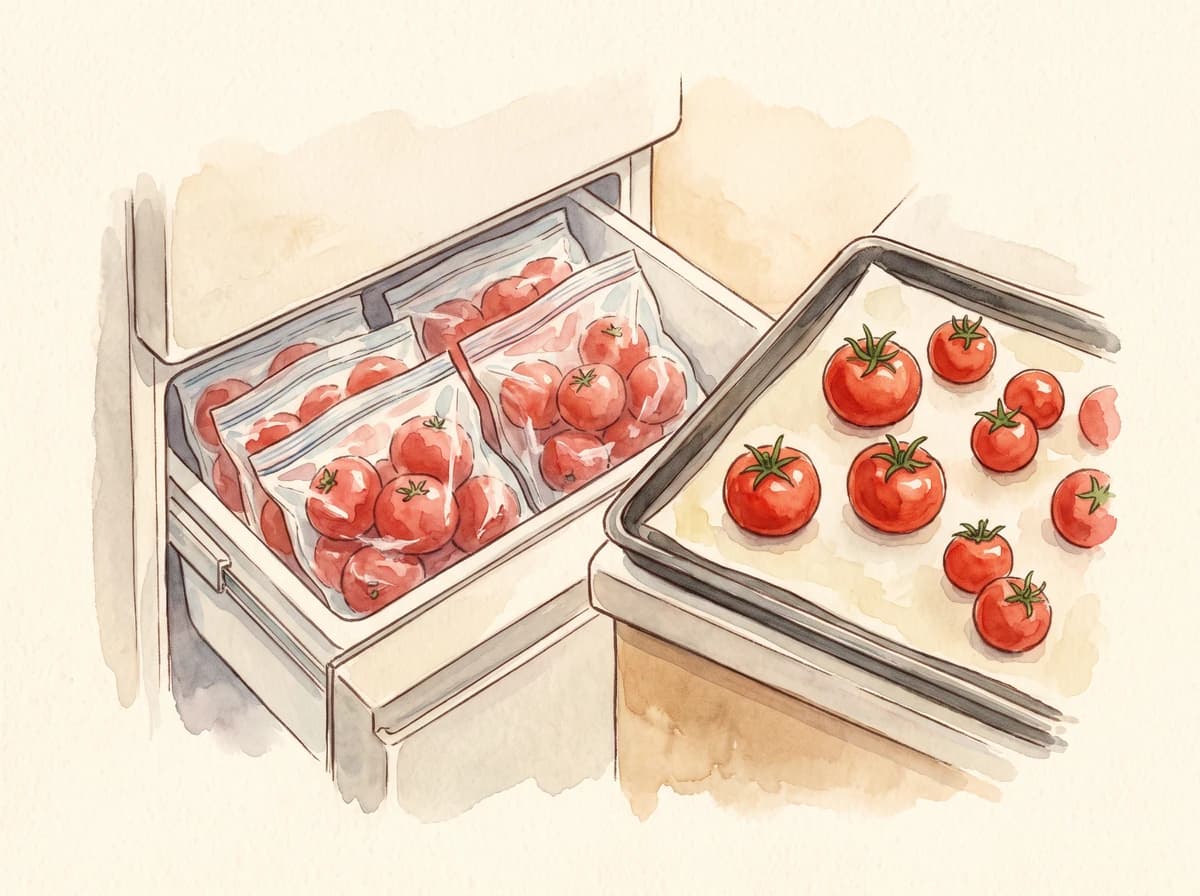
- Wash and dry the whole tomatoes.
- Freeze them loose on a tray (so they do not stick together).
- When they are hard (2–3 h), move them to an airtight bag.
- Label with the date.
Duration: 10–12 months.
To use: take them out, wait 1–2 minutes and the skin comes off with your fingers. Perfect for sauces.
2. Tomato sauce in jars (with acidification)
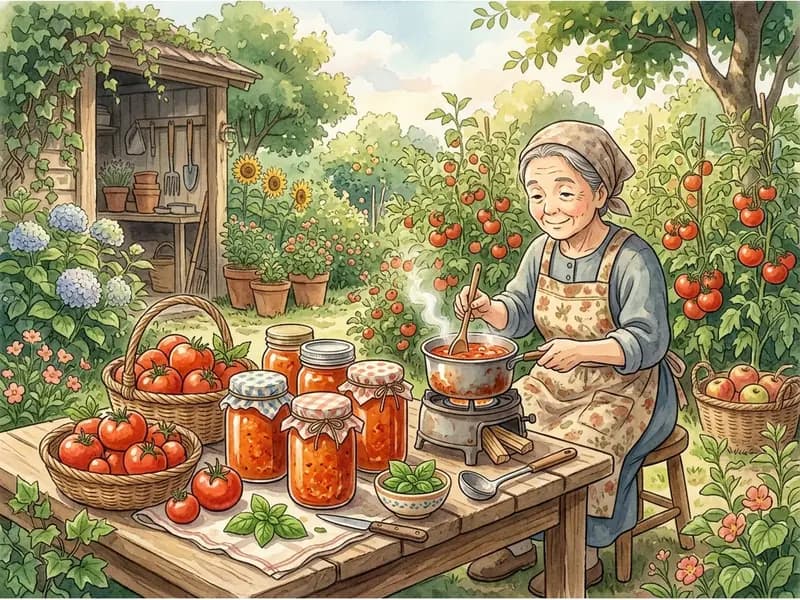
How (about 5 kg, 11 lb of tomato → ~4–5 jars of 500 ml, 16.9 fl oz):
- Scald: 30–60 s in boiling water and then iced water. Peel.
- Blend.
- Cook over a low heat 2–3 hours until thick, with salt (about 5 g, 0.2 oz per kg of tomato). Add the olive oil and the basil when serving, not before bottling.
- Acidify each empty jar before filling it:
- 1 tablespoon of bottled lemon juice per jar of ~500 ml (16.9 fl oz), or
- 2 tablespoons per jar of ~1 L (about 1.1 quarts), or
- 1/4 teaspoon of citric acid (500 ml, 16.9 fl oz) or 1/2 teaspoon (1 L, about 1.1 quarts).
- Fresh lemon is not suitable, because its acidity is not constant.
- Fill sterilised jars while still hot (leave 1–2 cm, 0.4–0.8 in free).
- Close and boil in a water bath: about 35 min (500 ml, 16.9 fl oz) or 45 min (1 L, about 1.1 quarts). Above 300 m (984.2 ft) altitude, lengthen the time: about 5 minutes more between 300 and 900 m (2952.7 ft), and 10 minutes more between 900 and 1800 m (5905.4 ft).
Use healthy, ripe tomatoes; do not bottle those from plants that died of disease or of frost.
Duration: up to about 12 months in a cool, dark pantry, only if the vacuum of the lid is correct (lid sunk and firm).
Note: this recipe is for tomato alone. If you want a sauce with onion, pepper, garlic or oil, acidifying is not enough: those ingredients lower the acidity and require a specific recipe in a pressure canner. In that case, freeze the sauce.
3. Sun-dried tomato
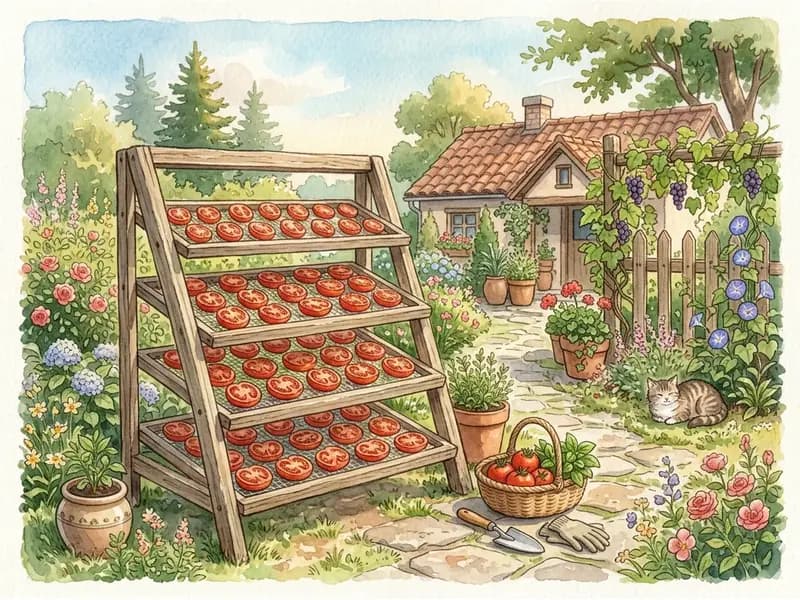
Ideal in: the south of the peninsula and dry, hot climates. If there is humidity or cloud, better to use a dehydrator, because the tomato can go mouldy before it dries.
Ideal varieties: cherry, roma, san marzano (less water).
How:
- Cut the tomatoes in half lengthways.
- Remove the seeds if you prefer.
- Sprinkle fine salt on the cut face.
- Place them face up on a rack.
- Leave them in the sun about 4–7 days, turning them each day, and bring them in at night so they do not catch dew.
- When they are like raisins, store them like this:
- Dry bag or jar (no oil): months in a cool place.
- In oil: it is the riskiest (oil does not acidify and botulism can grow). Store it always in the fridge and eat it within about 4 days, or freeze it. Do not leave it “a year” in oil; for months, it is better to keep it dry.
4. Dehydrated in the oven or dehydrator
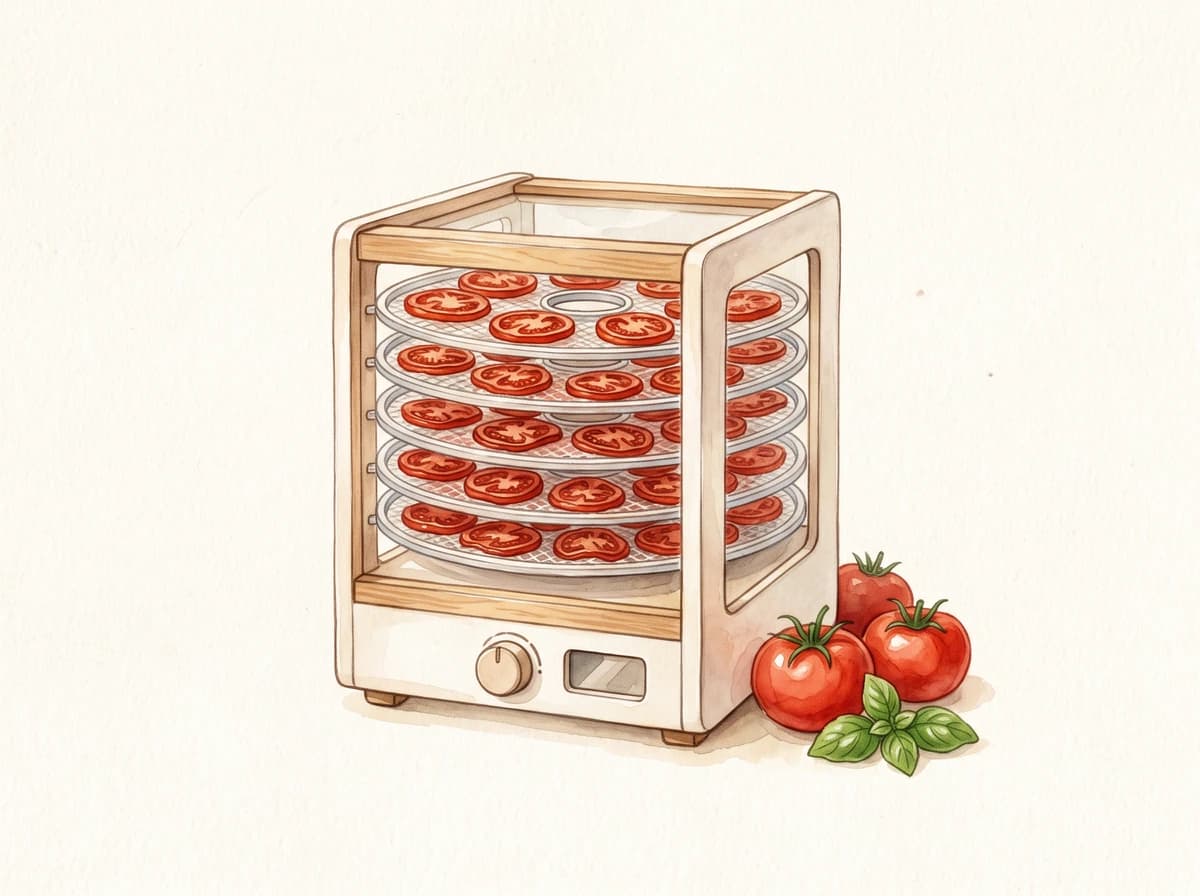
- Cut into slices of 5–7 mm (0.2–0.28 in) or in halves.
- Light salt.
- Dry in the oven at the lowest temperature it has (ideally below 70 °C, 158 °F) with the door ajar, or in a dehydrator at about 55–60 °C (131–140 °F). Allow between 6 and 12 hours.
- They are ready when they are flexible and leathery, but with no moisture when squeezed.
Use: rehydrate 30 min in hot water. For pasta, salads, pizza.
Duration: 6–12 months in an airtight jar, well dried.
5. Homemade fried tomato (better frozen)
- Peel and chop 3 kg (6.6 lb) of tomato.
- Fry onion gently in olive oil.
- Add the tomato, salt and a little sugar.
- Cook 1–2 hours over a low heat.
- Freeze in tubs. It is the safe and recommended way to keep it.
Do not bottle it in a jar for the pantry with a water bath: the onion and the oil lower the acidity, and acidifying is not enough to make it safe. It would only be valid with a specific recipe tested in a pressure canner.
6. Tomato jam
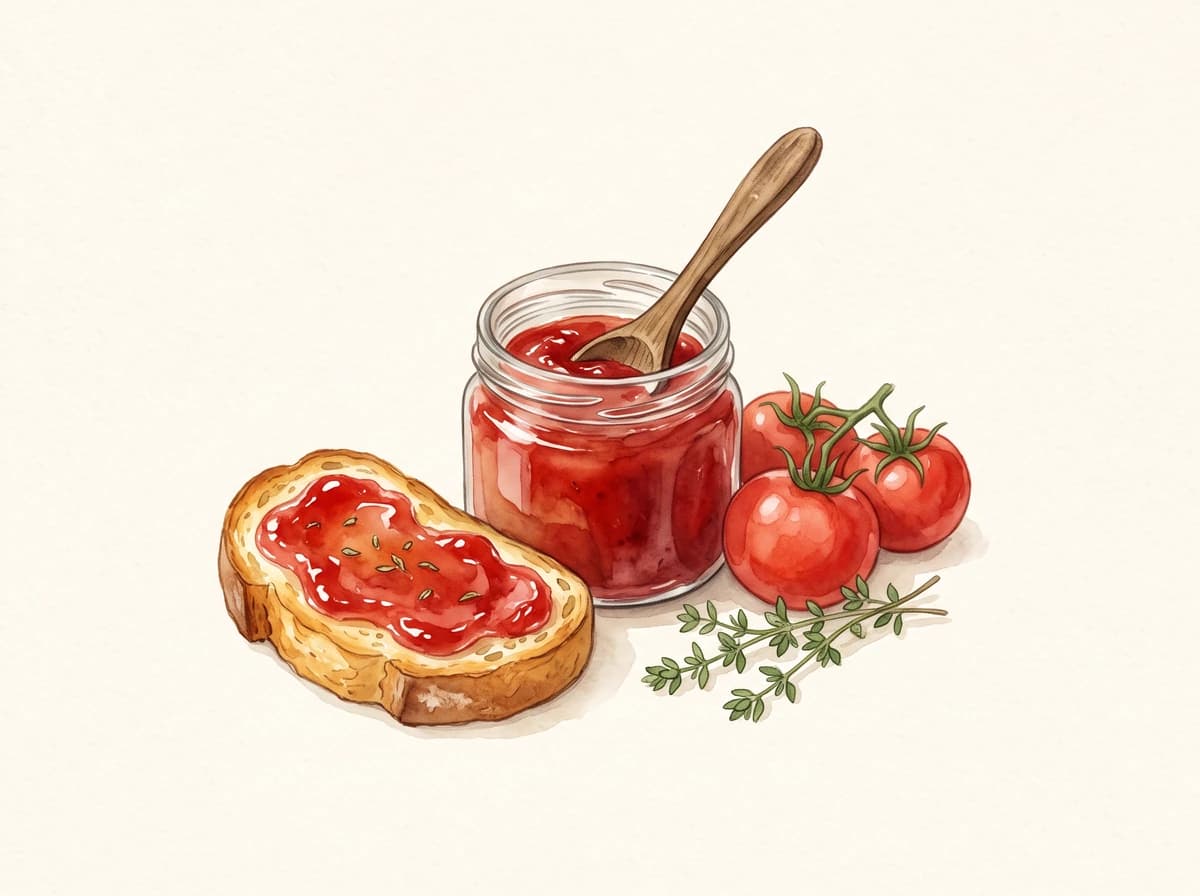
How: 2 kg (4.4 lb) of tomato + 1 kg (2.2 lb) of sugar + juice of 1 lemon. Cook for about 1 h until it sets. Pot hot into sterilised jars, close and boil 10 minutes in a water bath. With so much sugar the risk is lower than in a savoury sauce. Even so, work cleanly, label with the date and, once opened, keep it in the fridge.
Use: with cheeses, tapas, savoury desserts.
Useful tools
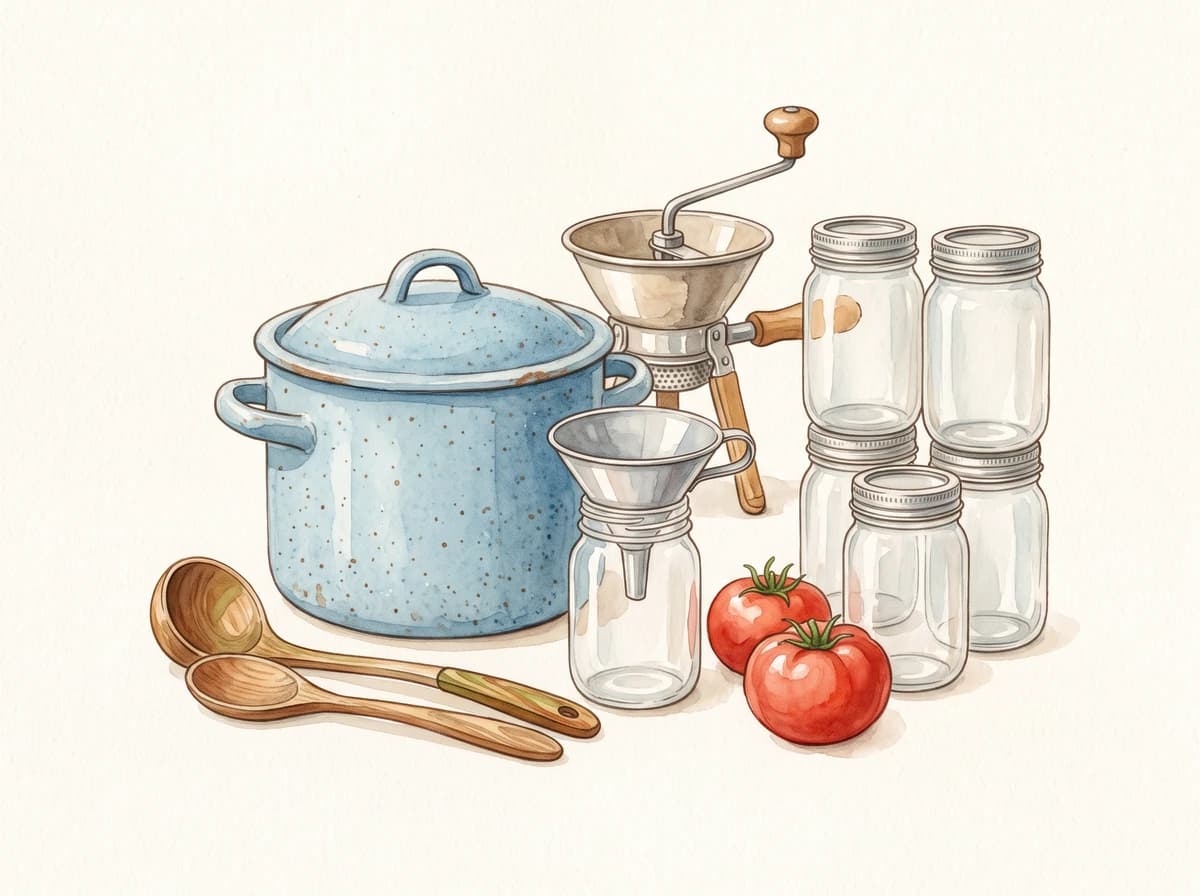
- Food mill: separates skin and pips.
- Vacuum sealer: useful for freezer bags.
- Dehydrator: more even than the oven.
- Tall pan for water-bath canning of jars.
- A kitchen pressure cooker does not replace a pressure canner.
Indicative amounts (family of 4)
- Sauce/fried: 25–30 kg (55.1–66.1 lb) of fresh tomato ≈ 20–30 jars of 500 ml (16.9 fl oz).
- Frozen: 5–10 kg (11–22 lb).
- Dried: 2–3 kg (4.4–6.6 lb) fresh ≈ 200–300 g (7.1–10.6 oz) dried.
Mixing varieties
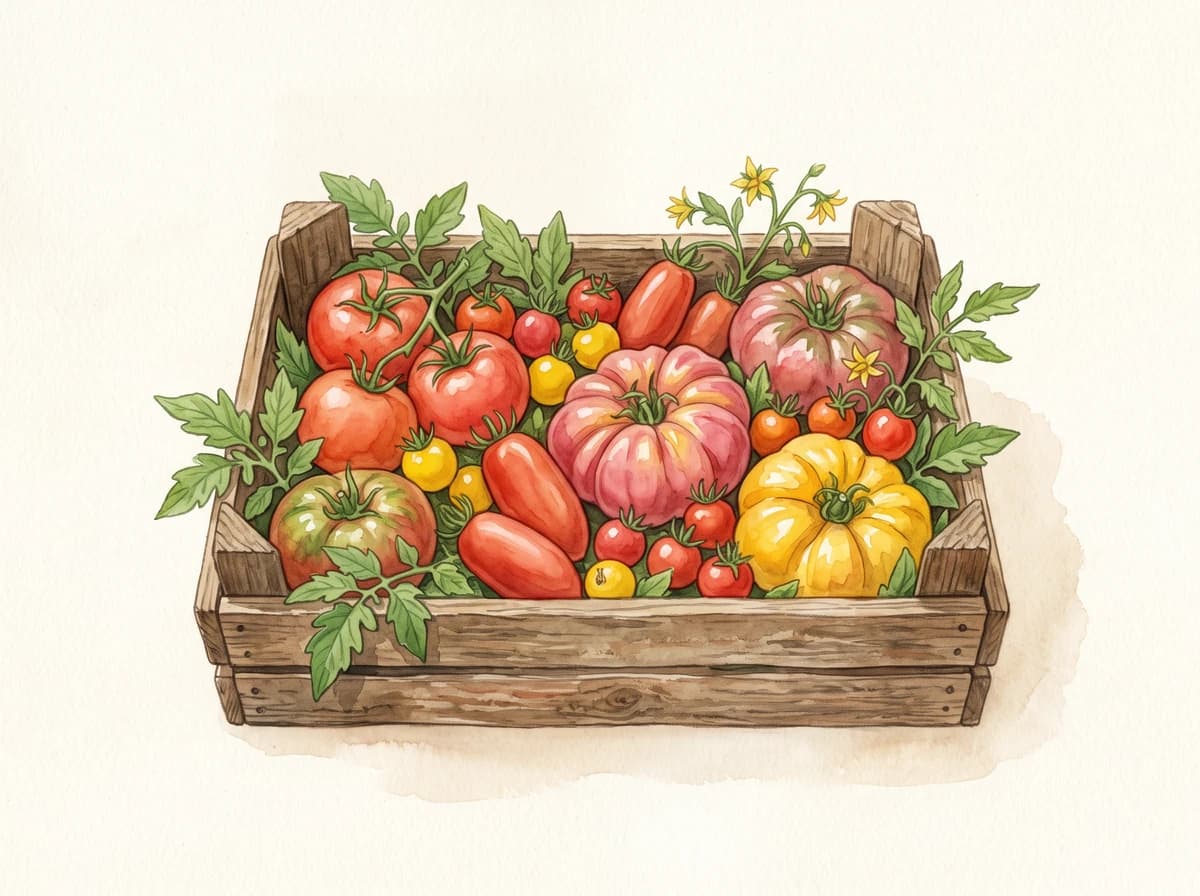
- Sauce: combine sweet, juicy tomatoes (e.g. San Marzano + Muchamiel).
- Drying: better small or elongated varieties.

What is harvested each month in the garden and in the wild.