In this article (6 sections)
A garden in the wrong spot will give you trouble all year. A well-sited one almost looks after itself. Before buying anything, spend an afternoon on deciding where it goes.
1. Follow the sun for a whole day

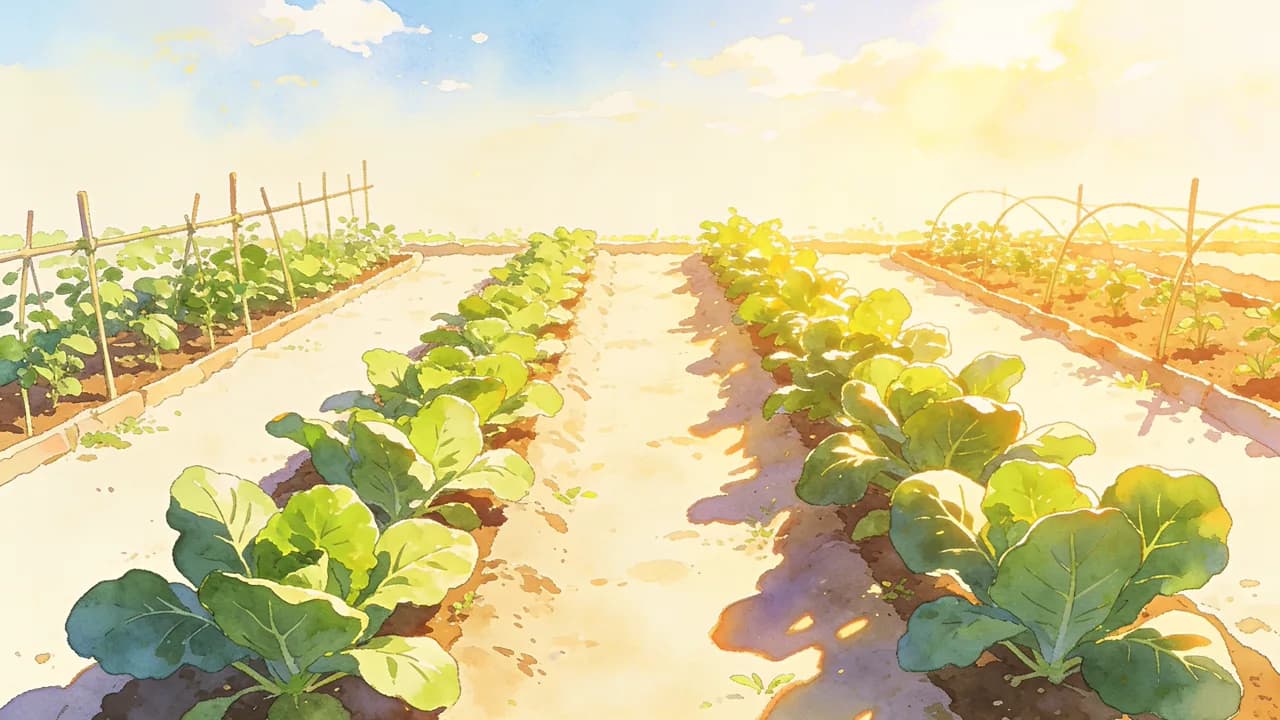
Go out at 8, 12, 15 and 18 h and note which areas of your garden or terrace get direct sun. What you need depends on what you want to grow:
- 6 hours or more of direct sun for tomato, pepper, courgette, strawberry and Mediterranean herbs.
- 4-5 hours if you will stick to leaves (lettuce, chard, lamb's lettuce, rocket) and herbs that tolerate shade (parsley, chives, mint).
- Less than 3-4 hours: only enough for a few leaves (lamb's lettuce, rocket or parsley) and with a small harvest. Better look for another spot.
The sun changes with the seasons. In summer it rises higher, and in winter it is much lower: a wall or a building to the south of the area can block almost all its light in January. That is why it is worth looking at the spot in winter, or imagining those longer shadows if you are doing it at another time of year.
2. Bring the water closer

During the first weeks of a crop you will have to check the soil almost every day. If the tap is 40 metres away with a tangled hose, you will end up giving up. Put the garden where you can water without effort: with a fixed hose, with drip or, at the very least, with a watering can nearby.
3. Break the wind

Wind dries out the plants and the soil. In the Mediterranean interior, a garden with no protection from the prevailing wind (often from the west or the north, depending on the area) can suffer important losses from dehydration. Check where it blows from in your area and place the windbreak on that side, at some distance from the plants so that it does not shade them. Quick options:
- A living hedge (rosemary, bay, privet).
- A heather or cane fence.
- A taller plant (maize, sunflowers) that shelters the low ones.
4. Look at what is underneath

If you are going to plant in the ground, do this check:
- Dig a hole of 40 cm (15.7 in) in the candidate spot.
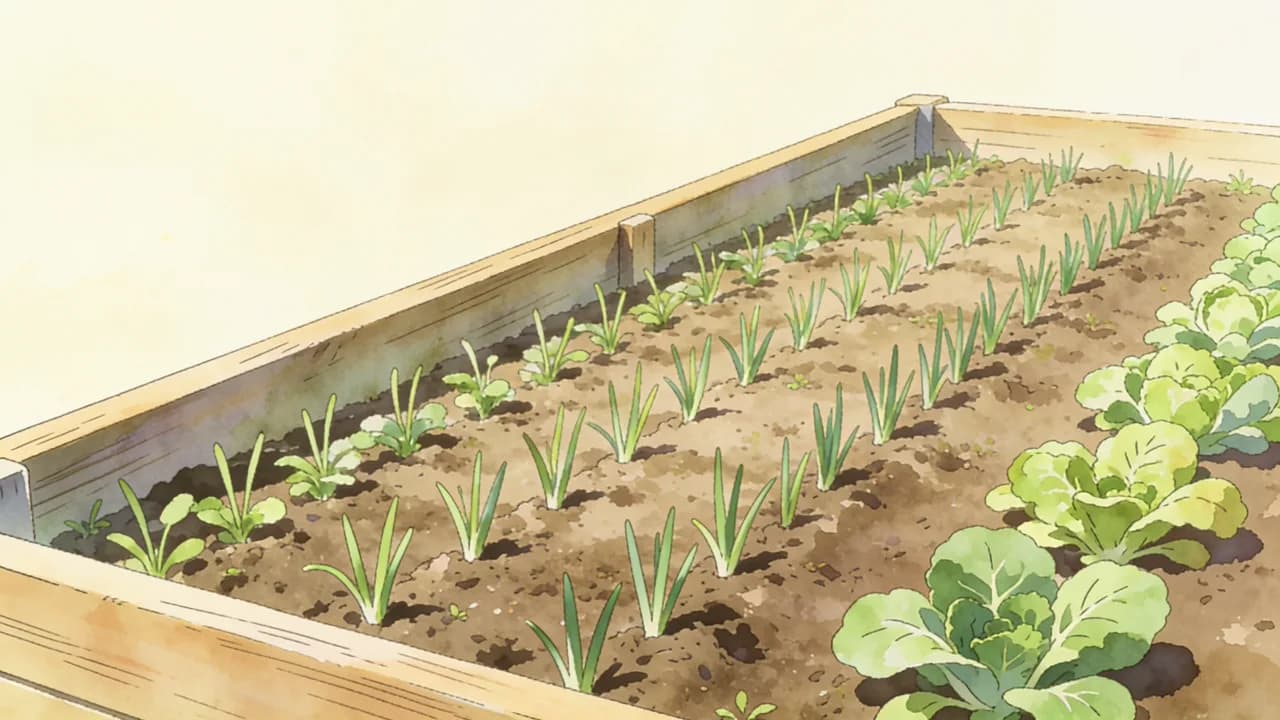
- Does water come in? It means the water table is high: better a raised bed.
- Do you find a layer of compact clay? Fill the hole with water; if the next day it is still waterlogged, the drainage is poor. Then the best thing is a raised bed, or improving the soil with compost on a continuous basis (sand on its own over clay does not usually work).
- Do you see worms? Excellent sign: the soil is alive.
5. Make sure it is not the forgotten corner

Nothing spoils a garden as much as not seeing it every day. Put it in a spot you pass, close to the kitchen or next to where you have your coffee. Good gardens are gardens that get looked at.
Checklist before deciding

- 6 hours or more of sun in summer on half of the garden.
- Tap within 10-15 m (32.8–49.2 ft).
- Natural or artificial protection from the prevailing wind.
- Soil with decent drainage (or a raised bed plan if not).
- Can be seen from a window or from your daily route.
With these five points, half the work of the first year is done.

Set it up by zones, elements and crops.