In this article (13 sections)
Bokashi is the quick, silent version of compost. It ferments the scraps with effective micro-organisms (EM) in a closed bucket for 10-15 days, with no rotten smell: it smells sweet-sour, like vinegar. It is perfect for a flat. That said, it is not finished compost: afterwards you have to bury or compost what has fermented, as you will see below.
What you need
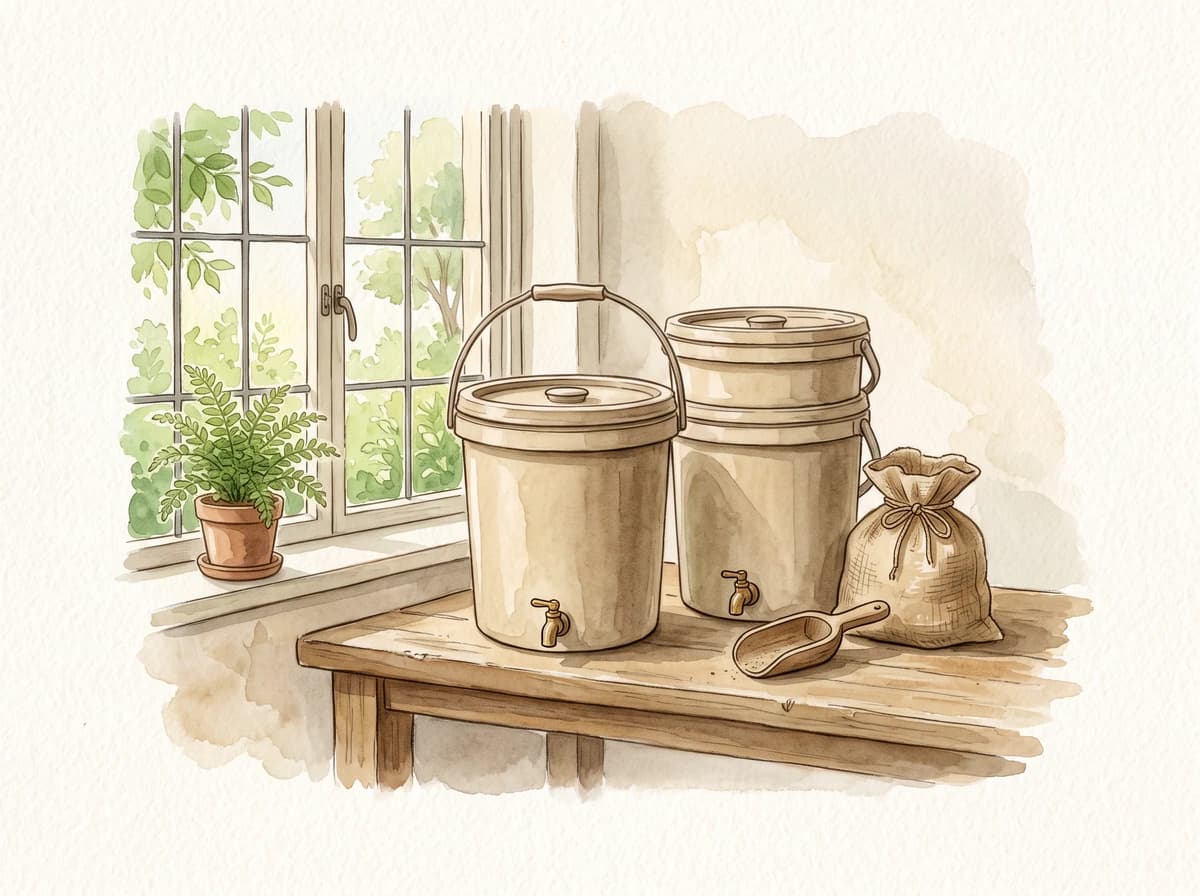
- 2 airtight buckets with a tap at the bottom (bokashi bins): €30-60 in total. You use one while the other ferments.
- EM bran or mix: a bag of 1 kg (2.2 lb) costs €10-15 and lasts roughly 4-6 months.
- A presser or a weight (for example, a plate or a clean brick) to press the scraps down.
How it works
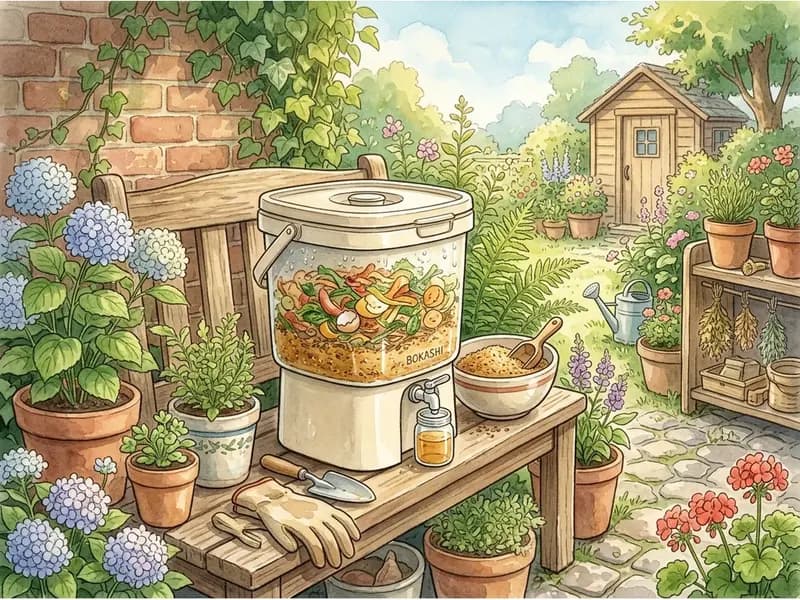
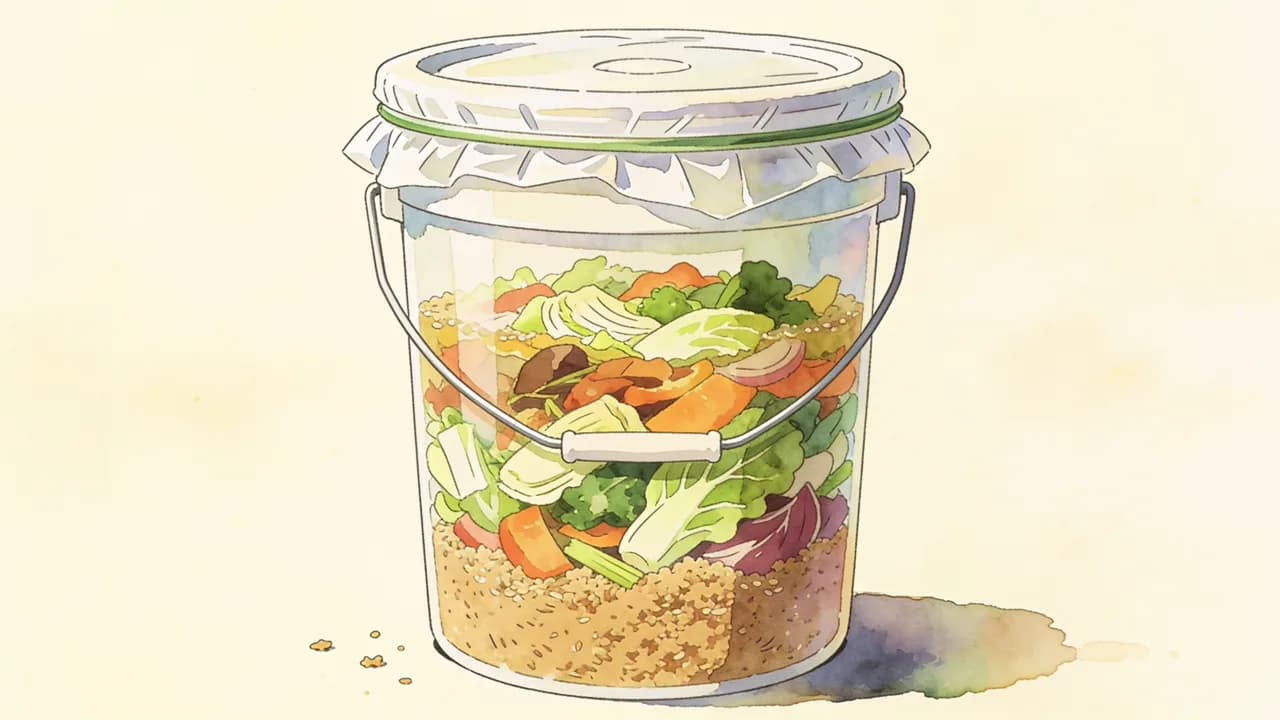
- You put in the kitchen scraps, chopped if they are large (it accepts almost everything, including meat, fish, dairy and cooked food).
- You sprinkle a thin layer of EM bran (1-2 tablespoons for each layer of 3-5 cm, 1.2–2 in of scraps).
- You press to push out the air, because the process is anaerobic (without oxygen).
- You close the bucket airtight.
- You drain the leachate (the liquid it gives off) through the tap every 2-3 days.
- When the bucket is full, you close it and leave it 10-15 days so it finishes fermenting.
Meanwhile you start the second bucket.
What you can add
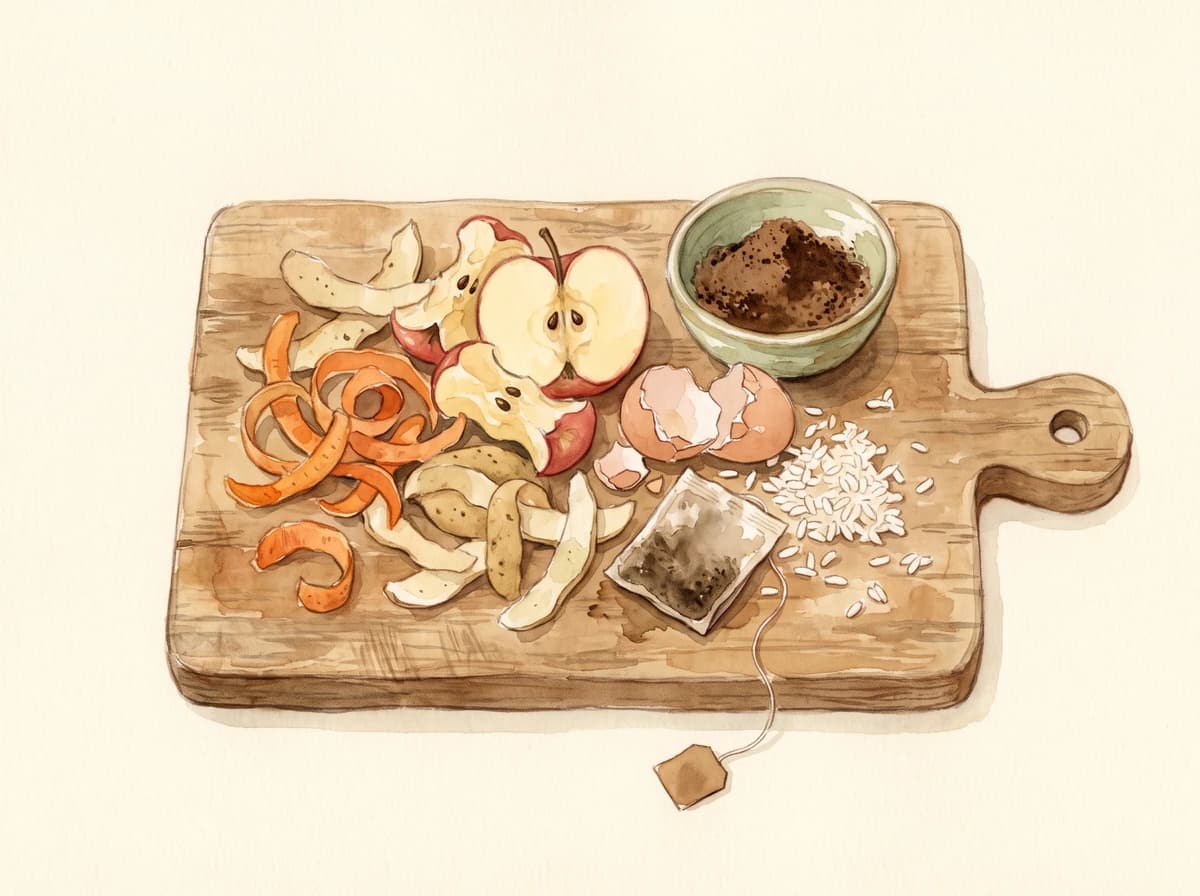
- Vegetable scraps (peelings, fruit, coffee, tea).
- Meat, fish and dairy (cheese, butter).
- Cooked leftovers (pasta, rice, drained soups).
- Small bones and shellfish shells, which ferment but do not break down: you will find them almost whole at the end.
It is the main advantage over compost or worm compost: almost nothing is discarded.
What NOT to add
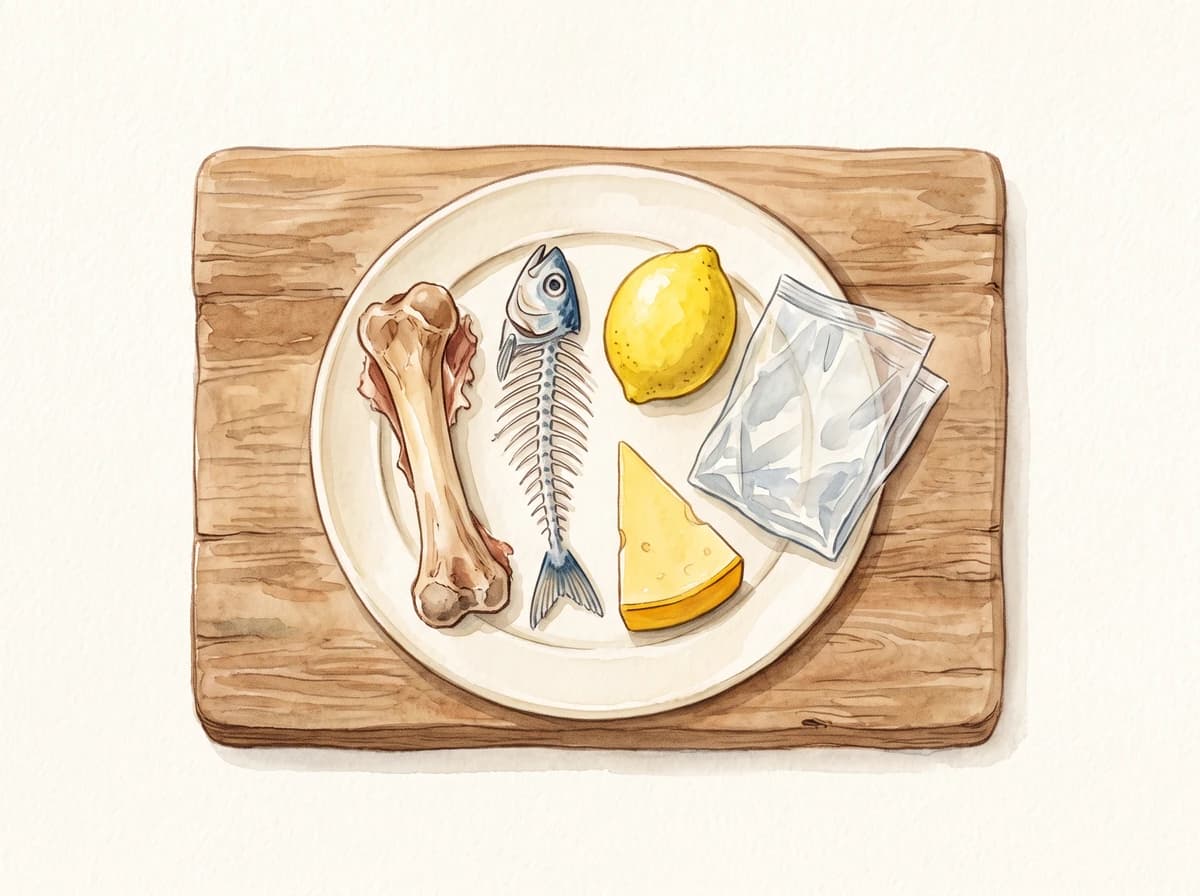
- Abundant liquids (soupy soups) and oils in quantity.
- Paper and plastics.
- Large bones or rinds.
- Food that is already rotten or has green, blue or black mould. White, fluffy mould is normal; green, blue or black indicates that fermentation has failed (usually due to excess air or moisture) and it is best to empty and clean the bucket.
Using the leachate
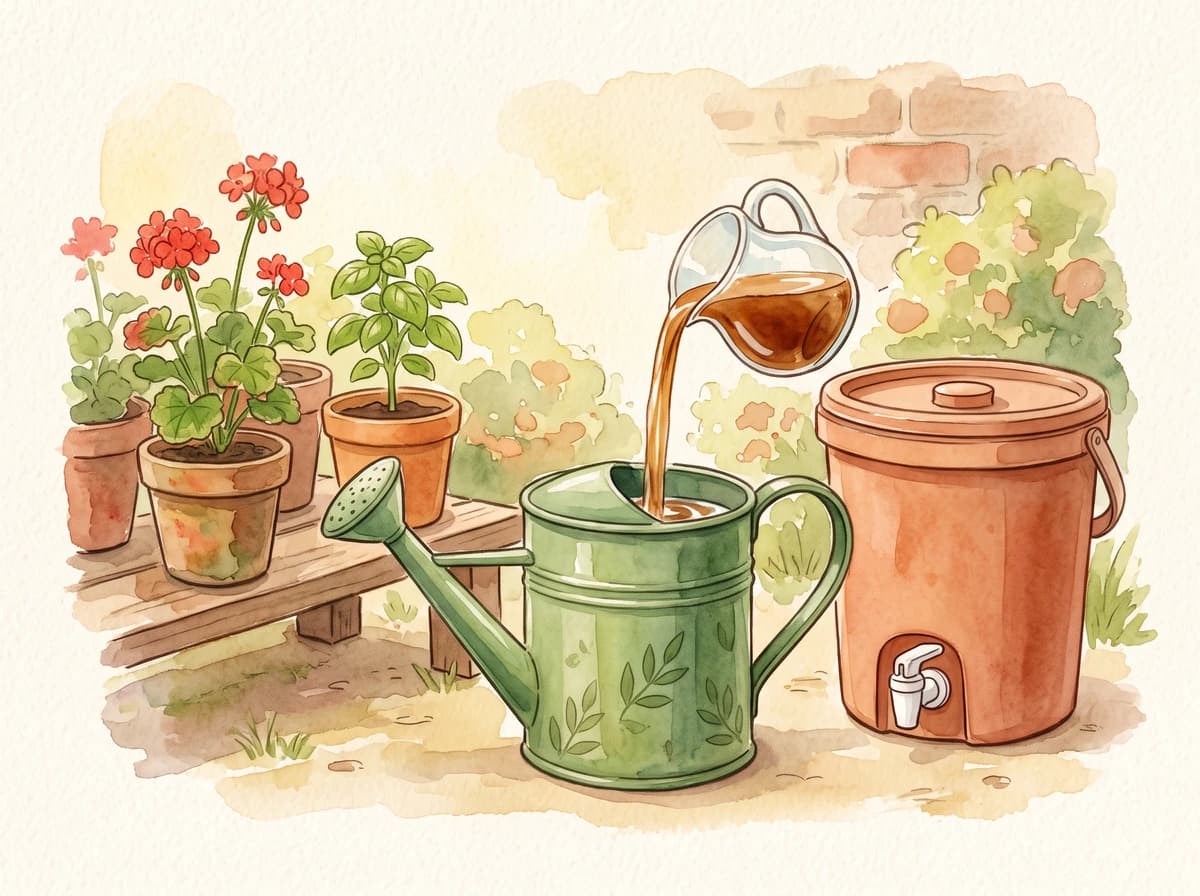
It is a dark, concentrated liquid. To water, dilute it 1:100 with water (100 ml, 3.4 fl oz in 10 L, about 2.6 US gal) and use it soon, because it loses its properties over time. Undiluted it must not touch the plants: it would scorch them. If you have some left, you can pour it down the drain.
The amount varies a lot depending on what you put in; do not be alarmed if one day it gives little.
After fermentation
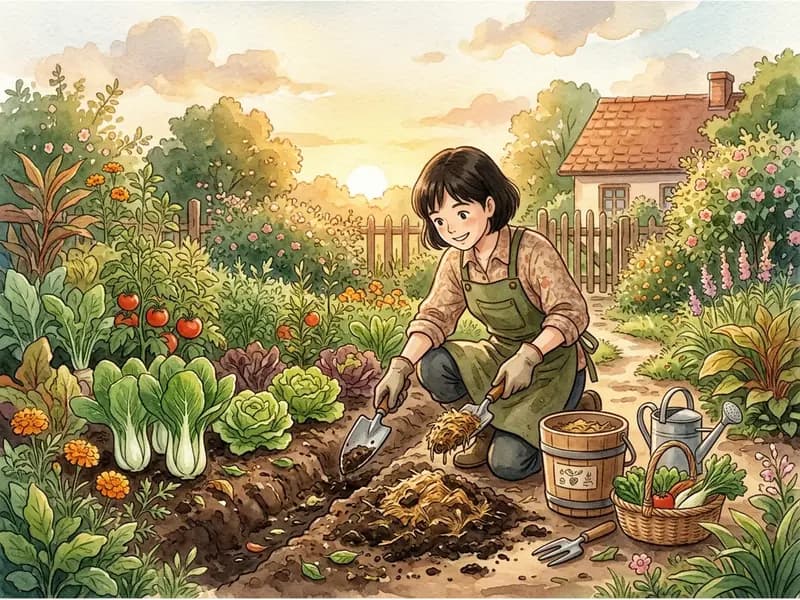
The scraps are fermented, not composted. They are acid and rich, and must not be put directly in contact with plant roots because they would damage them.
You have three options. The simplest if you have soil is A; if you already make compost, B.
A) Bury in the garden
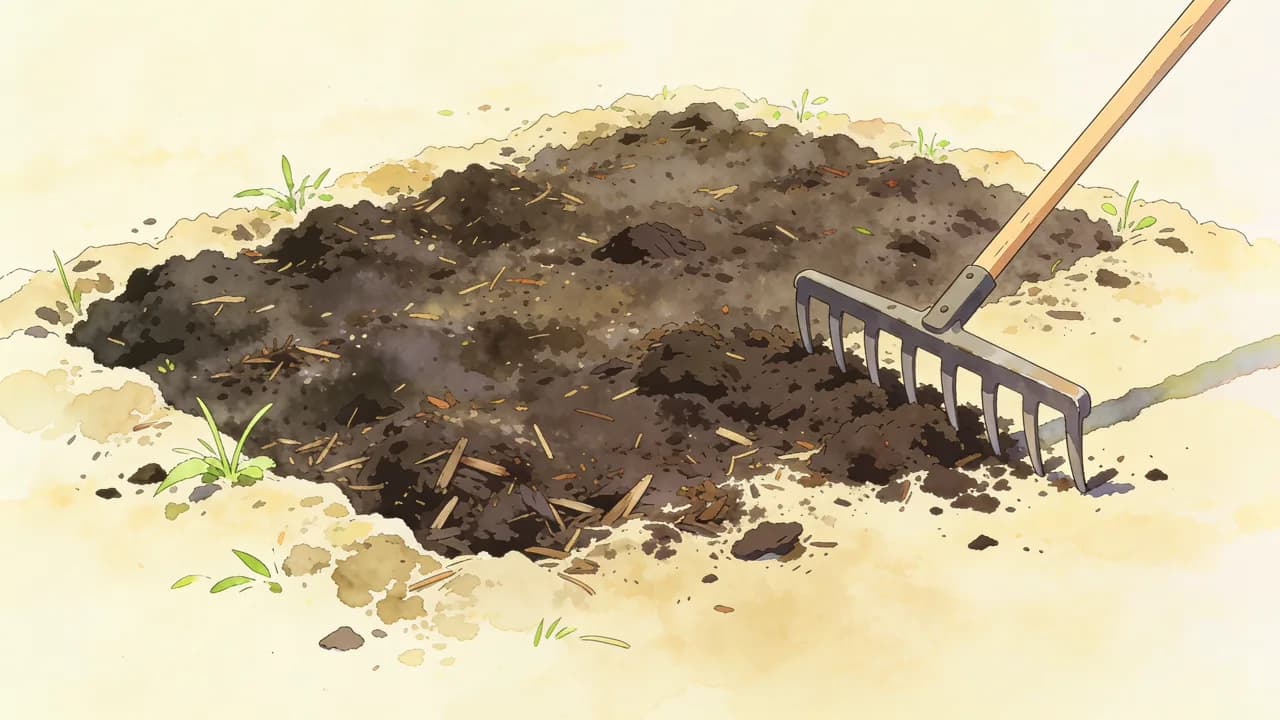
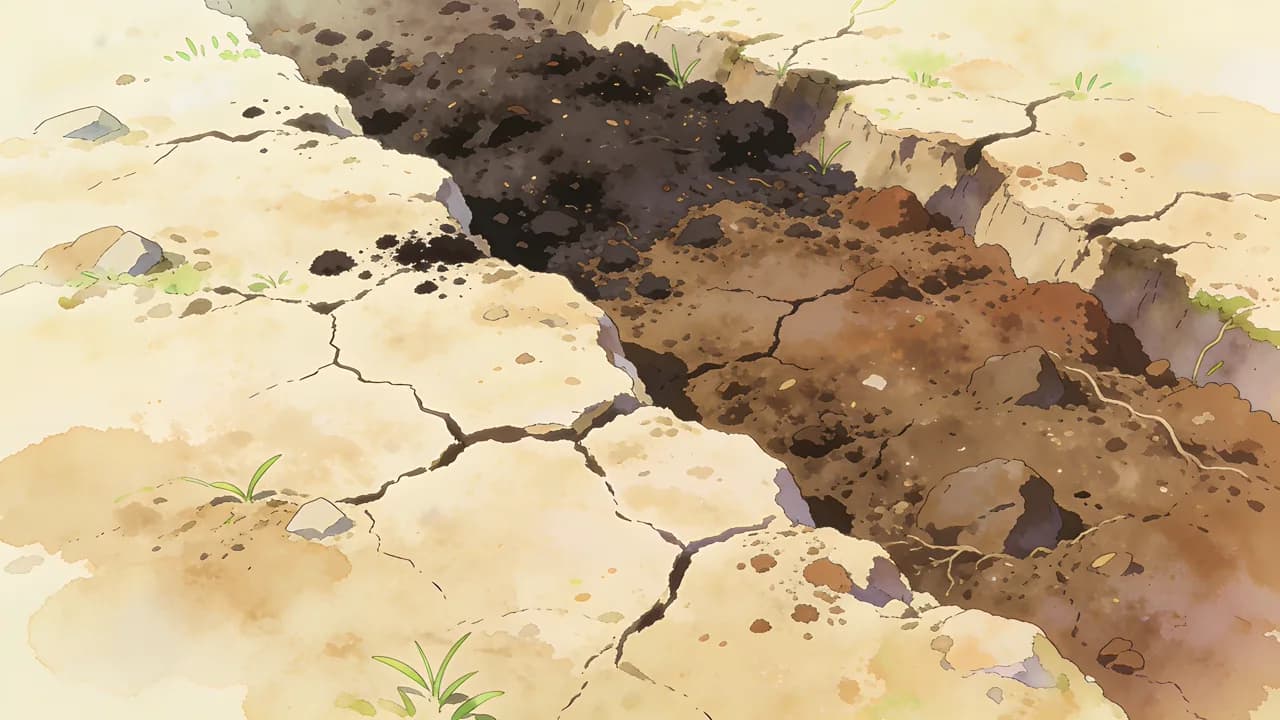
Dig a hole of about 30 cm (11.8 in), put in the bokashi and cover it with at least 15 cm (5.9 in) of soil, mixing in a little. In 2-4 weeks (longer if it is cold) it integrates into the soil. It is ideal next to trees or in a bed you will plant later. If you want to plant right on top, wait those weeks, or plant about 30 cm (11.8 in) from the hole. If it contained meat or fish, bury it deeper so that dogs, cats or rats do not dig it up.
B) Add to traditional compost or worm compost
Add it to the normal compost as if it were “green” material (rich in nitrogen) and it speeds up the whole process. In a worm bin, add a small amount each time, because the acidity bothers the worms.
C) Trench bed (deep garden)
Alternate layers of about 10 cm (3.9 in) of soil and 10 cm (3.9 in) of bokashi, and finish with a thick layer of soil. Leave it to rest about 4 weeks at least and you will have a very fertile bed.
Advantages of bokashi
- Little smell, and sweet-sour, not revolting.
- Few flies if the bucket closes well, and it does not attract rats while it is closed.
- Almost all scraps, including meat and dairy.
- Quick: 10-15 days of fermentation.
- Fits in the kitchen or on a small balcony.
Disadvantages
- Initial investment of about €45-75 (buckets and first bran).
- EM bran has to be bought, although it can also be made at home.
- It needs a final destination: you need a garden, bed, compost or a neighbour with a garden who will accept the bokashi.
Bokashi compared with other methods
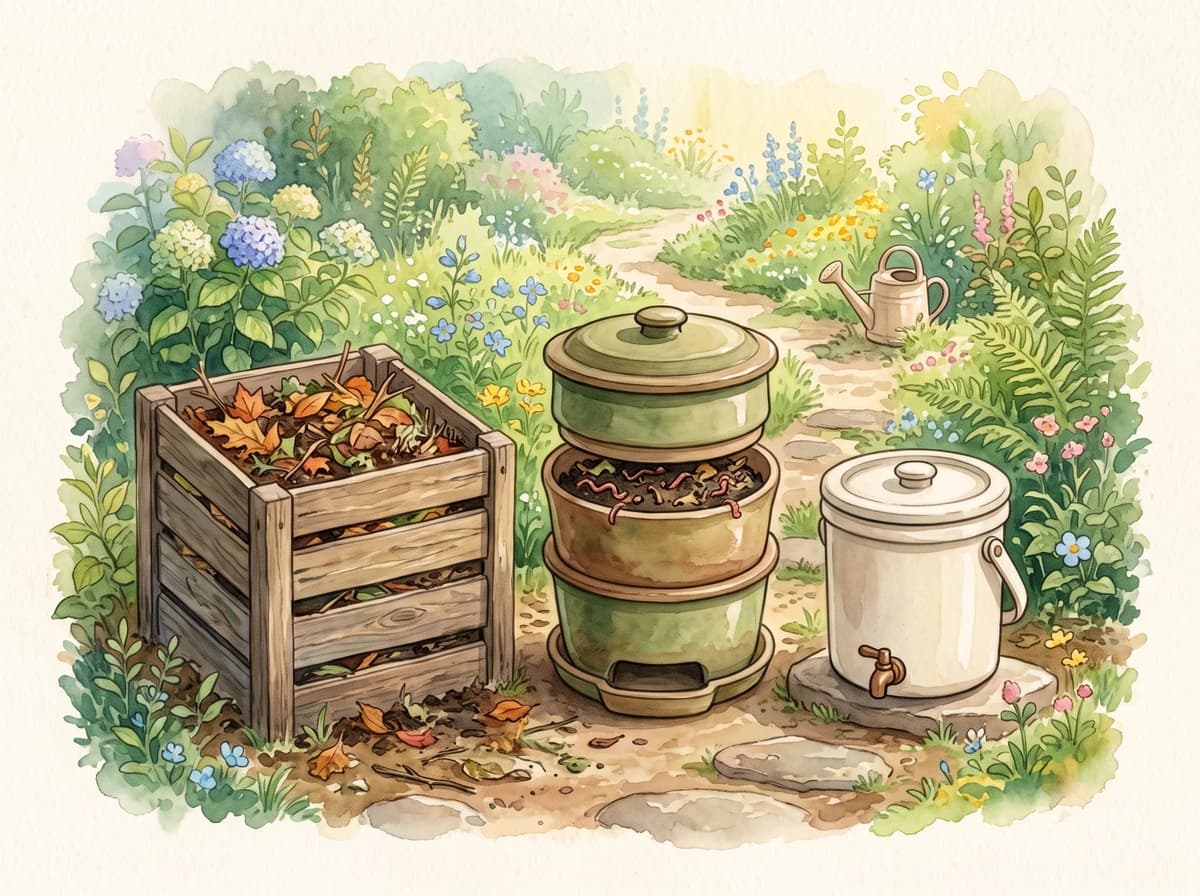
| Method | Space | Smell | Scraps | Time | Initial cost |
|---|---|---|---|---|---|
| Traditional compost | 2 m² (22 sq ft) | Low if well managed | Vegetable | 3-6 months | €30-100 |
| Worm compost | 40×40 cm (15.7 in) | Low | Vegetable | 3 months | €60-120 |
| Bokashi | 30×30 cm (11.8 in) | Low (sweet-sour) | Almost all | 2 weeks fermenting + 2-4 in the soil | €45-75 |
How to make your own EM bran (advanced)
You can buy a litre of liquid effective micro-organisms (for example, EM-1) and mix it with wheat bran, molasses and water; leave it to ferment and dry following the manufacturer's instructions. It comes out cheaper than buying the bran ready-made.
To begin with, it is simpler to use ready-made bran for the first year.

Greens, browns, moisture and troubleshooting.