
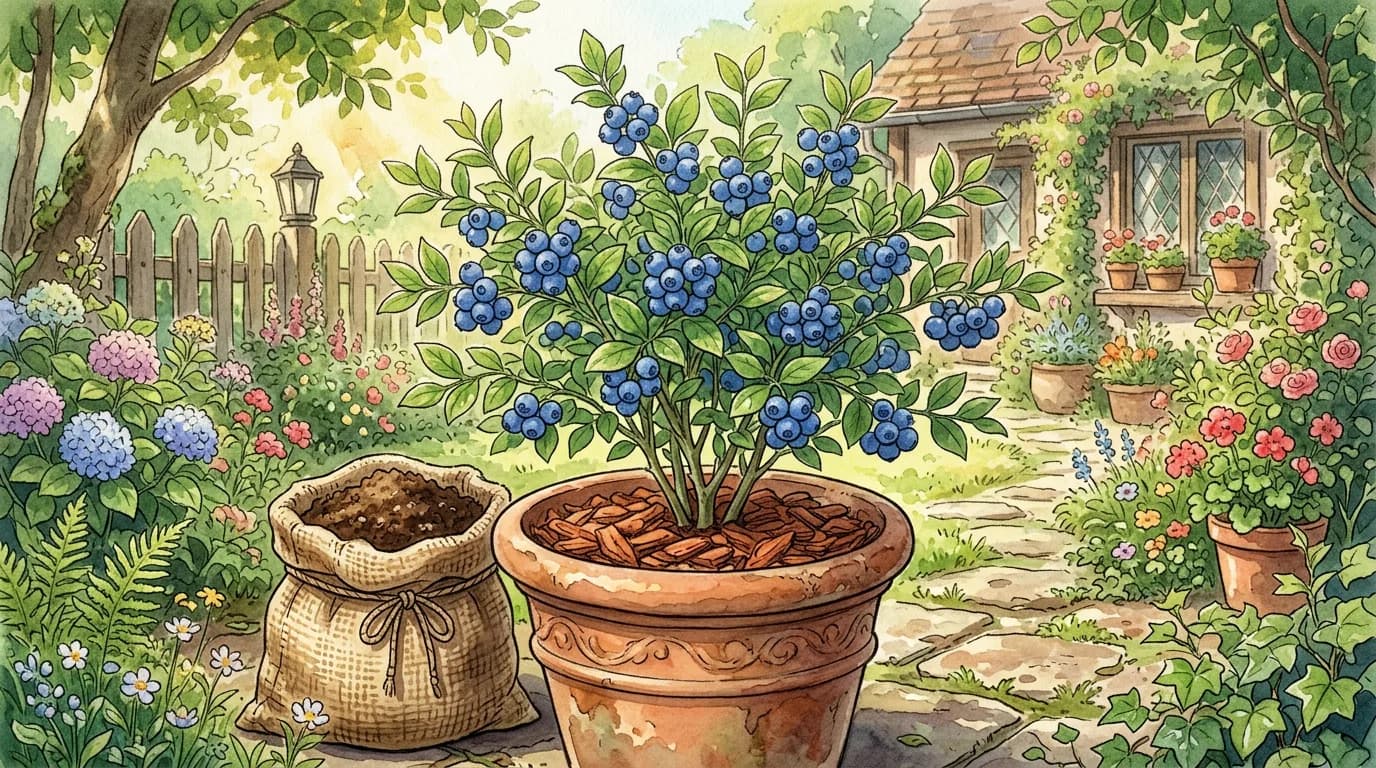
Sulphur and peat for acid-loving plants
Elemental sulphur lowers the pH slowly and acid peat serves as a growing medium for blueberries and azaleas.
Use with care. Sulphur works in soils with little chalk and is slow (months). In soils with chalk, common in Spain, the carbonate neutralises it and the pH does not drop. In those cases the practical thing is to grow in a pot with acid growing medium.
Before you start, read the precautions
You will need
- elemental sulphur
- sphagnum peat
- pine bark
When to use it
To lower the pH by half a point in non-chalky soil, with the soil warm and moist (spring or mild autumn). For blueberries in chalky areas, acid growing medium in a large pot (guide: 40 L, about 10.6 US gal or more).
Step by step
1First of all measure the pH and check whether there is chalk (a few drops of vinegar on the soil: if it fizzes, there are carbonates and sulphur will not work). In that case, grow in a pot.
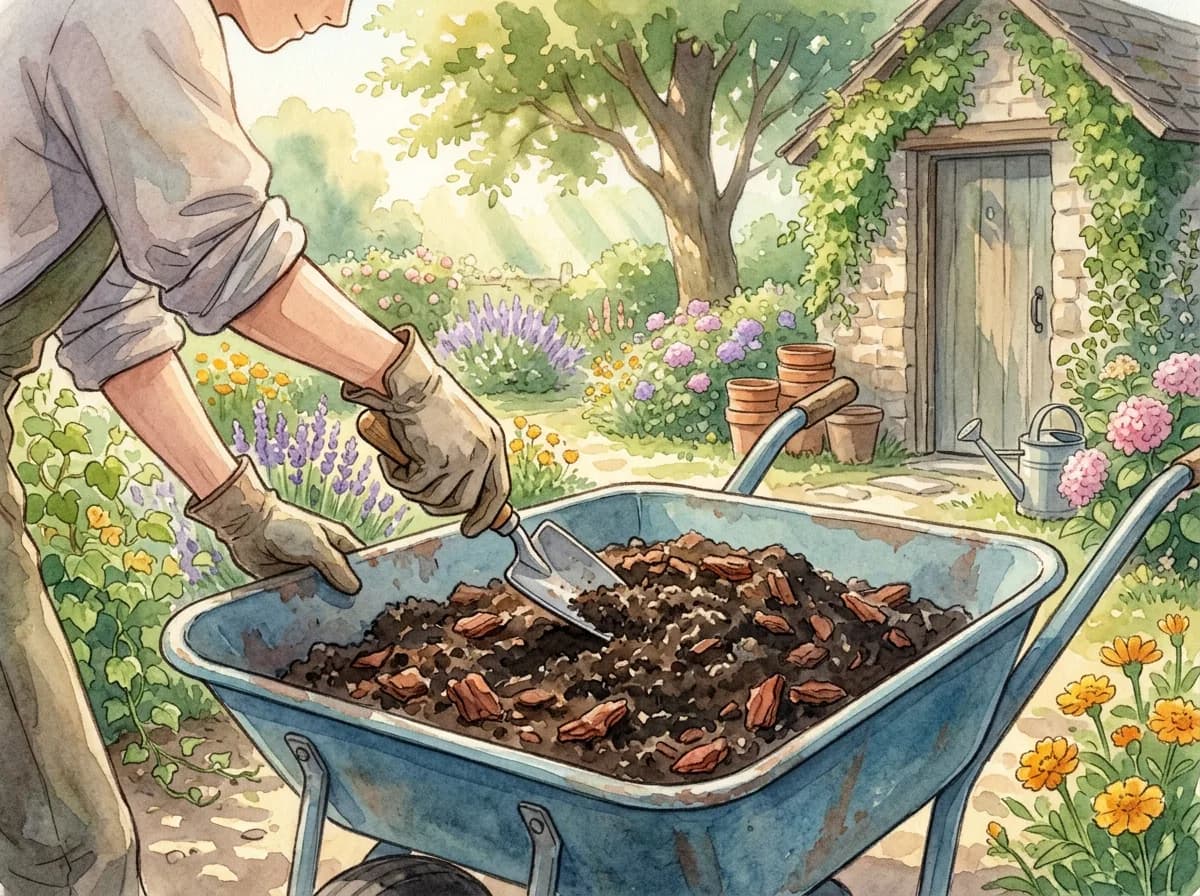
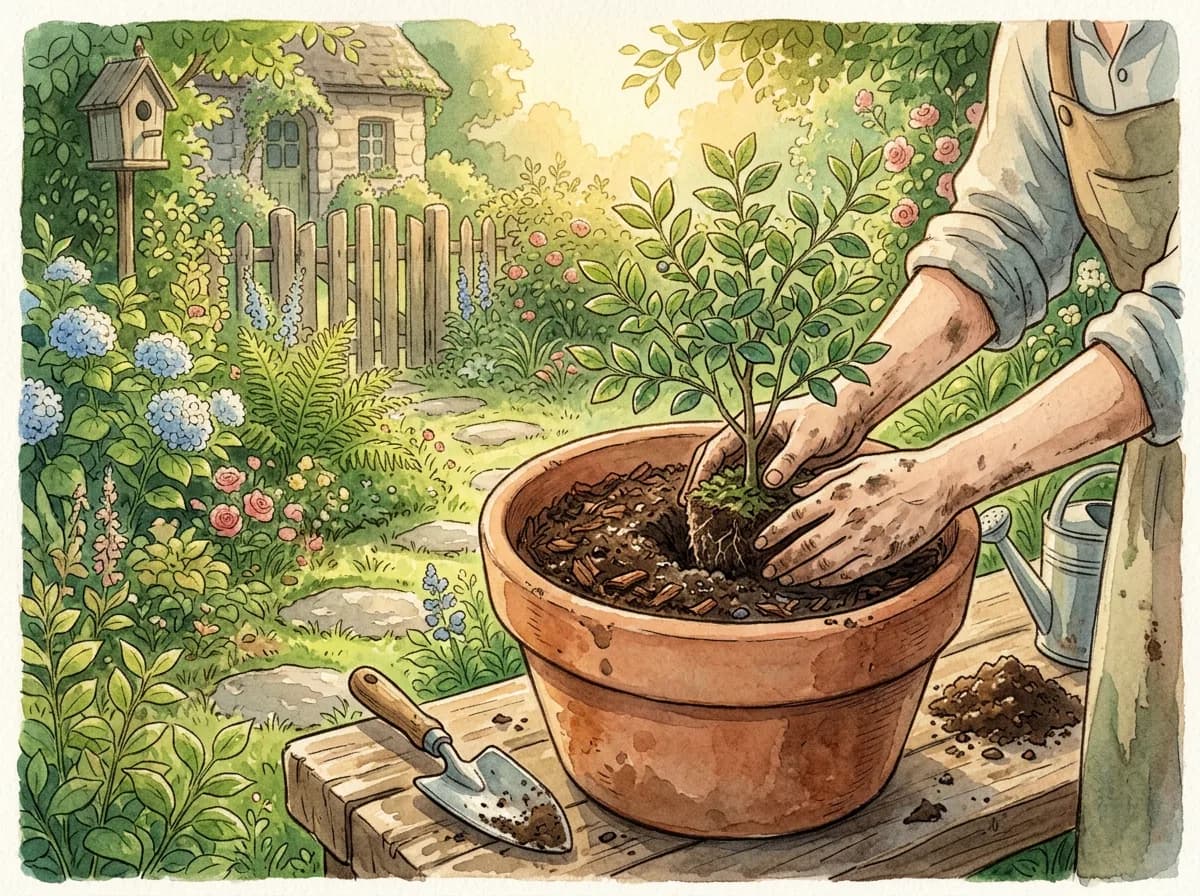
2For a pot of 40 L (about 10.6 US gal) or more, plant in a mix of acid sphagnum peat and composted pine bark 50/50, or in growing medium for acid-loving plants.
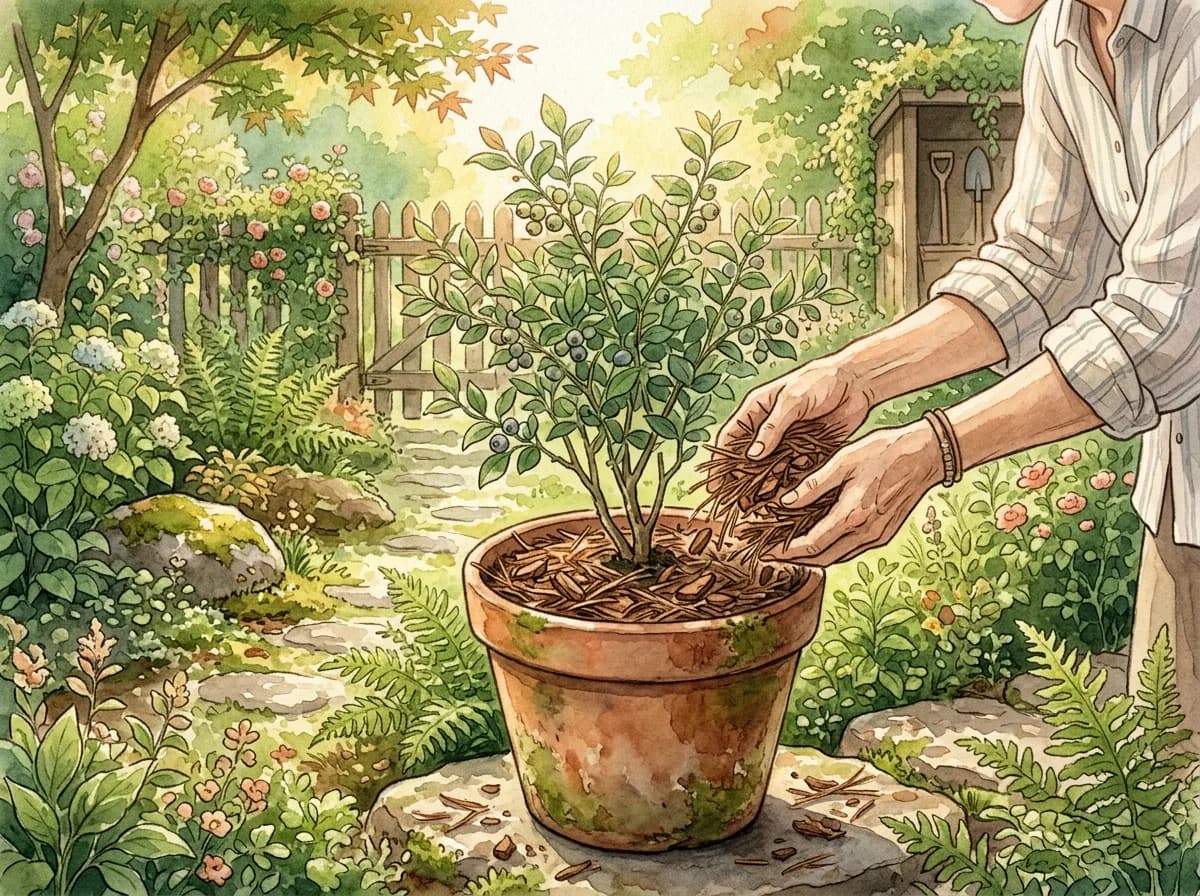
3Mulch with pine bark or pine needles and water with rainwater whenever you can. In non-chalky soil, spread elemental sulphur and mix it into the surface.
Dose
About 1.25 lb per 100 ft² (≈60 g/m²) to lower the pH by one point in loam soil; half in sandy soils and a third more in heavy soils. To lower it by half a point, as a guide 30 g/m² in loam, mixed into the top 10 cm (3.9 in). Reassess after 3–4 months, and no more than 100 g/m² in total without a test.
Which plants
Blueberry, azalea, camellia, rhododendron, blue hydrangea, heather. Not on common vegetables.
Plants mentioned in this remedy
 Legacy blueberryA late-ripening highbush blueberry with large, tasty berries.
 Japanese azaleaA compact shrub that is completely covered in flowers in spring, in shades ranging from white to magenta.
 CamelliaA shrub with glossy evergreen leaves and large, elegant flowers in winter and early spring.
 Rhododendron (Rhododendron ponticum)A large shrub with clusters of lilac flowers in spring and leathery evergreen leaves.
 Tree heathA shrub of acid soils that is covered in tiny white flowers in spring.
Precautions
- In chalky soil (pH > 7.5 with carbonates) sulphur is almost useless: you spend money and effort.
- Too much sulphur can acidify too much and damage roots; do not repeat without measuring.
- Powdered sulphur irritates eyes and airways: mask and gloves, and do not apply it in wind.
- Peat is a non-renewable resource: use it only where it is necessary and look for alternatives such as composted pine bark.
Why it works
Soil bacteria oxidise elemental sulphur to sulphuric acid, which lowers the pH. It is a biological process that needs warmth and moisture, which is why it takes weeks or months (it is best applied a year before planting blueberries). Sphagnum peat is very acid and airy, but it is a non-renewable resource.
Sources
- Pennsylvania State University Extension (Agricultural Analytical Services Lab): table of sulphur to lower the pH according to texture
- Iowa State University Extension: How do I lower the soil pH for blueberries? (sphagnum peat or sulphur applied a year before)