
Iron sulphate for iron chlorosis
It corrects yellow young leaves with green veins in neutral or acid soils; in chalky soil it works badly.
Use with care. It is used as a rescue foliar spray at 0.5 % or applied to the soil together with sulphur, with a short effect (less than a season) when foliar. In chalky soils iron becomes insoluble and EDDHA (iron chelate) products are what is recommended (see “Iron and trace element chelates in chalky soils”).
Before you start, read the precautions
You will need
- iron sulphate (ferrous sulphate)
- water
- spray bottle
When to use it
When the new leaves turn yellow with green veins, especially in spring. With a soil pH below 7.5 and without excess chalk.
Step by step
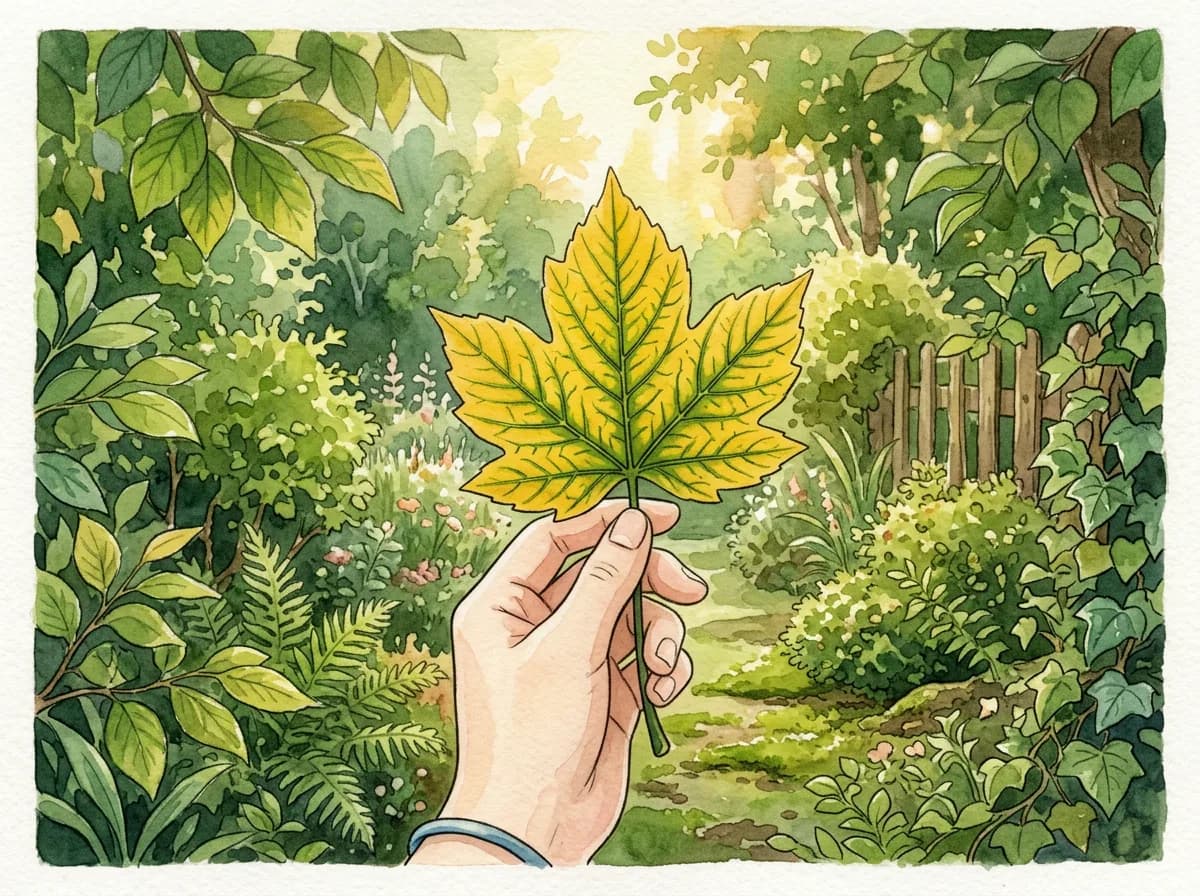
1Confirm the symptom: young yellow leaves with green veins point to iron; if it is the old ones, think of magnesium or nitrogen.
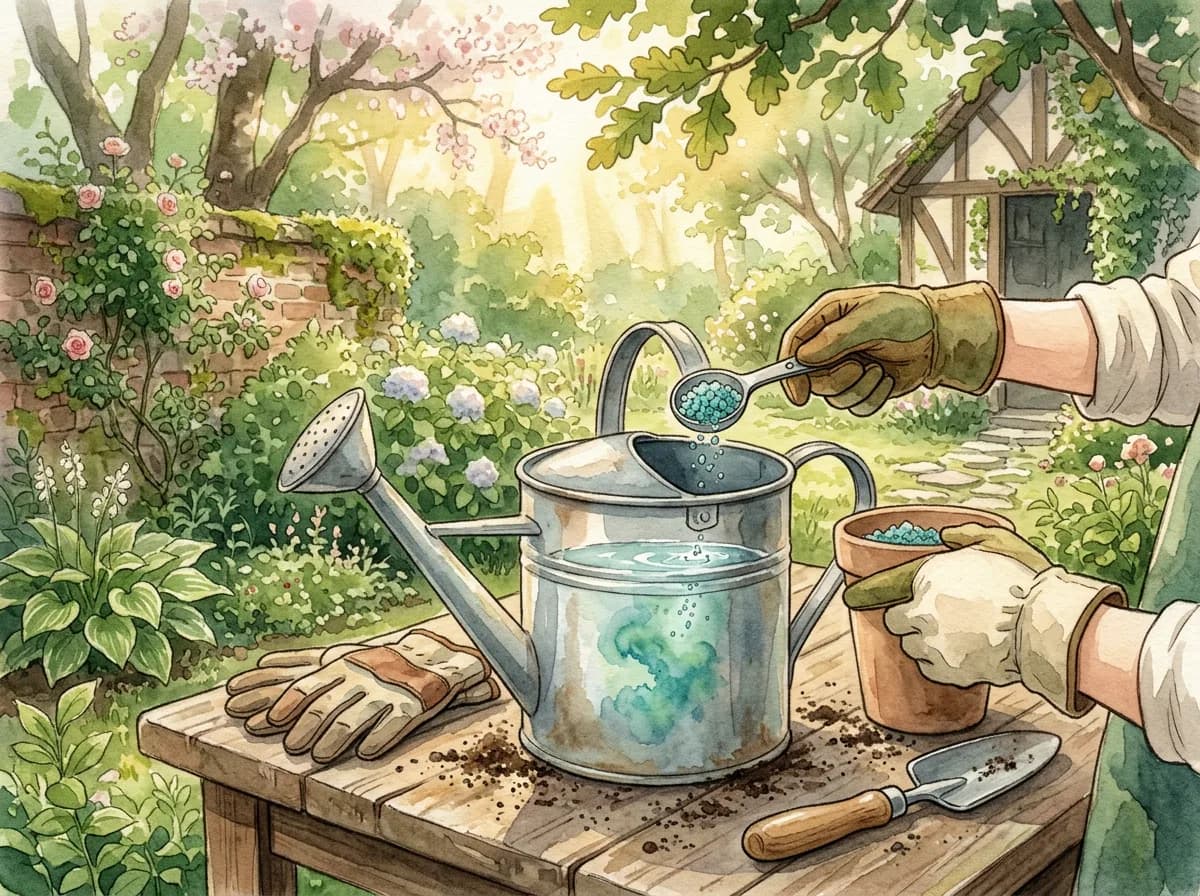
2Dissolve the iron sulphate in water, wearing gloves: foliar, start with 1–2 g/L (up to 5 g/L, 0.5 %, is used); for watering there is no validated dose, start with 2–3 g/L (indicative).
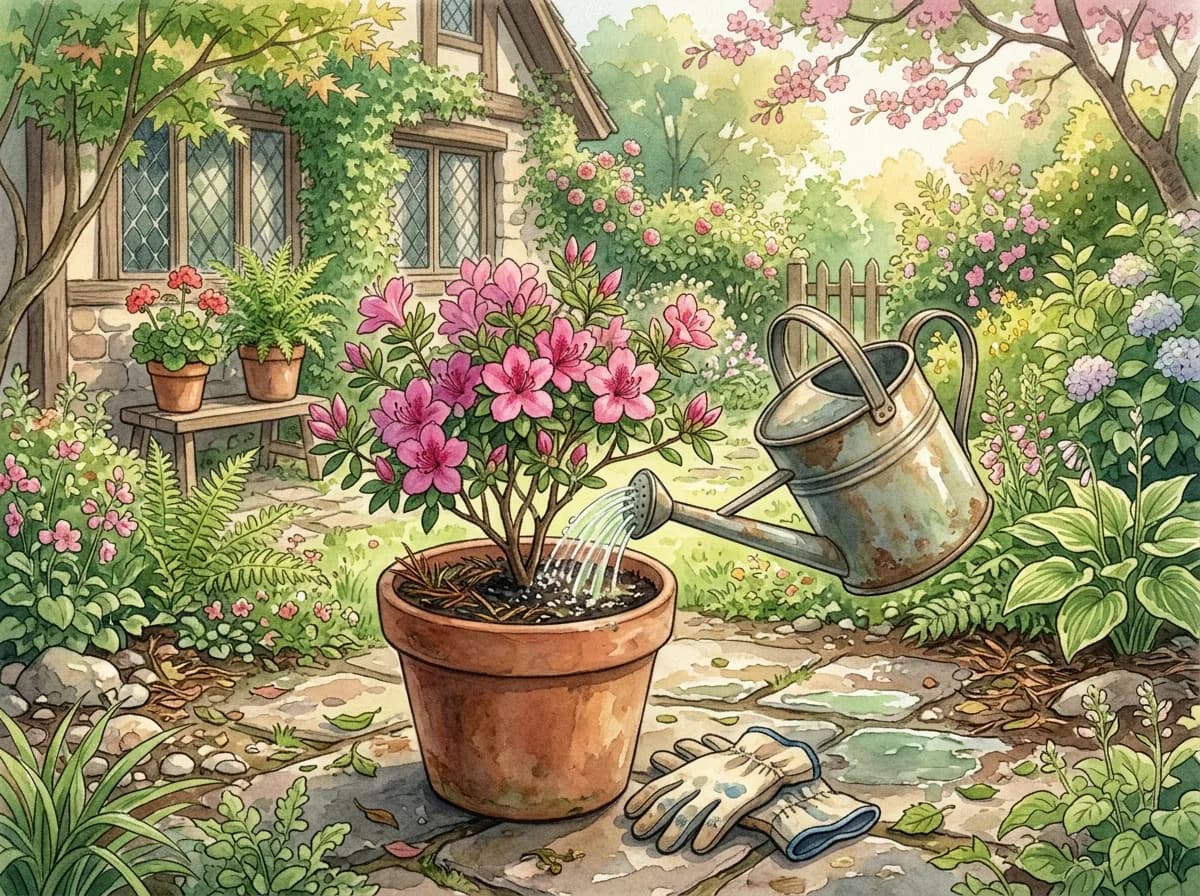
3Apply onto the leaves in the evening or on a cloudy day, or water the soil around the base. Repeat after 10–14 days if needed.
Dose
Foliar: 0.5 % (about 5 g/L, 2 oz in 3 gallons) with a few drops of soap; we recommend starting with 1–2 g/L and testing first on a few leaves. Watering: no verified dose, as a guide 2–3 g/L, 2–5 L (about 0.5–1.3 US gal) per plant. Do not repeat more than 2–3 times in a row.
Which plants
Citrus, fruit trees, blueberry, azalea, hydrangea, camellia and mossy lawn. It is not a general fertiliser.
Plants mentioned in this remedy
 Legacy blueberryA late-ripening highbush blueberry with large, tasty berries.
 Japanese azaleaA compact shrub that is completely covered in flowers in spring, in shades ranging from white to magenta.
 Hydrangea (bigleaf hydrangea)A shrub with large flower heads whose colour depends on the soil pH: blue in acid soil, pink in alkaline soil.
 CamelliaA shrub with glossy evergreen leaves and large, elegant flowers in winter and early spring.
Precautions
- It can stain soil, stones and clothes with rust, and scorch leaves in strong sun: apply in cool weather.
- In chalky soil or at high pH the effect lasts a very short time; only the FeEDDHA chelate works well at high pH (the other chelates fail above pH 7.2).
- Irritant: gloves and goggles, and keep it away from children and pets (toxic if swallowed).
- It can acidify the soil if you overdo it: do not apply without need or on plants without symptoms.
Why it works
Ferrous iron is soluble and the leaves absorb it directly if it is sprayed. In the soil, if the pH is low, iron remains available; if it is high, it precipitates as oxide and the root cannot use it, which is why the sulphate does less in chalky soils.
Sources
- North Dakota State University Extension: Iron chlorosis in trees
- Utah State University Extension: Preventing and treating iron chlorosis in trees and shrubs