Credits and licences
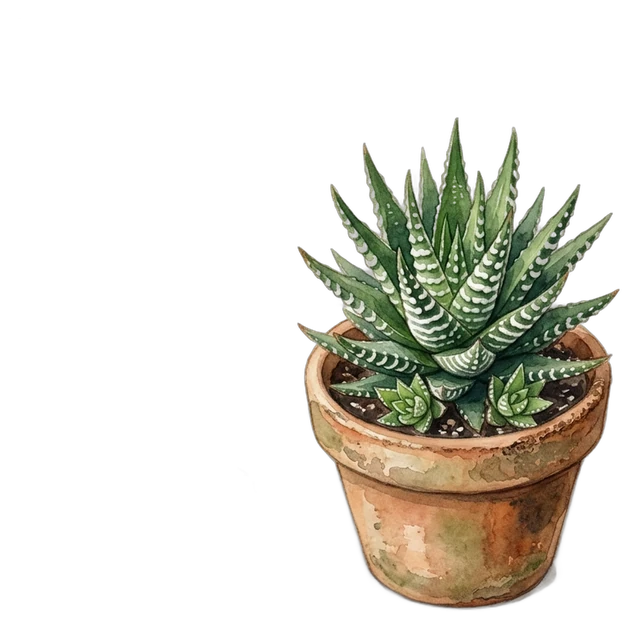
- #1 — vueltaalhuerto illustration
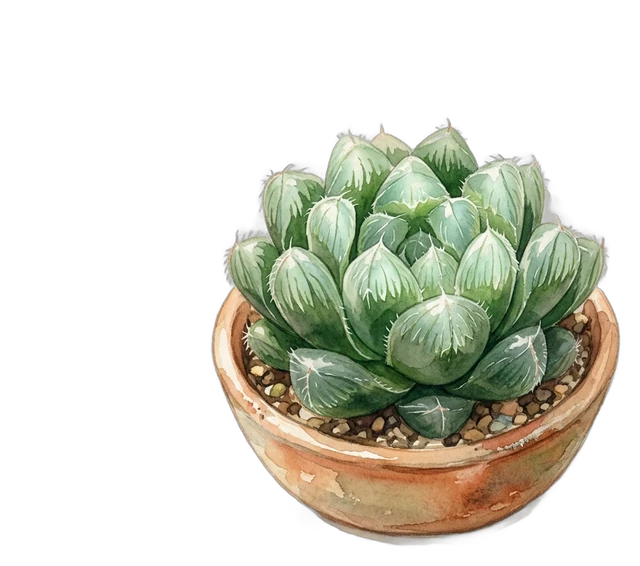
- #2 — vueltaalhuerto illustration
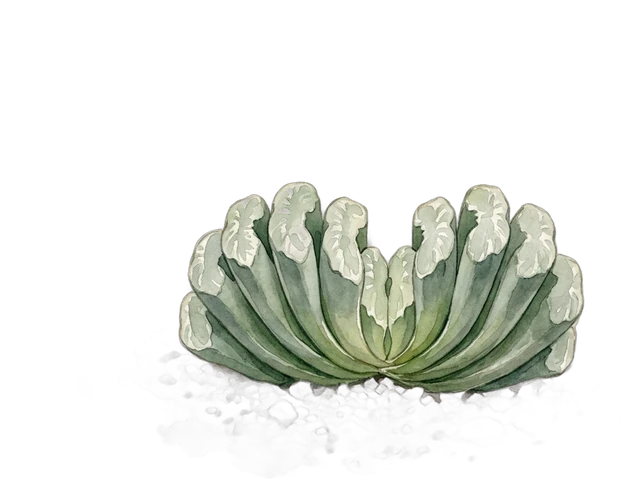
- #3 — vueltaalhuerto illustration
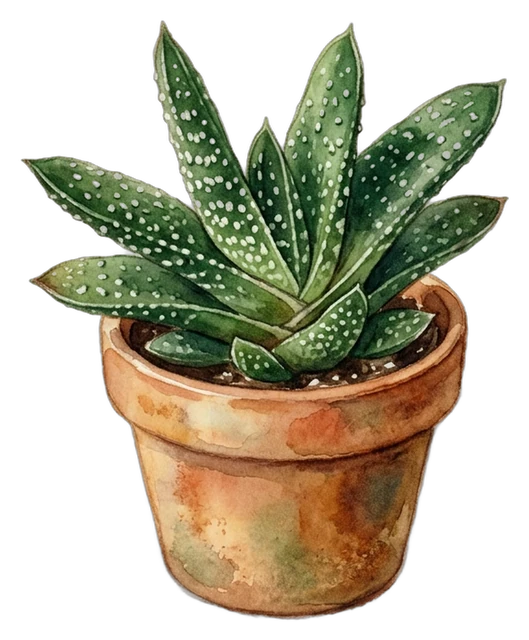
- #4 — vueltaalhuerto illustration
- #5 — vueltaalhuerto illustration
- #6 — vueltaalhuerto illustration
- #7 — vueltaalhuerto illustration
- #8 — vueltaalhuerto illustration
- #9 — vueltaalhuerto illustration
- #10 — vueltaalhuerto illustration
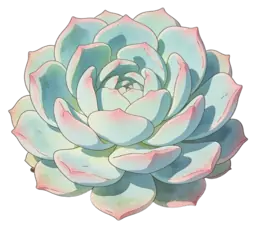
Tulista marginata (Haworthia marginata)
and 2 more names
tulista, succulentTulista marginata (Haworthia marginata) is sown in seed trays from September to November, and planted out from April to May and from September to October. Grow it in sun or partial shade, 15 cm apart, with little watering. Dates are for a mild temperate climate in the northern hemisphere; the calendar below adjusts them to your zone.
Tulista marginata is a rosette succulent about 20 cm across, made up of hard, upright, keeled leaves of a pale greyish green, with a well-defined pale edge and, depending on the population, small white tubercles. It grows very slowly, lives for many years and hardly ever produces offsets, so it is propagated mainly from seed. Towards the end of spring or in summer it sends up a branched flower stalk with small tubular flowers, pinkish-white with green veins, which then dry into capsules containing black seeds. It comes from the southern coast of the Western Cape Province in South Africa, where rain falls in winter; that is why it is a winter-growing plant, growing in autumn, winter and spring and resting in the summer heat. Until recently it was called Haworthia marginata and some shops still sell it under that name. Do not confuse it with Tulista pumila (the 'pearl haworthia'), another species of the same genus. It is not edible. LEGAL AND SAFETY NOTICE: Tulista marginata is a rare species in the wild: according to the botanical literature, its Cape populations are isolated and declining because of illegal plant collecting and livestock grazing. I have not found this species in the appendices of the CITES Convention, so buying and selling it in Spain does not require a permit under that convention, but that does not authorise collecting it in the wild: in South Africa, collecting wild plants is regulated by provincial conservation laws and is illegal without a permit. What to do: buy only nursery-grown plants (preferably with an invoice) or cultivated seed, be wary of large, cheap specimens of doubtful origin and do not collect plants or seeds in the wild. As for safety, there are no reliable data on the toxicity of this species; other haworthias are listed as non-toxic to dogs and cats, but as a precaution do not eat it and stop children and pets from nibbling it. It does not appear in the Spanish Catalogue of Invasive Alien Species (Royal Decree 630/2013).
Family and origin: Asphodel family (Asphodelaceae) · native to South Africa, on the southern coast of the Western Cape (between Riversdale and Ashton), on sandstone or shale slopes and flats, often in renosterveld; a Mediterranean climate with winter rainfall · More plants from Africa
01In your area
How will it do in your home?
Year calendar
| Task | J | F | M | A | M | J | J | A | S | O | N | D |
|---|---|---|---|---|---|---|---|---|---|---|---|---|
| Seed traySep–Nov | no | no | no | no | no | no | no | no | yes | yes | yes | no |
| Plant / transplantApr–May, Sep–Oct | no | no | no | yes | yes | no | no | no | yes | yes | no | no |
| CuttingsApr–Jun | no | no | no | yes | yes | yes | no | no | no | no | no | no |
Its life cycle at a glance
Swipe and tap a stage to see its details.
02Care
Care through the year
Sun and aspectSun and shade · 4 h of sun · shade in summer
- Too little sun
- Ideal range
- Plenty of sun
East, or south with light shade during the middle of the day
Gentle sun: Morning or afternoon sun. Midday summer sun stresses and scorches it.
Bright light with partial shade: a few hours of gentle morning or afternoon sun. Strong midday sun, especially in summer and behind glass, turns the leaves brown or scorched; in very low light it stretches and loses its shape. It cannot withstand frost: protect it below about 3 to 5 °C.
- Common mistakeLack of light makes them stretch and go soft (etiolation).
WateringLet it dry out between waterings · summer: every 3 to 4 weeks, or hardly at all while it rests
- Summerevery 3 to 4 weeks, or hardly at all while it rests0.2 L per plant/week
- Spring / Autumnevery 10-14 days0.1 L per plant/week
- Winterevery 10 to 14 days while it is growing0 L per plant/week
Let it dry out between waterings: A Mediterranean favourite: better thirsty than overwatered.
It is a winter grower: water thoroughly in autumn, winter and spring, always waiting until the potting mix has dried out completely, and cut watering right back in high summer. Do not leave water in the centre of the rosette or in the saucer.
When to water? Push your finger 4 cm into the soil next to the base of the plant:
- Damp: soil sticks to your finger. Do not water yet. It has more than enough; wait for it to dry out more.
- Cool but clean, no mud. Wait another 1-2 days before watering.
- Dry and dusty. Water now, but moderately. Do not overdo it: it prefers thirst to excess.
Potting mix and feedingpH 6–7.5 · Very gritty, free-draining mix
Very gritty, free-draining mix.
30 % multi-purpose compost · 40 % coarse sand · 30 % perlite or pumice.
Very high: standing moisture rots them.
This plant prefers a pH between 6.0 and 7.5 (slightly acidic to slightly alkaline).
- Multi-purpose compost on its own with no drainage: rot sets in quickly.
- Watering the rosette or the leaves marks them and causes rot.
- TipPlant it in a shallow pot with drainage holes and a very free-draining potting mix, for example half cactus compost and half coarse sand, pumice or perlite.
- TipIt grows slowly and likes snug pots: repot only when it outgrows its pot, in spring or early summer, with fresh potting mix.
- TipFeed it very little (cactus fertiliser at half strength once or twice a year) and do not feed it in winter.
- TipVery free-draining mix (with sand/perlite) and pots with a drainage hole.
03Propagation
Make new plants
It is propagated mainly from seed, because it hardly produces any offsets. The seeds, small, black, flat and angular, are sown in a light, sandy potting mix, covered with a very thin layer of sand (about 4 mm at most: if buried deeper, they do not come up), in the light and at 18 to 24 °C; for a winter-growing plant it is best to do this as the cool season begins. It is slow: the seedlings take years to reach a good size. A healthy leaf pulled off at the base can root, but does not always succeed; leave the wound to dry for a few days before placing it on a mineral potting mix.
Seeds: how to germinate them~30 days
04Uses and health
What it is used for, and with what care
SAFETY NOTICE: there are no reliable data on the toxicity of this particular species. Other haworthias, such as the zebra haworthia, are listed as non-toxic to dogs and cats, but we cannot say the same for this one; as a precaution, do not eat it and stop children and pets from chewing it. It is a rare and threatened species in the Cape because of illegal collecting: buy only nursery-grown plants.
- Properties
- A slow-growing ornamental succulent. It has no home medicinal uses.
- Uses
- It is not edible. There are no culinary uses or infusions.
For guidance only; this is not medical treatment and does not replace advice from a doctor or vet.
05Companions and related plants