
Credits and licences
- #1 — vueltaalhuerto illustration
- #2 — vueltaalhuerto illustration
- #3 — vueltaalhuerto illustration
- #4 — vueltaalhuerto illustration
- #5 — vueltaalhuerto illustration
- #6 — vueltaalhuerto illustration
- #7 — vueltaalhuerto illustration
- #8 — vueltaalhuerto illustration
- #9 — vueltaalhuerto illustration
- #10 — vueltaalhuerto illustration
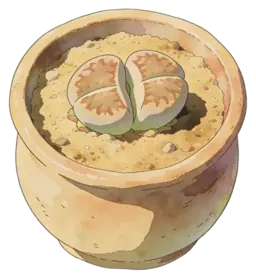
Haworthia cooperi
Haworthia cooperi is sown in seed trays from March to April and in September, and planted out from April to May and in September. Grow it in sun or partial shade, 12 cm apart, with little watering. Dates are for a mild temperate climate in the northern hemisphere; the calendar below adjusts them to your zone.
A small succulent with a compact rosette 5 to 8 cm across, formed of fleshy, swollen leaves with rounded or club-shaped tips, pale to dark green, with a translucent tip, like a glass window that lets the light in, and often with fine white hairs along the edges. It is a very variable species with many cultivated forms; in shops it is sold under trade names such as ‘Rosalinda’ (a shop name whose botanical meaning is unclear), which are cared for in the same way as the species. It produces offsets slowly and, over the years, forms a small clump. In spring and summer it produces a thin flower stalk with small white flowers. It grows slowly and suits small pots and a bright windowsill. It is ornamental and not edible. It is not on the Spanish Catalogue of Invasive Alien Species or the EU list.
Family and origin: Asphodel family (Asphodelaceae) · native to South Africa (Eastern Cape) · More plants from Africa
01In your area
How will it do in your home?
Year calendar
| Task | J | F | M | A | M | J | J | A | S | O | N | D |
|---|---|---|---|---|---|---|---|---|---|---|---|---|
| Seed trayMar–Apr, Sep | no | no | yes | yes | no | no | no | no | yes | no | no | no |
| Plant / transplantApr–May, Sep | no | no | no | yes | yes | no | no | no | yes | no | no | no |
| Divide the clumpMar–May, Sep | no | no | yes | yes | yes | no | no | no | yes | no | no | no |
Its life cycle at a glance
Swipe and tap a stage to see its details.
02Planting
Planting and transplanting
- TipRepot every two or three years, in spring, into a pot only slightly larger.
03Care
Care through the year
Sun and aspectSun and shade · 3 h of sun · shade in summer
- Too little sun
- Ideal range
- Plenty of sun
East, or south with light shade during the middle of the day
Gentle sun: Morning or afternoon sun. Midday summer sun stresses and scorches it.
Bright light without strong direct sun: by an east- or west-facing window, or a south-facing one with a sheer curtain. Direct summer sun, especially behind glass, scorches the leaves or turns them red; in low light the rosette stretches and loses its compact shape. It copes well with indoor light, but it should get a few hours of brightness each day.
- Common mistakeLack of light makes them stretch and go soft (etiolation).
WateringLet it dry out between waterings · summer: every 10 to 15 days
- Summerevery 10 to 15 days0.2 L per plant/week
- Spring / Autumnevery 10-14 days0.1 L per plant/week
- Winterevery 3 to 4 weeks, very little0 L per plant/week
Let it dry out between waterings: A Mediterranean favourite: better thirsty than overwatered.
Water thoroughly, but only when the mix is completely dry, and empty the saucer after a few minutes. It is a succulent and its worst enemy is too much water, which rots the base and the fleshy roots. In winter, when the plant has almost stopped growing, water very little; if the leaves wrinkle or go soft, it needs water.
When to water? Push your finger 3 cm into the soil next to the base of the plant:
- Damp: soil sticks to your finger. Do not water yet. It has more than enough; wait for it to dry out more.
- Cool but clean, no mud. Wait another 1-2 days before watering.
- Dry and dusty. Water now, but moderately. Do not overdo it: it prefers thirst to excess.
- TipWatch out for mealybugs and for rot at the base from overwatering.
- TipThe translucent leaves wrinkle if it is short of water and turn soft and dark if it gets too much; in either case, check the mix before watering.
- TipWater thoroughly and leave long gaps: better thirsty than overwatered.
- Common mistakeWatering often rots the crown and the roots.
Potting mix and feedingpH 6–7 · Very gritty, free-draining mix
Very gritty, free-draining mix.
30 % multi-purpose compost · 40 % coarse sand · 30 % perlite or pumice.
Very high: standing moisture rots them.
This plant prefers a pH between 6.0 and 7.0 (slightly acidic to neutral).
- Multi-purpose compost on its own with no drainage: rot sets in quickly.
- Watering the rosette or the leaves marks them and causes rot.
- TipPlant it in a small pot with a very free-draining mix: cactus compost mixed with equal parts perlite, pumice or coarse sand.
- TipFeed once or twice a year, from spring to summer, with a cactus fertiliser at half strength.
- TipVery free-draining mix (with sand/perlite) and pots with a drainage hole.
Common mistakes and tips
- TipTemperatures and timings are approximate.
04Propagation
Make new plants
The easiest and most reliable method is to separate the offsets that form at the base: with the plant fairly dry, take it out of the pot, tease apart or cut off the offsets that have their own roots and plant them in a very free-draining mix, in bright shade, without watering for a week. Any mild time of year will do, ideally spring or early autumn. It can also be propagated by seed: the seeds are tiny, black and angular, and are sown on the surface of a moist mineral mix at about 18 to 24 °C; they germinate in two to four weeks, although the plants take years to mature and cultivated forms may differ from the parent. Named cultivated forms such as ‘Rosalinda’ are kept true only by offsets: seed produces different plants.
Seeds: how to germinate them~21 days
05Uses and health
What it is used for, and with what care
The genus Haworthia is among the plants that are non-toxic to dogs, cats and horses, and no poisonings from this species are known, although there is no specific data on it. For people there is no reliable data: it is not grown for food, so do not eat it. As a precaution, keep children, dogs and cats from chewing the leaves, which may cause mild digestive upset. It is a nursery plant: buy cultivated plants and do not collect from the wild.
- Properties
- An easy-care ornamental plant that adds a green, sculptural touch to desks and windowsills. It has no home medicinal uses.
- Uses
- It is not grown for food and there are no culinary uses to recommend. Do not eat it or use it in infusions.
For guidance only; this is not medical treatment and does not replace advice from a doctor or vet.
06Companions and related plants
What to plant it with
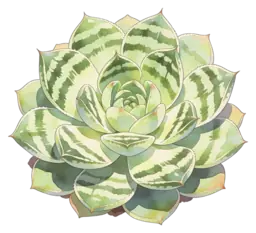
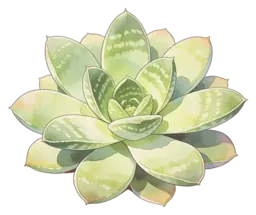
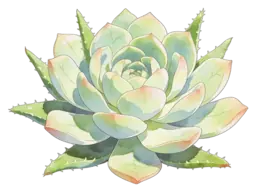
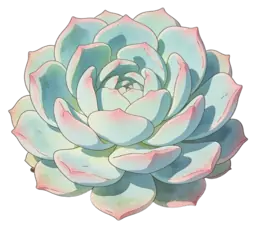
Compare with similar varieties
| Variety | Sowing | Harvest | Days | Spacing | Difficulty |
|---|---|---|---|---|---|
| Haworthia angustifolia | Mar–Apr, Sep | — | — | 12 cm | Easy |
| Haworthia cooperi | Mar–Apr, Sep | — | — | 12 cm | Easy |
| Haworthia emelyae | Mar–Apr, Sep | — | — | 12 cm | Easy |
| Haworthia glauca (Haworthiopsis glauca) | Mar–Apr, Sep | — | — | 12 cm | Easy |
| Fairy washboard (Haworthiopsis limifolia) | Mar–Apr, Sep–Oct | — | — | 12 cm | Easy |
| Haworthia mucronata | Mar–Apr, Sep–Oct | — | — | 10 cm | Easy |
| Haworthia retusa | Mar–Apr, Sep–Oct | — | — | 12 cm | Easy |
| Haworthia rossouwii | Mar–Apr, Sep–Oct | — | — | 8 cm | Moderate |
| Haworthia truncata (horse's teeth) | Mar–Apr, Sep–Oct | — | — | 10 cm | Moderate |
| Zebra haworthia | — | — | — | 15 cm | Easy |