
Credits and licences
- #1 — vueltaalhuerto illustration
- #2 — vueltaalhuerto illustration
- #3 — vueltaalhuerto illustration
- #4 — vueltaalhuerto illustration
- #5 — vueltaalhuerto illustration
- #6 — vueltaalhuerto illustration
- #7 — vueltaalhuerto illustration
Spider aloe (Aloe × spinosissima)
and 2 more names
aloe, garden aloeSpider aloe (Aloe × spinosissima) is planted from April to June and in September. Grow it in full sun, 40 cm apart, with little watering. Dates are for a mild temperate climate in the northern hemisphere; the calendar below adjusts them to your zone.
The spider aloe, sold in shops as Aloe spinosissima, is a garden hybrid between Aloe arborescens and Aloe humilis (Kew lists it as Aloe × spinosissima), not a wild species. It forms a clump of small rosettes of narrow, dark green leaves speckled with white dots and with tiny white teeth along the edges, which keep adding offsets until they cover about 60 cm to 1 m across. In winter it produces unbranched spikes 60 to 90 cm tall with reddish-orange tubular flowers, much visited by bees, and by hummingbirds where they occur. It is very drought-resistant and is grown in pots, rock gardens or sunny borders in mild climates; its weak points are too much water in winter and severe cold. LEGAL AND SAFETY NOTICE: the genus Aloe, except Aloe vera, is listed in Appendix II of the CITES convention, implemented in the EU by Annex B of Regulation (EC) 338/97. This plant is a garden hybrid between two listed aloes (Aloe arborescens and Aloe humilis) and I have not been able to confirm any express exemption for hybrids, so treat it as regulated: it is prohibited to remove aloes from the wild, and a CITES permit is needed to take it outside the EU. Within the EU, nursery plants can be bought and sold; keep the nursery invoice as proof of legal origin. It is not listed in the Spanish Catalogue of Invasive Alien Species, but do not dump prunings or offsets in the countryside. Safety: the genus Aloe is toxic to dogs and cats (vomiting, diarrhoea, lethargy and, sometimes, tremors), so keep it out of their reach and call the vet if you suspect it has been eaten. The yellow sap at the edge of the leaves is irritant: wear gloves. It is not Aloe vera and must not be eaten or used on the skin or in remedies. The leaf tips and teeth are sharp: take care with your eyes.
Family and origin: Asphodel family (Asphodelaceae) · native to Garden hybrid (Aloe arborescens × Aloe humilis), with parents from South Africa · More plants from Africa
01In your area
How will it do in your home?
Year calendar
| Task | J | F | M | A | M | J | J | A | S | O | N | D |
|---|---|---|---|---|---|---|---|---|---|---|---|---|
| Plant / transplantApr–Jun, Sep | no | no | no | yes | yes | yes | no | no | yes | no | no | no |
| Divide the clumpApr–Jun | no | no | no | yes | yes | yes | no | no | no | no | no | no |
Its life cycle at a glance
Swipe and tap a stage to see its details.
02Care
Care through the year
Sun and aspectFull sun · 8 h of sun · South or south-west, with nothing casting shade at midday
- Too little sun
- Ideal range
- Plenty of sun
South or south-west, with nothing casting shade at midday
Strong sun: Loves full midday sun and high temperatures.
Plenty of sun. It withstands light frosts: sources give from about -4 °C to -7 °C in dry soil, but to be safe protect it below -3 °C and from cold, wet conditions.
- Common mistakeLack of light makes them stretch and go soft (etiolation).
WateringLet it dry out between waterings · summer: every 5-7 days
- Summerevery 5-7 days0.2 L per plant/week
- Spring / Autumnevery 10-14 days0.1 L per plant/week
- Winteronly in extreme drought (once a month)0 L per plant/week
Let it dry out between waterings: A Mediterranean favourite: better thirsty than overwatered.
Water thoroughly in spring and summer when the potting mix has dried out completely, roughly every two weeks, and in winter practically not at all. Use a mineral potting mix with coarse sand or perlite and a pot with a drainage hole; do not leave it standing in a full saucer.
When to water? Push your finger 5 cm into the soil next to the base of the plant:
- Damp: soil sticks to your finger. Do not water yet. It has more than enough; wait for it to dry out more.
- Cool but clean, no mud. Wait another 1-2 days before watering.
- Dry and dusty. Water now, but moderately. Do not overdo it: it prefers thirst to excess.
- TipWater thoroughly and leave long gaps: better thirsty than overwatered.
- Common mistakeWatering often rots the crown and the roots.
Potting mix and feedingpH 6–7.5 · Very gritty, free-draining mix
Very gritty, free-draining mix.
30 % multi-purpose compost · 40 % coarse sand · 30 % perlite or pumice.
Very high: standing moisture rots them.
This plant prefers a pH between 6.0 and 7.5 (slightly acidic to slightly alkaline).
- Multi-purpose compost on its own with no drainage: rot sets in quickly.
- Watering the rosette or the leaves marks them and causes rot.
- TipPlant it in a very sunny spot with a very free-draining potting mix; in climates with hard frosts, grow it in a pot and shelter it in winter.
- TipFeed it once in spring with cactus fertiliser at half strength.
- TipVery free-draining mix (with sand/perlite) and pots with a drainage hole.
Common mistakes and tips
- TipWatch out for mealybugs and aloe mite (Aceria aloinis), which distorts leaves and flowers: remove and destroy the affected parts.
- TipDimensions and cold hardiness are approximate.
03Propagation
Make new plants
It is propagated by offsets, which is the method to use because it is a hybrid and seed-grown plants do not come true to the parent. In spring, lift the clump, separate the offsets that already have roots with a clean knife, leave the cut to dry for one or two days and plant them in a barely moist sandy potting mix.
04Uses and health
What it is used for, and with what care
WARNING FOR PETS AND PEOPLE: like other aloes, it contains anthraquinones and saponins. If a dog or cat chews or swallows the plant it may suffer vomiting, diarrhoea, lethargy and, sometimes, tremors or abnormally coloured urine: keep it out of their reach and call the vet if you suspect it has been eaten. For people its toxicity is mild: the yellow sap in the leaves is laxative and irritant and can cause dermatitis; wear gloves when pruning or dividing it. The leaf teeth are prickly.
- Properties
- It is an ornamental plant; it has no safe medicinal or culinary uses and must not be confused with Aloe vera.
- Uses
- It is not edible. Do not use its gel or sap, or take it in herbal teas or remedies.
For guidance only; this is not medical treatment and does not replace advice from a doctor or vet.
05Companions and related plants
What to plant it with
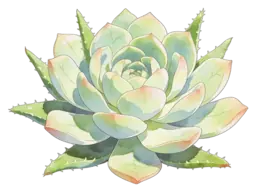
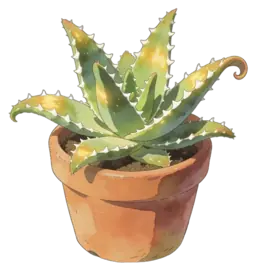
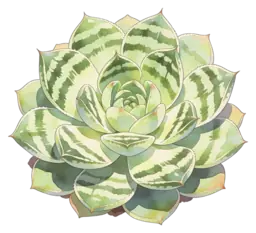
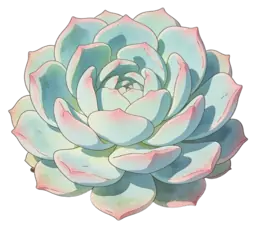
Compare with similar varieties
| Variety | Sowing | Harvest | Days | Spacing | Difficulty |
|---|---|---|---|---|---|
| Spider aloe (Aloe × spinosissima) | Apr–Jun, Sep | — | — | 40 cm | Easy |
| Aloe arborescens (candelabra aloe) | Mar–Apr | — | — | 100 cm | Easy |
| Lace aloe (Aloe aristata) | — | — | — | 20 cm | Easy |
| Aloe mitriformis (mitre aloe) | Mar–May | — | — | 60 cm | Easy |
| Soap aloe (Aloe maculata, syn. Aloe saponaria) | Mar–May | Feb–May | — | 50 cm | Easy |
| Tiger aloe (Gonialoe variegata, Aloe variegata) | Mar–May | — | — | 25 cm | Easy |
| Aloe vera | — | — | — | 30 cm | Easy |