
Credits and licences
- #1 — vueltaalhuerto illustration
- #2 — vueltaalhuerto illustration
- #3 — vueltaalhuerto illustration
- #4 — vueltaalhuerto illustration
- #5 — vueltaalhuerto illustration
- #6 — vueltaalhuerto illustration
- #7 — vueltaalhuerto illustration
- #8 — vueltaalhuerto illustration
- #9 — vueltaalhuerto illustration
- #10 — vueltaalhuerto illustration
Spanish moss (Tillandsia usneoides)
and 3 more names
Florida moss, long moss, tillandsiaSpanish moss (Tillandsia usneoides) is planted from April to June. Grow it in sun or partial shade, 30 cm apart, with moderate watering. Dates are for a mild temperate climate in the northern hemisphere; the calendar below adjusts them to your zone.
Spanish moss is an air plant of unique appearance: it forms long curtains of extremely fine, thread-like twisted stems, silvery grey in colour, that hang from tree branches and reach from half a metre to several metres long. It is neither a moss nor a lichen but a bromeliad, related to the pineapple and to other air plants. It has no roots: it clings to and drapes over branches without harming the tree, and it absorbs water and nutrients through its leaves and stems, which are covered in silvery scales. Its flowering almost always goes unnoticed: the flowers are tiny, three-petalled and yellowish-green or bluish, and open in spring or summer. It spreads mainly when pieces break off and lodge on other branches. Indoors it is hung from a support in a bright spot with fairly humid air. Do not confuse it with other plants called ‘old man's beard’ in Spanish, such as traveller's joy (Clematis vitalba), or with lichens of the genus Usnea. It is not edible and not toxic; in the wild, masses of it can harbour insects and small mites.
Family and origin: Bromeliad family (Bromeliaceae) · native to From the south-eastern United States and the Caribbean to northern Argentina and Chile, hanging from trees in humid and coastal forests · More plants from South America
01In your area
How will it do in your home?
Year calendar
| Task | J | F | M | A | M | J | J | A | S | O | N | D |
|---|---|---|---|---|---|---|---|---|---|---|---|---|
| Plant / transplantApr–Jun | no | no | no | yes | yes | yes | no | no | no | no | no | no |
| Divide the clumpApr–Sep | no | no | no | yes | yes | yes | yes | yes | yes | no | no | no |
Its life cycle at a glance
Swipe and tap a stage to see its details.
02Planting
Planting and transplanting
- TipHang it from a branch, a wire or a support, without burying it or putting it in a pot, somewhere with moving air.
- TipBuy nursery-grown plants and do not collect them in the wild or pull them off trees.
03Care
Care through the year
Sun and aspectSun and shade · 4 h of sun · shade in summer
- Too little sun
- Ideal range
- Plenty of sun
East, or south with light shade in the middle of the day
Gentle sun: Morning or afternoon sun. Midday summer sun stresses and scorches it.
Bright light but no strong direct sun: it grows in the bright shade of tree canopies. In low light it turns brown and goes dormant, although it recovers if you move it nearer the light. Indoors, beside a bright window; outdoors, hung from a tree or pergola in frost-free areas, in bright shade. Light cold will not kill it if it is dry, but it is best not to let it drop below about 0 to 5 °C.
- TipTurn the pot every week so it grows evenly towards the light.
WateringLet it dry out between waterings · summer: mist daily or 3 or 4 times a week, or a 20-minute soak every week
- Summermist daily or 3 or 4 times a week, or a 20-minute soak every week0.6 L per plant/week
- Spring / Autumnevery 4-5 days0.3 L per plant/week
- Winterevery 10 to 14 days0.1 L per plant/week
Let it dry out between waterings: A Mediterranean favourite: better thirsty than overwatered.
It needs more humidity than the grey rosette-forming tillandsias: its fine stems dry out quickly. Mist it often or submerge it completely for 20 minutes in rainwater or water low in lime once a week, and let it dry within four hours, hanging up with air around it: if it stays soaked without ventilation, it rots from the inside. In winter and in low light, water less.
When to water? Push your finger 0 cm into the soil next to the base of the plant:
- Damp: soil sticks to your finger. Do not water yet. It has more than enough; wait for it to dry out more.
- Cool but clean, no mud. Wait another 1-2 days before watering.
- Dry and dusty. Water now, but moderately. Do not overdo it: it prefers thirst to excess.
- TipIf the stems turn brown and brittle, it needs more water or light; if they smell rotten, it has too much water or too little air.
- TipWatering frequencies and temperatures are approximate.
- TipAdjust watering to the light and the season: in winter almost all of them need much less water.
- Common mistakeOverwatering is the number one killer: let it dry out as the species requires.
Potting mix and feedingMulti-purpose compost lightened with perlite
Multi-purpose compost lightened with perlite.
70 % multi-purpose compost · 20 % perlite · 10 % coir.
High: always a pot with a drainage hole and a shallow saucer.
This plant prefers a pH between 5.5 and 6.5 (slightly acidic to neutral).
- Repot every 2-3 years into a pot a finger's width wider, not much more.
- A handful of worm castings a year keeps the potting mix alive.
- Reusing old potting mix without refreshing it compacts and rots the roots.
- No drainage in the pot = waterlogged roots = dead plant.
Common mistakes and tips
- TipDo not leave it in a dark or stuffy room, because the stems rot from the inside.
- TipTrim off dry or brown pieces so the mass looks healthier.
04Propagation
Make new plants
It is propagated by division: simply split a curtain into pieces or skeins and hang them or tie them loosely to branches, wires or supports, preferably in spring or summer. In the wild it spreads when the stems break and catch on other branches. It can be grown from seed, but slowly: the seeds, with a tuft of white hairs, are stuck onto moist bark or fibre and take years to form a noticeable mass.
Seeds: how to germinate them~14 days
05Uses and health
What it is used for, and with what care
- Properties
- A decorative, low-maintenance air plant. It has no home medicinal uses.
- Uses
- Not edible. There are no culinary uses.
For guidance only; this is not medical treatment and does not replace advice from a doctor or vet.
06Companions and related plants
What to plant it with
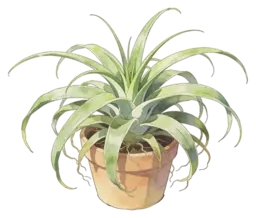
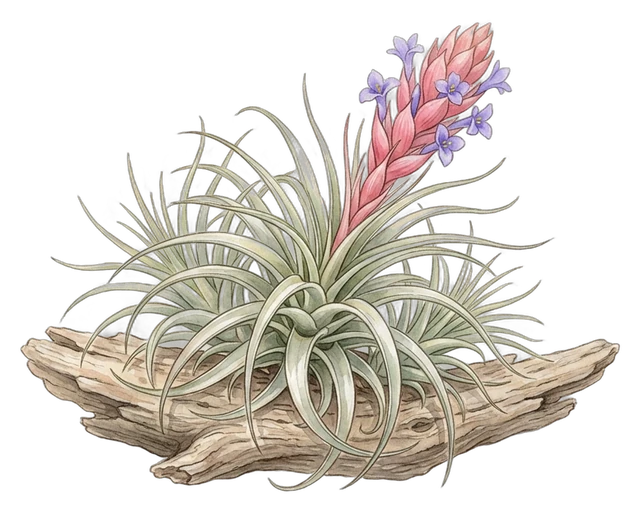
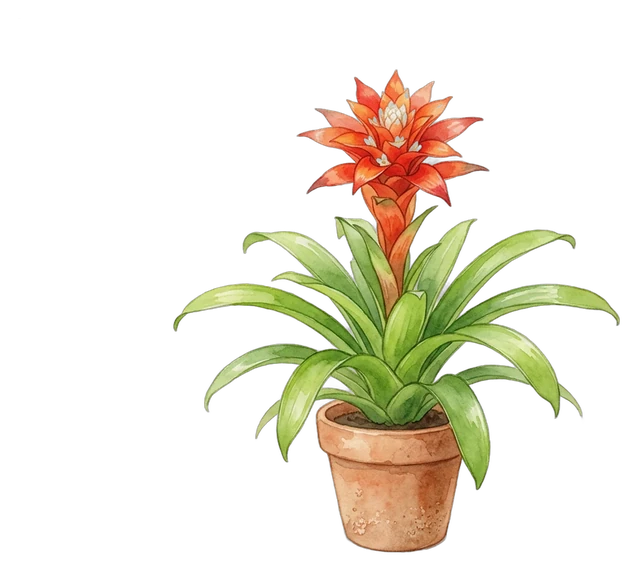
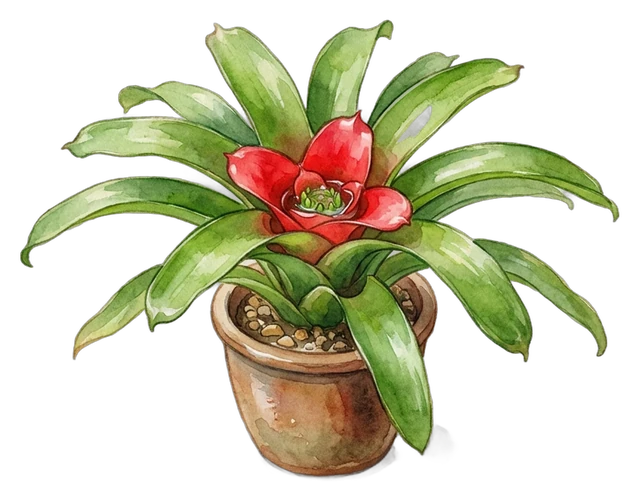
No known toxicity to people or pets
Bromeliads and tillandsias are listed as non-toxic to dogs and cats, and no risks to people are known. Do not confuse it with other plants called ‘old man's beard’: traveller's joy (Clematis vitalba) is an irritant and must not be eaten. In the wild, masses of Tillandsia usneoides can harbour mites and small insects, so it is best to buy nursery-grown plants, and to wash your hands if you handle plants collected outdoors.