
Credits and licences
- #1 — vueltaalhuerto illustration
- #2 — vueltaalhuerto illustration
- #3 — vueltaalhuerto illustration
- #4 — vueltaalhuerto illustration
- #5 — vueltaalhuerto illustration
- #6 — vueltaalhuerto illustration
- #7 — vueltaalhuerto illustration
- #8 — vueltaalhuerto illustration
- #9 — vueltaalhuerto illustration
- #10 — vueltaalhuerto illustration
Spanish lime (mamoncillo)
and 2 more names
limoncillo, Melicoccus bijugatusSpanish lime (mamoncillo) is sown in seed trays from April to June, and planted out from April to June. It is harvested from July to September (about 365 days to the first harvest). Grow it in full sun, 700 cm apart, with moderate watering. Dates are for a mild temperate climate in the northern hemisphere; the calendar below adjusts them to your zone.
What else to sow in April, May and June
The Spanish lime is a slow-growing evergreen tropical tree that reaches 25 m in its native range and in cultivation is usually kept at 4 to 8 m by pruning. It has glossy compound leaves and clusters of small, scented white flowers that attract bees in spring. The fruits hang in compact bunches and are round, 2 to 4 cm, with a thin, brittle green skin that you can crack open with your fingernails; inside is a jelly-like, salmon-coloured, sweet-and-sour pulp clinging to a large seed. It is related to the lychee and the longan, although hardier. The trees are usually of a single sex, so to get fruit you need male and female trees, or a tree grafted from a fruiting plant. In Spain it only thrives on the warmest frost-free coast or in the Canary Islands; elsewhere it can only be grown in a pot with protection.
Family and origin: Soapberry family (Sapindaceae) · native to Northern South America (Colombia and Venezuela), spread throughout the Caribbean · More plants from South America
01In your area
How will it do in your garden?
Year calendar
| Task | J | F | M | A | M | J | J | A | S | O | N | D |
|---|---|---|---|---|---|---|---|---|---|---|---|---|
| Seed trayApr–Jun | no | no | no | yes | yes | yes | no | no | no | no | no | no |
| Plant / transplantApr–Jun | no | no | no | yes | yes | yes | no | no | no | no | no | no |
| HarvestJul–Sep | no | no | no | no | no | no | yes | yes | yes | no | no | no |
| PruningMar–Apr, Sep | no | no | yes | yes | no | no | no | no | yes | no | no | no |
Its life cycle at a glance
Swipe and tap a stage to see its details.
02Planting
Where and how to plant it
Sow the seed 2 cm deep; leave 7 m between plants and 8 m between rows.
7 m between plants · 8 m between rows
Seed at a depth of 2 cm; seedlings go in with the root ball level with the soil.
- In a square-foot bed
- 1 plant every 576 squares30 × 30 cm squares
- Transplanting
- Apr–Jun
- Seed tray
- Apr–Jun
- Germination
- ~30 days
03Care
Care through the year
Sun and aspectFull sun · 8 h of sun · South or south-west, with nothing casting shade at midday
- Too little sun
- Ideal range
- Plenty of sun
South or south-west, with nothing casting shade at midday
Strong sun: Loves full midday sun and high temperatures.
Full sun or partial shade. Mature trees survive down to about -3 °C, but young shoots are damaged at around -1 °C; protect young plants with horticultural fleece or in a greenhouse.
WateringLet it dry out between waterings · summer: every 2-3 days
- Summerevery 2-3 days30 L per tree/week
- Spring / Autumnevery 4-5 days15 L per tree/week
- Winterevery 2-3 weeks4.5 L per tree/week
Let it dry out between waterings: A Mediterranean favourite: better thirsty than overwatered. Mulch: straw or dry plant material cuts watering by 30-50 %.
It tolerates drought well once established, but not waterlogging. Water regularly for the first few years and afterwards only during long dry spells. It adapts to almost any soil that drains, even sandy or chalky soil, and tolerates some salt.
When to water? Push your finger 3 cm into the soil next to the base of the plant:
- Damp: soil sticks to your finger. Do not water yet. It has more than enough; wait for it to dry out more.
- Cool but clean, no mud. Wait another 1-2 days before watering.
- Dry and dusty. Water now, but moderately. Do not overdo it: it prefers thirst to excess.
Soil and feedingpH 5.6–8 · A deep planting hole and well-drained soil
A deep planting hole and well-drained soil.
The site's own topsoil + 1/3 well-rotted compost + a handful of sand if there is clay.
Good: prolonged waterlogging rots the roots.
This plant prefers a pH between 5.6 and 8.0 (slightly acidic to alkaline).
- Dig a hole at least 60×60×60 cm before planting.
- A thick mulch around the tree (not touching the trunk) reduces water stress.
- Spread compost on the surface every autumn; never bury the graft union.
- A narrow hole in hard ground: the roots end up trapped as if in a pot.
- Burying the graft encourages rot and takes vigour away from the rootstock.
- TipPlant it in spring, in the warmest, sunniest spot, in loose, well-drained soil, or in a large container.
- Common mistakeDo not bury the graft union (the bulge on the trunk): if it ends up below ground it rots. Leave it a little above the soil.
Common mistakes and tips
- TipIf you want fruit, get a fruiting or grafted tree.
- TipWARNING: the seed is slippery and a child can choke on it; the pulp is sucked off one fruit at a time, without letting small children put a whole fruit in their mouths.
- TipIt has few pests.
04Harvest
Harvesting and storing
Harvest in Jul–Sep; the first, about 365 days after sowing.
- TipThe fruits are picked by the bunch when they are green but the skin has become brittle; fruits picked too early turn black and do not ripen.
- TipHarvest dates, height and the age at which it starts fruiting are only a guide.
- TipA good mulch and drip irrigation in summer make all the difference to the harvest.
05Propagation
Make new plants
It is propagated from seed, by grafting and by air layering. The large fresh seed comes up in about four to six weeks, but seedling trees are not true to the parent, may be male and bear no fruit, and take eight to ten years to start fruiting (a rough figure). To get fruiting trees of a known variety, air layering is used on a branch 5 cm thick during the warm season, which roots in five to six weeks, or grafting onto a seedling rootstock, which sometimes fails. Layered or grafted trees bear fruit in three or four years.
Seeds: how to germinate them~30 days
06Uses and health
What it is used for, and with what care
SAFETY NOTICE: the seed is large and slippery and can cause choking, especially in children: suck the pulp carefully, do not let small children put a whole fruit in their mouths and throw the seeds away. There are no reliable data on toxicity in dogs and cats: to be safe, do not let them chew the seeds, leaves or skins.
- Properties
- A refreshing sweet-and-sour fruit with vitamin C; very popular as a snack in the Caribbean and Colombia.
- Uses
- The brittle skin is peeled off and the pulp clinging to the seed is sucked off raw; it is also made into juice, and the pulp is steeped in syrup or liqueur. The seeds are not eaten.
For guidance only; this is not medical treatment and does not replace advice from a doctor or vet.
07Companions and related plants
What to plant it with
Good companions
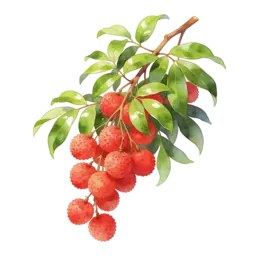
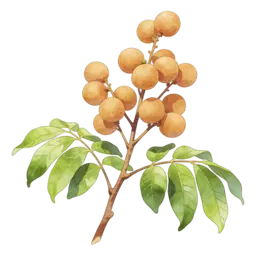
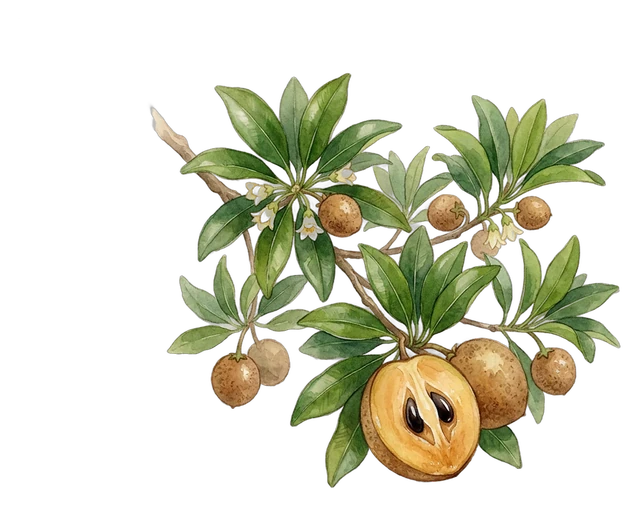
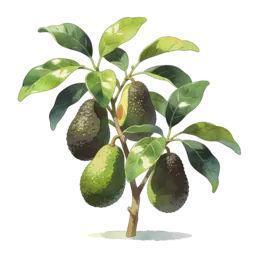
Group it in the same bedPlants with the same watering or the same sun
They are not essential companions, but you will not have to water or position them differently.