Credits and licences
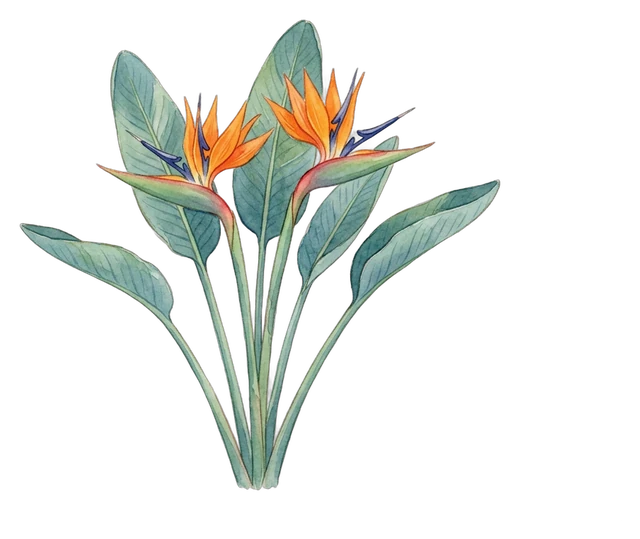
- #1 — vueltaalhuerto illustration
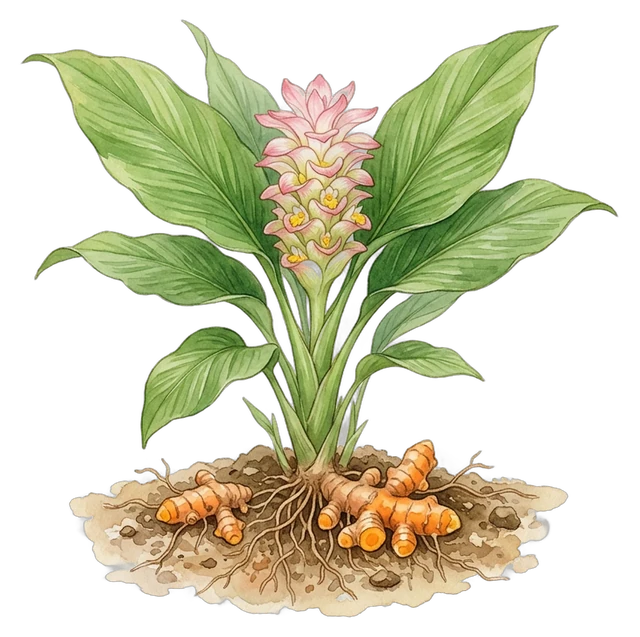
- #2 — vueltaalhuerto illustration
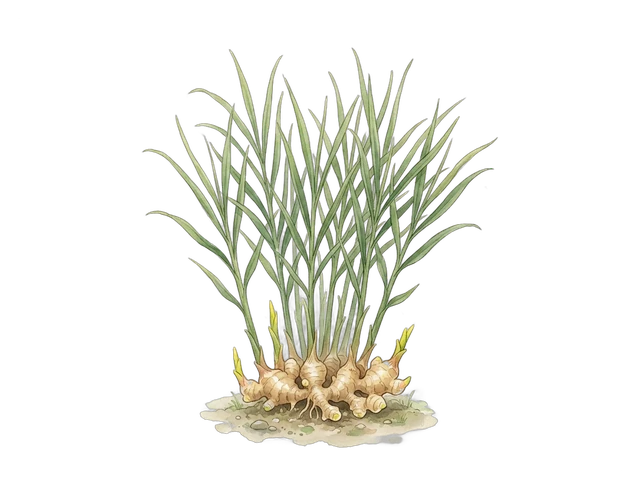
- #3 — vueltaalhuerto illustration
- #4 — vueltaalhuerto illustration
- #5 — vueltaalhuerto illustration
- #6 — vueltaalhuerto illustration
- #7 — vueltaalhuerto illustration
- #8 — vueltaalhuerto illustration
- #9 — vueltaalhuerto illustration
- #10 — vueltaalhuerto illustration
Shell ginger (Alpinia zerumbet)
and 3 more names
Alpinia zerumbet, Alpinia speciosa, alpiniaShell ginger (Alpinia zerumbet) is sown in seed trays from February to March, and planted out from March to May. It flowers from June to August. Grow it in sun or partial shade, 150 cm apart, with plenty of watering. Dates are for a mild temperate climate in the northern hemisphere; the calendar below adjusts them to your zone.
What else to sow in February and March
An ornamental plant in the ginger family that forms a dense clump of upright, arching canes, 1.5 to 3 m tall depending on the form, with long, lance-shaped, glossy leaves that are aromatic when crushed. The most widely sold variety is 'Variegata', 1.2 to 2 m tall, with leaves striped yellow and green. In summer, and in warm climates, it produces hanging flower clusters of waxy buds, white with pink tips, like small porcelain shells, which open into flowers with a yellow lip veined with red. The fruits are round, ribbed, reddish-orange capsules. It grows from a thick, spreading rhizome. It needs warmth, humidity and rich soil, and does not withstand hard frosts: in Spain it is grown outdoors in the Canary Islands and in sheltered corners of the warm Mediterranean coast, and elsewhere in a large pot protected in winter. It is not culinary ginger (Zingiber officinale), and its rhizome is not used as such.
Family and origin: Ginger family (Zingiberaceae) · native to East Asia (southern Japan, including Okinawa, Taiwan and southern China) · More plants from Far East
01In your area
How will it do in your garden?
Year calendar
| Task | J | F | M | A | M | J | J | A | S | O | N | D |
|---|---|---|---|---|---|---|---|---|---|---|---|---|
| Seed trayFeb–Mar | no | yes | yes | no | no | no | no | no | no | no | no | no |
| Plant / transplantMar–May | no | no | yes | yes | yes | no | no | no | no | no | no | no |
| HarvestJun–Sep | no | no | no | no | no | yes | yes | yes | yes | no | no | no |
| FloweringJun–Aug | no | no | no | no | no | yes | yes | yes | no | no | no | no |
| PruningMar | no | no | yes | no | no | no | no | no | no | no | no | no |
| Divide the clumpMar–May | no | no | yes | yes | yes | no | no | no | no | no | no | no |
Its life cycle at a glance
Swipe and tap a stage to see its details.
02Planting
Where and how to plant it
Sow the seed 1 cm deep; leave 1.5 m between plants and 1.8 m between rows; give it a stake from the start.
1.5 m between plants · 1.8 m between rows
Seed at a depth of 1 cm; seedlings go in with the root ball level with the soil.
- Transplanting
- Mar–May
- Seed tray
- Feb–Mar
- Germination
- ~30 days
- Support
- Needs a stake
- TipPlant it in a sheltered spot, out of the wind, with room to grow, because the clump gets wider every year.
- TipIf the plant flowers little, it is usually due to a lack of heat or to winter frost, as the flowers tend to appear on mature canes.
- Common mistakeSowing out of season: many need warmth or a cold spell beforehand to sprout.
03Care
Care through the year
Sun and aspectSun and shade · 5 h of sun · shade in summer
- Too little sun
- Ideal range
- Plenty of sun
East, or south with light shade in the middle of the day
Moderate sun: Copes with full sun, but give it some shade during heatwaves.
Partial shade or gentle sun, protected from strong midday sun, which scorches the variegated leaves; the green-leaved form tolerates more sun. It needs warmth: the canes are damaged by frosts below 0 to -2 °C, and the rhizome, under a good mulch, regrows after short frosts of about -5 °C, with no guarantee; in climates with frost it is best grown in a pot and kept under cover.
WateringConstantly moist · summer: daily or every 2 days when above 30 °C
- Summerdaily or every 2 days when above 30 °C2.1 L per plant/week
- Spring / Autumnevery 3-4 days1 L per plant/week
- Winterevery 2 weeks if dry0.2 L per plant/week
Constantly moist: The soil should always feel cool and damp. Ideal with mulch and drip irrigation. Mulch: straw or dry plant material cuts watering by 30-50 %.
It needs plenty of regular watering in summer and fertile soil, rich in organic matter, cool and well drained. It tolerates some drought, but its leaves curl and scorch. In winter, when it is cold, water sparingly. A 5 cm mulch of leaves or bark keeps in moisture and protects the rhizome.
When to water? Push your finger 2 cm into the soil next to the base of the plant:
- Damp: soil sticks to your finger. Do not water, although for this plant it is just right — check again tomorrow.
- Cool but clean, no mud. Water today: it likes to stay constantly moist.
- Dry and dusty. Water urgently and add mulch to hold in moisture.
Soil and feedingpH 5.5–7 · Loose soil with organic matter and good drainage
Loose soil with organic matter and good drainage.
50 % topsoil · 30 % well-rotted compost · 20 % sand or perlite.
Medium/high.
This plant prefers a pH between 5.5 and 7.0 (slightly acidic to neutral).
- Overfeeding gives lots of leaf and few flowers.
- Compacted, poorly drained soil rots the roots in winter.
- TipFeed in spring and midsummer with a potassium-rich fertiliser or well-rotted compost.
- Common mistakeOverfeeding gives lush leaves but few flowers.
PruningWhen: Mar
Pruning time for this plant: Mar.
- TipRemove faded flowers to prolong flowering.
Common mistakes and tips
- TipWatch out for red spider mite and snails, which nibble the new leaves.
04Harvest
Harvesting and storing
Harvest in Jun–Sep.
05Propagation
Make new plants
It is propagated by dividing the rhizome, which is the usual method and the only way to reproduce the variegated variety, and also by seed. Divide in spring: lift the clump, cut the rhizome with a large, sharp knife into pieces with roots and at least two or three canes or buds, and replant straight away at the same depth, watering well; in pots, divide when the rhizome fills the container. The seed, which comes from the ripe capsules, is sown at 22-28 °C in a moist seed tray, takes from several weeks to months to come up and the plants may differ from the parent; besides, in cold climates it hardly ever sets seed.
Seeds: how to germinate them~30 days
- TipRemove dry or frost-damaged canes in March, cutting them from the base.
06Uses and health
What it is used for, and with what care
No serious poisonings are known, and the leaves are used as wrappers and in herbal teas in Asia, but there are no reliable studies establishing safe use, so as a precaution it should not be consumed as a tea or a spice. It is not known for certain whether it is toxic to dogs and cats, so keep them from chewing it and consult a vet if they do. The essential oil from the leaves can irritate the skin and must not be applied undiluted.
- Properties
- It is an ornamental, aromatic plant, and its leaves give off a pleasant scent. No proven medicinal properties are attributed to it in this profile.
- Uses
- In Okinawa and other parts of Asia the aromatic leaves are used to wrap food and in herbal teas, but this is a local traditional use and there are no doses or safety guidelines. Here it is grown only as an ornamental: its rhizome is not used as if it were culinary ginger.
For guidance only; this is not medical treatment and does not replace advice from a doctor or vet.
07Companions and related plants