
Credits and licences
- #1 — vueltaalhuerto illustration
- #2 — vueltaalhuerto illustration
- #3 — vueltaalhuerto illustration
- #4 — vueltaalhuerto illustration
- #5 — vueltaalhuerto illustration
- #6 — vueltaalhuerto illustration
- #7 — vueltaalhuerto illustration
- #8 — vueltaalhuerto illustration
- #9 — vueltaalhuerto illustration
Natal ivy (Senecio macroglossus)
and 3 more names
variegated wax ivy, succulent ivy, senecioNatal ivy (Senecio macroglossus) is planted from April to June. Grow it in sun or partial shade, 20 cm apart, with little watering. Dates are for a mild temperate climate in the northern hemisphere; the calendar below adjusts them to your zone.
A climbing or trailing plant with thin stems that indoors can grow longer than a metre, with fleshy, glossy, triangular leaves with three to five shallow lobes, like those of an ivy. In the most widely sold form, ‘Variegata’, the leaves have cream edges. Now and then it produces yellow, daisy-like flowers about 4 cm across, especially if it gets plenty of light. It is an easy plant if watered sparingly, because the leaves store water and rot when there is too much. It is not a true ivy (Hedera), nor is it related to the wax plant (Hoya carnosa): it is a member of the daisy family in the genus Senecio, like string of pearls. It is not edible and it is best that neither children nor animals nibble it. In other countries, such as Australia and New Zealand, it has escaped from gardens and behaves as a weed, so never throw plant waste into the countryside or onto waste ground. Do not confuse it with Delairea odorata (formerly Senecio mikanioides), known in English as ‘Cape ivy’: that species is on the list of invasive alien species of Union concern (Regulation (EU) 1143/2014), and its sale, keeping and cultivation are banned in the EU.
Family and origin: Daisy family (Asteraceae) · native to Eastern and southern Africa (Mozambique, Zimbabwe and South Africa), in forests and scrubland · More plants from Africa
01In your area
How will it do in your home?
Year calendar
| Task | J | F | M | A | M | J | J | A | S | O | N | D |
|---|---|---|---|---|---|---|---|---|---|---|---|---|
| Plant / transplantApr–Jun | no | no | no | yes | yes | yes | no | no | no | no | no | no |
| PruningMar–Apr | no | no | yes | yes | no | no | no | no | no | no | no | no |
| CuttingsMar–Aug | no | no | yes | yes | yes | yes | yes | yes | no | no | no | no |
Its life cycle at a glance
Swipe and tap a stage to see its details.
02Care
Care through the year
Sun and aspectSun and shade · 4 h of sun · shade in summer
- Too little sun
- Ideal range
- Plenty of sun
East-facing, or south-facing with light shade in the middle of the day
Gentle sun: Morning or afternoon sun. Midday summer sun stresses and scorches it.
Plenty of light but no strong direct sun: an east- or west-facing window, or a metre from a south-facing window. In poor light it becomes leggy and the leaves lose their cream edges. It prefers 18 to 25 °C and should not drop below about 5 to 10 °C.
- TipTurn the pot every week so it grows evenly towards the light.
WateringLet it dry out between waterings · summer: every 10 to 14 days
- Summerevery 10 to 14 days0.3 L per plant/week
- Spring / Autumnevery 10-14 days0.1 L per plant/week
- Winterevery 3 to 4 weeks0 L per plant/week
Let it dry out between waterings: A Mediterranean favourite: better thirsty than overwatered.
Water thoroughly and wait until the potting mix is dry almost to the bottom of the pot before watering again; empty the saucer. The fleshy leaves store water, so it copes well with being forgotten and very badly with waterlogging. If the leaves wrinkle, it needs water; if they go soft and yellow, it has too much.
When to water? Push your finger 4 cm into the soil next to the base of the plant:
- Damp: soil sticks to your finger. Do not water yet. It has more than enough; wait for it to dry out more.
- Cool but clean, no mud. Wait another 1-2 days before watering.
- Dry and dusty. Water now, but moderately. Do not overdo it: it prefers thirst to excess.
- TipThe temperatures, watering and timings are only a guide.
- TipAdjust watering to the light and the season: in winter almost all of them need much less water.
- Common mistakeOverwatering is the number one killer: let it dry out as the species requires.
Potting mix and feedingpH 6–7 · Multi-purpose compost lightened with perlite
Multi-purpose compost lightened with perlite.
70 % multi-purpose compost · 20 % perlite · 10 % coir.
High: always a pot with a drainage hole and a shallow saucer.
This plant prefers a pH between 6.0 and 7.0 (slightly acidic to neutral).
- Repot every 2-3 years into a pot a finger's width wider, not much more.
- A handful of worm castings a year keeps the potting mix alive.
- Reusing old potting mix without refreshing it compacts and rots the roots.
- No drainage in the pot = waterlogged roots = dead plant.
- TipUse a pot with drainage holes and a very free-draining potting mix, for example cactus mix with some perlite.
- TipFeed sparingly: a liquid fertiliser diluted to half strength once a month, from spring to summer.
- Common mistakePots without drainage waterlog the roots and rot the plant.
PruningWhen: Mar–Apr
Pruning time for this plant: Mar–Apr.
- TipPinch out the stem tips in spring so that the plant grows bushier and does not end up with long, bare stems.
- TipWhen pruning or handling it, wash your hands afterwards and do not leave the clippings within reach of pets.
03Propagation
Make new plants
It is propagated from stem cuttings, which is the usual and most reliable method. Cut sections 8 to 12 cm long with three or four leaves, just below a node, leave the cut to dry for a few hours and put them in water or directly into a very free-draining potting mix. They root in two to four weeks with warmth and light. Stems that touch the soil root at the nodes. It is almost never propagated from seed.
04Uses and health
What it is used for, and with what care
Plants of the genus Senecio contain pyrrolizidine alkaloids, which can damage the liver if eaten often or in quantity. We have not found specific data for this species, so to be on the safe side treat it as toxic: do not eat it or use it for infusions, keep it out of reach of children, dogs and cats, and wash your hands after pruning it. If an animal eats part of the plant, consult your vet. This is a precautionary warning, not a dose figure.
- Properties
- An easy ornamental plant with curious leaves and variegated colouring. It has no home medicinal uses.
- Uses
- It is not edible. It has no culinary uses and is not used for infusions.
For guidance only; this is not medical treatment and does not replace advice from a doctor or vet.
05Companions and related plants
What to plant it with
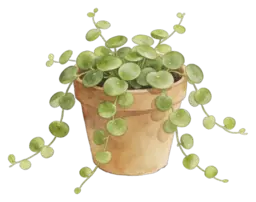
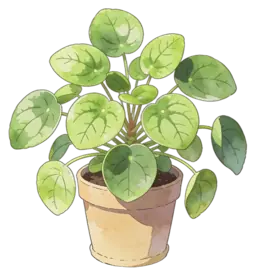
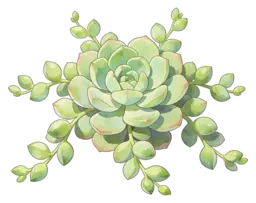
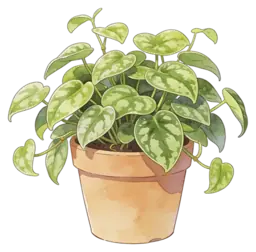
Compare with similar varieties
| Variety | Sowing | Harvest | Days | Spacing | Difficulty |
|---|---|---|---|---|---|
| Common ivy | Mar–Apr, Sep–Oct | — | — | 100 cm | Easy |
| Natal ivy (Senecio macroglossus) | Apr–Jun | — | — | 20 cm | Easy |
| Swedish ivy | — | — | — | 30 cm | Easy |