
Credits and licences
- #1 — vueltaalhuerto illustration
- #2 — vueltaalhuerto illustration
- #3 — vueltaalhuerto illustration
- #4 — vueltaalhuerto illustration
- #5 — vueltaalhuerto illustration
- #6 — vueltaalhuerto illustration
- #7 — vueltaalhuerto illustration
- #8 — vueltaalhuerto illustration
- #9 — vueltaalhuerto illustration
- #10 — vueltaalhuerto illustration
Motherwort
Motherwort is sown in seed trays from February to April or directly outdoors from April to May and in October, and planted out from May to June. It is harvested from June to September (about 120 days to the first harvest). Grow it in full sun, 30 cm apart, with moderate watering. Dates are for a mild temperate climate in the northern hemisphere; the calendar below adjusts them to your zone.
What else to sow in February, March, April, May and October
A hardy perennial of the mint family, 60 to 120 cm tall, with a square, upright stem, palmate dark green leaves with three to five pointed, toothed lobes, and whorls of small, pale pinkish-lilac flowers with a hairy upper lip, clustered in the leaf axils of the upper part of the plant from late spring into summer. The calyx left after flowering is hard, with five prickly points. It is a traditional plant of medicinal herb gardens and also rich in nectar, much visited by bumblebees and honeybees. It self-seeds readily and can spread. Traditionally it has been used as a plant for the heart and nerves, but there is not enough evidence and it is inadvisable in pregnancy: it is a plant to grow and observe, not a remedy.
Family and origin: Mint family (Lamiaceae) · native to Europe and temperate Asia · More plants from Temperate Europe
01In your area
How will it do in your garden?
Year calendar
| Task | J | F | M | A | M | J | J | A | S | O | N | D |
|---|---|---|---|---|---|---|---|---|---|---|---|---|
| Seed trayFeb–Apr | no | yes | yes | yes | no | no | no | no | no | no | no | no |
| Direct sowingApr–May, Oct | no | no | no | yes | yes | no | no | no | no | yes | no | no |
| Plant / transplantMay–Jun | no | no | no | no | yes | yes | no | no | no | no | no | no |
| HarvestJun–Sep | no | no | no | no | no | yes | yes | yes | yes | no | no | no |
| FloweringJun–Sep | no | no | no | no | no | yes | yes | yes | yes | no | no | no |
| Divide the clumpMar–Apr, Oct | no | no | yes | yes | no | no | no | no | no | yes | no | no |
Its life cycle at a glance
Swipe and tap a stage to see its details.
02Planting
Where and how to plant it
Sow the seed 2 mm deep; leave 30 cm between plants and 50 cm between rows.
30 cm between plants · 50 cm between rows
Seed at a depth of 2 mm; seedlings go in with the root ball level with the soil.
- In a square-foot bed
- 1 plant per square30 × 30 cm squares
- Transplanting
- May–Jun
- Seed tray
- Feb–Apr
- Direct sowing
- Apr–May, Oct
03Care
Care through the year
Sun and aspectFull sun · 8 h of sun · South or south-west, with nothing casting shade at midday
- Too little sun
- Ideal range
- Plenty of sun
South or south-west, with nothing casting shade at midday
Strong sun: Loves full midday sun and high temperatures.
Full sun or partial shade. In the south of Spain and on the Mediterranean coast, with very hot summers, it appreciates afternoon shade and cool soil.
WateringMoist but never waterlogged · summer: every 2-3 days
- Summerevery 2-3 days0.8 L per plant/week
- Spring / Autumnevery 4-5 days0.4 L per plant/week
- Winterevery 2-3 weeks0.1 L per plant/week
Moist but never waterlogged: Water before the surface is completely dry. Never puddles. Mulch: straw or dry plant material cuts watering by 30-50 %.
Once settled it copes well with dry spells and poor soils, but it flowers better with moderate watering in summer. It does not tolerate waterlogging. Water regularly in the first year.
When to water? Push your finger 3 cm into the soil next to the base of the plant:
- Damp: soil sticks to your finger. Do not water today. The moisture is fine.
- Cool but clean, no mud. Water early tomorrow if it stays like this, or this evening.
- Dry and dusty. Water now, and deeply. This is not where it likes to be.
- Common mistakeOverwatering: most prefer to dry out between waterings.
Soil and feedingpH 6–8 · Free-draining, airy mix
Free-draining, airy mix.
40 % topsoil · 30 % coarse sand or perlite · 30 % well-rotted compost (less compost for Mediterranean herbs).
High: almost all prefer being thirsty to being wet.
This plant prefers a pH between 6.0 and 8.0 (slightly acidic to alkaline).
- Mediterranean herbs in very rich, heavily watered soil: they grow a lot but lose their aroma.
- A pot without a drainage hole: the roots rot within weeks.
- TipChoose a sunny corner of a border or a bed of its own, in ordinary soil with good drainage: it spreads by seed, so cut off the dry spikes before they set seed if you do not want it to take over.
- TipMany Mediterranean herbs prefer poor soil and little water: more aroma.
Common mistakes and tips
- Common mistakeLetting them flower early makes the leaves bitter (in leafy herbs).
04Harvest
Harvesting and storing
Harvest in Jun–Sep; the first, about 120 days after sowing.
05Propagation
Make new plants
It is propagated by seed and by division. The seed, small and hard-coated, germinates better after a few weeks of moist cold: it can be sown outdoors in autumn, or in spring in a seed tray after two to four weeks in the fridge mixed with damp sand; scatter it on the surface, barely covered, because it needs some light, and it germinates in two to four weeks or more. Transplant at 30 cm apart. Old clumps are divided in spring or autumn, separating rootballs with roots and planting them straight away. It self-seeds readily.
Seeds: how to germinate them~21 days
- TipThe spines of the dry calyx prick: wear gloves when cutting the spikes.
06Uses and health
What it is used for, and with what care
SAFETY WARNING: do not take it during pregnancy, because it can stimulate the uterus, or while breastfeeding (data are lacking). Nor if you take heart medication, sedatives, anticoagulants or blood pressure treatment, or if you have heart disease or a thyroid disorder: it can interfere and cause excessive drowsiness. It is no substitute for any treatment and must not be given to children. For dogs and cats there is no reliable data: stop them from chewing it. The dry calyces are sharp: wear gloves when handling the spikes. Do not confuse it with other wild members of the mint family with lobed leaves.
- Properties
- In European herbal tradition it has been used as an infusion for nervousness and palpitations, but there is not enough evidence that it is effective or safe, and it is no substitute for any medical treatment. It is a good nectar plant: honeybees and bumblebees visit its flowers.
- Uses
- It is not grown as an edible. No usage guidance is given: do not take it as infusions, extracts or tablets without medical advice.
For guidance only; this is not medical treatment and does not replace advice from a doctor or vet.
07Companions and related plants
What to plant it with
Good companions
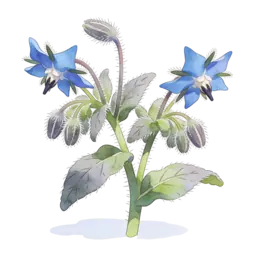
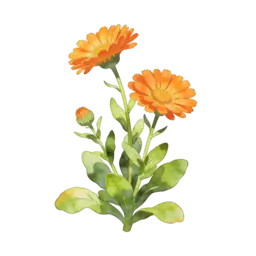
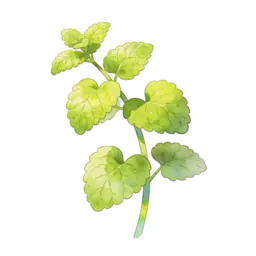
Group it in the same bedPlants with the same watering or the same sun
They are not essential companions, but you will not have to water or position them differently.