
Credits and licences
- #1 — vueltaalhuerto illustration
- #2 — vueltaalhuerto illustration
- #3 — vueltaalhuerto illustration
- #4 — vueltaalhuerto illustration
- #5 — vueltaalhuerto illustration
- #6 — vueltaalhuerto illustration
- #7 — vueltaalhuerto illustration
- #8 — vueltaalhuerto illustration
- #9 — vueltaalhuerto illustration
Monstera dubia
Monstera dubia is planted from April to June. Grow it in sun or partial shade, 40 cm apart, with moderate watering. Dates are for a mild temperate climate in the northern hemisphere; the calendar below adjusts them to your zone.
Monstera dubia is a climbing aroid from the American rainforests, famous for its "shingled" habit: when young it presses small, heart-shaped leaves against the trunk or pole, silvery green with dark veins, which overlap like the tiles on a roof. When it finds a tall support and plenty of light, the plant changes: the leaves stand away from the pole, grow much larger, lose their silvering and split into lobes and holes, like those of an adult Monstera. Indoors it is grown on a moss or cork pole, with plenty of light but no direct sun, warmth and a humid atmosphere, and it rarely reaches that adult stage; flowers and fruit are almost never seen indoors. LEGAL AND SAFETY NOTICE: like other aroids, Monstera contains calcium oxalate crystals in its leaves, stems and sap: chewing or swallowing it causes pain and swelling of the mouth and throat, drooling and vomiting, and the sap can irritate the skin and eyes. For dogs and cats, the genus Monstera is listed as toxic; there are no specific data for this species, so treat it the same way. Keep it out of reach of children and pets, wear gloves when pruning it or taking cuttings, and do not use it in food, infusions or remedies. We have not found it listed under the CITES convention or in the Spanish Catalogue of Invasive Alien Species, and it can be freely bought and sold.
Family and origin: Arum family (Araceae) · native to Rainforests from southern Mexico to Bolivia and northern Brazil, where it climbs tree trunks as a hemiepiphyte · More plants from South America
01In your area
How will it do in your home?
Year calendar
| Task | J | F | M | A | M | J | J | A | S | O | N | D |
|---|---|---|---|---|---|---|---|---|---|---|---|---|
| Plant / transplantApr–Jun | no | no | no | yes | yes | yes | no | no | no | no | no | no |
| PruningMar–Apr | no | no | yes | yes | no | no | no | no | no | no | no | no |
| CuttingsApr–Aug | no | no | no | yes | yes | yes | yes | yes | no | no | no | no |
Its life cycle at a glance
Swipe and tap a stage to see its details.
02Planting
Planting and transplanting
- TipGive it a moss or cork pole and keep it damp: that way the plant presses its leaves flat and keeps its shingled look.
03Care
Care through the year
Sun and aspectSun and shade · 4 h of sun · shade in summer
- Too little sun
- Ideal range
- Plenty of sun
East, or south with light shade during the middle of the day
Gentle sun: Morning or afternoon sun. Midday summer sun stresses and scorches it.
Put the plant near a bright window, out of direct sun during the middle of the day. The ideal temperature is around 18 to 28 °C and it should not drop below about 12 °C; it is very sensitive to cold.
- TipIf you want to see it grow and change leaf form, it needs a tall support and plenty of light; if you prefer the little silvery leaves, let it climb continuously and cut off any stems that pull away.
- TipTurn the pot every week so it grows evenly towards the light.
WateringMoist but never waterlogged · summer: every 5 to 7 days, when the top third has dried out
- Summerevery 5 to 7 days, when the top third has dried out0.6 L per plant/week
- Spring / Autumnevery 4-5 days0.3 L per plant/week
- Winterevery 10 to 14 days, with the potting mix almost dry between waterings0.1 L per plant/week
Moist but never waterlogged: Water before the surface is completely dry. Never puddles.
It prefers an airy potting mix (peat or coir with bark and perlite) that drains well; too much water rots the roots and makes the lower leaves turn yellow. High humidity suits it, 60 % or more: a humidifier or the damp moss pole help a great deal.
When to water? Push your finger 3 cm into the soil next to the base of the plant:
- Damp: soil sticks to your finger. Do not water today. The moisture is fine.
- Cool but clean, no mud. Water early tomorrow if it stays like this, or this evening.
- Dry and dusty. Water now, and deeply. This is not where it likes to be.
- TipAdjust watering to the light and the season: in winter almost all of them need much less water.
- Common mistakeOverwatering is the number one killer: let it dry out as the species requires.
Potting mix and feedingpH 5.5–7 · Multi-purpose compost lightened with perlite
Multi-purpose compost lightened with perlite.
70 % multi-purpose compost · 20 % perlite · 10 % coir.
High: always a pot with a drainage hole and a shallow saucer.
This plant prefers a pH between 5.5 and 7.0 (slightly acidic to neutral).
- Repot every 2-3 years into a pot a finger's width wider, not much more.
- A handful of worm castings a year keeps the potting mix alive.
- Reusing old potting mix without refreshing it compacts and rots the roots.
- No drainage in the pot = waterlogged roots = dead plant.
- TipWipe the leaves with a damp cloth, feed it every three or four weeks in spring and summer with a balanced fertiliser at half strength, and watch out for mealybugs and red spider mite, which appear when the air is dry.
- Common mistakePots without drainage waterlog the roots and rot the plant.
PruningWhen: Mar–Apr
Pruning time for this plant: Mar–Apr.
Common mistakes and tips
- TipWash your hands after handling it.
- TipThe frequencies and timings are a rough guide.
04Propagation
Make new plants
It is propagated from stem cuttings with at least one node, carrying a leaf and, if possible, an aerial root. Cut with a clean blade below the node, from April to August, and root it in a glass of water or directly in damp, airy potting mix, with plenty of light and warmth; roots appear in a few weeks. It is then planted against a moss or cork pole so that it keeps its shingled stage. Seed is hardly ever used, because the plant barely fruits in cultivation.
05Uses and health
What it is used for, and with what care
SAFETY WARNING: like other aroids, it contains calcium oxalate crystals in its leaves, stems and sap. If bitten or swallowed it causes pain and swelling of the mouth and throat, drooling and vomiting; the sap can irritate the skin and eyes. The genus Monstera is listed as toxic to dogs and cats; there are no specific data for this species. Keep it out of reach of children and pets, wear gloves when pruning, and consult a doctor or a vet if you suspect someone has chewed it.
- Properties
- It is an ornamental houseplant; it is not grown for any health benefit and has no safe medicinal or culinary uses.
- Uses
- It is not edible. Do not use it in food, infusions or remedies.
For guidance only; this is not medical treatment and does not replace advice from a doctor or vet.
06Companions and related plants
What to plant it with
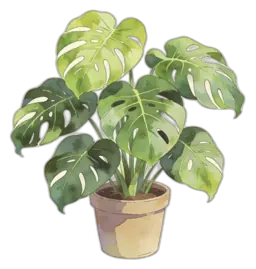
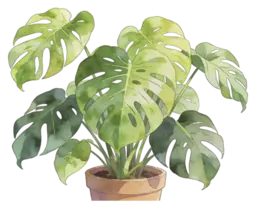
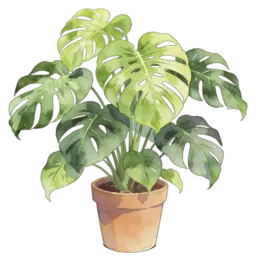
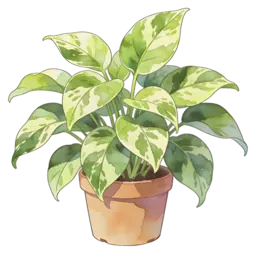
Compare with similar varieties
| Variety | Sowing | Harvest | Days | Spacing | Difficulty |
|---|---|---|---|---|---|
| Monstera 'Peru' | — | — | — | 40 cm | Moderate |
| Monstera adansonii | — | — | — | 40 cm | Easy |
| Monstera deliciosa | — | — | — | 100 cm | Easy |
| Monstera dubia | Apr–Jun | — | — | 40 cm | Moderate |
| Monstera obliqua | Apr–Jun | — | — | 40 cm | Difficult |