
Credits and licences
- #1 — vueltaalhuerto illustration
- #2 — vueltaalhuerto illustration
- #3 — vueltaalhuerto illustration
- #4 — vueltaalhuerto illustration
- #5 — vueltaalhuerto illustration
- #6 — vueltaalhuerto illustration
- #7 — vueltaalhuerto illustration
- #8 — vueltaalhuerto illustration
- #9 — vueltaalhuerto illustration
- #10 — vueltaalhuerto illustration
Madagascar sundew (Drosera madagascariensis)
and 2 more names
tropical sundew, carnivorous plantMadagascar sundew (Drosera madagascariensis) is sown in seed trays from March to June, and planted out from April to June. Grow it in full sun, 12 cm apart, with plenty of watering. Dates are for a mild temperate climate in the northern hemisphere; the calendar below adjusts them to your zone.
An upright-stemmed tropical carnivorous plant that forms a clump of long, narrow, linear leaves 4 to 10 cm long, covered in reddish tentacles with sticky droplets. Over the years it develops a visible stem, 10 to 25 cm tall if it finds support, and only the top part stays green while the base dries off. The flower stalk bears five-petalled white flowers tinged pink or mauve, which open in the sun and self-pollinate, so it sets seed readily. It is sturdier and more vigorous than other sundews but needs more warmth: it grows at 15 to 35 °C and in hard cold it loses its leaves, although it sometimes resprouts from the roots. It is grown in a pot, with rainwater or distilled water, in a very bright spot. It is neither edible nor medicinal.
Family and origin: Sundew family (Droseraceae) · native to Tropical and subtropical Africa and Madagascar (savannahs with water seepages, sphagnum bogs and damp slopes) · More plants from Africa
01In your area
How will it do in your home?
Year calendar
| Task | J | F | M | A | M | J | J | A | S | O | N | D |
|---|---|---|---|---|---|---|---|---|---|---|---|---|
| Seed trayMar–Jun | no | no | yes | yes | yes | yes | no | no | no | no | no | no |
| Plant / transplantApr–Jun | no | no | no | yes | yes | yes | no | no | no | no | no | no |
| CuttingsApr–Aug | no | no | no | yes | yes | yes | yes | yes | no | no | no | no |
Its life cycle at a glance
Swipe and tap a stage to see its details.
02Care
Care through the year
Sun and aspectFull sun · 6 h of sun · South or south-west, with nothing casting shade at midday
- Too little sun
- Ideal range
- Plenty of sun
South or south-west, with nothing casting shade at midday
Strong sun: Loves full midday sun and high temperatures.
It is one of the sundews that tolerates the most sun and heat: give it 6 to 8 hours of direct sun, or a very powerful grow light, so that the leaves turn reddish and produce droplets. On a sunny windowsill the glass intensifies the heat; do not leave it in a closed, unventilated space. Keep it above 10 °C in winter so it does not stop growing.
- TipOn a very sunny, warm windowsill it grows a great deal; add a thin stake if the stem gets long and flops.
- TipTurn the pot every week so it grows evenly towards the light.
WateringVery moist, tolerates waterlogging · summer: saucer with 2 cm of mineral-free water, at all times
- Summersaucer with 2 cm of mineral-free water, at all times1.1 L per plant/week
- Spring / Autumnevery 3-4 days0.5 L per plant/week
- Winterpotting mix just moist, with a little water in the saucer0.1 L per plant/week
Very moist, tolerates waterlogging: Saturated or nearly saturated soil. Still watch out for fungal disease.
Always water with very low-mineral water: rainwater, distilled water or reverse-osmosis water. Tap water, especially if it is hard, gradually leaves salts in the potting mix and eventually kills the plant. The easiest method is to stand the pot in a saucer with a couple of centimetres of water during the growing season and, in winter, leave only a little water in the saucer so the mix stays moist. Never feed it: it lives on the insects it catches and fertiliser burns the roots.
This is a plant for waterlogged soil or pond margins: the finger test does not help, because the soil must stay wet all the time. Make sure the mud never dries out and, if it grows in a pond, that the water covers the base as the profile says; in summer, top up what evaporates.
- TipAdjust watering to the light and the season: in winter almost all of them need much less water.
Potting mix and feedingpH 4–6 · Multi-purpose compost lightened with perlite
Multi-purpose compost lightened with perlite.
70 % multi-purpose compost · 20 % perlite · 10 % coir.
High: always a pot with a drainage hole and a shallow saucer.
This plant prefers a pH between 4.0 and 6.0 (acidic to slightly acidic).
- Repot every 2-3 years into a pot a finger's width wider, not much more.
- A handful of worm castings a year keeps the potting mix alive.
- Reusing old potting mix without refreshing it compacts and rots the roots.
- No drainage in the pot = waterlogged roots = dead plant.
- TipUse unfertilised sphagnum peat with perlite or silica sand, in a pot with drainage holes and a saucer, with rainwater, distilled water or reverse-osmosis water.
- TipDo not feed it, and do not give it meat or dead insects.
- Common mistakePots without drainage waterlog the roots and rot the plant.
Common mistakes and tips
- TipRemove dead leaves from the base with tweezers, without pulling the living ones.
- TipIf it drops below about 10 °C it stops growing and may lose its leaves: do not throw it away until you have seen whether it resprouts in spring.
- TipThe figures for cold and heat, and the times for germination and rooting, are approximate: growing sources do not entirely agree.
03Propagation
Make new plants
As it self-pollinates, it is easy to obtain its tiny black seed, which is sown fresh on the surface of moist peat, without covering, in warmth and light, and germinates in a few weeks. It is also propagated by tip cuttings: cut off the top of the stem, about 5 to 8 cm long, with its leaves, and push it into moist peat with perlite, in light and warmth; it roots within a few weeks. Root cuttings and plants resprouting from the base are another option.
Seeds: how to germinate them~21 days
04Uses and health
What it is used for, and with what care
WARNING: there is no reliable data on the toxicity of this species. Sundews contain naphthoquinones, substances that can irritate the skin and mucous membranes in sensitive people, so do not eat it, do not use it in home remedies, and wash your hands after handling it. Keep children and pets from biting the plant; if this happens, consult the doctor or the vet.
- Properties
- An ornamental curiosity that catches midges and small flies, but it is no substitute for an insecticide and does not control a pest. It is a good way to learn how carnivorous plants feed.
- Uses
- It is not edible and is not used in infusions. Some sundews are used in herbal medicine under professional supervision in other countries, but this indoor species is not for home use.
For guidance only; this is not medical treatment and does not replace advice from a doctor or vet.
05Companions and related plants
What to plant it with
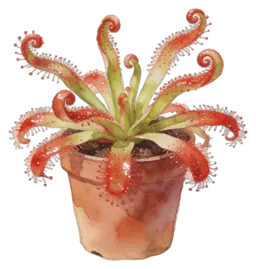
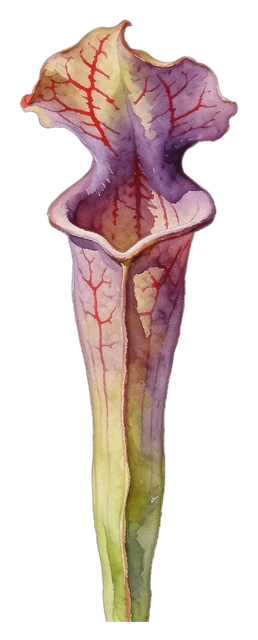
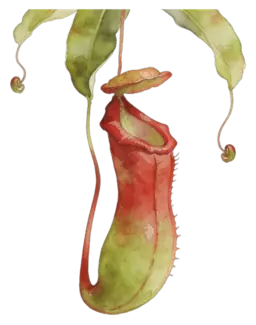
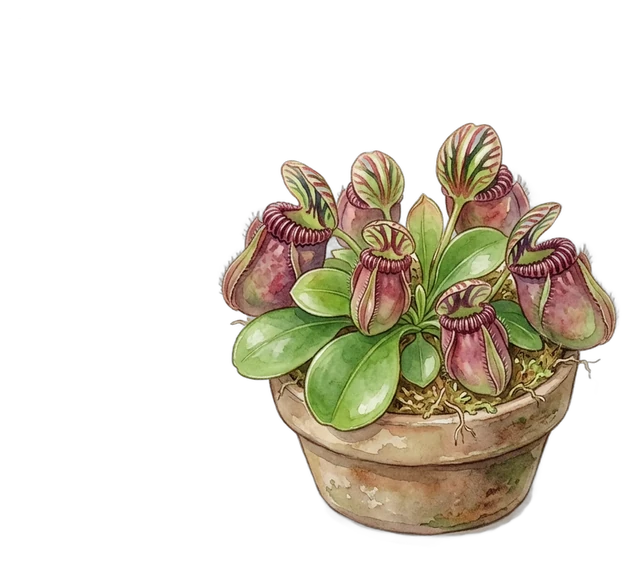
Compare with similar varieties
| Variety | Sowing | Harvest | Days | Spacing | Difficulty |
|---|---|---|---|---|---|
| Alice sundew (Drosera aliciae) | Mar–May | — | — | 10 cm | Easy |
| Wedge-leaved sundew (Drosera cuneifolia) | Mar–Apr, Sep–Oct | — | — | 10 cm | Moderate |
| Cape sundew | — | — | — | 12 cm | Easy |
| Madagascar sundew (Drosera madagascariensis) | Mar–Jun | — | — | 12 cm | Moderate |
| Nest sundew (Drosera nidiformis) | Mar–May | — | — | 10 cm | Moderate |
| Spoon-leaved sundew (Drosera spatulata) | Mar–Jun | — | — | 8 cm | Easy |
| Drosera × snyderi (hybrid sundew) | Mar–May | — | — | 10 cm | Easy |