
Credits and licences
- #1 — vueltaalhuerto illustration
- #2 — vueltaalhuerto illustration
- #3 — vueltaalhuerto illustration
- #4 — vueltaalhuerto illustration
- #5 — vueltaalhuerto illustration
Tropical pitcher plant (Nepenthes)
and 1 more names
Nepenthes alataA climbing or trailing carnivorous plant that forms pitchers at the tips of its leaves to trap and digest insects. As befits a tropical rainforest plant, it needs very high humidity and watering with lime-free water.
Family and origin: Pitcher plant family (Nepenthaceae) · native to South-East Asia · More plants from Southeast Asia
01In your area
How will it do in your home?
02Care
Care through the year
Sun and aspectSun and shade · 5 h of sun · shade in summer
- Too little sun
- Ideal range
- Plenty of sun
East, or south with light shade in the middle of the day
Moderate sun: Copes with full sun, but give it some shade during heatwaves.
- TipTurn the pot every week so it grows evenly towards the light.
WateringConstantly moist · summer: daily or every 2 days above 30 °C
- Summerdaily or every 2 days above 30 °C1.1 L per plant/week
- Spring / Autumnevery 3-4 days0.5 L per plant/week
- Winterevery 2 weeks if dry0.1 L per plant/week
Constantly moist: The soil should always feel cool and damp. Ideal with mulch and drip irrigation. Mulch: straw or dry plant material cuts watering by 30-50 %.
When to water? Push your finger 2 cm into the soil next to the base of the plant:
- Damp: soil sticks to your finger. Do not water, although for this plant it is just right — check again tomorrow.
- Cool but clean, no mud. Water today: it likes to stay constantly moist.
- Dry and dusty. Water urgently and add mulch to hold in moisture.
- TipIt needs plenty of light without strong sun and high humidity; if the air is dry it stops forming pitchers.
- TipAdjust watering to the light and the season: in winter almost all of them need much less water.
Potting mix and feedingMulti-purpose compost lightened with perlite
Multi-purpose compost lightened with perlite.
70 % multi-purpose compost · 20 % perlite · 10 % coir.
High: always a pot with a drainage hole and a shallow saucer.
This plant prefers a pH between 5.5 and 6.5 (slightly acidic to neutral).
- Repot every 2-3 years into a pot a finger's width wider, not much more.
- A handful of worm castings a year keeps the potting mix alive.
- Reusing old potting mix without refreshing it compacts and rots the roots.
- No drainage in the pot = waterlogged roots = dead plant.
- TipUse a very open potting mix, such as sphagnum moss with perlite or bark, and keep it moist with lime-free water without leaving the saucer waterlogged.
- TipThere is no need to feed it or fill the pitchers with water.
- Common mistakePots without drainage waterlog the roots and rot the plant.
03Uses and health
What it is used for, and with what care
- Properties
- A very striking tropical pitcher plant.
For guidance only; this is not medical treatment and does not replace advice from a doctor or vet.
04Pests and diseases
Critters and ailments to keep an eye on
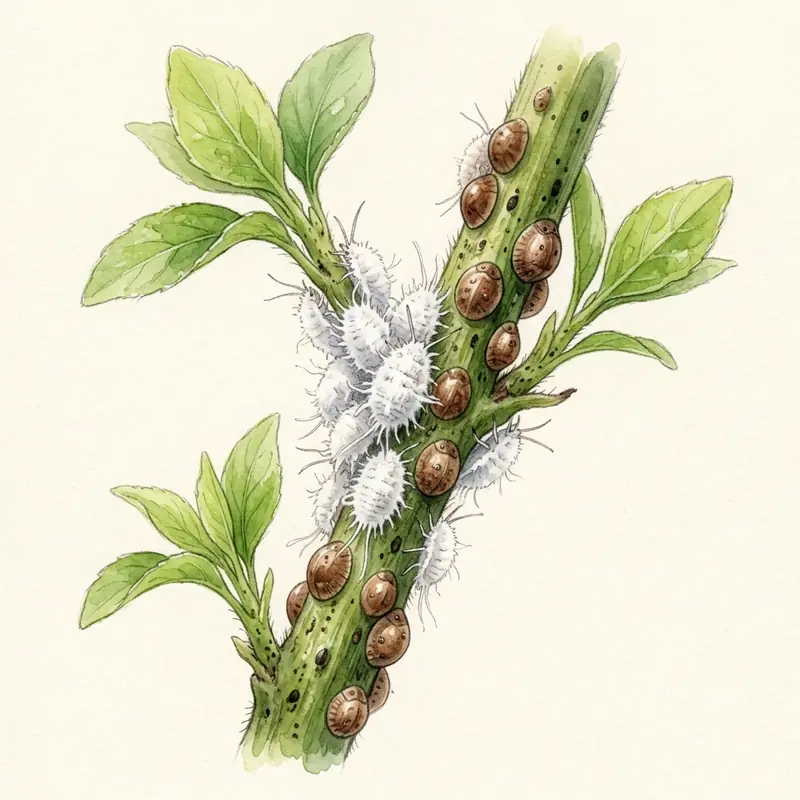
The most common ones on this plant. Tap one to see how to recognise it and what to do.
No known toxicity to people or pets
No known toxicity; the liquid in the pitchers is harmless in small amounts.