Credits and licences
- #1 — vueltaalhuerto illustration
- #2 — vueltaalhuerto illustration
- #3 — vueltaalhuerto illustration
- #4 — vueltaalhuerto illustration
- #5 — vueltaalhuerto illustration
- #6 — vueltaalhuerto illustration
- #7 — vueltaalhuerto illustration
- #8 — vueltaalhuerto illustration
- #9 — vueltaalhuerto illustration
- #10 — vueltaalhuerto illustration
Lungwort
and 2 more names
Jerusalem cowslip, soldiers and sailorsLungwort is sown directly outdoors from September to October. It flowers from February to May. Grow it in shade, 40 cm apart, with moderate watering. Dates are for a mild temperate climate in the northern hemisphere; the calendar below adjusts them to your zone.
What else to sow in September and October
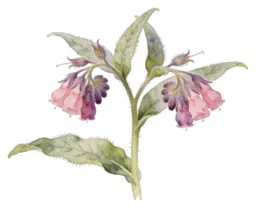
A low-growing perennial, about 20 to 30 cm tall, which forms clumps of rough, hairy, dark green leaves with silvery-white spots. In late winter and spring it bears clusters of small funnel-shaped flowers that open pink and turn violet-blue as they mature, sometimes both at once. It is a woodland-floor plant: it wants shade or partial shade and a cool, moist soil rich in humus, and it does not cope well with dry heat, so in Spain it does better in the north and in mountain areas than in the hot interior or on the Mediterranean coast. It is very useful as ground cover under trees and shrubs and feeds bumblebees and early bees. Like other members of the borage family, it is not a plant for eating or for herbal teas (see the health notice). Do not confuse it with comfrey or borage, which belong to the same family.
Family and origin: Borage family (Boraginaceae) · native to Central and eastern Europe · More plants from Temperate Europe
01In your area
How will it do in your garden?
Year calendar
| Task | J | F | M | A | M | J | J | A | S | O | N | D |
|---|---|---|---|---|---|---|---|---|---|---|---|---|
| Direct sowingSep–Oct | no | no | no | no | no | no | no | no | yes | yes | no | no |
| Plant / transplantMar–Apr, Oct–Nov | no | no | yes | yes | no | no | no | no | no | yes | yes | no |
| HarvestFeb–May | no | yes | yes | yes | yes | no | no | no | no | no | no | no |
| FloweringFeb–May | no | yes | yes | yes | yes | no | no | no | no | no | no | no |
| PruningMay–Jun | no | no | no | no | yes | yes | no | no | no | no | no | no |
| Divide the clumpMay–Jun, Sep–Oct | no | no | no | no | yes | yes | no | no | yes | yes | no | no |
Its life cycle at a glance
Swipe and tap a stage to see its details.
02Planting
Where and how to plant it
Sow the seed 4 mm deep; leave 40 cm between plants and 40 cm between rows.
40 cm between plants · 40 cm between rows
Seed at a depth of 4 mm; seedlings go in with the root ball level with the soil.
- Transplanting
- Mar–Apr, Oct–Nov
- Direct sowing
- Sep–Oct
- Germination
- ~45 days
- Common mistakeSowing out of season: many need warmth or a cold spell beforehand to sprout.
03Care
Care through the year
Sun and aspectShade · 3 h of sun · shade in summer
- Too little sun
- Ideal range
- Plenty of sun
Cool north-facing spot or under the canopy of a deciduous tree
Gentle sun: Morning or afternoon sun. Midday summer sun stresses and scorches it.
Shade or partial shade, ideally with morning sun or light filtered through trees. Strong midday sun and dry heat scorch and dry out the leaves.
WateringMoist but never waterlogged · summer: every 2-3 days
- Summerevery 2-3 days1.2 L per plant/week
- Spring / Autumnevery 4-5 days0.6 L per plant/week
- Winterevery 2-3 weeks0.2 L per plant/week
Moist but never waterlogged: Water before the surface is completely dry. Never puddles. Mulch: straw or dry plant material cuts watering by 30-50 %.
Water regularly so that the soil stays cool and moist without becoming waterlogged; keep a particularly close eye on it in summer. If the leaves wilt and turn whitish in a drought, cut them back and water: they will regrow.
When to water? Push your finger 3 cm into the soil next to the base of the plant:
- Damp: soil sticks to your finger. Do not water today. The moisture is fine.
- Cool but clean, no mud. Water early tomorrow if it stays like this, or this evening.
- Dry and dusty. Water now, and deeply. This is not where it likes to be.
Soil and feedingpH 6–7.5 · Loose soil with organic matter and good drainage
Loose soil with organic matter and good drainage.
50 % topsoil · 30 % well-rotted compost · 20 % sand or perlite.
Medium/high.
This plant prefers a pH between 6.0 and 7.5 (slightly acidic to slightly alkaline).
- Overfeeding gives lots of leaf and few flowers.
- Compacted, poorly drained soil rots the roots in winter.
- TipPlant it under deciduous trees or in a cool, shady corner, in moist, loose soil, with compost or leaf mould.
- Common mistakeOverfeeding gives lush leaves but few flowers.
PruningWhen: May–Jun
Pruning time for this plant: May–Jun.
- TipRemove faded flowers to prolong flowering.
Common mistakes and tips
- TipAfter flowering, cut the old and damaged leaves right back: new, clean leaves regrow with more striking silver markings.
- TipWatch for powdery mildew in dry summers and for slugs and snails in spring.
- TipThe figures for germination, dates and cold hardiness are approximate and depend on the location and the variety.
04Harvest
Harvesting and storing
Harvest in Feb–May.
05Propagation
Make new plants
The easiest and most reliable method is to divide the clump just after flowering, in late spring, or in a mild autumn, and replant each piece with roots. It can also be grown from seed, sown fresh in autumn and left outdoors over winter; it germinates slowly and unevenly, and the plants may differ from the parent, because it crosses easily with other lungworts.
Seeds: how to germinate them~45 days
- TipDivide it every three or four years to renew the clump.
06Uses and health
What it is used for, and with what care
SAFETY NOTICE: do not use it for herbal teas or home remedies. Like other plants of the borage family, it may contain traces of pyrrolizidine alkaloids, substances that damage the liver with repeated consumption. There is no reliable information on its exact toxicity in people or pets. During pregnancy or breastfeeding, or with liver disease, avoid it completely. If someone has eaten a large amount, in Spain call the Toxicology Information Service (91 562 04 20) or 112. Do not let dogs or cats chew the plant and, if in any doubt, consult a vet.
- Properties
- A plant used in traditional European medicine for respiratory complaints (hence its name), but there is no solid evidence that it works and it does not replace any treatment.
- Uses
- It is not grown or recommended as food. Some young leaves have traditionally been eaten cooked, but it is not a usual vegetable and, to be on the safe side, it is better not to eat it.
For guidance only; this is not medical treatment and does not replace advice from a doctor or vet.
07Companions and related plants