
Credits and licences
- #1 — vueltaalhuerto illustration
- #2 — vueltaalhuerto illustration
- #3 — vueltaalhuerto illustration
- #4 — vueltaalhuerto illustration
- #5 — vueltaalhuerto illustration
- #6 — vueltaalhuerto illustration
- #7 — vueltaalhuerto illustration
- #8 — vueltaalhuerto illustration
- #9 — vueltaalhuerto illustration
- #10 — vueltaalhuerto illustration
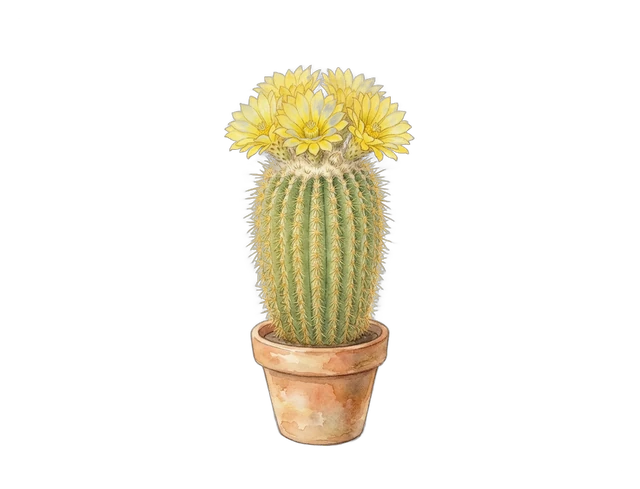
Parodia leninghausii (golden ball cactus, yellow tower)
and 2 more names
Notocactus leninghausii, Eriocactus leninghausiiParodia leninghausii (golden ball cactus, yellow tower) is sown in seed trays from March to May, and planted out from April to June. It flowers from May to July. Grow it in full sun, 25 cm apart, with little watering. Dates are for a mild temperate climate in the northern hemisphere; the calendar below adjusts them to your zone.
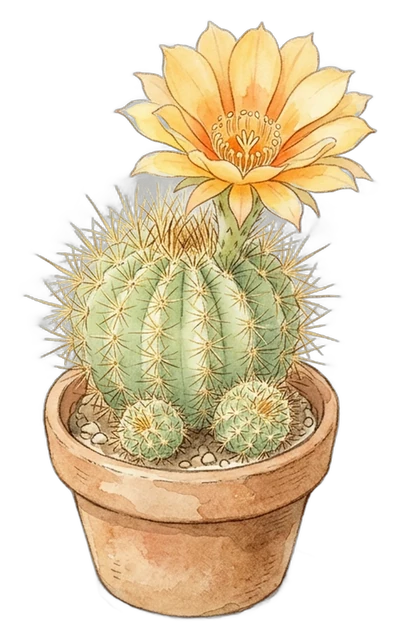
A cactus with cylindrical stems that grow in a cluster from the base. They are globular when young and lengthen over the years into columns 30 cm to 1 m tall and 8 to 12 cm across, green and covered in many fine, soft, golden-yellow spines, with white wool at the top. The stems lean towards the light. In summer it opens large flowers about 5 cm across at the top, lemon yellow with many narrow petals. It is a rewarding cactus, moderately fast-growing and fairly tolerant. It used to be called Notocactus leninghausii or Eriocactus leninghausii, and it is still sold under those names; the accepted name today is Parodia leninghausii. It is also offered in its ‘cristata’ form, a deformed variant with a flattened, wavy, crest-shaped stem that can only be kept going by offsets or grafting. It is not edible. LEGAL AND SAFETY NOTICE: all cacti (family Cactaceae) are included in the CITES Convention (Washington Convention), almost all of them in Appendix II, and in the European Union in Regulation (EC) No 338/97. It is forbidden to dig up wild plants from their habitat and to trade them between countries without CITES permits; breaking these rules can lead to administrative and even criminal penalties. What to do: buy only nursery-grown plants with a receipt or a label of origin; do not collect cacti from the wild; and if you are going to travel with them or send them abroad, check first with the CITES Service of Spanish Customs. In addition, the spines cause injury: handle it with thick gloves or tongs and keep it out of the reach of children and pets.
Family and origin: Cactus family (Cactaceae) · native to Southern Brazil (Rio Grande do Sul), on rocky slopes and outcrops at about 300 to 1300 m altitude · More plants from South America
01In your area
How will it do in your home?
Year calendar
| Task | J | F | M | A | M | J | J | A | S | O | N | D |
|---|---|---|---|---|---|---|---|---|---|---|---|---|
| Seed trayMar–May | no | no | yes | yes | yes | no | no | no | no | no | no | no |
| Plant / transplantApr–Jun | no | no | no | yes | yes | yes | no | no | no | no | no | no |
| FloweringMay–Jul | no | no | no | no | yes | yes | yes | no | no | no | no | no |
| Divide the clumpMay–Jul | no | no | no | no | yes | yes | yes | no | no | no | no | no |
Its life cycle at a glance
Swipe and tap a stage to see its details.
02Planting
Planting and transplanting
- TipTurn the pot from time to time so it grows straight.
03Care
Care through the year
Sun and aspectFull sun · 6 h of sun · shade in summer
- Too little sun
- Ideal range
- Plenty of sun
South or south-west, with nothing casting shade at midday
Moderate sun: Copes with full sun, but give it some shade during heatwaves.
Bright light with direct sun, preferably in the morning or afternoon; strong midday sun through glass in summer can mark the stems. In low light it stretches and loses its golden spines. It copes with dry cold and light, brief frosts, but protect it below about 0 °C and keep it dry in winter.
WateringLet it dry out between waterings · summer: every 7 to 12 days
- Summerevery 7 to 12 days0.2 L per plant/week
- Spring / Autumnevery 10-14 days0.1 L per plant/week
- Winteralmost none: once a month at most0 L per plant/week
Let it dry out between waterings: A Mediterranean favourite: better thirsty than overwatered.
Water deeply in spring and summer and let the mix dry out before watering again; it comes from a summer-rainfall area. In winter, keep it almost dry. Do not let water sit between the stems and empty the saucer.
When to water? Push your finger 5 cm into the soil next to the base of the plant:
- Damp: soil sticks to your finger. Do not water yet. It has more than enough; wait for it to dry out more.
- Cool but clean, no mud. Wait another 1-2 days before watering.
- Dry and dusty. Water now, but moderately. Do not overdo it: it prefers thirst to excess.
- TipWatering, temperatures and timings are only a guide.
- TipA dry winter rest: with hardly any water they flower better in spring.
- Common mistakeWatering in cold winter weather is the fast track to rot.
Potting mix and feedingpH 6–7 · Mineral mix with almost no organic matter
Mineral mix with almost no organic matter.
20 % multi-purpose compost · 40 % silica sand · 40 % pumice or lava rock.
Extreme.
This plant prefers a pH between 6.0 and 7.0 (slightly acidic to neutral).
- Rich, compact mix: certain rot within a few months.
- Watering in cold winter weather: the first step towards rot.
- TipPlant it in a terracotta pot with drainage holes and a free-draining, slightly humus-rich mix: two parts cactus compost to one part coarse sand or pumice.
- TipFeed sparingly, with cactus fertiliser at half strength once or twice between spring and summer.
- TipPlenty of light and a free-draining mineral mix.
- Common mistakeA mix that holds water drowns the roots.
Common mistakes and tips
- TipRepot every two or three years, in spring, when the stems fill the container.
- TipWatch out for mealybugs in the wool at the top.
04Propagation
Make new plants
It is propagated by offsets, which appear at the base of the mother plant. Separate them in spring or summer when they have their own roots, let the cut dry for a few days and plant them in a mineral mix. It can also be propagated from its small black seed, sown on the surface in spring at 20 to 25 °C. The ‘cristata’ form does not come true from seed: only from offsets or grafting.
Seeds: how to germinate them~14 days
05Uses and health
What it is used for, and with what care
There is no reliable toxicity data for this species. The real risk is the spines: they cause injury and lodge in skin, mouths and paws; handle it with thick gloves or tongs and keep it out of the reach of children and pets. WARNING: it is a CITES-listed plant; buy only nursery-grown specimens and do not collect wild cacti.
- Properties
- An ornamental cactus with showy flowers. It has no home medicinal uses.
- Uses
- It is not edible. There are no culinary uses.
For guidance only; this is not medical treatment and does not replace advice from a doctor or vet.
06Companions and related plants
What to plant it with
Compare with similar varieties
| Variety | Sowing | Harvest | Days | Spacing | Difficulty |
|---|---|---|---|---|---|
| Parodia leninghausii (golden ball cactus, yellow tower) | Mar–May | — | — | 25 cm | Easy |
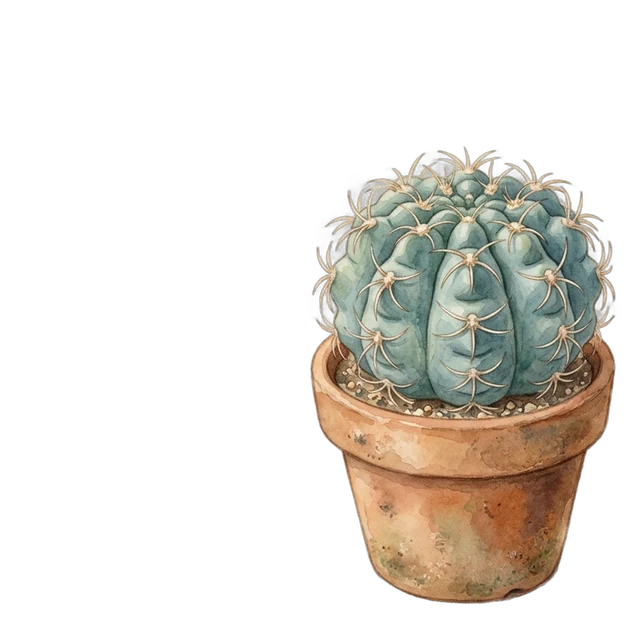
| Parodia magnifica (blue ball cactus, balloon cactus) | Mar–May | — | — | 20 cm | Moderate |
| Parodia schumanniana (formerly Eriocactus) | Mar–May | — | — | 20 cm | Easy |