Credits and licences
- #1 — vueltaalhuerto illustration
- #2 — vueltaalhuerto illustration
- #3 — vueltaalhuerto illustration
- #4 — vueltaalhuerto illustration
- #5 — vueltaalhuerto illustration
- #6 — vueltaalhuerto illustration
- #7 — vueltaalhuerto illustration
- #8 — vueltaalhuerto illustration
- #9 — vueltaalhuerto illustration
- #10 — vueltaalhuerto illustration
Lobivia densispina (Echinopsis densispina)
and 2 more names
Lobivia densispina cristata, cob cactusLobivia densispina (Echinopsis densispina) is sown in seed trays from March to May, and planted out from April to June. It flowers from May to July. Grow it in full sun, 10 cm apart, with little watering. Dates are for a mild temperate climate in the northern hemisphere; the calendar below adjusts them to your zone.
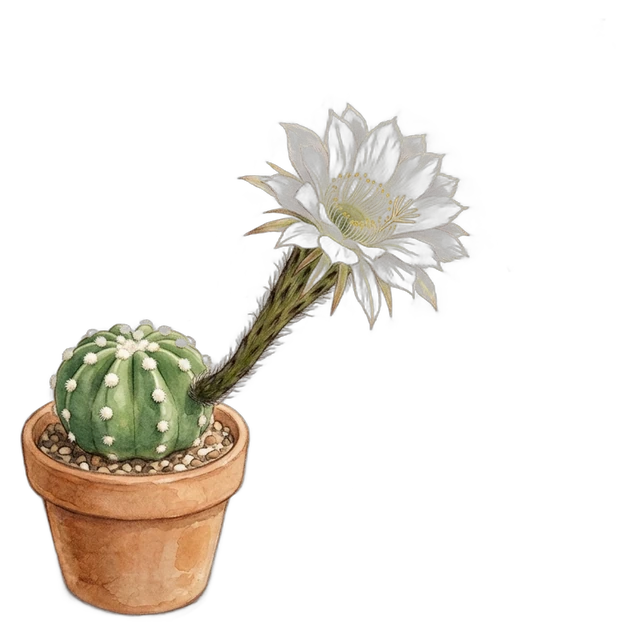
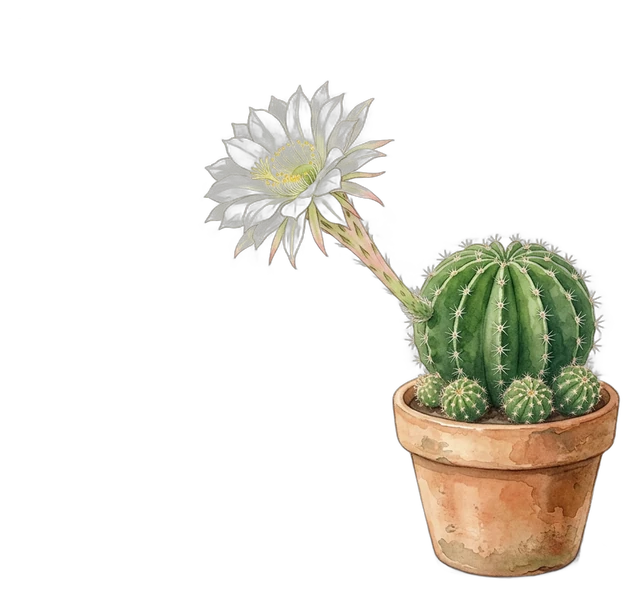
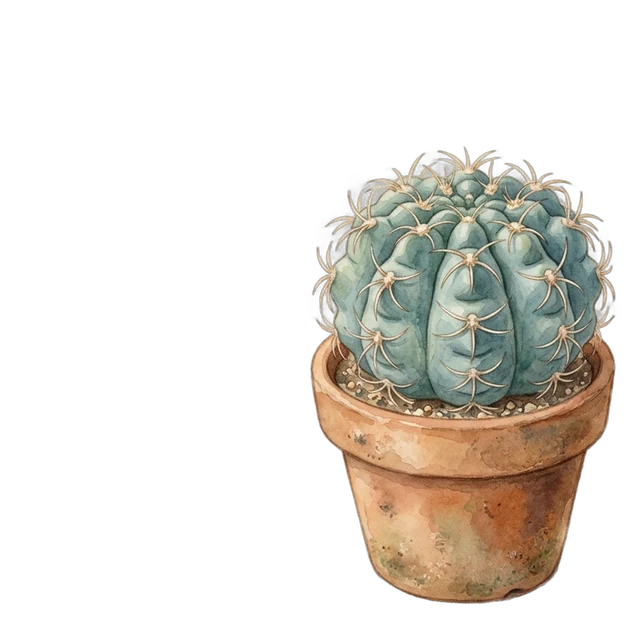
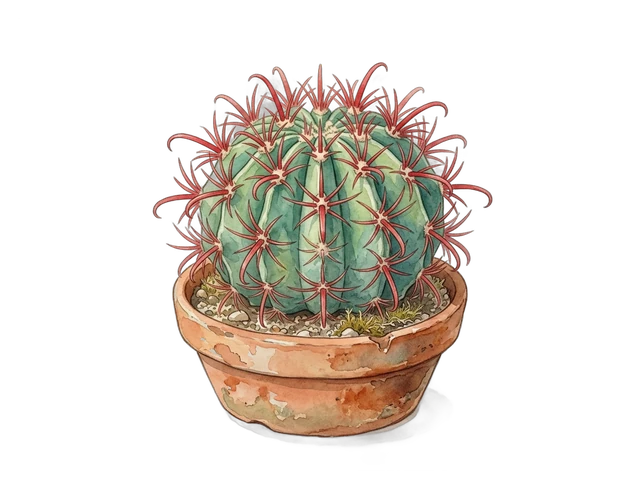
A small cactus, globular or becoming somewhat elongated with age, 5 to 10 cm tall and 5 to 8 cm wide, light green, with numerous low ribs and areoles bearing fine, numerous, very dense spines, yellowish to brown, that almost hide the body. It readily produces offsets at the base and in time forms rounded clusters. Its main attraction is its flowers: in spring and summer it produces funnel-shaped blooms that are large for the size of the plant, about 4 to 7 cm, with a long, hairy tube, in yellow, orange, pink or red depending on the specimen; each flower lasts one or two days. A note on the name: it is sold as ‘Lobivia densispina’, but Kew and other botanical databases treat it as a synonym of Echinopsis densispina, which is the accepted name. When a shop offers it as ‘crested’, this is an abnormal fan- or crest-shaped growth form maintained by growers. It needs full sun, sparing watering in summer and a cool, dry winter in order to flower. It is not edible. WARNING: the fine spines prick and lodge in the skin; handle it with tongs or folded paper and do not place it where children or animals might brush against it.
Family and origin: Cactus family (Cactaceae) · native to North-western Argentina (Jujuy province), on stony slopes and dry scrub at high altitude · More plants from South America
01In your area
How will it do in your home?
Year calendar
| Task | J | F | M | A | M | J | J | A | S | O | N | D |
|---|---|---|---|---|---|---|---|---|---|---|---|---|
| Seed trayMar–May | no | no | yes | yes | yes | no | no | no | no | no | no | no |
| Plant / transplantApr–Jun | no | no | no | yes | yes | yes | no | no | no | no | no | no |
| FloweringMay–Jul | no | no | no | no | yes | yes | yes | no | no | no | no | no |
| Divide the clumpMay–Jul | no | no | no | no | yes | yes | yes | no | no | no | no | no |
Its life cycle at a glance
Swipe and tap a stage to see its details.
02Care
Care through the year
Sun and aspectFull sun · 8 h of sun · South or south-west, with nothing casting shade at midday
- Too little sun
- Ideal range
- Plenty of sun
South or south-west, with nothing casting shade at midday
Strong sun: Loves full midday sun and high temperatures.
Full sun, with many hours of direct sunlight; with little light it stretches and does not flower. A newly bought plant from a shady spot needs to be accustomed to the sun gradually so that it does not scorch. It comes from high altitude and tolerates cold if the potting mix is completely dry (about -3 °C, as a guide); with cold and damp together it rots. To flower, it benefits from spending the winter cool, between 5 and 10 °C, and dry.
WateringLet it dry out between waterings · summer: every 10 to 14 days, thoroughly
- Summerevery 10 to 14 days, thoroughly0.2 L per plant/week
- Spring / Autumnevery 10-14 days0.1 L per plant/week
- Winternone, from November to February0 L per plant/week
Let it dry out between waterings: A Mediterranean favourite: better thirsty than overwatered.
Water thoroughly in spring and summer and let the potting mix dry out completely before watering again. From November to February do not water: with cold and damp the body rots. Use a pot with drainage holes and a very mineral potting mix.
When to water? Push your finger 5 cm into the soil next to the base of the plant:
- Damp: soil sticks to your finger. Do not water yet. It has more than enough; wait for it to dry out more.
- Cool but clean, no mud. Wait another 1-2 days before watering.
- Dry and dusty. Water now, but moderately. Do not overdo it: it prefers thirst to excess.
- TipThe watering, temperatures and timings are only a guide.
- TipA dry winter rest: with hardly any water they flower better in spring.
- Common mistakeWatering in cold winter weather is the fast track to rot.
Potting mix and feedingpH 6–7 · Mineral mix with almost no organic matter
Mineral mix with almost no organic matter.
20 % multi-purpose compost · 40 % silica sand · 40 % pumice or lava rock.
Extreme.
This plant prefers a pH between 6.0 and 7.0 (slightly acidic to neutral).
- Rich, compact mix: certain rot within a few months.
- Watering in cold winter weather: the first step towards rot.
- TipPlant it in a terracotta pot with drainage holes, slightly wider than the plant, with a very free-draining potting mix (for example, half cactus compost and half coarse sand, pumice or fine gravel), and put it in the sun.
- TipFeed sparingly: a cactus fertiliser at half strength once or twice between spring and summer.
- TipPlenty of light and a free-draining mineral mix.
- Common mistakeA mix that holds water drowns the roots.
Common mistakes and tips
- TipTo repot it, wrap it in folded newspaper or use kitchen tongs.
- TipGive it a cool, dry winter so that it flowers.
- TipBuy only nursery-raised specimens: like the rest of the cactus family, it is protected by the CITES convention.
03Propagation
Make new plants
It is propagated by offsets and by seed. Offsets appear at the base of the mother plant; separate them in spring or summer with a clean knife, let the wound dry for a week and plant them in a mineral potting mix that is almost dry. The seed, small, black and shiny, comes from the dry, hairy fruits left by a pollinated flower; sow it in spring on the surface of a fine, moist mineral mix at 20 to 25 °C with plenty of light, and it comes up in one to three weeks. Seed-raised plants take a few years to flower.
Seeds: how to germinate them~14 days
04Uses and health
What it is used for, and with what care
There are no reliable toxicity data for this species. The real risk is the spines, fine and numerous, which lodge in the skin, mouth and paws of dogs and cats and are hard to remove. Do not eat it and keep it out of reach of children and pets; handle it with tongs or folded paper.
- Properties
- An ornamental cactus with showy flowers. It has no home medicinal uses.
- Uses
- It is not edible. There are no culinary uses.
For guidance only; this is not medical treatment and does not replace advice from a doctor or vet.
05Companions and related plants