
Credits and licences
- #1 — vueltaalhuerto illustration
- #2 — vueltaalhuerto illustration
- #3 — vueltaalhuerto illustration
- #4 — vueltaalhuerto illustration
- #5 — vueltaalhuerto illustration
- #6 — vueltaalhuerto illustration
- #7 — vueltaalhuerto illustration
- #8 — vueltaalhuerto illustration
- #9 — vueltaalhuerto illustration
- #10 — vueltaalhuerto illustration
Goat's horn cactus (Astrophytum capricorne)
and 1 more names
star cactusGoat's horn cactus (Astrophytum capricorne) is sown in seed trays from April to June, and planted out from April to June. Grow it in full sun, 15 cm apart, with little watering. Dates are for a mild temperate climate in the northern hemisphere; the calendar below adjusts them to your zone.
A globular cactus that slowly lengthens over the years into a short column, with 7 to 10 ribs, greyish-green in colour and covered in white flecks. You will recognise it at once by its long, fine, flexible, dark brown spines, which twist and tangle over the body like goat's horns. In summer it bears yellow flowers with a red throat, about 6 to 7 cm across, followed by dry, woolly fruits. It is tougher and easier than Astrophytum asterias, although it too suffers from too much water. It is listed in CITES Appendix II: buy nursery-grown plants, not wild-collected specimens.
Family and origin: Cactus family (Cactaceae) · native to Chihuahuan Desert, northern Mexico · More plants from Mesoamerica
01In your area
How will it do in your home?
Year calendar
| Task | J | F | M | A | M | J | J | A | S | O | N | D |
|---|---|---|---|---|---|---|---|---|---|---|---|---|
| Seed trayApr–Jun | no | no | no | yes | yes | yes | no | no | no | no | no | no |
| Plant / transplantApr–Jun | no | no | no | yes | yes | yes | no | no | no | no | no | no |
Its life cycle at a glance
Swipe and tap a stage to see its details.
02Care
Care through the year
Sun and aspectFull sun · 8 h of sun · South or south-west, with nothing casting shade at midday
- Too little sun
- Ideal range
- Plenty of sun
South or south-west, with nothing casting shade at midday
Strong sun: Loves full midday sun and high temperatures.
Once acclimatised it copes with anything from very bright light to full sun. In summer, behind glass or at the height of midday, a little light shade is advisable.
WateringLet it dry out between waterings · summer: every 5-7 days
- Summerevery 5-7 days0.2 L per plant/week
- Spring / Autumnevery 10-14 days0.1 L per plant/week
- Winteronly in extreme drought (once a month)0 L per plant/week
Let it dry out between waterings: A Mediterranean favourite: better thirsty than overwatered.
Water moderately from March to October, only when the potting mix is completely dry, and keep it dry in winter. The mix must drain instantly. During its rest period it wants cool (about 5 to 15 °C), dry conditions.
When to water? Push your finger 5 cm into the soil next to the base of the plant:
- Damp: soil sticks to your finger. Do not water yet. It has more than enough; wait for it to dry out more.
- Cool but clean, no mud. Wait another 1-2 days before watering.
- Dry and dusty. Water now, but moderately. Do not overdo it: it prefers thirst to excess.
- TipStart watering in spring and stop in autumn.
- TipA dry winter rest: with hardly any water they flower better in spring.
- Common mistakeWatering in cold winter weather is the fast track to rot.
Potting mix and feedingpH 6–7 · Mineral mix with almost no organic matter
Mineral mix with almost no organic matter.
20 % multi-purpose compost · 40 % silica sand · 40 % pumice or lava rock.
Extreme.
This plant prefers a pH between 6.0 and 7.0 (slightly acidic to neutral).
- Rich, compact mix: certain rot within a few months.
- Watering in cold winter weather: the first step towards rot.
- TipUse a terracotta pot with a very mineral, free-draining potting mix containing plenty of coarse sand or pumice.
- TipPlenty of light and a free-draining mineral mix.
- Common mistakeA mix that holds water drowns the roots.
Common mistakes and tips
- TipPlace it in the brightest, airiest spot you have; from May to October it can live outdoors, sheltered from rain, and in winter keep it dry and no colder than about 5 °C (it will tolerate brief cold spells of a degree or so below zero if it is completely dry, but it is unwise to risk it).
- TipRepot every two or three years.
- TipThe long, fine spines catch and prick: handle it with tongs or a folded strip of paper.
- TipCheck for mealybugs hiding in the wool of the areoles.
- TipGrowth and flowering details are approximate.
03Propagation
Make new plants
It is propagated from seed, sown on the surface of a fine, moist mineral mix at 20-28 °C in good light, in a covered tray. Seeds germinate in one to three weeks and the plants flower at around three or four years old. Like almost all cacti in this genus, it needs pollen from another plant to set fertile seed; pollinate by hand with a fine brush. It rarely produces offsets; collectors' forms are also propagated by grafting onto a vigorous rootstock.
Seeds: how to germinate them~10 days
04Uses and health
What it is used for, and with what care
- Properties
- An ornamental collector's cactus with no medicinal or edible uses.
For guidance only; this is not medical treatment and does not replace advice from a doctor or vet.
05Companions and related plants
What to plant it with
Compare with similar varieties
| Variety | Sowing | Harvest | Days | Spacing | Difficulty |
|---|---|---|---|---|---|
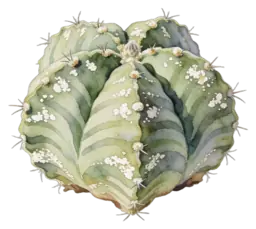
| Sea urchin cactus (Astrophytum asterias) | Apr–Jun | — | — | 12 cm | Difficult |
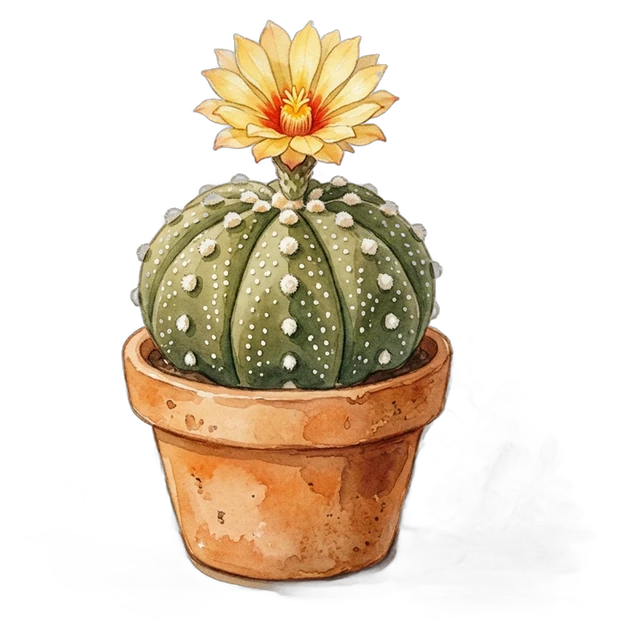
| Goat's horn cactus (Astrophytum capricorne) | Apr–Jun | — | — | 15 cm | Moderate |
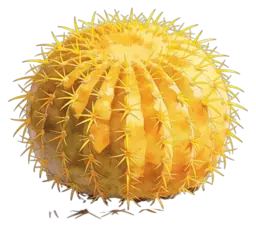
| Astrophytum ornatum (bishop's hood) | — | — | — | 15 cm | Moderate |
No known toxicity to people or pets
No known toxicity to people or pets. The spines are long, fine and flexible and catch on clothing and skin: handle it with tongs or folded paper and keep it away from play areas and walkways. It is listed in CITES Appendix II: buy nursery-grown plants only.