
Credits and licences
- #1 — vueltaalhuerto illustration
- #2 — vueltaalhuerto illustration
- #3 — vueltaalhuerto illustration
- #4 — vueltaalhuerto illustration
- #5 — vueltaalhuerto illustration
- #6 — vueltaalhuerto illustration
- #7 — vueltaalhuerto illustration
- #8 — vueltaalhuerto illustration
- #9 — vueltaalhuerto illustration
Friendship plant (Pilea involucrata 'Norfolk')
and 2 more names
moon valley pilea, pileaFriendship plant (Pilea involucrata 'Norfolk') is planted from March to June. Grow it in sun or partial shade, 20 cm apart, with moderate watering. Dates are for a mild temperate climate in the northern hemisphere; the calendar below adjusts them to your zone.
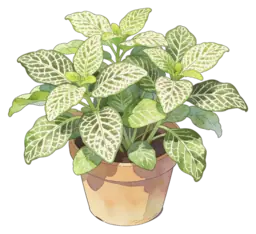
A compact, bushy herbaceous plant 15 to 30 cm tall, with fleshy, reddish stems that become trailing with age. The oval leaves, 3 to 6 cm long with toothed edges, are rough, puckered and quilted-looking, bronze-green with prominent veins and a reddish or purple underside. The cultivar sold as ‘Norfolk’ has darker, bronze-toned leaves. Every so often it produces clusters of tiny pinkish and greenish flowers in the leaf axils. It is called the ‘friendship plant’ because it roots very easily and is given away as cuttings. It is an easy houseplant for warm, humid air that does not withstand cold. It is not edible. The friendship plant (Pilea involucrata) is not toxic to dogs, cats or horses.
Family and origin: Nettle family (Urticaceae) · native to Central America and northern South America, in the humid understorey of tropical areas · More plants from South America
01In your area
How will it do in your home?
Year calendar
| Task | J | F | M | A | M | J | J | A | S | O | N | D |
|---|---|---|---|---|---|---|---|---|---|---|---|---|
| Plant / transplantMar–Jun | no | no | yes | yes | yes | yes | no | no | no | no | no | no |
| PruningMar–Aug | no | no | yes | yes | yes | yes | yes | yes | no | no | no | no |
| CuttingsApr–Sep | no | no | no | yes | yes | yes | yes | yes | yes | no | no | no |
| Divide the clumpApr–Jun | no | no | no | yes | yes | yes | no | no | no | no | no | no |
Its life cycle at a glance
Swipe and tap a stage to see its details.
02Care
Care through the year
Sun and aspectSun and shade · 4 h of sun · shade in summer
- Too little sun
- Ideal range
- Plenty of sun
East, or south with light shade during the middle of the day
Gentle sun: Morning or afternoon sun. Midday summer sun stresses and scorches it.
Bright light without direct sun: near an east- or north-facing window, or a little way back from a south-facing one. In low light it gets leggy and the leaves lose their texture; in direct sun they scorch. It prefers 18 to 25 °C and should not drop below about 10 to 12 °C.
- TipTurn the pot every week so it grows evenly towards the light.
WateringMoist but never waterlogged · summer: every 5 to 7 days
- Summerevery 5 to 7 days0.6 L per plant/week
- Spring / Autumnevery 4-5 days0.3 L per plant/week
- Winterevery 10 to 14 days0.1 L per plant/week
Moist but never waterlogged: Water before the surface is completely dry. Never puddles.
Water when the top third of the potting mix is dry, with lime-free water if you can, and empty the saucer. It tolerates neither waterlogging nor prolonged drought: the leaves wrinkle and drop. It appreciates high air humidity (50 to 70 %), for example standing on a tray of damp pebbles.
When to water? Push your finger 2 cm into the soil next to the base of the plant:
- Damp: soil sticks to your finger. Do not water today. The moisture is fine.
- Cool but clean, no mud. Water early tomorrow if it stays like this, or this evening.
- Dry and dusty. Water now, and deeply. This is not where it likes to be.
- TipTemperatures, watering and timings are a guide only.
- TipAdjust watering to the light and the season: in winter almost all of them need much less water.
- Common mistakeOverwatering is the number one killer: let it dry out as the species requires.
Potting mix and feedingpH 5.5–7 · Multi-purpose compost lightened with perlite
Multi-purpose compost lightened with perlite.
70 % multi-purpose compost · 20 % perlite · 10 % coir.
High: always a pot with a drainage hole and a shallow saucer.
This plant prefers a pH between 5.5 and 7.0 (slightly acidic to neutral).
- Repot every 2-3 years into a pot a finger's width wider, not much more.
- A handful of worm castings a year keeps the potting mix alive.
- Reusing old potting mix without refreshing it compacts and rots the roots.
- No drainage in the pot = waterlogged roots = dead plant.
- TipPlant it in a pot with drainage holes and a light potting mix of peat, coir and perlite with good drainage.
- TipFeed every four weeks from spring to summer with a balanced fertiliser diluted to half strength.
- Common mistakePots without drainage waterlog the roots and rot the plant.
Common mistakes and tips
- TipWatch out for red spider mite and mealybugs in dry rooms.
03Propagation
Make new plants
It is very easily propagated from stem cuttings: cut pieces 7 to 10 cm long with several nodes and pairs of leaves, remove the lower leaves and stand them in water or in a light, moist potting mix; they root in two or three weeks in spring and summer. A large clump can also be divided into several rooted plants. It is not propagated from seed at home.
04Uses and health
What it is used for, and with what care
The friendship plant (Pilea involucrata) is among the plants that are non-toxic to dogs, cats and horses. Even so, an animal that eats a lot of the plant may have mild digestive upset. There are no reliable data for people: do not eat it.
- Properties
- An ornamental houseplant that is easy to grow. It has no home medicinal uses.
- Uses
- It is not edible. There are no culinary uses or infusions.
For guidance only; this is not medical treatment and does not replace advice from a doctor or vet.
05Companions and related plants
What to plant it with
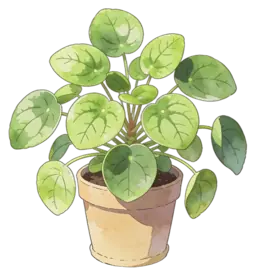
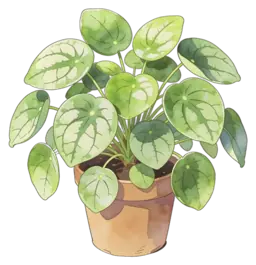
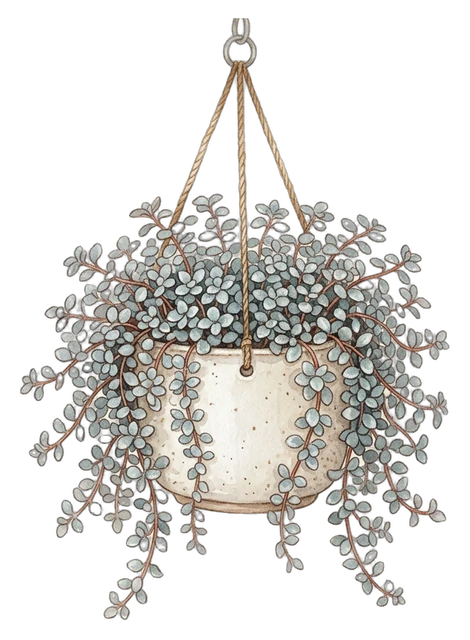
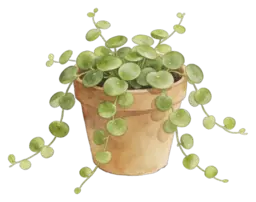
Compare with similar varieties
| Variety | Sowing | Harvest | Days | Spacing | Difficulty |
|---|---|---|---|---|---|
| Aluminium plant (Pilea cadierei) | — | — | — | 25 cm | Easy |
| Friendship plant (Pilea involucrata 'Norfolk') | Mar–Jun | — | — | 20 cm | Easy |
| Silver sprinkles (Pilea libanensis, sold as Pilea glauca) | Mar–Jun | — | — | 20 cm | Easy |
| Chinese money plant | — | — | — | 25 cm | Easy |