
Credits and licences
- #1 — vueltaalhuerto illustration
- #2 — vueltaalhuerto illustration
- #3 — vueltaalhuerto illustration
- #4 — vueltaalhuerto illustration
- #5 — vueltaalhuerto illustration
- #6 — vueltaalhuerto illustration
- #7 — vueltaalhuerto illustration
- #8 — vueltaalhuerto illustration
- #9 — vueltaalhuerto illustration
- #10 — vueltaalhuerto illustration
Kalanchoe humilis (desert surprise)
and 1 more names
banded kalanchoeKalanchoe humilis (desert surprise) is sown in seed trays from March to May, and planted out from April to June. Grow it in full sun, 20 cm apart, with little watering. Dates are for a mild temperate climate in the northern hemisphere; the calendar below adjusts them to your zone.
A small kalanchoe forming a low rosette of broad, fleshy, slightly waxy leaves in greyish green, marbled with crosswise purple-brown bands and blotches that deepen in strong light. It grows about 15 or 20 cm tall and, in spring or summer, sends up a slender, tall flower stem, up to about 40 cm, with hanging, bell-shaped, greenish-white flowers tinged with pink. In the trade it is often sold under the cultivar name 'Desert Surprise'. It is easy, drought-resistant and a good choice for small pots and bright windowsills. LEGAL AND SAFETY NOTICE: Kalanchoes contain bufadienolides, cardiac glycosides similar to those in foxglove, which affect the heart and are the reason the genus is listed among plants toxic to dogs, cats and birds. There are no specific data on this species, so it should be treated as toxic, to people too. What to do: do not eat it or use it in herbal teas, keep it out of reach of children and pets, wash your hands after handling it and, if a person or pet bites it, call the Toxicology Information Service (in Spain, 91 562 04 20) or the vet without waiting for symptoms. Legal status: it is not listed in the Spanish Catalogue of Invasive Alien Species (Real Decreto 630/2013); do not dump leaves or plant waste in the countryside, because the leaves root easily.
Family and origin: Stonecrop family (Crassulaceae) · native to Eastern and southern Africa (Tanzania, Malawi and Mozambique), among rocks and crevices, at about 800 to 1,400 m altitude · More plants from Africa
01In your area
How will it do in your home?
Year calendar
| Task | J | F | M | A | M | J | J | A | S | O | N | D |
|---|---|---|---|---|---|---|---|---|---|---|---|---|
| Seed trayMar–May | no | no | yes | yes | yes | no | no | no | no | no | no | no |
| Plant / transplantApr–Jun | no | no | no | yes | yes | yes | no | no | no | no | no | no |
| CuttingsApr–Aug | no | no | no | yes | yes | yes | yes | yes | no | no | no | no |
Its life cycle at a glance
Swipe and tap a stage to see its details.
02Care
Care through the year
Sun and aspectFull sun · 5 h of sun · shade in summer
- Too little sun
- Ideal range
- Plenty of sun
South or south-west, with nothing casting shade at midday
Moderate sun: Copes with full sun, but give it some shade during heatwaves.
Plenty of light and gentle direct sun; strong light brings out the purple bands, but in high summer light shade at midday is best. It dislikes frost: protect it below about 2 °C.
- Common mistakeLack of light makes them stretch and go soft (etiolation).
WateringLet it dry out between waterings · summer: every 2 to 3 weeks, letting it dry out completely
- Summerevery 2 to 3 weeks, letting it dry out completely0.2 L per plant/week
- Spring / Autumnevery 10-14 days0.1 L per plant/week
- Winteronce a month or less0 L per plant/week
Let it dry out between waterings: A Mediterranean favourite: better thirsty than overwatered.
Water moderately from spring to autumn, letting the potting mix dry out completely between waterings, and only occasionally in winter. Overwatering is the most common cause of failure.
When to water? Push your finger 4 cm into the soil next to the base of the plant:
- Damp: soil sticks to your finger. Do not water yet. It has more than enough; wait for it to dry out more.
- Cool but clean, no mud. Wait another 1-2 days before watering.
- Dry and dusty. Water now, but moderately. Do not overdo it: it prefers thirst to excess.
Potting mix and feedingpH 6–7.5 · Very gritty, free-draining mix
Very gritty, free-draining mix.
30 % multi-purpose compost · 40 % coarse sand · 30 % perlite or pumice.
Very high: standing moisture rots them.
This plant prefers a pH between 6.0 and 7.5 (slightly acidic to slightly alkaline).
- Multi-purpose compost on its own with no drainage: rot sets in quickly.
- Watering the rosette or the leaves marks them and causes rot.
- TipPlant it in a small pot with drainage holes and a very free-draining mix of equal parts soil and sand, plus pumice or grit.
- TipVery free-draining mix (with sand/perlite) and pots with a drainage hole.
Common mistakes and tips
- TipRemove the flower stem once it dries.
- TipWatch out for mealybug.
03Propagation
Make new plants
Propagate from single leaves, which root and produce a new plantlet at the base, from offsets separated from the parent plant, and from its tiny seed, sown on the surface. A leaf that falls on the soil can root by itself.
Seeds: how to germinate them~14 days
04Uses and health
What it is used for, and with what care
Kalanchoes contain bufadienolides, cardiac glycosides similar to those in foxglove, which can disturb the heart rhythm; the genus is listed among plants toxic to dogs, cats and birds. There are no specific data on this species, so it is treated as toxic out of caution: keep it out of reach of children and pets and wash your hands after handling it. If a person or pet nibbles it, call the Toxicology Information Service (in Spain, 91 562 04 20) or the vet without waiting for symptoms.
- Properties
- Ornamental succulent with no home medicinal uses.
- Uses
- Not edible. It has no culinary or medicinal uses; do not use it in herbal teas or eat it.
For guidance only; this is not medical treatment and does not replace advice from a doctor or vet.
05Companions and related plants
What to plant it with
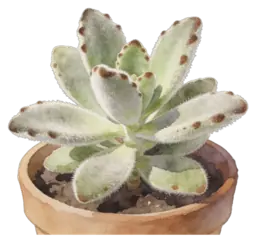
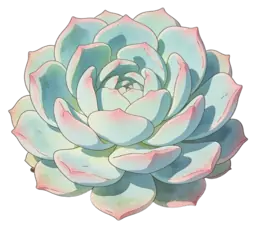
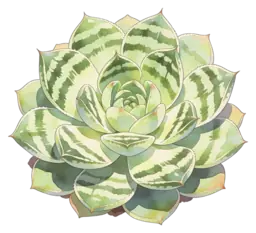
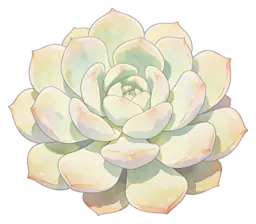
Compare with similar varieties
| Variety | Sowing | Harvest | Days | Spacing | Difficulty |
|---|---|---|---|---|---|
| Kalanchoe (flaming Katy) | — | — | — | 25 cm | Easy |
| Kalanchoe beharensis (felt bush) | Mar–May | — | — | 60 cm | Easy |
| Kalanchoe humilis (desert surprise) | Mar–May | — | — | 20 cm | Easy |
| Kalanchoe laciniata (cut-leaf kalanchoe) | Mar–May | — | — | 40 cm | Easy |
| Panda plant (pussy ears kalanchoe) | — | — | — | 20 cm | Easy |
| Kalanchoe orgyalis (copper spoons) | Mar–May | — | — | 40 cm | Easy |
| Kalanchoe thyrsiflora (paddle plant, flapjack) | Mar–May | — | — | 40 cm | Easy |
| Kalanchoe × kewensis (Kew kalanchoe) | Apr–Jun | — | — | 30 cm | Easy |